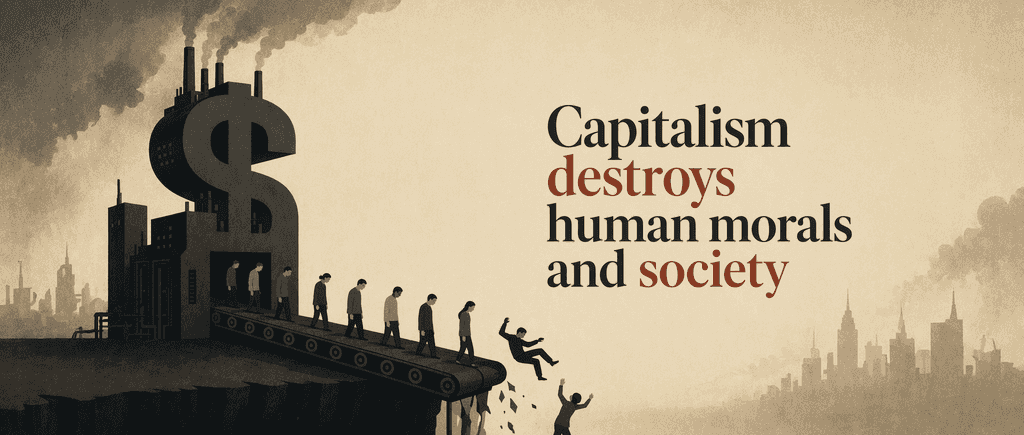
《American Psycho》概述
In "American Psycho," Ellis's controversial masterpiece dissects 1980s yuppie culture through Wall Street psychopath Patrick Bateman. Ranked #12 on BBC's world-shaping novels list, it sparked protests yet inspired Christian Bale's most chilling performance. What drives millions to this dark mirror of capitalism's soul?
- Consumerism drives self-worth through brand obsession in 1980s Wall Street culture.
- Identity erosion in capitalism turns individuals into interchangeable corporate clones.
- Dehumanization of women and homeless exposes society’s moral bankruptcy.
- The polished facade of success masks a psychopathic inner reality.
- Moral clarity emerges through psychotic breakdowns in a nihilistic society.
- Mundane routines and extreme violence merge to critique capitalist emptiness.
- Hyper-masculine culture fuels homoerotic tension and violent repression.
- Unreliable narration blurs reality, reflecting the absurdity of social facades.
- Mistaken identities reveal the interchangeability of capitalist elites.
- Obsession with appearance suppresses authentic human connection and empathy.
- Societal indifference enables psychopathic behavior in corporate elitism.
- Bret Easton Ellis weaponizes graphic violence to satirize American greed.
《American Psycho》作者介绍
Bret Easton Ellis, bestselling author of American Psycho, is a renowned satirist and provocateur whose works dissect the excesses of modern consumerism and moral decay.
Born in Los Angeles in 1964, Ellis emerged as a leading voice of the literary Brat Pack, crafting transgressive fiction that blends black comedy with unflinching social critique. His debut novel, Less Than Zero (1985), written while he was an undergraduate at Bennington College, cemented his reputation for depicting the nihilism of privileged youth.
American Psycho (1991), his most controversial work, explores themes of materialism, identity, and violence through the lens of a Wall Street serial killer, sparking widespread debate and eventual acclaim as a cult classic. Ellis’s other notable novels include The Rules of Attraction, Lunar Park, and The Shards (2023), often weaving metafictional elements and recurring characters.
Four of his books have been adapted into films, including the 2000 American Psycho starring Christian Bale. Ellis also hosts The Bret Easton Ellis Podcast, offering sharp cultural commentary. Translated into over 30 languages, his works remain pivotal in postmodern literature, with American Psycho enduring as a defining critique of 1980s excess.
关于《American Psycho》的常见问题
What is American Psycho by Bret Easton Ellis about?
American Psycho follows Patrick Bateman, a wealthy Wall Street investment banker in 1980s Manhattan, whose obsession with materialism and status masks his psychopathic tendencies. The novel juxtaposes meticulous descriptions of luxury brands and routines with escalating acts of torture, murder, and sexual violence, critiquing consumerism and moral emptiness in yuppie culture. Bateman’s crimes escalate unchecked, culminating in a surreal confession that society ignores.
Who should read American Psycho?
This book suits readers interested in dark satire, psychological horror, and critiques of 1980s excess. It’s recommended for those who can stomach extreme violence, including graphic scenes of murder, sexual assault, and cannibalism. Fans of unreliable narrators and studies of societal apathy will find it compelling, though it’s strongly discouraged for sensitive audiences.
Is American Psycho worth reading?
Yes, if analytical social commentary and transgressive fiction appeal to you. Despite its notorious violence, the novel is praised for its sharp critique of consumerism and identity. Critics highlight its unflinching examination of narcissism and moral decay, though its explicit content has sparked decades of controversy.
What themes are explored in American Psycho?
Key themes include the vacuity of consumer culture, the performativity of identity, and the normalization of violence in capitalist societies. Bateman’s obsession with brands and superficiality mirrors the era’s materialism, while his psychopathy underscores the dehumanizing effects of wealth and privilege.
What is the significance of the business cards in American Psycho?
The business cards symbolize Bateman’s fixation on status and competition. His colleagues’ nearly identical cards—distinguished only by subtle typographic differences—highlight the absurdity of yuppie one-upmanship and the interchangeable identities of Wall Street elites.
How does American Psycho end?
The novel ends ambiguously: Bateman confesses his crimes to his lawyer, who mistakes him for another colleague and dismisses the confession. This reinforces the theme of societal indifference, suggesting Bateman’s actions are either ignored or impossible to distinguish from the era’s moral rot.
How does the American Psycho book compare to the movie?
The film adaptation softens the novel’s extreme violence and focuses more on satire, while the book includes explicit scenes of torture, necrophilia, and animal cruelty. Both critique materialism, but the novel’s unflinching brutality makes it a more polarizing experience.
What are some iconic quotes from American Psycho?
- “I have to return some videotapes”: Reflects Bateman’s detachment and use of mundanity to deflect suspicion.
- “There is no real me”: Highlights his fragmented identity and performative existence.
These lines underscore the character’s existential void.
What criticisms has American Psycho faced?
The novel has been condemned for graphic misogyny, glorification of violence, and perceived nihilism. It’s frequently banned for its explicit content, though defenders argue it critiques the very behaviors it depicts.
Why did Bret Easton Ellis write American Psycho?
Ellis aimed to satirize 1980s greed and superficiality, exposing how capitalism erodes empathy. By portraying Bateman’s crimes as extensions of consumerist excess, he critiques a society that prioritizes appearance over morality.
How does American Psycho reflect 1980s culture?
The novel parodies Wall Street’s obsession with luxury brands, fine dining, and status symbols like designer suits. Bateman’s routine—meticulously cataloging his skincare regimen or critiquing music albums—mirrors the era’s commodification of identity.
Why was American Psycho controversial?
Its graphic violence, particularly against women, sparked protests and bans. Critics accused it of promoting misogyny, while others defended it as a critique of systemic violence in capitalist systems. The 1991 release faced boycotts and censorship.
What key scenes define American Psycho?
- Bateman’s drug-fueled police chase and confession.
- The brutal murder of a homeless man and his dog.
- Extended torture sequences juxtaposed with bland descriptions of pop music.
These scenes emphasize the banality of evil in Bateman’s world.
How is psychopathy portrayed in American Psycho?
Bateman exhibits classic psychopathic traits: lack of empathy, superficial charm, and compulsive violence. His inability to feel guilt and obsession with control reflect the dehumanizing effects of his environment, blurring the line between mental illness and societal pathology.
通过作者的声音感受这本书
将知识转化为引人入胜、富含实例的见解
快速捕捉核心观点,高效学习
以有趣互动的方式享受这本书
《American Psycho》主要人物
- Patrick BatemanWealthy investment banker and serial killer
- Timothy PriceBateman's sneering and status-obsessed colleague
- David Van PattenOne of Bateman's Wall Street associates
- McDermottA colleague of Bateman at Pierce & Pierce
《American Psycho》核心主题
- eighties consumerism
- performative masculinity
- commodity fetishism
- urban alienation
- status anxiety
《American Psycho》经典语录
Appearance is everything.
Surfaces are all that matter.
Each detail becomes a weapon.
People are as interchangeable as the products they consume.
His body is treated like a project to be perfected.
探索你的学习方式
 快速摘要模式
9分钟阅读或收听《American Psycho》摘要
将《American Psycho》的核心观点拆解为易于理解的要点,了解创新团队如何创造、协作和成长。

 趣味模式
趣味模式
《American Psycho》的启示 - 23分钟故事
通过生动的故事体验《American Psycho》,将创新经验转化为令人难忘且可应用的精彩时刻。
 个性化模式
个性化模式
用你自己的学习方式体验《American Psycho》
随时提问,选择你的学习方式,共创真正适合你的洞察。
"Instead of endless scrolling, I just hit play on BeFreed. It saves me so much time."


"I never knew where to start with nonfiction—BeFreed’s book lists turned into podcasts gave me a clear path."


"Perfect balance between learning and entertainment. Finished ‘Thinking, Fast and Slow’ on my commute this week."
"Crazy how much I learned while walking the dog. BeFreed = small habits → big gains."
"Reading used to feel like a chore. Now it’s just part of my lifestyle."

"Feels effortless compared to reading. I’ve finished 6 books this month already."
"BeFreed turned my guilty doomscrolling into something that feels productive and inspiring."

"BeFreed turned my commute into learning time. 20-min podcasts are perfect for finishing books I never had time for."
"BeFreed replaced my podcast queue. Imagine Spotify for books — that’s it. 🙌"

"It is great for me to learn something from the book without reading it."
"The themed book list podcasts help me connect ideas across authors—like a guided audio journey."
"Makes me feel smarter every time before going to work"
"Instead of endless scrolling, I just hit play on BeFreed. It saves me so much time."
"I never knew where to start with nonfiction—BeFreed’s book lists turned into podcasts gave me a clear path."
"Perfect balance between learning and entertainment. Finished ‘Thinking, Fast and Slow’ on my commute this week."
"Crazy how much I learned while walking the dog. BeFreed = small habits → big gains."
"Reading used to feel like a chore. Now it’s just part of my lifestyle."
"Feels effortless compared to reading. I’ve finished 6 books this month already."
"BeFreed turned my guilty doomscrolling into something that feels productive and inspiring."
"BeFreed turned my commute into learning time. 20-min podcasts are perfect for finishing books I never had time for."
"BeFreed replaced my podcast queue. Imagine Spotify for books — that’s it. 🙌"
"It is great for me to learn something from the book without reading it."
"The themed book list podcasts help me connect ideas across authors—like a guided audio journey."
"Makes me feel smarter every time before going to work"
"Instead of endless scrolling, I just hit play on BeFreed. It saves me so much time."
"I never knew where to start with nonfiction—BeFreed’s book lists turned into podcasts gave me a clear path."
"Perfect balance between learning and entertainment. Finished ‘Thinking, Fast and Slow’ on my commute this week."
"Crazy how much I learned while walking the dog. BeFreed = small habits → big gains."
"Reading used to feel like a chore. Now it’s just part of my lifestyle."
"Feels effortless compared to reading. I’ve finished 6 books this month already."
"BeFreed turned my guilty doomscrolling into something that feels productive and inspiring."
"BeFreed turned my commute into learning time. 20-min podcasts are perfect for finishing books I never had time for."
"BeFreed replaced my podcast queue. Imagine Spotify for books — that’s it. 🙌"
"It is great for me to learn something from the book without reading it."
"The themed book list podcasts help me connect ideas across authors—like a guided audio journey."
"Makes me feel smarter every time before going to work"
"Instead of endless scrolling, I just hit play on BeFreed. It saves me so much time."
"I never knew where to start with nonfiction—BeFreed’s book lists turned into podcasts gave me a clear path."
"Perfect balance between learning and entertainment. Finished ‘Thinking, Fast and Slow’ on my commute this week."
"Crazy how much I learned while walking the dog. BeFreed = small habits → big gains."
"Reading used to feel like a chore. Now it’s just part of my lifestyle."
"Feels effortless compared to reading. I’ve finished 6 books this month already."
"BeFreed turned my guilty doomscrolling into something that feels productive and inspiring."
"BeFreed turned my commute into learning time. 20-min podcasts are perfect for finishing books I never had time for."
"BeFreed replaced my podcast queue. Imagine Spotify for books — that’s it. 🙌"
"It is great for me to learn something from the book without reading it."
"The themed book list podcasts help me connect ideas across authors—like a guided audio journey."
"Makes me feel smarter every time before going to work"

下载《American Psycho》摘要
免费获取《American Psycho》摘要的 PDF 或 EPUB 版本。可打印或随时离线阅读。