第 1 章
Inside the Mind of a Psychopath: When Empathy Goes Missing
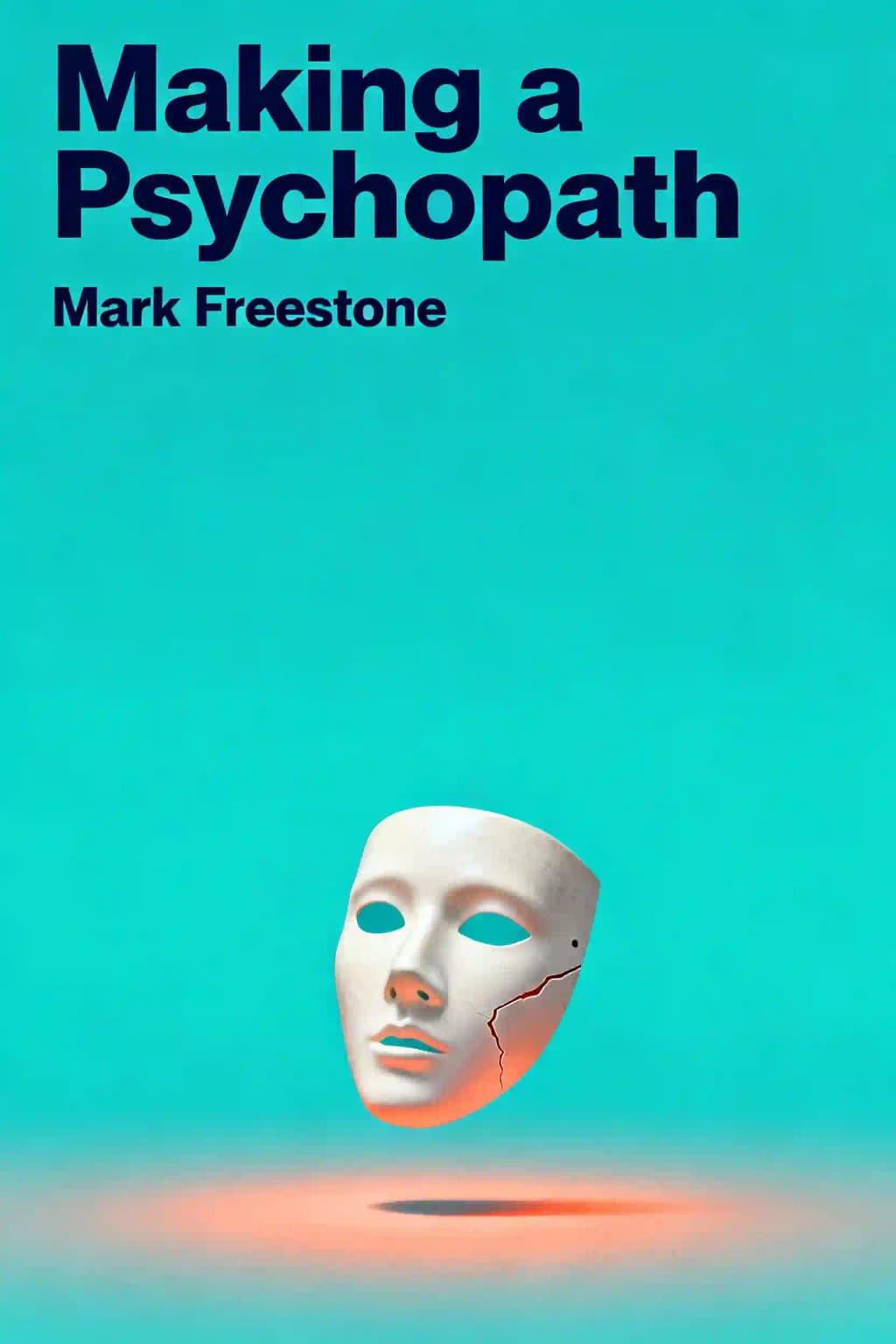
"We want your help with a character: it's a TV show about a female assassin. Who's also a psychopath." This was the call that inspired forensic mental health specialist Mark Freestone to revisit his experiences with real psychopaths when consulting on the hit show Killing Eve. The character Villanelle captivates viewers despite being a remorseless killer - much like real psychopaths who, despite lacking basic human empathy, often draw people in. Freestone's book has become a sensation among criminal psychology enthusiasts and true crime fans alike, with celebrities like Phoebe Waller-Bridge citing it as essential reading for understanding the complexity behind seemingly inexplicable criminal behavior. Beyond entertainment, the book has influenced policy discussions about treatment approaches for personality disorders in forensic settings. What makes someone capable of terrible acts without remorse? And more unsettlingly - could you spot a psychopath in your everyday life?
第 2 章
The Many Faces of Psychopathy
Despite decades of intensive research, psychopathy remains one of psychology's most misunderstood and complex conditions. The standard diagnostic tool, the Psychopathy Checklist-Revised (PCL-R), developed by Robert Hare, consists of 20 items scored 0-2 points each. With a diagnostic threshold of 30 points in America (though some countries use 25), there are over 15,000 different possible combinations of traits that could qualify someone as a psychopath. This staggering variability explains why psychopaths can appear so different from one another, ranging from the charismatic corporate executive to the impulsive street criminal.
Brain imaging studies have identified several regions that function differently in psychopaths, with two areas showing particularly significant variations. The prefrontal cortex, which governs decision-making based on social rules and future consequences, shows notably reduced activation - similar to the famous case of Phineas Gage, whose personality dramatically changed after a metal rod damaged this region in 1848. The second crucial area is the amygdala, which processes emotions like fear, sadness, and empathy. With reduced activity here, psychopaths struggle to recognize emotions in others' faces, creating the emotional "void" that prevents empathy. Recent studies using fMRI scans have shown up to 18% reduction in amygdala volume in diagnosed psychopaths.
Not everyone with these brain differences becomes criminal, however. A fascinating example comes from neuropsychologist James Fallon, who accidentally discovered his own brain scan showed the classic psychopathic pattern while reviewing research materials. Further investigation revealed he carried the "warrior" MAO-A gene associated with violence and had several murderers in his family tree. Yet Fallon built a successful academic career requiring patience and abstract thinking - traits not typically associated with psychopathy. His case demonstrates how biological predisposition doesn't guarantee antisocial behavior.
What separates criminal psychopaths from functioning ones? Environment plays a crucial role, particularly during early development. Every criminal psychopath I've encountered came from a background with some form of significant disruption - whether physical abuse, emotional neglect, or traumatic loss - that damaged vital parent-child attachment, leaving them without a secure identity foundation. Studies show that up to 94% of incarcerated psychopaths experienced childhood trauma or disruption. This combination of neurological differences and environmental trauma creates the perfect storm for developing criminal psychopathy. Recent research suggests that positive environmental factors like stable family relationships, education, and early intervention can help redirect potentially psychopathic traits toward more constructive outcomes.
The diversity in psychopathic presentation has led researchers to propose distinct subtypes: "primary" psychopaths who are born with neurological differences, and "secondary" psychopaths whose traits develop primarily through environmental factors. Understanding these variations is crucial for both treatment approaches and early intervention strategies.
第 3 章
The Master Manipulator: How Psychopaths Control Their Environment
Paul, with his PCL-R score of 38/40, ranked among the most psychopathic 1% of all prisoners. Unlike most inmates who find prison restrictive and isolating, Paul seemed perfectly at home in maximum security. Born into a criminal family and inducted early into the "con code" of never informing and showing contempt for authority, he carried himself with an ease that commanded respect. His good looks and shock of black hair earned him undue leeway despite his violent history as a hitman who had tortured debtors and killed rival dealers.
In prison, Paul created an elaborate web of influence. He initially charmed me with helpful suggestions and gregarious behavior. Only Josie, a diminutive forensic psychologist, seemed immune to his manipulation, consistently calling out his subtle threats. While Paul entertained with gossip about the prison's sexual politics, I gradually realized he was strategically spreading poison throughout the institution, keeping staff on edge and prisoners too concerned about their secrets to challenge him.
I became Paul's victim during my attempt to experience a full prison shift. After overwhelming me with information about which sessions to attend, he publicly shamed me for "breaking a promise" I had no recollection of making. His manipulation culminated in nearly tricking me into smuggling contraband into the prison.
Most shocking was discovering that Paul had manipulated Louise, an upstanding prison officer, into a sexual relationship. Starting with small contraband requests that escalated incrementally from magazines to cigarettes to cannabis, Paul had systematically compromised her professional integrity. Like Hannibal Lecter, Paul possessed the rare combination of intelligence and experience to extract his "quid pro quo" from every interaction, making him a genuine Machiavellian manipulator who consciously used others for personal gain.
第 4 章
The Empty Reflection: Narcissism and Deception
I first encountered Tony in a secure psychiatric hospital, mistaking him for a consultant psychiatrist due to his well-fitted suit and calm demeanor. Unlike many psychopaths, Tony's early life wasn't marked by obvious poverty or abuse, though his father was an archetypal conman who abandoned the family when Tony was eight.
In hospital, Tony's behavior was an extreme parody of narcissistic personality - infuriating yet oddly genial. Despite ridicule from other patients (including murderers and drug kingpins), he maintained his distinctive style of dress and projected indifference to criticism with withering put-downs. Though initially charming, his hollow compliments quickly wore thin, and his apparent listening was merely waiting for others to stop speaking so he could continue his own agenda.
Tony had bizarre habits like describing implausible situations and claiming to have written a 13-volume history of British kings. I avoided challenging these obvious lies, knowing he would simply amend them to maintain the fiction. Unlike most psychopaths, Tony avoided long-term relationships, preferring casual encounters with male sex workers. His index offense involved brutally assaulting a sex worker after offering "light BDSM," then leaving a check that later bounced.
I think of Tony as a "cellophane psychopath" - all primary psychopathy with a tissue-thin, reflective mask that could be changed depending on the situation. His case demonstrates how psychopaths can appear superficially normal or even impressive while concealing profound emotional emptiness. The most dangerous aspect of Tony's presentation was how quickly he could shift personas when challenged, making him fundamentally untrustworthy in any relationship.
第 5 章
The Pathological Liar: When Truth Becomes Fiction
In 2014, I heard a news report about Jason Marshall, a British man convicted in Italy for murder, and recognized him as someone who had absconded from the hospital where I worked. Born in 1989 in impoverished East London to heroin-addicted parents who were imprisoned for drug crimes when he was ten, Marshall's early life was marked by disruption and abandonment.
As a teenager, he reportedly worked as a male escort and began impersonating authority figures. His criminal career began in 2006 when he was arrested for impersonating transport police with a Yorkshire terrier as a "sniffer dog" and convicted of robbery and possessing an air rifle. After self-harming in prison, he was transferred to a psychiatric hospital in 2008 but absconded during unescorted leave and returned to prison.
After release in 2010, Marshall struggled with substance abuse. In February 2013, he attacked Umberto Gismondi in Rome after arranging a meeting through a dating app. Police connected this to the murder of Vincenzo Iale, who had been strangled, stabbed, and robbed. During his Italian trial, Marshall claimed to be "the Archangel Gabriel" and received a 16-year sentence.
In 2017, evidence emerged that Marshall had also murdered Peter Fasoli in London before fleeing to Italy. Fasoli's nephew discovered video footage showing Marshall posing as an undercover policeman before tying up, killing, and robbing Fasoli, then setting fire to his apartment. Marshall received a 39-year UK sentence for this murder.
Marshall's pathological lying reflects a psychopathic trait where deception becomes so seamless that the liar forgets the actual truth. Unlike those with autism who struggle with consistent lying, psychopaths' underactive amygdalas make them skilled at deception. What's most disturbing is how Marshall exploited social trust and showed complete contempt for his victims, psychiatrists, police, and courts, demonstrating a fundamental alienation from social accountability that made him particularly dangerous.
第 6 章
The Dependent Personality: When Psychopathy Meets Helplessness
I first met Arthur in prison shortly after starting my job there, though I barely recall our early interactions. He embodied "non-remarkability" - so forgettable that when writing this chapter, I had to search my notes to find his real name. Arthur was physically unremarkable too: short, stick-thin, and a shade of "crepuscular grey" that seemed impossible for a human. Unlike Paul or Tony whom I could instantly recognize, Arthur was "barely there" - a quality central to understanding his dangerous nature.
The Psychopathy Checklist includes the value-laden trait "Parasitic Lifestyle," defined as "intentional, manipulative, selfish, and exploitative financial dependence on others." Arthur exemplified this trait, having grown up with drug-using parents in a troubled relationship. When Arthur was ten, his father left permanently, followed by his siblings who moved out to create their own lives. This left Arthur alone with his mother in an arrangement he found "cosy" - too cosy, as after leaving school at 16, he showed no interest beyond watching TV while his mother cooked and cleaned for him.
When Arthur was 17, his mother died unexpectedly from a brain aneurysm, leaving him completely on his own with no job, few qualifications, and little interest in anything. His brother temporarily took him in, but Arthur couldn't understand his brother's frustration when he lost his job for chronic lateness, failing to grasp that rent was a continuous expense. As tensions escalated, Arthur was eventually forced to leave at age 18, becoming homeless and accumulating charges for petty crimes.
After an assault charge, Arthur's brother bailed him out and reluctantly brought him home again. Now drinking heavily and using drugs, Arthur became unpredictable and quick to anger. When his sister-in-law insisted he leave, Arthur refused despite their offer to help him find council housing. A physical fight erupted, and Arthur grabbed a kitchen knife, accidentally stabbing his brother in the thigh and nearly severing his femoral artery.
Surprisingly, prison seemed to be the best environment for Arthur. He flourished with structure, enjoyed repetitive activities, and preferred staying out of everyone's way. During a risk assessment meeting about post-release plans, Arthur became terrified and enraged at the mere suggestion of release. Arthur was completely dependent on the prison system, just as he had been on his brother and mother before. His case demonstrates how psychopathy can manifest not through calculated manipulation but through a complete inability to function independently, leading to violence when that dependency is threatened.
第 7 章
When Trauma Creates Monsters: The Borderline Psychopath
On my first day at a new assessment ward for men with severe personality disorder, I met Danny - a frail-looking young man barely 18 with the sallow complexion of someone who'd spent considerable time in institutional care. The modern matron Jack playfully feigned a punch at Danny, who collapsed in giggles. Later that day, I learned Danny had been left briefly unsupervised in a medical room where he inserted a glass catheter into his penis and broke it in half - a horrifying act of self-harm that broke my heart.
While every secure hospital patient has typically experienced trauma, neglect, and criminality before committing serious offenses, certain patients evoke particular despair. These "heart-sink patients" combine both innocence and hope - young people whose lives and freedom have been lost to moments of insanity, yet who continually sabotage their chances at rehabilitation.
Danny entered the system young after his abusive father abandoned the family and his struggling mother couldn't care for him. After a relatively stable foster placement ended when he was trapped in a building fire, Danny bounced between care homes and foster placements, eventually joining gangs for stability. Without consistent parental figures, Danny never developed a stable identity. His confusion and rage turned inward - he self-harmed extensively, leaving intimidating scars that pushed others away. His identity confusion, emotional dysregulation, and self-directed anger formed the classic profile of borderline personality disorder, though his callousness toward others' pain also scored high on psychopathy measures.
When a local vicar took interest in Danny, offering stability through church involvement, Danny briefly found purpose. But after perceiving rejection during a conversation with the vicar, Danny stabbed him in the back with a knife and fled. Sentenced to ten years, Danny was transferred to a secure hospital when prison staff couldn't manage his extreme self-harm - he constantly attempted to emasculate himself and maintained perpetual wounds.
Danny's case illustrates the complex overlap between borderline personality disorder and psychopathy - where emotional dysregulation meets callousness. These patients challenge our understanding of psychopathy as purely calculating and unemotional, showing how trauma can create a volatile mix of self-hatred and disregard for others that manifests in unpredictable, often self-destructive violence.
第 8 章
The Female Psychopath: Breaking Gender Stereotypes
Female psychopaths are exceedingly rare - approximately one female psychopath for every fifty males. Using standard prevalence rates, this suggests only about 200 female psychopaths exist in the entire UK. Yet they're overrepresented in media, from Aileen Wuornos in "Monster" to Villanelle in "Killing Eve."
Fiction typically portrays female psychopaths in two ways: either maintaining the emotional traits of male psychopaths while replacing antisocial behaviors with seduction and manipulation, or simply writing them as brutal and remorseless as their male counterparts. The latter approach challenges our societal expectations of women, which is precisely why female psychopaths often seem more terrifying than men.
Angela Simpson's case exemplifies a real female psychopath. After learning that Terry Neely, a wheelchair user who had taken an interest in her, had allegedly informed on others while in prison, Simpson lured him to her apartment with promises of drugs and sex. Over two horrifying days, she tortured him - beating him unconscious with a tire iron, stabbing him over 50 times, extracting his teeth with pliers, and driving a nail into his skull. She eventually strangled him, dismembered his body, and disposed of the remains in a garbage can before setting it on fire.
Born in 1975 in Phoenix, Arizona, Simpson had a chaotic childhood marked by physical and sexual abuse, resulting in repeated foster care placements. She reported being hospitalized for psychiatric issues from age ten and developed a drug habit in early adulthood. Despite having four children, they were placed with their grandmother due to Simpson's addiction issues.
Simpson's interviews reveal classic psychopathic traits. She proudly confessed to killing Neely to police but pled not guilty in court. In a television interview, she displayed ferocious pseudo-logic, equating her murder with capital punishment. She showed no remorse, maintained intense eye contact, and demonstrated callousness toward her victim. When asked about her children, she simply stated, "I don't want to talk about my children."
Unlike fictional female psychopaths who rely on manipulation and seduction, Simpson presents like a male psychopath - aggressive and without conscience. When the interviewer noted women rarely commit such heinous crimes, she smirked and replied "equal opportunities, definitely," almost advocating for more female serial killers. This challenges stereotypes about female criminals being weak, contrite, or merely manipulative rather than violent enforcers.
第 9 章
The Road to Redemption: Can Psychopaths Change?
Unlike previous cases, I met Eddie not in a prison or hospital, but in a normal London home with small dogs and espresso. Now in his fifties, Eddie discussed his violent past and remarkable transformation. Despite his intimidating presence - tall, well-built with enormous hands - he was polite and generous, though direct in speech and movement. His story illustrates how someone becomes labeled a psychopath and, more importantly, how they can change.
Eddie was born near London's Docklands in the 1960s. His biological father died when he was very young, and his mother remarried. Initially, life seemed normal until Eddie was ten, when his mother left his stepfather for his womanizing and found a new boyfriend who became tyrannical and abusive. This man enforced harsh discipline and physically abused the family. Once, Eddie witnessed him dragging his mother into a bedroom by her hair and grabbed a knife to intervene, only to find them having sex - which adult Eddie now recognizes was likely rape.
Eddie's troubles escalated when he attacked a teacher whose finger-wagging reminded him of his abusive stepfather. Though the teacher wasn't seriously hurt, Eddie was arrested and sentenced to three months in detention. Upon release, Eddie rejected his mother's kindness and began a relationship with an older woman named Mary. Their relationship became increasingly toxic - Eddie was controlling and abusive while expecting fidelity from her despite his own infidelity.
Eddie's behavior reflected "identification with the aggressor" - despite hating his stepfather, he unconsciously adopted his violent, controlling behaviors. This distorted thinking led him to see women as "weak victims" deserving of mistreatment. After a series of failed relationships, crimes, and prison sentences, Eddie's life reached its nadir when he raped a woman who was a prison officer, expressing hatred toward authority figures. He received a nine-year sentence.
At 37, after two decades of imprisonment, Eddie finally sought help. Walking around London feeling "murderous," he noticed people recoiling from him in fear. Recognizing he'd become everything he hated, he approached a mental health clinic and was referred to a forensic psychotherapist. Weekly sessions transformed Eddie's life. He avoided crime and violence, developed better interpersonal skills, and maintained his longest relationship.
After a relapse following his mother's death and another prison sentence for common assault, Eddie wrote to his therapist from prison. She arranged his transfer to a secure hospital with a therapeutic community model. There, Eddie was forced to confront his violent behavior while serving his sentence. The approach worked because he recognized his own pain and received both empathy and straight talk from the staff.
Nearly twenty years later, Eddie has completed his sentence, been discharged from the secure unit, and concluded his therapy. He's maintained a stable relationship for nine years and describes his life as "happy and normal." When asked about psychopathy, Eddie explained: "I still get those thoughts, but I push them away. I don't know if you can develop empathy, but I believe I have."
Despite his official psychopathy diagnosis and 16 years in prison for serious crimes including manslaughter and rape, Eddie's psychopathy was only "surface-deep" - a defense mechanism developed in response to childhood brutality. His willingness to acknowledge shame for his crimes and his ability to empathize demonstrates genuine change, providing hope that even those with extensive criminal histories can transform their lives with appropriate intervention.
第 10 章
Beyond the Label: Rethinking Our Approach to Psychopathy
The media consistently misrepresents psychopathy in ways that harm public understanding. Publishing the 20-item psychopathy checklist without proper context is misleading, as proper assessment requires extensive clinical training and accreditation. Even expert interviews can be problematic when different theoretical perspectives - psychoanalytic, neurocognitive, genetic - are presented as equivalent despite fundamental disagreements about psychopathy's origins and treatment.
Another significant issue is researchers using semi-validated self-report questionnaires with college students to make broad claims about psychopathy. Universities issue press releases containing the word "psychopath," which media outlets eagerly amplify despite questionable methodology. This approach falsely equates normal traits with clinical conditions, like confusing ordinary tiredness with chronic fatigue syndrome.
While geneticists have found that children with callous and unemotional traits often share genetic profiles that predict adult psychopathy, criminal psychopaths never emerge from stable, safe "good enough" homes. Genetics matter, but environment determines outcomes. James Fallon exemplifies this - despite having "psychopathic" genes and brain structure, he functions well in society with only minor social quirks.
The English-speaking world's biomedical approach to psychopathy treatment contrasts sharply with the Netherlands' more pragmatic model. At the Van der Hoeven Kliniek in Utrecht, diagnosed offenders work real jobs for actual wages within the facility. Patients run the cafe, reception desk, and manufacturing operations. Most remarkably, patients themselves help manage behavioral issues - during my visit, when a "violent psychopath" became aggressive, fellow patients calmly escorted him to a de-escalation room.
Ironically, this therapeutic community model originated at Britain's Henderson Hospital in 1947 but was abandoned during NHS reorganization in 2008. We invented this effective approach but have largely forgotten it.
Psychopaths need and deserve help rather than permanent incarceration. Early intervention can prevent psychopathy in traumatized children, and even adults like Eddie can transform through proper care. Because psychopathy has complex genetic, environmental and neuropsychological causes, treatment must be equally multifaceted rather than a single "magic pill."
My recent research suggests psychopathy isn't even among the top ten factors predicting violence. The diagnosis is simultaneously complex and reductive - describing an absence of empathy while being applied to vastly different individuals from self-hating young men like Danny to manipulators like Tony to remorseless killers like Angela. Psychopathy's origins lie in profoundly wrong early life experiences - inadequate parenting, abuse, or insufficient care systems. While interventions can help troubled youth, the challenge remains reaching those who don't recognize they need help. Criminal motivations are ultimately unique and complex - making a psychopath isn't as simple as a diagnostic test suggests.