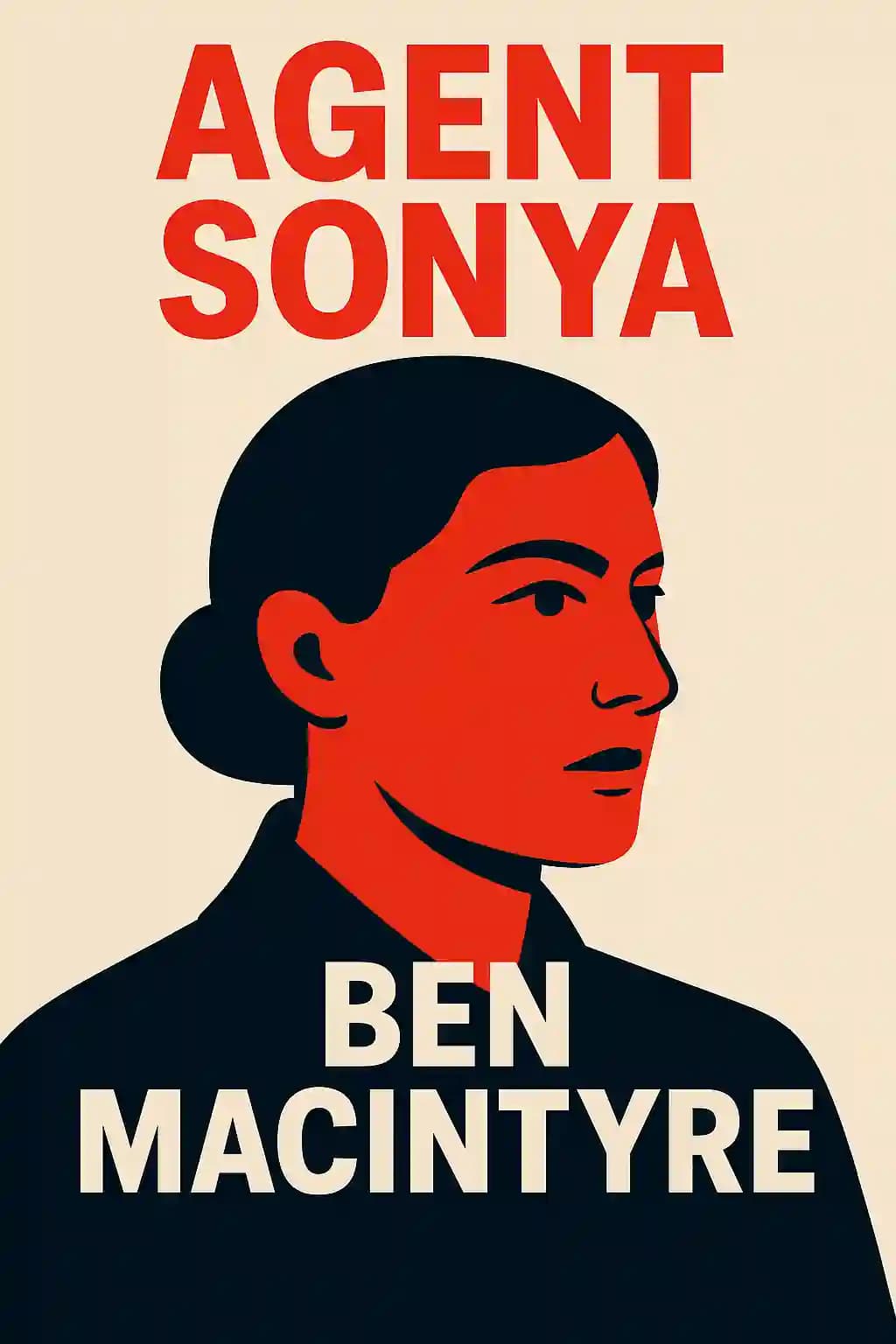
Agent Sonya
Lover, Mother, Soldier, Spy
《Agent Sonya》概述
Behind the facade of a British housewife, Ursula Kuczynski - codename "Sonya" - became Stalin's most formidable spy, stealing nuclear secrets while MI5's "old boys' club" overlooked her. Macintyre's bestseller reveals how motherhood became the perfect espionage cover.
《Agent Sonya》核心主题
- soviet atomic espionage
- female secret agents
- clandestine radio operations
- communist revolutionary movements
- double life domesticity
《Agent Sonya》经典语录
"If young people could be exploited," she declared, "they could also fight exploitation."
"I was no longer afraid," she later wrote.
"Underground work cut deeply into my personal life," she wrote.
《Agent Sonya》主要人物
- Ursula KuczynskiColonel in the Red Army and Soviet master spy
- Rudolf HamburgerArchitect and Ursula's first husband
- Agnes SmedleyAmerican writer and Soviet intelligence operative
- Richard SorgeSenior Soviet spy and Ursula's mentor in Shanghai
- Olga "Ollo" MuthUrsula's devoted nanny and emotional anchor
关于作者
《Agent Sonya》作者介绍
Ben Macintyre, bestselling author of Agent Sonya: Lover, Mother, Soldier, Spy, is a leading authority on historical espionage and investigative non-fiction. A columnist for The Times (UK) since 1996 and former bureau chief in New York, Paris, and Washington, Macintyre brings rigorous journalistic precision to his exploration of 20th-century spycraft.
His acclaimed works, including The Spy and the Traitor (shortlisted for the Baillie Gifford Prize) and Operation Mincemeat, often reveal untold stories of wartime deception through meticulously researched narratives. Educated at Cambridge University, Macintyre has adapted four of his books into BBC documentary series, including Double Agent: The Eddie Chapman Story.
Agent Sonya—his profile of Soviet spy Ursula Kuczynski—exemplifies his focus on complex moral dilemmas in intelligence operations, blending geopolitical drama with intimate character studies. The book became a BBC Radio 4 "Book of the Week" and has been translated into 28 languages. His latest work, The Siege (2024), about the 1980 Iranian Embassy crisis, is being adapted for television by the team behind Slow Horses.
下载《Agent Sonya》摘要
免费获取《Agent Sonya》摘要的 PDF 或 EPUB 版本。可打印或随时离线阅读。
关于本书的常见问题
Agent Sonya chronicles the life of Ursula Kuczynski, a Soviet spy codenamed "Sonya," who played a pivotal role in Cold War espionage. The book details her clandestine operations across China, Europe, and England, including her involvement in transmitting atomic secrets via Klaus Fuchs. Macintyre highlights her duality as a mother, communist ideologue, and master spy, using diaries and unpublished sources to expose her impact on 20th-century geopolitics.
History enthusiasts, Cold War scholars, and fans of spy thrillers will find this book compelling. It appeals to readers interested in female-led narratives, atomic age espionage, or profiles of ideological conviction. Macintyre’s gripping storytelling also makes it ideal for casual readers seeking high-stakes nonfiction.
Yes. Critics praise it as a "masterpiece" and "absorbing study" of espionage, blending meticulous research with narrative flair. Kirkus Reviews highlights Sonya’s modern sensibilities and the adrenaline-fueled risks she took, offering insights into Stalin-era politics and spycraft mechanics.
Sonya’s coordination with physicist Klaus Fuchs enabled the USSR to develop nuclear weapons, altering Cold War power dynamics. Her radio operation skills, language fluency, and recruitment of informants provided critical intelligence to Moscow, accelerating the arms race and deepening East-West tensions.
Driven by a mix of communist idealism, anti-fascist fervor, and personal ambition, Sonya embraced espionage as a means to combat injustice. Macintyre argues her motivations blended ideological loyalty with a thirst for adventure, rebellion against her bourgeois upbringing, and belief in revolutionary socialism.
Her identity as a mother and homemaker allowed her to evade suspicion in male-dominated spy networks. Authorities underestimated women in espionage, enabling her to operate across Nazi Germany, Maoist China, and postwar Britain undetected for decades.
Like Agent Zigzag and Operation Mincemeat, it combines archival rigor with thriller pacing. However, Agent Sonya uniquely centers on a female protagonist and explores themes of motherhood, gender roles, and ideological disillusionment alongside spycraft.
Some reviewers question Macintyre’s sympathetic portrayal of a Soviet operative, given her role in fueling nuclear proliferation. Others note the book minimizes critiques of communism’s atrocities while emphasizing Sonya’s personal resilience.
She frequently relocated, adopted new identities, and leveraged her nonthreatening persona as a wife and mother. Macintyre notes her ability to build local networks and maintain compartmentalized relationships shielded her from exposure.
The book frames Sonya’s communism as a response to fascism’s rise and capitalist inequality. However, Macintyre suggests her loyalty waned after learning of Stalin’s purges, though she remained committed to socialist ideals.
Through personal letters and family interviews, Macintyre reveals her struggles balancing motherhood with spy work, her romantic entanglements, and moments of self-doubt. These details contrast her mythic status as a Soviet hero.
Key events include the 1924 Berlin May Day riots, Mao’s Long March, the Spanish Civil War, and the Manhattan Project’s aftermath. The book also examines MI5’s failure to uncover Sonya’s UK operations during WWII.