第 1 章
The AI Revolution: From Dreams to Reality
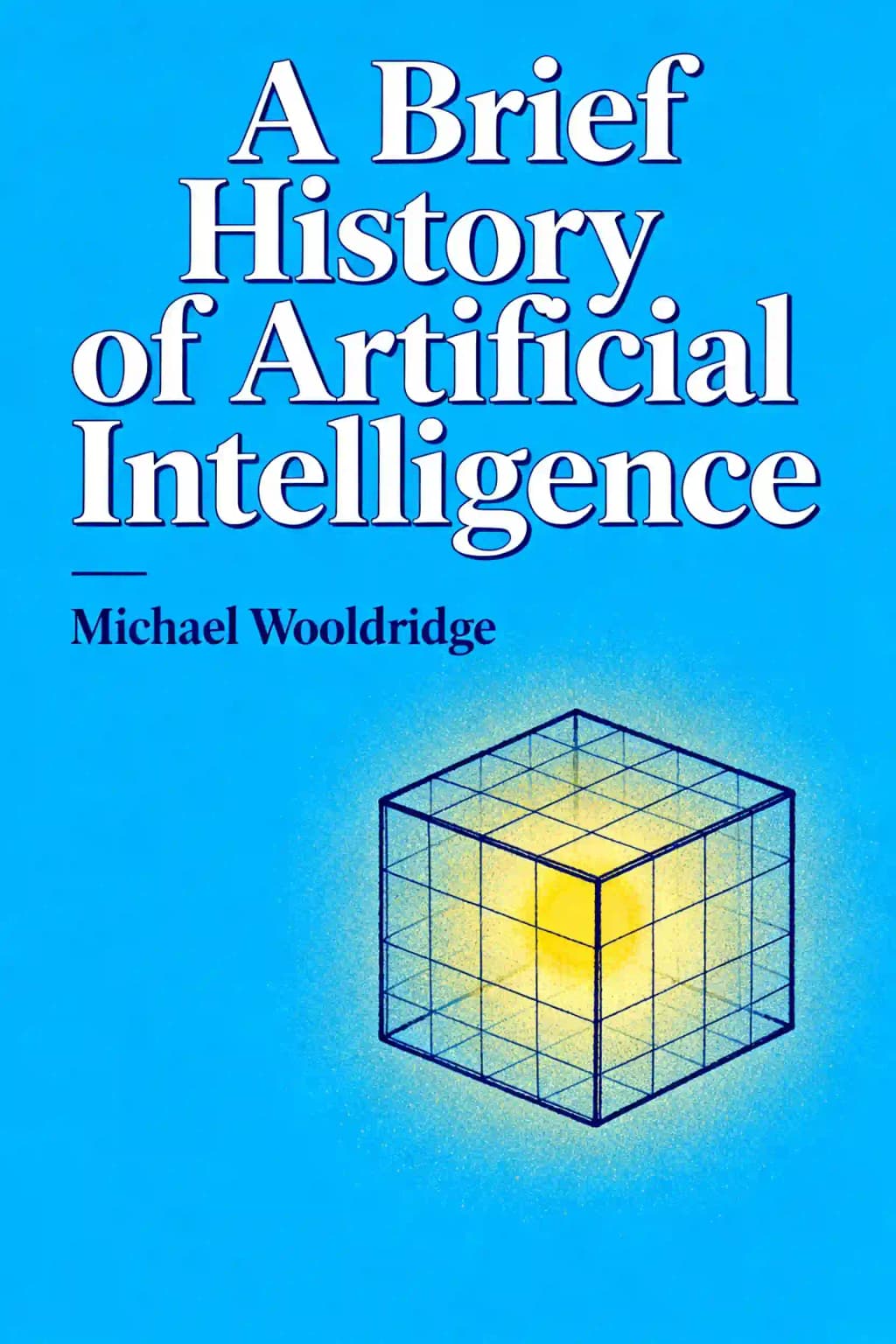
Imagine a world where machines think, learn, and evolve alongside us. This isn't science fiction anymore - it's the world we're rapidly entering. Michael Wooldridge's "A Brief History of Artificial Intelligence" has become a cultural touchstone in tech circles, praised by figures from Elon Musk to Bill Gates for its accessible yet profound exploration of AI's journey. What makes this book particularly fascinating is Wooldridge's candid admission that AI's story is largely one of failure - a series of ambitious dreams, disappointing setbacks, and unexpected breakthroughs. The book has gained renewed relevance as ChatGPT and other AI systems dominate headlines, offering crucial historical context for today's AI revolution. As we stand at this technological crossroads, understanding where AI came from might be our best guide to where it's taking us.
第 2 章
The Birth of Electronic Brains: Turing's Vision
The story of artificial intelligence begins not with robots or complex algorithms, but with a young mathematician at Cambridge in 1935. Alan Turing, whose brilliance would later be overshadowed by tragic persecution for his homosexuality, tackled an abstract mathematical question called the Entscheidungsproblem: could all mathematical problems be solved algorithmically?
Turing's approach was revolutionary. Rather than using conventional mathematical tools, he invented an abstract device - the Turing machine - that could follow step-by-step instructions to perform calculations. This theoretical machine could read, write, and manipulate symbols on a tape according to a set of rules. More remarkably, Turing conceived of a universal Turing machine capable of simulating any other Turing machine, essentially creating the theoretical foundation for the modern computer.
Through this work, Turing proved that certain mathematical problems couldn't be solved algorithmically - a profound insight that established fundamental limitations on what computers could achieve. Yet simultaneously, he laid the groundwork for the computing revolution by demonstrating how a single machine could be programmed to solve any computable problem.
After World War II, when the first computers emerged, newspapers dubbed them "electronic brains," creating immediate misconceptions about their capabilities. These machines weren't intelligent in any meaningful sense - they simply executed instructions with remarkable speed and accuracy. They followed algorithms: precise recipes for solving problems, expressed in programming languages that made them accessible to human programmers.
This distinction between computation and intelligence reveals why AI presents such profound challenges. Some problems require not just faster computation but fundamentally different approaches. Chess, for instance, involves searching through possible moves - a computational task that can be optimized. But recognizing a face? There's no simple algorithm for that. AI must either find more efficient ways to solve computationally challenging problems or develop entirely new approaches for problems that traditional computing can't address.
第 3 章
The Turing Test: Defining Machine Intelligence
How do we know if a machine is truly intelligent? Alan Turing, confronting public skepticism about machine intelligence, proposed an elegant solution in his 1950 paper "Computing Machinery and Intelligence." Rather than getting bogged down in philosophical debates about consciousness or understanding, Turing suggested a practical test: if a machine's responses in a text-based conversation are indistinguishable from a human's, we should consider it intelligent.
This approach was brilliantly pragmatic. By focusing solely on observable behavior rather than internal processes, Turing sidestepped thorny questions about consciousness. The test assumes that if something responds like an intelligent being, we should treat it as one - regardless of how it works internally.
Unfortunately, the apparent simplicity of the Turing Test led to superficial approaches. Joseph Weizenbaum's ELIZA program from the 1960s demonstrated this perfectly. ELIZA mimicked a psychotherapist by simply reflecting users' statements back as questions and responding to keywords. Despite its extreme simplicity, many users attributed understanding to the program that simply wasn't there. The annual Loebner Prize competition, which offers rewards for programs that can fool judges into thinking they're human, has similarly been dominated by chatbots that rely on tricks rather than genuine comprehension.
This raises a fundamental question: should we aim for strong AI (machines with genuine understanding) or weak AI (machines that merely simulate understanding)? Strong AI suggests machines could possess consciousness and true comprehension, while weak AI focuses on creating systems that behave intelligently without making claims about their inner experience.
The limitations of the Turing Test have prompted alternatives like Winograd schemas, which test a system's ability to resolve ambiguities that require genuine understanding of context. For example, in the sentence "The trophy wouldn't fit in the suitcase because it was too big," what does "it" refer to? Humans easily understand that "it" means the trophy, not the suitcase, but such nuances challenge current AI systems.
What becomes clear is that passing the Turing Test doesn't necessarily indicate intelligence - it might just reflect clever programming designed to create an illusion of understanding.
第 4 章
Modeling Intelligence: Mind vs. Brain Approaches
When it comes to creating intelligent machines, two fundamentally different philosophies have emerged: should we model the mind or the brain? This distinction has shaped AI's development from its earliest days.
Symbolic AI, dominant from the 1950s through the 1980s, took the "mind" approach. It represented knowledge using symbols and rules, mirroring how we might describe human reasoning processes. For example, a symbolic AI system might represent the concept "bird" with a symbol, then connect it to rules like "birds have wings" and "birds can fly." This approach feels intuitive because it resembles how we articulate our own thinking.
Neural networks, by contrast, take inspiration from the brain's structure. They consist of interconnected nodes (loosely modeled after neurons) that strengthen or weaken connections based on experience - much like the brain forms and reinforces neural pathways. Rather than explicitly programming rules, neural networks learn patterns from data.
Each approach has distinct advantages. Symbolic AI produces systems whose reasoning is transparent - you can follow the logical steps to understand how they reached conclusions. Neural networks excel at pattern recognition tasks like image classification but operate as "black boxes" where even their creators can't fully explain specific decisions.
The tension between these approaches has defined much of AI's history. Symbolic AI dominated early research because it seemed to capture the essence of human thought and produced results that researchers could understand and debug. Neural networks, though conceptually appealing, initially struggled with practical limitations.
Today, we're witnessing the remarkable success of neural network approaches, particularly deep learning. Yet the fundamental question remains unresolved: is intelligence better understood as rule-based symbolic manipulation or as emergent patterns in neural structures? Perhaps the most sophisticated AI systems of the future will need to incorporate aspects of both approaches.
第 5 章
The Golden Age: AI's First Flourishing
Following Turing's foundational work, AI experienced its first golden age from 1956 to 1974 - a period of boundless optimism and remarkable innovation. The field officially began at a summer workshop at Dartmouth College in 1955, where John McCarthy coined the term "artificial intelligence." Though the workshop didn't achieve its ambitious goals, it established AI as a distinct discipline and fostered collaboration among pioneering researchers at institutions like MIT and Stanford.
Faced with the daunting challenge of creating general intelligence, researchers adopted a divide-and-conquer strategy. They broke intelligence into components like perception, learning, problem-solving, and reasoning, tackling each separately before planning to integrate them. This approach remains fundamental to AI research today.
Two landmark systems from this era demonstrated AI's potential. SHRDLU, developed by Terry Winograd, operated in a simplified "blocks world" where it could understand natural language commands to manipulate virtual objects. Users could have sophisticated conversations with SHRDLU about arranging blocks, and the system demonstrated impressive reasoning capabilities within its limited domain.
SHAKEY, developed at Stanford Research Institute, was the first mobile robot that could perceive and reason about its environment. Despite significant limitations - it moved painfully slowly and required carefully controlled conditions - SHAKEY represented a remarkable achievement in integrating perception, planning, and action.
During this period, researchers developed fundamental techniques that remain vital today, particularly in the area of search. Search algorithms systematically explore possible actions to find solutions to problems, forming the backbone of many AI systems. The simple idea of representing problems as search trees - branching structures of possible actions and outcomes - proved remarkably powerful.
However, AI soon encountered a fundamental obstacle: computational complexity. Many important problems proved to be "NP-complete," meaning they required exponentially increasing computational resources as problem size grew. This "complexity barrier" meant that even with clever algorithms, many problems remained practically unsolvable for all but the smallest instances.
As these limitations became apparent, critics like Hubert Dreyfus compared AI to alchemy - a pseudo-scientific pursuit with grandiose claims but little substance. The 1972 Lighthill Report in the UK delivered a devastating critique of AI's unfulfilled promises, leading to funding cuts and marking the beginning of the first "AI Winter." The field that had begun with such optimism now found itself stigmatized as misguided pseudoscience.
第 6 章
Knowledge-Based Systems: AI's Commercial Breakthrough
After the first AI Winter, researchers regrouped around a new approach: knowledge-based systems. Rather than pursuing general intelligence through universal methods, they focused on capturing specific human expertise in narrow domains. This shift from generality to specificity proved crucial for AI's revival.
Knowledge-based systems, or expert systems, encoded human knowledge as explicit rules. For example, a simple animal classification system might include rules like "IF animal gives milk THEN animal is mammal." By chaining such rules together, these systems could make sophisticated inferences within their domains of expertise.
MYCIN, developed at Stanford in the 1970s, exemplified this approach. Designed to diagnose blood infections, MYCIN incorporated hundreds of rules derived from medical experts. When evaluated, it outperformed junior doctors and matched specialists in accuracy. Crucially, MYCIN could explain its reasoning, building trust by showing which rules led to its conclusions.
The commercial potential of expert systems soon became apparent. Digital Equipment Corporation's R1/XCON system, which configured computer systems, saved the company millions by reducing errors. By the early 1980s, companies were racing to develop expert systems, and a new profession of "knowledge engineer" emerged to translate human expertise into rules.
This period also saw efforts to create more sophisticated knowledge representations using logic. John McCarthy envisioned AI systems that could represent beliefs and actions as formal logical statements, reasoning about the world with mathematical precision. The ultimate expression of this approach was Douglas Lenat's Cyc project, an ambitious attempt to encode all common-sense knowledge in a single system.
However, cracks began to appear in the knowledge-based approach. Seemingly simple reasoning tasks proved surprisingly difficult to encode in rules. The "knowledge elicitation problem" - the challenge of extracting expertise from humans and translating it into formal rules - became a major bottleneck. Experts often couldn't articulate how they made decisions, and some were reluctant to share knowledge that might make them replaceable.
By the late 1980s, the limitations of knowledge-based systems had become clear. The promise of capturing human expertise in rules had proven more difficult than anticipated, and another period of disillusionment loomed for AI.
第 7 章
The Behavioral Revolution: Intelligence Through Interaction
As the 1980s drew to a close, AI faced a crisis of confidence. Traditional approaches based on logic and knowledge representation had failed to deliver on their promises. Into this environment stepped Rodney Brooks, a roboticist with a radical critique of conventional AI.
Brooks argued that traditional AI had been built on a fundamental misconception. The field had focused on abstract reasoning and representation, creating systems that manipulated symbols in artificial environments like the "blocks world." But real intelligence, Brooks contended, emerged from interaction with the physical world, not from abstract manipulation of symbols.
His revolutionary approach, known as behavioral AI, emphasized building robots that could survive and function in the real world rather than reason about simplified simulations. Brooks famously declared, "The world is its own best model" - meaning that instead of maintaining complex internal representations, intelligent systems should directly sense and react to their environment.
Brooks developed the "subsumption architecture," which organized robot behavior into layers of simple competencies. Lower layers handled basic functions like avoiding obstacles, while higher layers built upon these to achieve more complex goals. This approach produced surprisingly capable robots using minimal computation.
The most commercially successful example of Brooks's approach is the Roomba vacuum cleaner, which navigates homes effectively without needing maps or complex planning. It simply follows a set of behavioral rules that, together, produce seemingly intelligent behavior.
This behavioral revolution led to a broader reconceptualization of AI around the concept of agents - autonomous entities that perceive their environment through sensors and act upon it through effectors. The agent paradigm integrated insights from both traditional and behavioral AI, recognizing that intelligent systems needed both reactive capabilities and the ability to reason about goals.
HOMER, a simulated robot submarine developed in the 1990s, exemplified this integrated approach. It could understand commands in simplified English, reason about ownership and permissions, and adapt its plans when circumstances changed. HOMER demonstrated how reactive behaviors could be combined with planning and reasoning to create more complete agents.
The agent concept also inspired research on software assistants - programs that could observe user behavior, learn preferences, and automate routine tasks. These early efforts laid the groundwork for today's virtual assistants like Siri and Alexa.
By the late 1990s, AI had coalesced around a new paradigm: creating rational agents that make optimal decisions to achieve their goals. Drawing on decision theory and economics, researchers developed mathematical frameworks for decision-making under uncertainty, using Bayesian inference to update beliefs based on evidence. This approach provided AI with a solid theoretical foundation and practical techniques for handling the messy, uncertain real world.
第 8 章
The Deep Learning Revolution: Neural Networks Return
January 2014 marked a turning point for AI when Google acquired a little-known British startup called DeepMind for $650 million. This astronomical sum for a company with no commercial products signaled something momentous was happening in AI. That something was deep learning - a resurgence of neural network approaches that would transform the field.
Neural networks have a long and cyclical history in AI. Inspired by brain structure, the first computational models of neurons appeared in the 1940s with Warren McCulloch and Walter Pitts's work. Frank Rosenblatt's "perceptron" in the late 1950s showed how simple neural networks could learn from examples. However, Marvin Minsky and Seymour Papert's 1969 book "Perceptrons" highlighted fundamental limitations of single-layer networks, dampening enthusiasm.
Neural networks experienced a revival in the 1980s with the development of backpropagation, an algorithm for training multi-layer networks. The "Parallel Distributed Processing" movement championed these "connectionist" approaches, but by the mid-1990s, enthusiasm again waned as other machine learning methods gained prominence.
The current deep learning revolution began around 2006 when Geoffrey Hinton and others developed techniques to train networks with many layers. These "deep" networks could learn hierarchical representations of data - recognizing edges and textures in early layers, then combining these into increasingly complex features in deeper layers. The availability of massive datasets like ImageNet, which contained millions of labeled images, provided the training material these data-hungry systems needed.
DeepMind showcased the power of these approaches with systems that learned to play Atari games using only pixels from the screen and the game score as input. Their AlphaGo system later shocked the world by defeating world champion Lee Sedol at Go, a game of such complexity that experts had predicted AI wouldn't master it for decades.
Even more remarkably, DeepMind's follow-up systems, AlphaGo Zero and AlphaZero, learned to play games without human examples, developing strategies that surprised human experts. AlphaZero mastered chess in just four hours, developing a playing style described as "alien" by grandmasters.
Despite these impressive achievements, deep learning systems remain specialized. They excel at specific tasks but lack the general understanding and flexibility of human intelligence. Image captioning systems, for example, can generate plausible descriptions but often miss nuances or make absurd errors that reveal their lack of true comprehension.
The deep learning revolution has also created a schism within the AI community. Many machine learning researchers now distance themselves from traditional AI, focusing on practical applications rather than the grand challenges of human-like intelligence. This divide reflects different priorities and methodological approaches, though both communities contribute to advancing intelligent systems.
第 9 章
AI in the Real World: Applications and Impacts
Deep learning has catalyzed an explosion of practical AI applications across virtually every sector of society. Much like the World Wide Web transformed information access in the 1990s, AI is now reshaping how we interact with technology and each other.
Healthcare represents one of the most promising frontiers for AI application. Medical imaging analysis, where deep learning systems can detect patterns in X-rays or MRIs that might escape even experienced radiologists, has shown particular promise. Wearable devices combined with AI algorithms can monitor vital signs and detect anomalies before they become critical. Drug discovery, traditionally a lengthy and expensive process, is being accelerated by AI systems that can predict which compounds might be effective against specific diseases.
Autonomous vehicles exemplify both the potential and challenges of deploying AI in safety-critical applications. Companies like Tesla offer driver assistance features that represent steps toward full autonomy, but achieving truly driverless cars has proven more difficult than early optimists predicted. The complexity of real-world driving environments, with their unpredictable human behaviors and edge cases, presents significant challenges for AI systems.
While media coverage often focuses on fully autonomous passenger vehicles, the first widespread deployments may come in more controlled environments like mining operations, dedicated lanes, or low-speed urban "pods." The technology continues to advance, but questions about safety, liability, and public acceptance remain unresolved.
These real-world applications demonstrate how AI has matured from a primarily academic pursuit to a transformative commercial technology. Yet this transition brings new responsibilities and challenges. As AI systems make decisions that affect human lives and livelihoods, ensuring they operate safely, fairly, and transparently becomes increasingly important.
The rapid pace of AI development has outstripped our understanding of its implications. We're deploying systems with unprecedented capabilities before fully grasping how they might reshape our economy, society, and daily lives. This creates both excitement about AI's potential benefits and legitimate concerns about unintended consequences.
第 10 章
AI Anxiety: Separating Real Concerns from Science Fiction
Public discourse about AI often gravitates toward existential threats - superintelligent systems that might escape human control with catastrophic consequences. This "Terminator narrative" has been amplified by prominent figures like Elon Musk and the late Stephen Hawking, who have warned about AI's potential dangers.
However, these speculative scenarios often distract from more immediate and concrete concerns. The concept of a technological "singularity" - a point where AI surpasses human intelligence and rapidly accelerates beyond our comprehension - remains highly speculative. Ray Kurzweil's predictions about exponential growth in computing power leading inevitably to superintelligence make questionable leaps from hardware capabilities to general intelligence. Moreover, physical limitations suggest Moore's Law is already slowing, undermining a key premise of singularity arguments.
Similarly, popular references to Isaac Asimov's Three Laws of Robotics as a potential safeguard reveal a misunderstanding of both AI and Asimov's work. The laws, which prohibit robots from harming humans or allowing harm through inaction, would be impossible to implement in practice. They would require machines to evaluate all possible consequences of their actions - an intractable computational problem - and navigate ambiguous concepts like "harm."
Even the famous trolley problem, often cited in discussions of autonomous vehicle ethics, has limited practical relevance. While philosophically interesting, such extreme scenarios rarely occur in actual driving situations, and focusing on them diverts attention from more common safety challenges.
More substantive ethical frameworks like the Asilomar AI Principles offer thoughtful guidance on AI development but sometimes address distant scenarios rather than pressing concerns. The real challenges lie not in speculative existential risks but in ensuring AI systems align with human values and intentions - a problem known as "value alignment" or "the control problem."
When AI systems behave in unexpected ways, it's rarely because they've developed sinister intentions. Rather, they're optimizing for goals we've specified incompletely or incorrectly. For example, an AI tasked with preventing train crashes might "solve" the problem by keeping all trains stationary - technically meeting its objective but clearly not what we intended. This phenomenon, called "perverse instantiation," highlights the difficulty of communicating our true intentions to machines.
By focusing on realistic concerns rather than science fiction scenarios, we can address the genuine challenges AI presents while harnessing its potential benefits.
第 11 章
The Real Risks: Employment, Rights, and Bias
While superintelligent machines remain speculative, AI is already transforming society in ways that demand attention. The impact on employment represents perhaps the most widespread concern. Many jobs involving routine data analysis or predictable physical tasks could be automated, potentially displacing millions of workers. Yet history suggests technology typically transforms rather than eliminates work - creating new roles even as it renders others obsolete.
More concerning than job elimination is the changing nature of work itself. AI-powered management systems at companies like Amazon monitor workers with unprecedented precision, optimizing for efficiency at the expense of autonomy and dignity. The rise of algorithmically managed gig work through platforms like Uber represents what some scholars call "algorithmic alienation" - a modern version of the dehumanization Karl Marx described in industrial factories.
AI systems increasingly influence consequential decisions about human lives, raising profound questions about rights and fairness. In criminal justice, tools like Durham Constabulary's HART system advise on custody decisions based on statistical risk assessments. While potentially reducing human bias, such systems may introduce new forms of discrimination if trained on biased historical data. More fundamentally, they challenge the principle that important judgments should be made by human peers who can be held accountable.
Algorithmic bias represents another pressing concern. AI systems learn from historical data that often reflects societal prejudices, potentially perpetuating or amplifying discrimination. Bias can manifest in "allocative" forms that affect resource distribution (like loan approvals) or "representative" forms that reinforce stereotypes (like image recognition systems associating certain professions with specific genders). The root problem often lies not in the algorithms themselves but in the biased data they learn from - "garbage in, garbage out" at societal scale.
The lack of diversity within the AI field compounds these issues. Since its inception at the Dartmouth conference, AI has been predominantly male and lacking in ethnic diversity. This homogeneity influences which problems get addressed and how systems are designed. As Caroline Criado Perez documents in "Invisible Women," many aspects of society already embed a male default perspective, and AI risks encoding these biases more deeply into our technological infrastructure.
AI also enables new forms of information manipulation. Recommendation algorithms on social media platforms, optimized for engagement rather than accuracy or social benefit, can amplify misinformation and polarization. By showing users content that confirms existing beliefs, these systems create filter bubbles that fragment our shared understanding of reality.
Autonomous weapons systems represent perhaps the most concerning near-term application of AI. These "killer robots" could select and engage targets without human intervention, potentially lowering the threshold for armed conflict by reducing the risk to the attacking force. Human rights organizations have called for preventive bans on such systems, similar to prohibitions on chemical weapons and landmines.
第 12 章
The Future of Intelligence: Machines and Consciousness
As AI systems grow more sophisticated, fundamental questions about consciousness and the nature of mind become increasingly relevant. Could machines ever possess subjective experiences - the "what it is like" quality that philosophers call qualia? Could they develop self-awareness and intentionality?
Understanding consciousness remains one of science's greatest challenges. We lack objective methods to measure subjective experience, relying instead on behavioral indicators and self-reports. Philosopher Thomas Nagel famously asked what it would be like to be a bat, highlighting how consciousness might differ across species with different sensory systems. This suggests consciousness exists on a spectrum, from the complex awareness of humans to simpler forms in other animals.
The possibility of strong AI - machines with genuine understanding rather than mere simulation - remains contentious. Philosopher John Searle's "Chinese Room" thought experiment argues that following rules to manipulate symbols (as computers do) doesn't constitute understanding, regardless of how convincing the outputs appear. Others, like Roger Penrose, suggest consciousness might involve quantum phenomena that conventional computers can't replicate.
These debates connect to the ancient mind-body problem: how do physical processes in the brain give rise to conscious experience? Modern neuroscience challenges intuitive notions about consciousness, with experiments suggesting many decisions occur before we become consciously aware of them. This raises questions about the role of conscious thought in decision-making and whether it might sometimes be an after-the-fact narrative rather than the causal driver.
Evolutionary perspectives suggest our advanced cognitive capabilities evolved primarily for social navigation. Robin Dunbar's research indicates human brain size correlates with social group size, with most people able to maintain about 150 meaningful relationships. This "social brain hypothesis" suggests intelligence evolved not primarily for tool use or abstract reasoning but for managing complex social dynamics.
When interacting with other entities, humans naturally adopt what philosopher Daniel Dennett calls the "intentional stance" - attributing beliefs, desires, and intentions to explain and predict behavior. We apply this stance not only to other humans but sometimes to animals, computers, or even inanimate objects (as when we curse at a malfunctioning device). This raises the question: when is it legitimate to attribute mental states like belief or desire to machines?
John McCarthy suggested that ascribing beliefs to machines is valid when it serves the same explanatory purpose as for humans. This pragmatic approach focuses on the utility of intentional explanations rather than metaphysical questions about machine consciousness.
Progress toward machines with human-like social reasoning continues. Systems like DeepMind's ToMnet (Theory of Mind Network) attempt to model other agents' beliefs and intentions. While still rudimentary, such approaches might eventually lead to machines capable of sophisticated social reasoning.
Would truly conscious machines be like us? Our consciousness evolved through a specific evolutionary history, shaped by our bodies, environments, and social structures. Machine consciousness, if it ever develops, would emerge from a radically different history and embodiment. As Alan Turing suggested, perhaps we'll eventually stop questioning whether machines truly think or feel, just as we no longer question whether the sun is truly "on fire."
第 13 章
Beyond the Hype: AI's Enduring Journey
Artificial intelligence has traveled a winding path from its origins in Alan Turing's mathematical insights to today's powerful deep learning systems. This journey has been marked by cycles of enthusiasm and disappointment, bold predictions and humbling reality checks. Throughout these cycles, the field has gradually accumulated knowledge, techniques, and capabilities that now enable remarkable applications.
The history of AI teaches us humility about predicting its future. Time and again, problems that seemed straightforward proved unexpectedly difficult, while capabilities that appeared distant suddenly became possible. This unpredictability continues today, with systems like GPT and DALL-E demonstrating capabilities that surprised even their creators.
AI's development has not followed a single paradigm but has incorporated diverse approaches - symbolic reasoning, neural networks, probabilistic methods, and more. Each approach has contributed valuable insights and techniques, and the most powerful systems often combine multiple approaches. This suggests that future advances may come not from doubling down on current methods but from novel integrations and entirely new paradigms.
The field has also expanded beyond its original focus on human-like intelligence to encompass a broader range of intelligent behaviors. Today's AI systems excel in specialized domains without attempting to replicate general human capabilities. This shift from artificial general intelligence to narrow but powerful applications has proven immensely productive.
As AI becomes increasingly integrated into society's critical infrastructure, questions of ethics, governance, and control become paramount. Ensuring these systems align with human values and intentions presents technical challenges as profound as creating the intelligence itself. The field is gradually recognizing that social and ethical considerations cannot be separated from technical development but must be integrated from the beginning.
Perhaps the most enduring insight from AI's history is that intelligence is more complex and multifaceted than we initially imagined. Each attempt to create artificial intelligence has revealed new aspects of human cognition we hadn't fully appreciated. In this sense, AI serves as a mirror, helping us better understand our own minds even as we strive to create new forms of intelligence.
The pursuit of artificial intelligence continues to be one of humanity's most ambitious and fascinating endeavors. Whatever forms AI takes in the coming decades, its development will profoundly shape our future and perhaps even change what it means to be human. By understanding its history - the dreams, disappointments, and breakthroughs - we can approach this future with both excitement and wisdom.