The Wars You Were Never Taught
Standard history often hides the messy reality of how empires are built. Explore the forgotten conflicts and hidden motives that shaped a superpower.

The Wars You Were Never Taught 베스트 인용
We often think of history as a settled record of what happened, but it is actually a curated selection of stories designed to support a specific national identity. When you look at the 'untold' history, you aren't just learning new facts—you are deconstructing the very foundation of how you understand power, empire, and the moral arc of a nation.
Generated with BeFreed
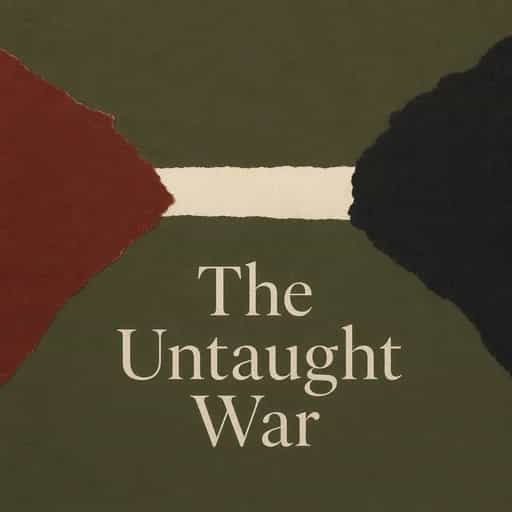
The War You Were Never Taught






자주 묻는 질문
The Watermelon War of 1856 was a conflict that began in Panama when an American visitor refused to pay ten cents for a slice of watermelon. The resulting riot led to a three-day U.S. military occupation of Panama City. This event is significant because it demonstrates how the U.S. government used minor, localized disputes as "politically convenient" justifications to secure strategic assets, such as naval bases and railroad rights, during its rise as a global power.
The Second Seminole War (1835–1842) is considered the longest American war prior to Vietnam and shared many of its characteristics, including a misunderstood terrain and a resilient enemy. Fought in the "lethal" subtropical wilderness of Florida, the U.S. military struggled against a multiracial alliance of Indigenous people and formerly enslaved Black Seminoles. Like Vietnam, the conflict was a catastrophe of imperial overreach where the majority of American deaths were caused by disease rather than combat, and the government spent massive sums of money on a war that could have been avoided through diplomacy.
The 1871 mission to Korea was a failure of "gunboat diplomacy" where military victory did not translate into strategic success. After an American ship was destroyed years earlier, the U.S. sent a fleet to demand a treaty. Although American soldiers successfully seized a Korean fortress and killed hundreds of defenders while losing only three men, the Korean government refused to negotiate and labeled the captured soldiers as cowards. The U.S. was forced to withdraw without a treaty, proving that military force cannot easily compel a nation to establish a relationship.
A "betrayal of mission" refers to historical moments where there is a massive chasm between a nation's stated ideals—such as democracy, freedom, and justice—and its actual actions, such as imperial overreach or the denial of human rights. The script argues that standard history often sanitizes these moments to create a comfortable national identity. By focusing on these betrayals, such as the use of kidnapping squads in Florida or nuclear brinkmanship during the Cold War, citizens can better understand how power actually operates and avoid repeating those same errors in the future.
The Polygars were regional military chieftains in southern India who led a fifteen-year struggle against the British East India Company starting in 1752. Led by figures like Puli Thevar, they used guerrilla tactics to resist British tax collection and authority. The British responded with "total war," systematically dismantling the region's military infrastructure and leveling forts to erase the possibility of future defiance. While the resistance was eventually crushed and its leaders executed, the conflict remains a significant early example of the high price of resisting imperial power.
샌프란시스코에서 컬럼비아 대학교 동문들이 만들었습니다
"Instead of endless scrolling, I just hit play on BeFreed. It saves me so much time."


"I never knew where to start with nonfiction—BeFreed’s book lists turned into podcasts gave me a clear path."


"Perfect balance between learning and entertainment. Finished ‘Thinking, Fast and Slow’ on my commute this week."
"Crazy how much I learned while walking the dog. BeFreed = small habits → big gains."
"Reading used to feel like a chore. Now it’s just part of my lifestyle."

"Feels effortless compared to reading. I’ve finished 6 books this month already."
"BeFreed turned my guilty doomscrolling into something that feels productive and inspiring."

"BeFreed turned my commute into learning time. 20-min podcasts are perfect for finishing books I never had time for."
"BeFreed replaced my podcast queue. Imagine Spotify for books — that’s it. 🙌"

"It is great for me to learn something from the book without reading it."
"The themed book list podcasts help me connect ideas across authors—like a guided audio journey."
"Makes me feel smarter every time before going to work"
샌프란시스코에서 컬럼비아 대학교 동문들이 만들었습니다
"Instead of endless scrolling, I just hit play on BeFreed. It saves me so much time."
"I never knew where to start with nonfiction—BeFreed’s book lists turned into podcasts gave me a clear path."
"Perfect balance between learning and entertainment. Finished ‘Thinking, Fast and Slow’ on my commute this week."
"Crazy how much I learned while walking the dog. BeFreed = small habits → big gains."
"Reading used to feel like a chore. Now it’s just part of my lifestyle."
"Feels effortless compared to reading. I’ve finished 6 books this month already."
"BeFreed turned my guilty doomscrolling into something that feels productive and inspiring."
"BeFreed turned my commute into learning time. 20-min podcasts are perfect for finishing books I never had time for."
"BeFreed replaced my podcast queue. Imagine Spotify for books — that’s it. 🙌"
"It is great for me to learn something from the book without reading it."
"The themed book list podcasts help me connect ideas across authors—like a guided audio journey."
"Makes me feel smarter every time before going to work"
"Instead of endless scrolling, I just hit play on BeFreed. It saves me so much time."
"I never knew where to start with nonfiction—BeFreed’s book lists turned into podcasts gave me a clear path."
"Perfect balance between learning and entertainment. Finished ‘Thinking, Fast and Slow’ on my commute this week."
"Crazy how much I learned while walking the dog. BeFreed = small habits → big gains."
"Reading used to feel like a chore. Now it’s just part of my lifestyle."
"Feels effortless compared to reading. I’ve finished 6 books this month already."
"BeFreed turned my guilty doomscrolling into something that feels productive and inspiring."
"BeFreed turned my commute into learning time. 20-min podcasts are perfect for finishing books I never had time for."
"BeFreed replaced my podcast queue. Imagine Spotify for books — that’s it. 🙌"
"It is great for me to learn something from the book without reading it."
"The themed book list podcasts help me connect ideas across authors—like a guided audio journey."
"Makes me feel smarter every time before going to work"
"Instead of endless scrolling, I just hit play on BeFreed. It saves me so much time."
"I never knew where to start with nonfiction—BeFreed’s book lists turned into podcasts gave me a clear path."
"Perfect balance between learning and entertainment. Finished ‘Thinking, Fast and Slow’ on my commute this week."
"Crazy how much I learned while walking the dog. BeFreed = small habits → big gains."
"Reading used to feel like a chore. Now it’s just part of my lifestyle."
"Feels effortless compared to reading. I’ve finished 6 books this month already."
"BeFreed turned my guilty doomscrolling into something that feels productive and inspiring."
"BeFreed turned my commute into learning time. 20-min podcasts are perfect for finishing books I never had time for."
"BeFreed replaced my podcast queue. Imagine Spotify for books — that’s it. 🙌"
"It is great for me to learn something from the book without reading it."
"The themed book list podcasts help me connect ideas across authors—like a guided audio journey."
"Makes me feel smarter every time before going to work"



![[PDF] what do we want students to remember about the “forgotten war”? a](/_next/image?url=https%3A%2F%2Fd1y2du6z1jfm9e.cloudfront.net%2Fassets%2Fpodcast%2Fgreen.png&w=1024&q=50)