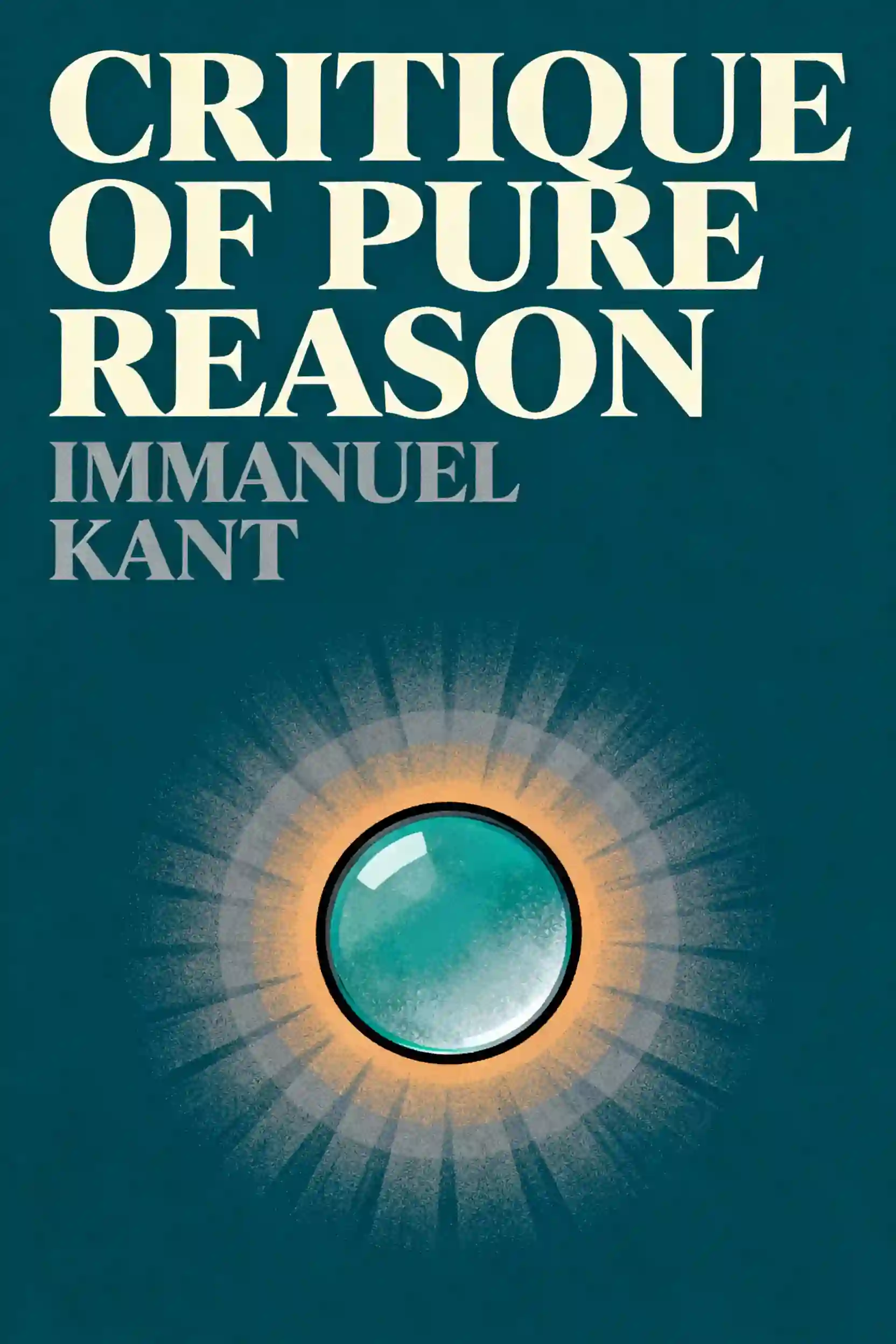
The Critique of Pure Reason and how your mind shapes reality
Does our mind conform to the world, or does the world conform to our mind? Explore Kant’s philosophy to see how we perceive time, space, and truth.

The Critique of Pure Reason and how your mind shapes reality 베스트 인용
Instead of our minds conforming to objects, objects must conform to our minds. We only ever know things as they appear to us through these filters; the 'things-in-themselves' as they exist apart from our minds remain forever out of reach.
Generated by Freedee_BB13EEF4
纯粹理性批判

자주 묻는 질문
This term refers to a fundamental shift in how we understand the relationship between the mind and reality. Traditionally, philosophers assumed that our minds conform to the objects we perceive in the world. Kant flipped this logic, suggesting that objects must instead conform to the structure of our minds. He argued that we are not passive recorders of reality, but active participants who "legislate" the laws of nature by processing sensory data through our own internal mental framework.
Kant distinguished between the world as it appears to us and the world as it exists independently of our perception. Phenomena are the things we experience through our mental filters of space, time, and categories; this is the only reality we can ever truly "know." Noumena, or "things-in-themselves," represent reality as it exists apart from human sensibility. Because our minds automatically apply human-shaped filters to everything we perceive, the raw "code" of the noumenal world remains forever out of reach.
In Kant’s view, space and time are not external containers or things we discover in the physical world. Instead, he called them "pure forms of intuition" that belong to the subject. They act like a built-in pair of tinted glasses that we can never remove; they provide the necessary coordinates for us to perceive anything at all. If all conscious minds were removed from the universe, Kant argued that space and time would vanish as well, because they are the internal "rules of the game" for human sensing.
The categories are twelve pure concepts of the understanding—such as causality, substance, and unity—that act like a mental filing system. Kant argued that we don't learn these concepts from experience; rather, we use them to make experience possible in the first place. For example, we don't "see" a cause; we use the built-in category of "Cause and Effect" to organize disconnected sensory impressions into a meaningful event. Without these internal folders to organize raw data, our perceptions would be a chaotic and "blind" blur.
Kant warned that human reason has a natural tendency to "overreach" by trying to answer questions about things outside of space and time, such as the existence of God or the beginning of the universe. He argued that our mental categories are only designed to organize sensory experience. When we apply them to the "noumenal" realm where there is no sensory data, we end up in "antinomies," or logical contradictions where two opposing sides both seem right. He believed we must recognize these boundaries to avoid "shallow babble" and focus on the certain path of science.
샌프란시스코에서 컬럼비아 대학교 동문들이 만들었습니다
"Instead of endless scrolling, I just hit play on BeFreed. It saves me so much time."


"I never knew where to start with nonfiction—BeFreed’s book lists turned into podcasts gave me a clear path."


"Perfect balance between learning and entertainment. Finished ‘Thinking, Fast and Slow’ on my commute this week."
"Crazy how much I learned while walking the dog. BeFreed = small habits → big gains."
"Reading used to feel like a chore. Now it’s just part of my lifestyle."

"Feels effortless compared to reading. I’ve finished 6 books this month already."
"BeFreed turned my guilty doomscrolling into something that feels productive and inspiring."

"BeFreed turned my commute into learning time. 20-min podcasts are perfect for finishing books I never had time for."
"BeFreed replaced my podcast queue. Imagine Spotify for books — that’s it. 🙌"

"It is great for me to learn something from the book without reading it."
"The themed book list podcasts help me connect ideas across authors—like a guided audio journey."
"Makes me feel smarter every time before going to work"
 Ask ChatGPT
 Ask Claude
샌프란시스코에서 컬럼비아 대학교 동문들이 만들었습니다
"Instead of endless scrolling, I just hit play on BeFreed. It saves me so much time."
"I never knew where to start with nonfiction—BeFreed’s book lists turned into podcasts gave me a clear path."
"Perfect balance between learning and entertainment. Finished ‘Thinking, Fast and Slow’ on my commute this week."
"Crazy how much I learned while walking the dog. BeFreed = small habits → big gains."
"Reading used to feel like a chore. Now it’s just part of my lifestyle."
"Feels effortless compared to reading. I’ve finished 6 books this month already."
"BeFreed turned my guilty doomscrolling into something that feels productive and inspiring."
"BeFreed turned my commute into learning time. 20-min podcasts are perfect for finishing books I never had time for."
"BeFreed replaced my podcast queue. Imagine Spotify for books — that’s it. 🙌"
"It is great for me to learn something from the book without reading it."
"The themed book list podcasts help me connect ideas across authors—like a guided audio journey."
"Makes me feel smarter every time before going to work"
"Instead of endless scrolling, I just hit play on BeFreed. It saves me so much time."
"I never knew where to start with nonfiction—BeFreed’s book lists turned into podcasts gave me a clear path."
"Perfect balance between learning and entertainment. Finished ‘Thinking, Fast and Slow’ on my commute this week."
"Crazy how much I learned while walking the dog. BeFreed = small habits → big gains."
"Reading used to feel like a chore. Now it’s just part of my lifestyle."
"Feels effortless compared to reading. I’ve finished 6 books this month already."
"BeFreed turned my guilty doomscrolling into something that feels productive and inspiring."
"BeFreed turned my commute into learning time. 20-min podcasts are perfect for finishing books I never had time for."
"BeFreed replaced my podcast queue. Imagine Spotify for books — that’s it. 🙌"
"It is great for me to learn something from the book without reading it."
"The themed book list podcasts help me connect ideas across authors—like a guided audio journey."
"Makes me feel smarter every time before going to work"
"Instead of endless scrolling, I just hit play on BeFreed. It saves me so much time."
"I never knew where to start with nonfiction—BeFreed’s book lists turned into podcasts gave me a clear path."
"Perfect balance between learning and entertainment. Finished ‘Thinking, Fast and Slow’ on my commute this week."
"Crazy how much I learned while walking the dog. BeFreed = small habits → big gains."
"Reading used to feel like a chore. Now it’s just part of my lifestyle."
"Feels effortless compared to reading. I’ve finished 6 books this month already."
"BeFreed turned my guilty doomscrolling into something that feels productive and inspiring."
"BeFreed turned my commute into learning time. 20-min podcasts are perfect for finishing books I never had time for."
"BeFreed replaced my podcast queue. Imagine Spotify for books — that’s it. 🙌"
"It is great for me to learn something from the book without reading it."
"The themed book list podcasts help me connect ideas across authors—like a guided audio journey."
"Makes me feel smarter every time before going to work"