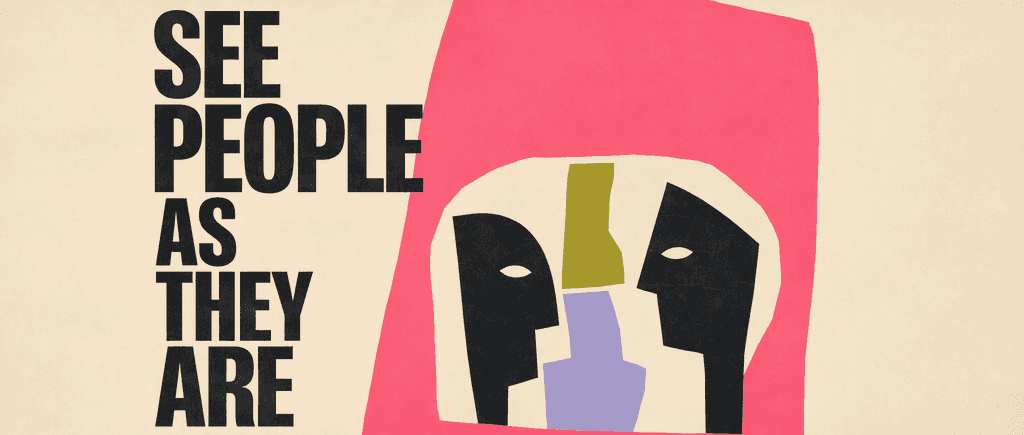
Stop people-pleasing by healing your survival response
Struggling with perfectionism? Learn how to view childhood patterns through a Buddhist lens to choose authenticity over performance and find freedom.

Stop people-pleasing by healing your survival response 베스트 인용
The survival strategy that saved you then is the very thing that is suffocating you now. Healing begins by naming this for what it is: an automatic, physiological response to perceived danger, rather than a moral failing.
Generated by SlowLoris
I want to learn how to move past ingrained childhood patterns. For example, I tend to be a people pleaser and a perfectionist because I want to perform goodness and avoid punishment. This bleeds into my work and into my relationships. I would like to understand this in a Buddhist framework as well.


자주 묻는 질문
The fawn response is a sophisticated physiological survival strategy rather than a personality trait or a choice to be helpful. It develops in childhood when a person’s nervous system determines that fighting, fleeing, or freezing is not an option for safety. Instead, the individual learns to "merge" with the needs of others, becoming hypervigilant to emotional cues to neutralize threats like criticism or abandonment before they happen. While it looks like being "nice" on the surface, it is actually an automatic threat-detection algorithm that runs on adrenaline, leading to chronic exhaustion and self-abandonment.
Dependent origination allows you to view "glass-hearted" or emotionally limited parents as a complex web of causes and conditions rather than absolute authorities or villains. By recognizing that parents carry their own "seeds" of trauma and cultural conditioning, you can see their behavior as a "karmic continuum" of their own wounded nervous systems. This shift in perspective creates a "spiritual shield" that helps you dismantle the projection that they are all-powerful. It allows you to acknowledge the harm they caused while realizing they were operating with limited tools, which helps you reclaim your agency.
People-pleasing and perfectionism are stored as bodily states and nervous system memories rather than just intellectual mindsets. When you face the prospect of disappointing someone, your body reacts with a spike in heart rate and shallow breathing because your brain associates displeasing an adult with a life-or-death threat. Because this is a "bottom-up" survival response triggered by the storehouse of past experiences in the consciousness, intellectual reasoning cannot override the physical jolt of panic. Healing requires somatic tools to signal physical safety to the brainstem in real-time.
Cognitive defusion is the practice of learning to notice perfectionist thoughts without automatically obeying them as commands. Instead of accepting the thought "This must be perfect" as a literal truth, you rephrase it to "I am noticing my mind telling me this must be perfect." This creates a "non-residence" where you allow the thought to flow through you without dwelling in it. By decoupling your self-worth from outcomes and viewing mistakes as temporary combinations of conditions, you can shift from a "performance mode" to a "values-aligned" way of living.
Reconditioning starts with "mindfulness marking," which involves naming the trauma response as it happens to create a buffer between the feeling and the action. Practical exercises include the "80% Rule," where you deliberately aim for "good enough" work to provide the nervous system with observable evidence that imperfection does not lead to annihilation. Other tools include practicing a two-second pause before responding to requests and using somatic grounding techniques—like lengthening exhales or feeling your feet on the floor—to signal safety to the body during moments of social pressure.
샌프란시스코에서 컬럼비아 대학교 동문들이 만들었습니다
"Instead of endless scrolling, I just hit play on BeFreed. It saves me so much time."


"I never knew where to start with nonfiction—BeFreed’s book lists turned into podcasts gave me a clear path."


"Perfect balance between learning and entertainment. Finished ‘Thinking, Fast and Slow’ on my commute this week."
"Crazy how much I learned while walking the dog. BeFreed = small habits → big gains."
"Reading used to feel like a chore. Now it’s just part of my lifestyle."

"Feels effortless compared to reading. I’ve finished 6 books this month already."
"BeFreed turned my guilty doomscrolling into something that feels productive and inspiring."

"BeFreed turned my commute into learning time. 20-min podcasts are perfect for finishing books I never had time for."
"BeFreed replaced my podcast queue. Imagine Spotify for books — that’s it. 🙌"

"It is great for me to learn something from the book without reading it."
"The themed book list podcasts help me connect ideas across authors—like a guided audio journey."
"Makes me feel smarter every time before going to work"
샌프란시스코에서 컬럼비아 대학교 동문들이 만들었습니다
"Instead of endless scrolling, I just hit play on BeFreed. It saves me so much time."
"I never knew where to start with nonfiction—BeFreed’s book lists turned into podcasts gave me a clear path."
"Perfect balance between learning and entertainment. Finished ‘Thinking, Fast and Slow’ on my commute this week."
"Crazy how much I learned while walking the dog. BeFreed = small habits → big gains."
"Reading used to feel like a chore. Now it’s just part of my lifestyle."
"Feels effortless compared to reading. I’ve finished 6 books this month already."
"BeFreed turned my guilty doomscrolling into something that feels productive and inspiring."
"BeFreed turned my commute into learning time. 20-min podcasts are perfect for finishing books I never had time for."
"BeFreed replaced my podcast queue. Imagine Spotify for books — that’s it. 🙌"
"It is great for me to learn something from the book without reading it."
"The themed book list podcasts help me connect ideas across authors—like a guided audio journey."
"Makes me feel smarter every time before going to work"
"Instead of endless scrolling, I just hit play on BeFreed. It saves me so much time."
"I never knew where to start with nonfiction—BeFreed’s book lists turned into podcasts gave me a clear path."
"Perfect balance between learning and entertainment. Finished ‘Thinking, Fast and Slow’ on my commute this week."
"Crazy how much I learned while walking the dog. BeFreed = small habits → big gains."
"Reading used to feel like a chore. Now it’s just part of my lifestyle."
"Feels effortless compared to reading. I’ve finished 6 books this month already."
"BeFreed turned my guilty doomscrolling into something that feels productive and inspiring."
"BeFreed turned my commute into learning time. 20-min podcasts are perfect for finishing books I never had time for."
"BeFreed replaced my podcast queue. Imagine Spotify for books — that’s it. 🙌"
"It is great for me to learn something from the book without reading it."
"The themed book list podcasts help me connect ideas across authors—like a guided audio journey."
"Makes me feel smarter every time before going to work"
"Instead of endless scrolling, I just hit play on BeFreed. It saves me so much time."
"I never knew where to start with nonfiction—BeFreed’s book lists turned into podcasts gave me a clear path."
"Perfect balance between learning and entertainment. Finished ‘Thinking, Fast and Slow’ on my commute this week."
"Crazy how much I learned while walking the dog. BeFreed = small habits → big gains."
"Reading used to feel like a chore. Now it’s just part of my lifestyle."
"Feels effortless compared to reading. I’ve finished 6 books this month already."
"BeFreed turned my guilty doomscrolling into something that feels productive and inspiring."
"BeFreed turned my commute into learning time. 20-min podcasts are perfect for finishing books I never had time for."
"BeFreed replaced my podcast queue. Imagine Spotify for books — that’s it. 🙌"
"It is great for me to learn something from the book without reading it."
"The themed book list podcasts help me connect ideas across authors—like a guided audio journey."
"Makes me feel smarter every time before going to work"



![Facing Codependence [ABRIDGED]](/_next/image?url=https%3A%2F%2Fd3lvzgn0lx7rb2.cloudfront.net%2Fcovers%2F1d91cc59-653c-487c-bb06-0a03ac09820d%2Fimage_resized.webp&w=1024&q=50)