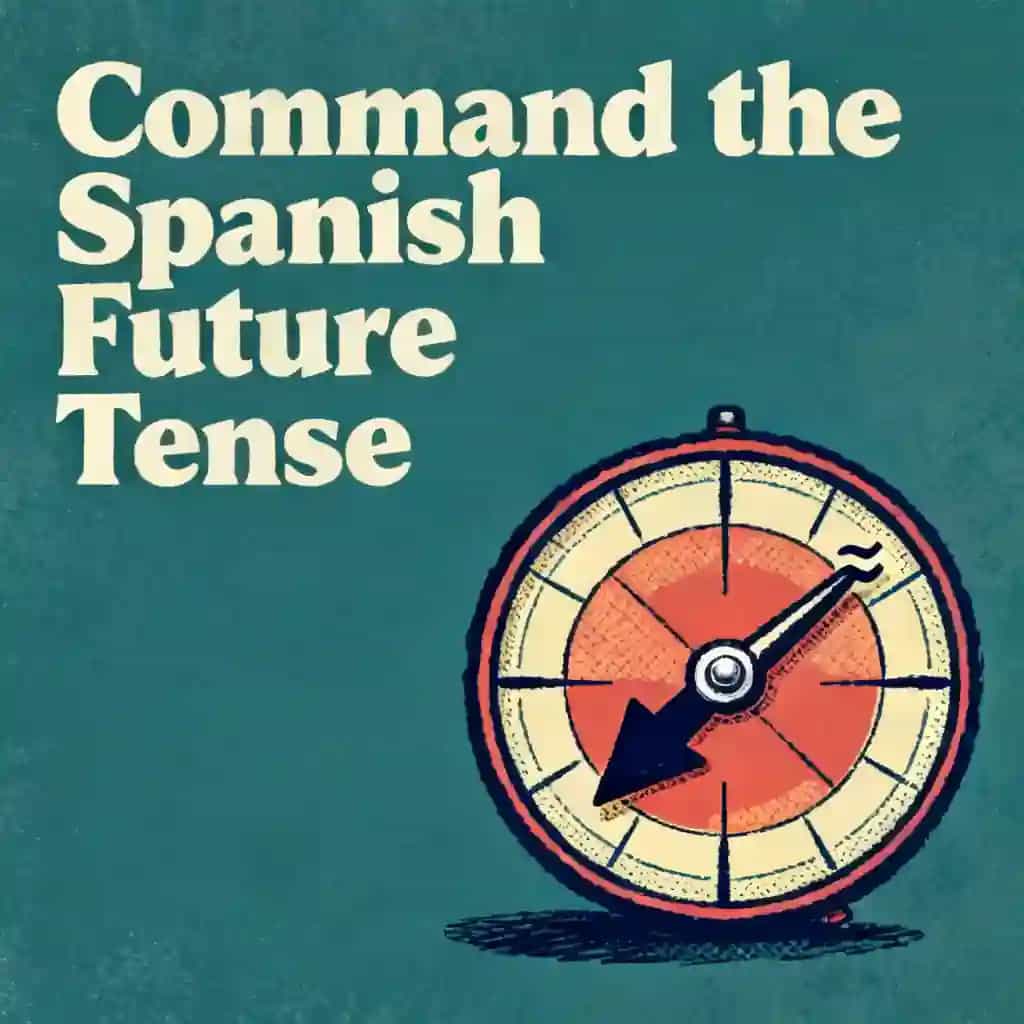
The Easiest Victory in Spanish Grammar
Lena: Hey everyone! You know, I was just thinking about how often we worry about the "future" when learning a new language—it usually feels like this distant, complex wall of grammar we have to climb. But what if I told you that in Spanish, the future tense is actually a gift? It’s arguably the easiest conjugation pattern in the entire language .
Jackson: It really is. Most people start their Spanish journey bracing themselves for endless stem changes and irregular patterns, but the future tense—specifically the Futuro Simple—is remarkably consistent. Unlike almost every other tense where you have to chop off the ending of a verb before you can do anything with it, the future tense lets you keep the whole thing. You just take the infinitive—the "to" form of the verb—and stick a new ending right on the tail .
Lena: That is such a relief to hear. I remember spending hours trying to remember if a verb was an -ar, -er, or -ir verb just to change the stem, but here you’re saying we just leave it alone?
Jackson: Exactly. Whether it's hablar, comer, or vivir, they all share the exact same set of endings . It’s a "one size fits all" situation that makes it incredibly approachable for English speakers. In fact, it functions a lot like our English "will" plus a verb, so the logic feels very familiar .
Lena: I love that. It’s like having a universal remote for your verbs. So, if we’re looking to master this, where do we actually start? Because I’m ready to dive into how this actually looks in a real sentence.
Jackson: Well, to get started, we need to look at the "tool kit" of endings. Once you have those six little endings down, you can theoretically conjugate thousands of verbs in seconds. Let's break down that framework and see why it’s so much simpler than what we’re used to.