Reclaiming Your Focus: Training the Goldfish Brain
Discover why your attention span is shrinking and how to neurologically retrain your brain. Learn the science of neural oscillations and practical strategies to silence distractions and rebuild deep focus.

Reclaiming Your Focus: Training the Goldfish Brain 베스트 인용
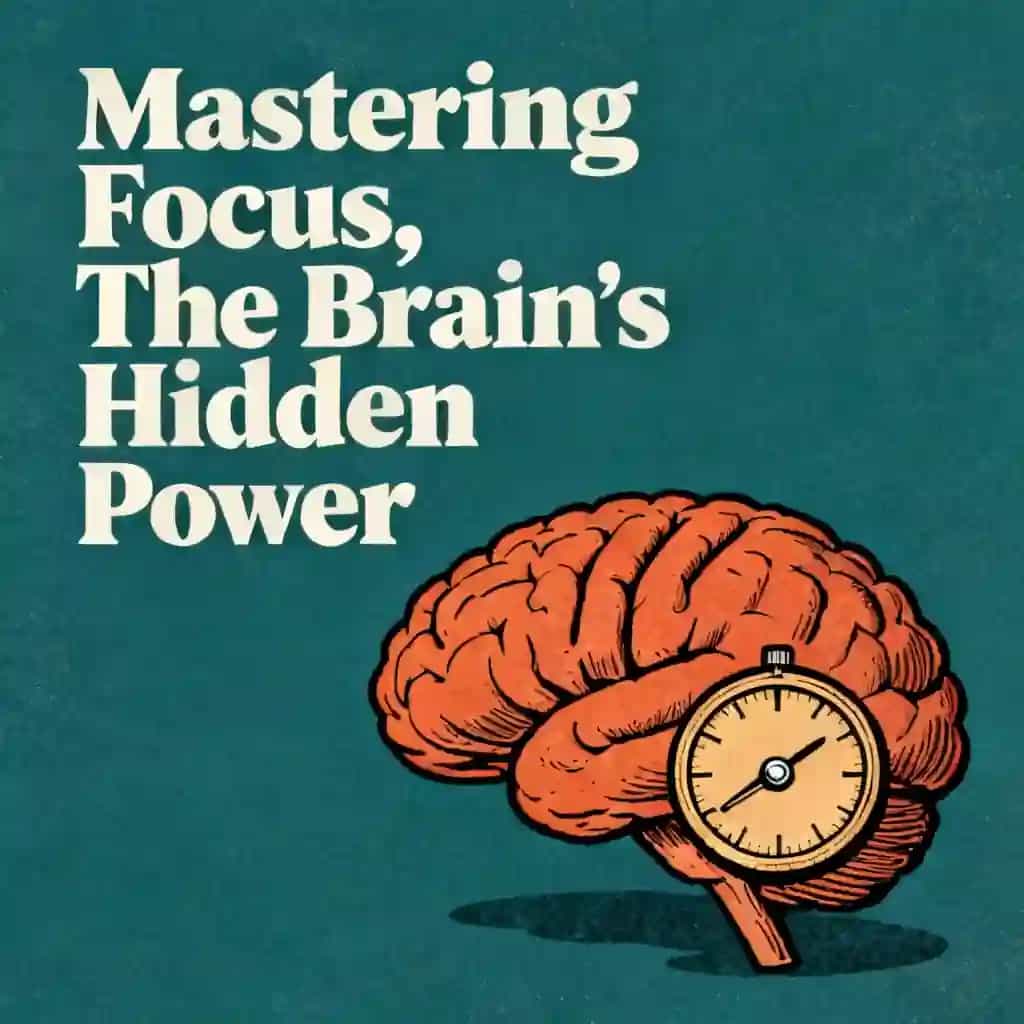
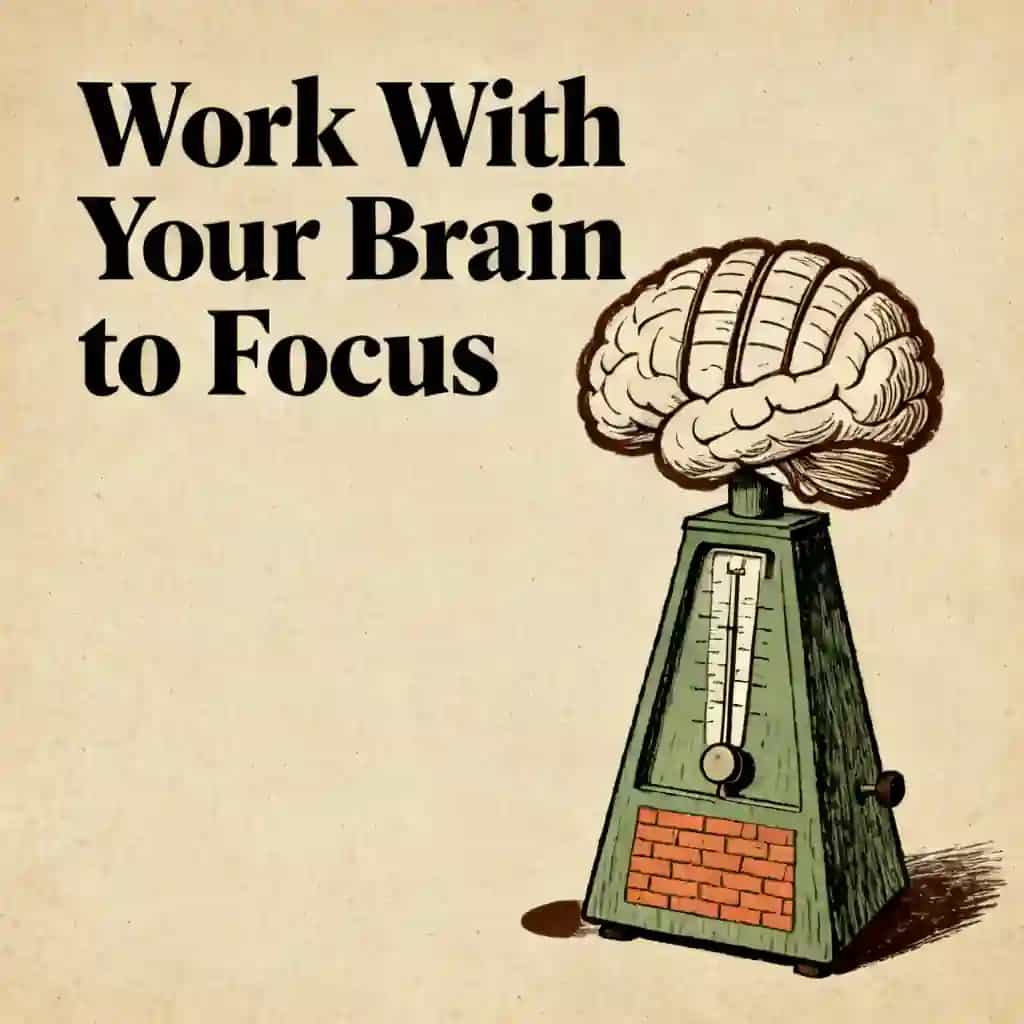
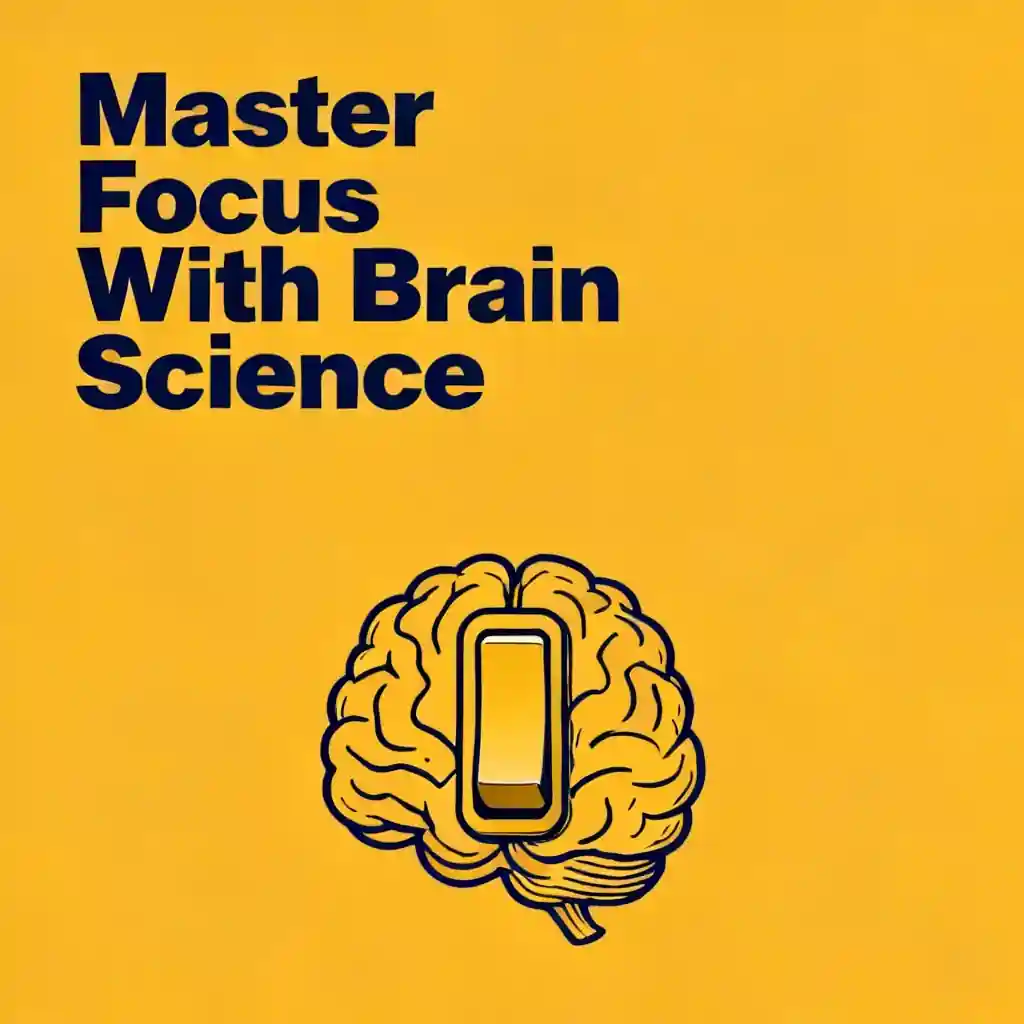
Focus is not a static state we enter, but a trainable muscle and a dynamic physiological process. By understanding the brain's natural rhythms—like the 'on-off' cycles of neurons and the 'switch costs' of multitasking—we can move from fighting our biology to actively conducting it.
Generated by EPSTARTER
BLP-2 Training Your Focus Questions: • What is attention? • What distracts the brain most? • How do you bring focus back?

자주 묻는 질문
This struggle is caused by a biological "tug of war" between two types of attention: goal-driven (top-down) and stimulus-driven (bottom-up). While your prefrontal cortex tries to focus on a task, your stimulus-driven system is a survival mechanism handled by the superior colliculus, which scans for "salience" like bright colors or sudden movements. Because this system is designed to detect threats or important changes rapidly, it often "wins" the competition for your attention before you even realize you have been distracted.
Research shows that attention is actually rhythmic rather than constant, sampling the world in "theta cycles" about three to eight times per second. Even when you feel focused, your brain is briefly shifting between your target and the surrounding environment to check for new information. This means there are "good" phases where you are primed to process information and "poor" phases where you are more susceptible to distraction, making focus a dynamic process that must be constantly maintained.
Switching between external tasks and internal thoughts is "biologically expensive" due to a phenomenon called the "switch cost." When you move from the outside world to your internal thoughts, your brain undergoes "perceptual decoupling," where it actively turns down sensory input to prioritize internal simulations. Forcing the brain to constantly jump this "fence" requires the prefrontal cortex to reconfigure its entire processing mode, which consumes significant cognitive resources and leads to mental exhaustion.
One of the most effective ways to reset is to leverage your oculomotor system by physically locking your gaze onto your task. Because eye control and attention are neurologically linked, pointing your eyes at a specific target sends a powerful top-down signal to the visual cortex that helps "gate" out distractions. Additionally, you can perform a "neural bicep curl" by simply labeling the distraction and consciously pulling your spotlight of attention back, which strengthens the dopamine pathways responsible for maintaining focus.
샌프란시스코에서 컬럼비아 대학교 동문들이 만들었습니다
"Instead of endless scrolling, I just hit play on BeFreed. It saves me so much time."


"I never knew where to start with nonfiction—BeFreed’s book lists turned into podcasts gave me a clear path."


"Perfect balance between learning and entertainment. Finished ‘Thinking, Fast and Slow’ on my commute this week."
"Crazy how much I learned while walking the dog. BeFreed = small habits → big gains."
"Reading used to feel like a chore. Now it’s just part of my lifestyle."

"Feels effortless compared to reading. I’ve finished 6 books this month already."
"BeFreed turned my guilty doomscrolling into something that feels productive and inspiring."

"BeFreed turned my commute into learning time. 20-min podcasts are perfect for finishing books I never had time for."
"BeFreed replaced my podcast queue. Imagine Spotify for books — that’s it. 🙌"

"It is great for me to learn something from the book without reading it."
"The themed book list podcasts help me connect ideas across authors—like a guided audio journey."
"Makes me feel smarter every time before going to work"
샌프란시스코에서 컬럼비아 대학교 동문들이 만들었습니다
"Instead of endless scrolling, I just hit play on BeFreed. It saves me so much time."
"I never knew where to start with nonfiction—BeFreed’s book lists turned into podcasts gave me a clear path."
"Perfect balance between learning and entertainment. Finished ‘Thinking, Fast and Slow’ on my commute this week."
"Crazy how much I learned while walking the dog. BeFreed = small habits → big gains."
"Reading used to feel like a chore. Now it’s just part of my lifestyle."
"Feels effortless compared to reading. I’ve finished 6 books this month already."
"BeFreed turned my guilty doomscrolling into something that feels productive and inspiring."
"BeFreed turned my commute into learning time. 20-min podcasts are perfect for finishing books I never had time for."
"BeFreed replaced my podcast queue. Imagine Spotify for books — that’s it. 🙌"
"It is great for me to learn something from the book without reading it."
"The themed book list podcasts help me connect ideas across authors—like a guided audio journey."
"Makes me feel smarter every time before going to work"
"Instead of endless scrolling, I just hit play on BeFreed. It saves me so much time."
"I never knew where to start with nonfiction—BeFreed’s book lists turned into podcasts gave me a clear path."
"Perfect balance between learning and entertainment. Finished ‘Thinking, Fast and Slow’ on my commute this week."
"Crazy how much I learned while walking the dog. BeFreed = small habits → big gains."
"Reading used to feel like a chore. Now it’s just part of my lifestyle."
"Feels effortless compared to reading. I’ve finished 6 books this month already."
"BeFreed turned my guilty doomscrolling into something that feels productive and inspiring."
"BeFreed turned my commute into learning time. 20-min podcasts are perfect for finishing books I never had time for."
"BeFreed replaced my podcast queue. Imagine Spotify for books — that’s it. 🙌"
"It is great for me to learn something from the book without reading it."
"The themed book list podcasts help me connect ideas across authors—like a guided audio journey."
"Makes me feel smarter every time before going to work"
"Instead of endless scrolling, I just hit play on BeFreed. It saves me so much time."
"I never knew where to start with nonfiction—BeFreed’s book lists turned into podcasts gave me a clear path."
"Perfect balance between learning and entertainment. Finished ‘Thinking, Fast and Slow’ on my commute this week."
"Crazy how much I learned while walking the dog. BeFreed = small habits → big gains."
"Reading used to feel like a chore. Now it’s just part of my lifestyle."
"Feels effortless compared to reading. I’ve finished 6 books this month already."
"BeFreed turned my guilty doomscrolling into something that feels productive and inspiring."
"BeFreed turned my commute into learning time. 20-min podcasts are perfect for finishing books I never had time for."
"BeFreed replaced my podcast queue. Imagine Spotify for books — that’s it. 🙌"
"It is great for me to learn something from the book without reading it."
"The themed book list podcasts help me connect ideas across authors—like a guided audio journey."
"Makes me feel smarter every time before going to work"