The Pyramid Builders: Life on the Giza Plain & Inspector Merer
Explore the life of Giza's pyramid builders through Inspector Merer’s diary. Discover the logistics, workforce, and social contract behind the Horizon of Khufu.
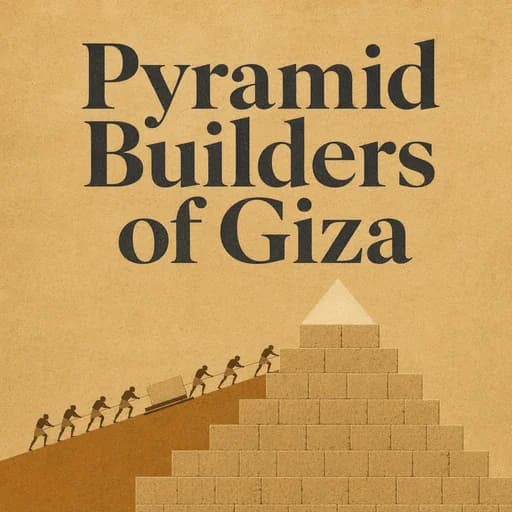
The Pyramid Builders: Life on the Giza Plain & Inspector Merer 베스트 인용
The Great Pyramid wasn't built by a faceless mass of suffering slaves, but by a highly organized, well-fed, and specialized workforce. It was a sophisticated social contract: the people built the pharaoh’s eternal home, and the pharaoh, as the living god, ensured the people didn't go hungry.

이 오디오 레슨은 BeFreed 커뮤니티 멤버가 만들었습니다
The workforce and daily life of the ancient Egyptian pyramid builders, focusing on how they lived, ate, and organized their society while working.






자주 묻는 질문
Inspector Merer was an official whose diary is the oldest papyrus ever discovered. This historical document provides a firsthand account of the human machinery and logistics required to build the Great Pyramid of Giza. Through his eyes, we see how the workforce functioned as a highly organized and specialized team, moving beyond the myth of faceless labor to reveal the actual people who managed the construction of the Horizon of Khufu.
Contrary to popular depictions in movies, the Great Pyramid was not built by a faceless mass of suffering slaves. Evidence from the Giza Plateau suggests the workforce was part of a sophisticated social contract involving a well-fed and highly organized nation. This specialized workforce was powered by a system of provisioning and reward, showing that the pharaohs maintained industry through complex logistics and national mobilization rather than through fear alone.
Akhet Khufu is the ancient name for the Great Pyramid, translating to the 'Horizon of Khufu.' It represents more than just a tomb; it was a logistical masterpiece and the center of a bustling industrial site. 4,600 years ago, this area was filled with the sounds of copper chisels and the activity of boat captains navigating artificial canals, serving as a testament to the sophisticated power and organization of the Old Kingdom.
Life on the Giza Plain was defined by constant activity, noise, and the smells of a massive community. Workers lived in a sprawling environment where thousands of outdoor hearths were used for roasting meat and baking bread to keep the workforce well-fed. The site was a hub of rhythmic labor, featuring boat captains maneuvering through canals and specialized craftsmen using copper chisels to shape the stones that would eventually form the Great Pyramid.
샌프란시스코에서 컬럼비아 대학교 동문들이 만들었습니다
"Instead of endless scrolling, I just hit play on BeFreed. It saves me so much time."


"I never knew where to start with nonfiction—BeFreed’s book lists turned into podcasts gave me a clear path."


"Perfect balance between learning and entertainment. Finished ‘Thinking, Fast and Slow’ on my commute this week."
"Crazy how much I learned while walking the dog. BeFreed = small habits → big gains."
"Reading used to feel like a chore. Now it’s just part of my lifestyle."

"Feels effortless compared to reading. I’ve finished 6 books this month already."
"BeFreed turned my guilty doomscrolling into something that feels productive and inspiring."

"BeFreed turned my commute into learning time. 20-min podcasts are perfect for finishing books I never had time for."
"BeFreed replaced my podcast queue. Imagine Spotify for books — that’s it. 🙌"

"It is great for me to learn something from the book without reading it."
"The themed book list podcasts help me connect ideas across authors—like a guided audio journey."
"Makes me feel smarter every time before going to work"
샌프란시스코에서 컬럼비아 대학교 동문들이 만들었습니다
"Instead of endless scrolling, I just hit play on BeFreed. It saves me so much time."
"I never knew where to start with nonfiction—BeFreed’s book lists turned into podcasts gave me a clear path."
"Perfect balance between learning and entertainment. Finished ‘Thinking, Fast and Slow’ on my commute this week."
"Crazy how much I learned while walking the dog. BeFreed = small habits → big gains."
"Reading used to feel like a chore. Now it’s just part of my lifestyle."
"Feels effortless compared to reading. I’ve finished 6 books this month already."
"BeFreed turned my guilty doomscrolling into something that feels productive and inspiring."
"BeFreed turned my commute into learning time. 20-min podcasts are perfect for finishing books I never had time for."
"BeFreed replaced my podcast queue. Imagine Spotify for books — that’s it. 🙌"
"It is great for me to learn something from the book without reading it."
"The themed book list podcasts help me connect ideas across authors—like a guided audio journey."
"Makes me feel smarter every time before going to work"
"Instead of endless scrolling, I just hit play on BeFreed. It saves me so much time."
"I never knew where to start with nonfiction—BeFreed’s book lists turned into podcasts gave me a clear path."
"Perfect balance between learning and entertainment. Finished ‘Thinking, Fast and Slow’ on my commute this week."
"Crazy how much I learned while walking the dog. BeFreed = small habits → big gains."
"Reading used to feel like a chore. Now it’s just part of my lifestyle."
"Feels effortless compared to reading. I’ve finished 6 books this month already."
"BeFreed turned my guilty doomscrolling into something that feels productive and inspiring."
"BeFreed turned my commute into learning time. 20-min podcasts are perfect for finishing books I never had time for."
"BeFreed replaced my podcast queue. Imagine Spotify for books — that’s it. 🙌"
"It is great for me to learn something from the book without reading it."
"The themed book list podcasts help me connect ideas across authors—like a guided audio journey."
"Makes me feel smarter every time before going to work"
"Instead of endless scrolling, I just hit play on BeFreed. It saves me so much time."
"I never knew where to start with nonfiction—BeFreed’s book lists turned into podcasts gave me a clear path."
"Perfect balance between learning and entertainment. Finished ‘Thinking, Fast and Slow’ on my commute this week."
"Crazy how much I learned while walking the dog. BeFreed = small habits → big gains."
"Reading used to feel like a chore. Now it’s just part of my lifestyle."
"Feels effortless compared to reading. I’ve finished 6 books this month already."
"BeFreed turned my guilty doomscrolling into something that feels productive and inspiring."
"BeFreed turned my commute into learning time. 20-min podcasts are perfect for finishing books I never had time for."
"BeFreed replaced my podcast queue. Imagine Spotify for books — that’s it. 🙌"
"It is great for me to learn something from the book without reading it."
"The themed book list podcasts help me connect ideas across authors—like a guided audio journey."
"Makes me feel smarter every time before going to work"