The Roman Socrates and the Art of Not Caring
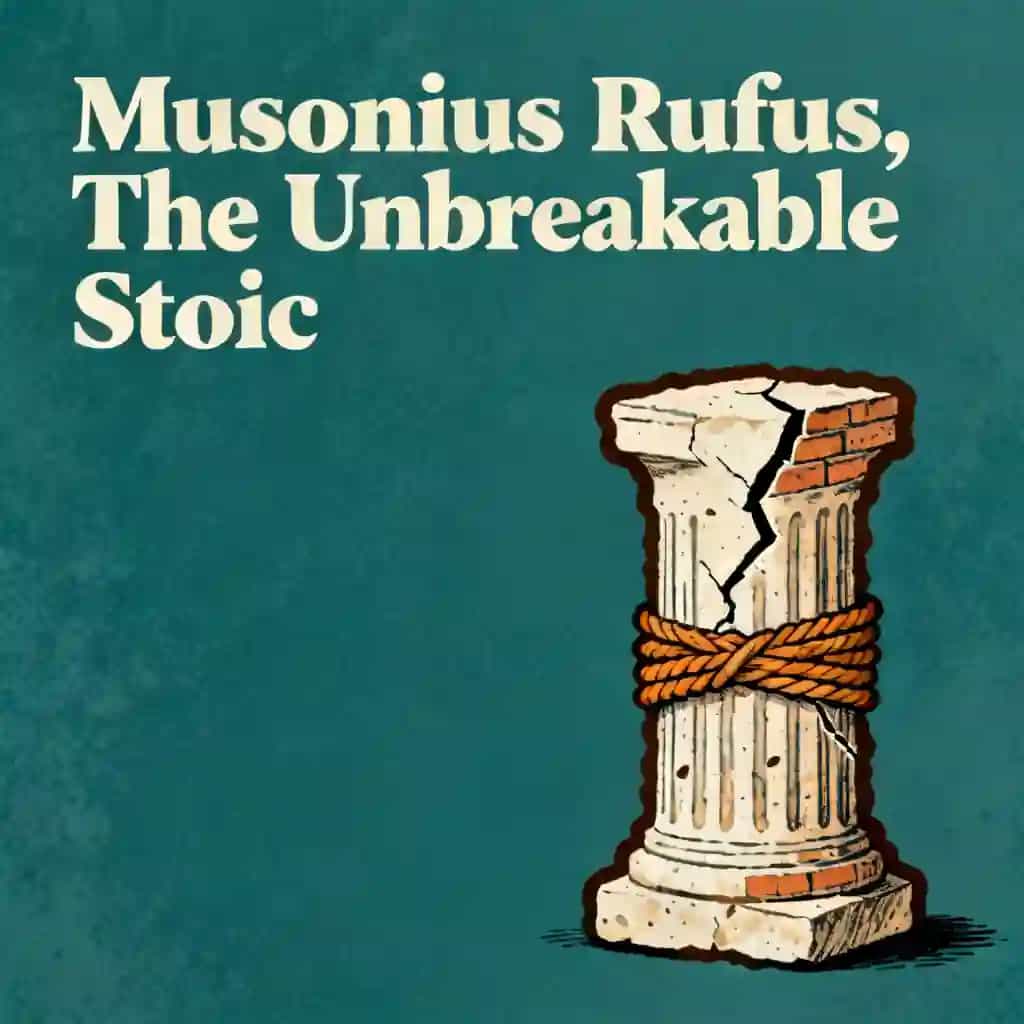
If you were to look for a celebrity in the first—century Roman world, you probably wouldn't expect to find him on a barren, arid island in the middle of the Aegean Sea. But that is exactly where Gaius Musonius Rufus became a legend. Imagine a man so influential that when he was exiled to a place described as the Alcatraz of the ancient world, his students didn't just miss him—they actually packed their bags and moved there with him . Musonius Rufus was a man who lived his philosophy with such intensity that he was considered by Origen a 'Roman Socrates', a title that hints at his knack for challenging authority and his unwavering commitment to virtue over comfort . You might be wondering why a philosopher who lived nearly two thousand years ago matters to you today. The answer lies in his radical pragmatism. Musonius didn't care about winning abstract debates or showing off his intellectual brilliance—he cared about how you eat, how you treat your partner, and how you handle it when your world falls apart. He believed that philosophy was a craft of living, a techne tou biou, that should be as practical as carpentry or medicine . In a world where we are often overwhelmed by luxury and external pressures, Musonius offers a blueprint for a sturdy, self—reliant life that can withstand any storm. He teaches us that the only thing that can truly harm us is our own loss of character, and that every difficulty—even being kicked out of your home—is an opportunity for growth. He was the teacher of the famous Epictetus, and as we look at his life, you will see how he laid the groundwork for some of the most powerful Stoic ideas in history . So, let's dive into the story of the man who turned a desolate island into a world—class university and learn why his brand of tough—love Stoicism is exactly what our modern lives might be missing.