BeFreed
    Categories>Leadership & Corp Culture>Leadership: Born or Built? The Science of the Manager Transition

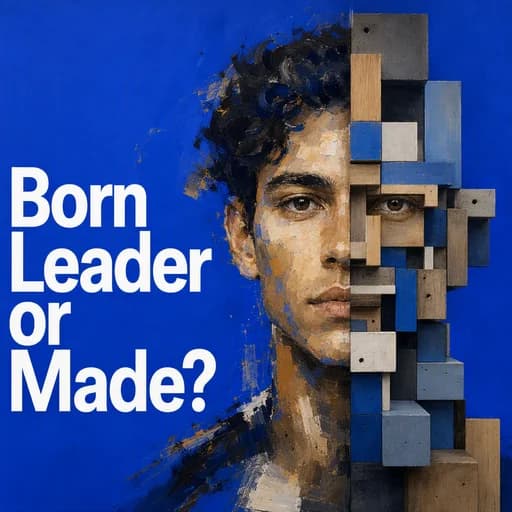
    Leadership: Born or Built? The Science of the Manager Transition

    12분
    |
    |
    2026년 8월 21일
    Leadership & Corp CultureSelf-GrowthCareer & Business

    Explore the science of the manager transition. Learn why high performers struggle moving from technical competency to leadership and how to build essential skills.

    Leadership: Born or Built? The Science of the Manager Transition
    전달 방식을 선택하세요

    하나의 에피소드, 다양한 청취 방식.

    Leadership: Born or Built? The Science of the Manager Transition의 같은 아이디어를 나에게 맞는 목소리, 깊이, 속도로 만나보세요. 언제든 바꿀 수 있습니다.

    전체 대본 및 챕터

    챕터 1

    The moment the title changes

    You are sitting in a glass-walled conference room, perhaps slightly out of breath from the transition, looking at a new business card or a digital signature that now carries the word manager or leader. It is a celebratory moment, a milestone you likely worked years to achieve, yet as the door closes and the quiet settles in, a specific kind of cold realization often takes root. You were promoted because you were the best engineer, the most meticulous analyst, or the most persuasive salesperson in the room, but suddenly, the tools that got you here feel remarkably heavy and strangely blunt. According to, many people find themselves thrust into these roles without a single hour of formal training in how to actually guide another human being. You are standing on a precipice where your technical competency meets a psychological demand you might not feel prepared to meet. The question that begins to hum in the back of your mind—usually in the late hours when the emails stop—is whether you actually have what it takes, or if leadership is a locked room, accessible only to those born with a specific key. This episode is about that transition and the profound relief found in the data, which suggests that leadership is not a divine spark granted at birth, but a craft that can be meticulously assembled. We are going to look at why so many high performers struggle when they step upward, and more importantly, how the science of self-reflection can turn a hesitant manager into a truly effective leader. It turns out that the most important factor in your success isn't your charisma or your pedigree, but a very specific kind of willingness to be a student again.
    챕터 2

    The myth of the natural born commander

    The belief that you are either born to lead or destined to follow is one of the most persistent and damaging myths in the modern workplace. It creates a binary world where those who feel quiet, or hesitant, or simply unprepared, assume they are lacking a fundamental genetic component. However, the reality is far more fluid and, frankly, more encouraging for anyone currently feeling like an imposter in their own office. Research mentioned by indicates that leadership is only about 30 percent genetic. This means that a staggering 70 percent of what makes a leader effective comes from the environment, from experience, and most crucially, from intentional practice. If you find yourself struggling, it isn't because you lack the "leadership gene"—it is more likely because you are attempting to use a content-driven skillset to solve a human-driven problem. When a top-tier performer is promoted, decision-makers often fall into the trap of assuming that excellence in a specific task translates naturally into the ability to manage others performing that task. But as points out, management and leadership require skillsets that are qualitatively different from the technical work you did before. If you don't recognize this gap, you might find yourself doing what many new leaders do—clinging to the substance of the role and avoiding the human elements entirely. You might bury yourself in spreadsheets or technical reviews because those feel safe, while the messy, unpredictable work of managing people feels like a threat to your perceived competence. Understanding that this discomfort is a natural part of the learning curve—rather than a sign of personal failure—is the first step toward actually bridging that 70 percent gap.

    이 에피소드로 더 깊이 배우기

    이 에피소드의 아이디어를 BeFreed의 가이드 학습 경험으로 더 깊이 탐구해 보세요.

    챕터 3

    The ready willing and able framework

    At the University of Illinois, Urbana-Champaign, researchers took a group of students through a 15-week academic course to see if they could actually move the needle on leadership capability. They used a specific model called "Ready, Willing, and Able" to track how these students evolved over the semester. As explains, this model breaks down the development process into three distinct pillars: are you ready to lead, are you motivated to lead, and are you effective in your efforts? What they discovered was that the most critical factor wasn't "ability" in the way we usually think of it—it wasn't about who was the smartest or the most outgoing. Instead, the "Willingness" factor—the sheer motivation to acquire and develop leadership skills—was the primary driver of success. If you are a new manager, this shifts the focus from what you are to what you are doing. When a leader lacks this willingness, they often default to what calls a "stock" leadership position. This is the authoritarian stance—the "because I said so" approach—which is almost always a defensive crouch. It is what happens when someone feels unequipped and tries to hide that fact behind a mask of rigid control. If you feel that urge to be overly bossy or to micromanage, it might actually be a sign that you are feeling "unready" and are overcompensating. The goal of the 15-week study was to show that when people are willing to acknowledge their lack of preparation, they can translate that worry into a focused motivation to improve. It turns out that the most effective leaders aren't the ones who start with all the answers, but the ones who are most committed to the journey of finding them.

    챕터 4

    The internal pivot of self-assessment

    If leadership is a skill to be learned, then the classroom isn't just a physical space—it is your own internal dialogue. To move from a state of being "unprepared" to a state of being "effective," you have to engage in a type of self-monitoring that can be quite uncomfortable at first. According to, there are three fundamental questions that every new leader should be asking themselves constantly. First, what qualities do good leaders actually possess? Second, do I currently have these qualities? And third, how can I acquire or improve the ones I lack? These aren't just philosophical exercises; they are diagnostic tools. Many leaders fail because they never actually contemplate their own managerial style or their impact on the people they are supposed to inspire. They simply "plow ahead," as notes, remaining completely blind to the trail of frustration or confusion they might be leaving behind. This blindness is usually a survival mechanism—if you don't look at your failures, they can't hurt your ego. But real growth requires you to view every interaction through a specific prism: "Am I influencing this group toward a common goal?" This definition of leadership—moving a team toward a shared objective through influence rather than just authority—requires a level of honesty that most people find difficult. You have to be willing to look at a failed project or a demoralized team member and ask, "What was my role in that outcome?" This isn't about guilt; it is about data. If you can see where your communication failed or where your relationship with a team member frayed, you have something you can actually fix.

    이 에피소드로 더 깊이 배우기

    이 에피소드의 아이디어를 BeFreed의 가이드 학습 경험으로 더 깊이 탐구해 보세요.

    챕터 5

    Relationships as the core engine

    We often think of leadership as a series of grand decisions made from a high-backed chair, but the University of Illinois study suggests something much more grounded. They defined leadership as an individual influencing a group of people toward a common goal, and the "influence" part of that equation should be on interactions, relationships, and communication. As highlights, the focus for a developing leader must be on interactions, relationships, and communication. It is easy to ignore these "soft" elements when you are focused on hitting a deadline or a revenue target, but those soft elements are actually the foundation. If the relationship between a leader and a team member is broken, the influence stops, and you are left with nothing but the blunt instrument of authority. This is why suggests that new managers need to frame their role as a journey of "necessary corrections." You will get it wrong. You will misread a room, you will give feedback that lands poorly, and you will fail to motivate someone when they need it most. The difference between a leader who grows and one who flounders is the ability to see these moments as course corrections rather than permanent character flaws. By focusing on how your impact actually moves the team—or fails to move them—you begin to refine your self-identity. You stop seeing yourself as "the person who does the work" and start seeing yourself as "the person who creates the conditions for the work to happen." This shift in identity is often the hardest part of the entire transition, but it is where the real power of leadership begins to take hold.

    챕터 6

    Navigating the fear of failure

    The transition into leadership is often a high-stakes moment, and with high stakes comes the very real possibility of failure. Many people who are celebrated for their promotion find that the initial glow fades quickly when they realize the expectations on them have changed. If you don't take the time to assess your strengths and weaknesses, that celebration can turn into a slow-motion crash. As points out, the bottom line is that a willingness to change your approach and enhance your knowledge is one does not take the time to assess their strengths and weaknesses as a leader, and show willingness to change their approach and enhance their knowledge and skillset when necessary. It is helpful to think of your new role through the lens of "Emotional First Aid," a concept that helps in healing the hurts that come with everyday professional life—rejection, guilt, and the sting of failing in a new capacity. When you step into leadership, you are essentially signing up for a higher volume of these difficult emotions. You will be rejected by stakeholders, you will feel guilty about a team member's burnout, and you will feel the weight of every mistake your department makes. If you believe leadership is an innate talent, these setbacks feel like proof that you don't have "it." But if you view it as a learned skill, these moments become your training ground. emphasizes that self-monitoring and self-assessment are crucial in these initial stages. You have to be honest with yourself about your successes and failures without letting them crush your motivation. This balance—being rigorous about your own performance while remaining compassionate toward your own learning process—is what allows a manager to survive the first year and eventually thrive.

    이 에피소드로 더 깊이 배우기

    이 에피소드의 아이디어를 BeFreed의 가이드 학습 경험으로 더 깊이 탐구해 보세요.

    챕터 7

    A playbook for the developing leader

    For those of you standing at this threshold, or perhaps already a few months into a role that feels a bit too big, the path forward is paved with very specific, intentional actions. The first step is to stop waiting for the "feeling" of being a leader to arrive and instead focus on the mechanics of the "Ready, Willing, and Able" model. You can start by conducting a formal self-audit. Don't just do this in your head; write it down. Take the three questions from —what do good leaders possess, do I have those traits, and how can I get them—and answer them with brutal honesty. If you realize that your communication is often one-way or that you struggle to provide constructive feedback, don't ignore it. That gap is your 70 percent, and it is where your growth will happen. Next, shift your focus from the "what" of your job to the "who." Every meeting and every email is an opportunity to practice influence. Ask yourself: did this interaction move the team closer to the common goal, or did it just serve my need to feel in control? If you feel yourself leaning toward an authoritarian or "stock" leadership position, pause and ask what fear is driving that. Usually, it is a feeling of being unequipped. Instead of masking that feeling with power, use it as motivation to seek out specific knowledge—whether that is through a course, a mentor, or science-based techniques for emotional resilience. Remember that leadership is a journey of corrections. You are allowed to pull a team member aside and say, "I think I handled our last conversation poorly; can we try that again?" This kind of transparency isn't a weakness; it is a high-level leadership skill that builds trust and demonstrates the very willingness to lead that the University of Illinois study found so essential.

    챕터 8

    The quiet evolution of the self

    We often look for leadership in the loud moments—the speeches, the crises, the dramatic turns of fortune—but as we have seen through the lens of, the real work happens in the quiet, reflective space where a person decides to change. It is a relief to know that you are not beholden to a genetic lottery you had no part in. The 30 percent you were born with is just the starting blocks; the other 70 percent is the race itself, and you have every right to be in it. The most important thing to take away from this is that your hesitancy is not a disqualifier. In fact, that feeling of being "unprepared" is often the very spark that ignites the willingness to learn, which we know is the most important factor for successful students. If you are willing to look at your interactions through the prism of influence and common goals, and if you are willing to be honest about where you fall short, you are already doing the work of a leader. It is a continuous process of adjusting your communication, honing your self-identity, and showing up with the intention to improve. Thank you for spending this time reflecting on the architecture of leadership and what it means for your own professional path. I encourage you to take one of those three diagnostic questions today—perhaps simply asking what qualities you admire in others—and see how that small bit of self-reflection changes the way you walk into your next meeting. The title on your card is just the beginning; the person you become while inhabiting that title is the real achievement.

    ★★★★★

    Leadership: Born or Built? The Science of the Manager Transition의 끝까지 도달했어요

    “23일째 매일 사용하고 있어요. 이제 제 일상의 한 부분이 되었습니다.”

    jayallen

    Leadership: Born or Built? The Science of the Manager Transition 베스트 인용

    “

    Research indicates that leadership is only about 30 percent genetic, meaning a staggering 70 percent of what makes a leader effective comes from environment, experience, and intentional practice.

    ”
    T

    Generated by Taylor Ford

    질문 입력

    Summarize and read the attached article 'Can Leadership Be Learned or Are You Born With It? | Psychology Today' while emphasizing the key points regarding leadership acquisition and training.

    호스트 음성
    Lenaplay
    지식 출처
    Can Leadership Be Learned or Are You Born With It? | Psychology Today
    link
    https://www.psychologytoday.com/us/blog/the-squeaky-wheel/201502/can-leadership-be-learned-or-are-you-born-with-it

    자주 묻는 질문

    While many wonder if leadership is a locked room accessible only to those born with a specific key, data suggests it is not a divine spark granted at birth. Instead, leadership is a craft that can be meticulously assembled through practice and self-reflection. This episode explores how individuals can transition from being high performers to effective leaders by developing new skills beyond their initial technical competency.

    Many high performers, such as the best engineers or most persuasive salespeople, are promoted based on technical competency rather than leadership skills. Once in the role, they often find that the tools that made them successful in their previous positions feel heavy and blunt. Without formal management training, these individuals face a psychological demand they may not be prepared to meet during their career transition.

    The science of self-reflection is a critical component of leadership development, especially for those thrust into roles without prior management training. It helps new leaders bridge the gap between their technical expertise and the requirement to guide other human beings. By engaging in self-reflection, managers can better understand the transition and refine the specific leadership skills needed to succeed in their new professional milestone.

    컬럼비아 대학교 동문들이 제작 | 샌프란시스코에서 개발

    BeFreed는 호기심 넘치는 글로벌 커뮤니티를 하나로 연결합니다

    4.7

    평균 평점

    앱 평가 7.84천 개 이상

    BeFreed 커뮤니티

    정말이지 아직 앱을 다 써 보지도 않았는데, 며칠 써 본 것만으로도 깊은 인상을 받았어요… BeFreed는 제가 써 본 어떤 학습 앱과도 차원이 달라요. 몰입감이 엄청나고 집중력도 실제로 좋아져서, 스마트폰을 하염없이 스크롤하는 분들께 딱이에요!

    @ladyInfinity

    정확히 23일 전에 BeFreed를 구입했는데, 그날부터 하루도 빠짐없이 쓰고 있어요. 제 일상 업무 흐름과 학습 습관에 완전히 자리 잡았어요.

    @jayallen

    솔직히 이 앱은 제 기대를 전부 뛰어넘었어요. 어떤 주제든 오디오로 만들어 달라고 할 수 있고, 결과물이 놀라워요. 제 전문 분야는 심리치료 쪽이고 여러 학문이 얽혀 있는데도 답변이 아주 정확해요.

    @Raguipa

    제일 고마운 건 스크롤하는 시간이 확 줄었다는 거예요. 검색하는 시간은 줄고 흡수하는 시간은 늘었어요. 오디오북 전권, 팟캐스트, 학습 플랜의 조합이 정말 훌륭해요.

    @colonyofcreatorsNGO

    저는 24년째 PhotoReading 속진 학습 강사로 일하고 있어요… 책과 독서, 배움이 제 전문인데, BeFreed는 정보를 소화하기 쉽게 전달하는 혁신적인 방식을 정말 잘 구현했어요.

    @BeFreed user

    단순한 책 요약 앱이 아니에요. '재미' 스타일을 써 봤는데, 전통적인 방식보다 훨씬 나은 요약이고 아이디어를 이해하기도 쉬워요. 이것만으로도 값어치를 해요.

    @austinakon

    이 앱이 정말 좋아요. 며칠 써 봤는데 듣는 걸 멈출 수가 없어요. 시작하기에 이보다 좋을 수 없어요.

    @jcrules328

    정말 마음에 들어요. 한 달 정도 써 봤는데 숨은 보석을 찾은 기분이에요. BeFreed로 제가 원하는 주제를 직접 만들 수 있어서 좋고, 목소리도 훌륭한 데다 내레이션 선택지가 무궁무진해요.

    @DanielCZ

    정말이지 아직 앱을 다 써 보지도 않았는데, 며칠 써 본 것만으로도 깊은 인상을 받았어요… BeFreed는 제가 써 본 어떤 학습 앱과도 차원이 달라요. 몰입감이 엄청나고 집중력도 실제로 좋아져서, 스마트폰을 하염없이 스크롤하는 분들께 딱이에요!

    @ladyInfinity

    정확히 23일 전에 BeFreed를 구입했는데, 그날부터 하루도 빠짐없이 쓰고 있어요. 제 일상 업무 흐름과 학습 습관에 완전히 자리 잡았어요.

    @jayallen

    솔직히 이 앱은 제 기대를 전부 뛰어넘었어요. 어떤 주제든 오디오로 만들어 달라고 할 수 있고, 결과물이 놀라워요. 제 전문 분야는 심리치료 쪽이고 여러 학문이 얽혀 있는데도 답변이 아주 정확해요.

    @Raguipa

    제일 고마운 건 스크롤하는 시간이 확 줄었다는 거예요. 검색하는 시간은 줄고 흡수하는 시간은 늘었어요. 오디오북 전권, 팟캐스트, 학습 플랜의 조합이 정말 훌륭해요.

    @colonyofcreatorsNGO

    저는 24년째 PhotoReading 속진 학습 강사로 일하고 있어요… 책과 독서, 배움이 제 전문인데, BeFreed는 정보를 소화하기 쉽게 전달하는 혁신적인 방식을 정말 잘 구현했어요.

    @BeFreed user

    단순한 책 요약 앱이 아니에요. '재미' 스타일을 써 봤는데, 전통적인 방식보다 훨씬 나은 요약이고 아이디어를 이해하기도 쉬워요. 이것만으로도 값어치를 해요.

    @austinakon

    이 앱이 정말 좋아요. 며칠 써 봤는데 듣는 걸 멈출 수가 없어요. 시작하기에 이보다 좋을 수 없어요.

    @jcrules328

    정말 마음에 들어요. 한 달 정도 써 봤는데 숨은 보석을 찾은 기분이에요. BeFreed로 제가 원하는 주제를 직접 만들 수 있어서 좋고, 목소리도 훌륭한 데다 내레이션 선택지가 무궁무진해요.

    @DanielCZ

    유용한 정보와 아이디어를 8~15분짜리 팟캐스트 스타일 오디오로 압축해서 들을 수 있다는 게 정말 좋아요. 원래 팟캐스트는 군더더기가 많아서 안 좋아했는데, 여기는 그걸 싹 걷어냈어요.

    @BeFreed user

    박사 과정을 마무리하는 중이라 낯선 자료를 많이 읽어야 해요… BeFreed에서는 프롬프트만 입력하면 앱이 자료를 찾아서 오디오 팟캐스트로 만들어 줘요. BeFreed의 과정이 NotebookLM보다 더 매끄럽게 느껴져요.

    @Brad

    아침을 준비하거나 산책하거나 출퇴근할 때 들을 것을 YouTube에서 자주 찾곤 했는데, BeFreed는 광고도 군더더기도 없이 훨씬 더 딱 맞는 걸 들려줘요!

    @BeFreed user

    이 플랫폼의 가장 큰 장점은 활용도예요. 다루지 못하는 주제가 말 그대로 하나도 없어요. 무엇을 던져도 다 소화해요… 제한이 전혀 없으면서 약속을 실제로 지키는 학습 도구는 정말 드물어요.

    @jayallen

    BeFreed는 환상적이에요. 디자인이 편해서 헤매는 시간은 줄고 배우는 시간은 늘었어요. 오디오북, 팟캐스트, 학습 플랜의 조합은 천재적이에요. 제 하루가 완전히 달라졌어요.

    @BeFreed user

    처음엔 이탈리아어로 팟캐스트를 만드는 방법을 이해하는 데 시간이 좀 걸렸는데, 알고 나니까 — 와! 정말 대단해요! 어떤 주제든 설명해 달라고 하면 정말 똑똑하게 잘 설명해 줘요!

    @matteo77

    BeFreed는 제가 매일 쓰는 오디오북 앱이 됐어요… 제일 마음에 드는 건 텍스트를 넣으면 이동 중에도 들을 수 있는 오디오로 만들어 준다는 점이에요.

    @kotanzu1

    유용한 정보와 아이디어를 8~15분짜리 팟캐스트 스타일 오디오로 압축해서 들을 수 있다는 게 정말 좋아요. 원래 팟캐스트는 군더더기가 많아서 안 좋아했는데, 여기는 그걸 싹 걷어냈어요.

    @BeFreed user

    박사 과정을 마무리하는 중이라 낯선 자료를 많이 읽어야 해요… BeFreed에서는 프롬프트만 입력하면 앱이 자료를 찾아서 오디오 팟캐스트로 만들어 줘요. BeFreed의 과정이 NotebookLM보다 더 매끄럽게 느껴져요.

    @Brad

    아침을 준비하거나 산책하거나 출퇴근할 때 들을 것을 YouTube에서 자주 찾곤 했는데, BeFreed는 광고도 군더더기도 없이 훨씬 더 딱 맞는 걸 들려줘요!

    @BeFreed user

    이 플랫폼의 가장 큰 장점은 활용도예요. 다루지 못하는 주제가 말 그대로 하나도 없어요. 무엇을 던져도 다 소화해요… 제한이 전혀 없으면서 약속을 실제로 지키는 학습 도구는 정말 드물어요.

    @jayallen

    BeFreed는 환상적이에요. 디자인이 편해서 헤매는 시간은 줄고 배우는 시간은 늘었어요. 오디오북, 팟캐스트, 학습 플랜의 조합은 천재적이에요. 제 하루가 완전히 달라졌어요.

    @BeFreed user

    처음엔 이탈리아어로 팟캐스트를 만드는 방법을 이해하는 데 시간이 좀 걸렸는데, 알고 나니까 — 와! 정말 대단해요! 어떤 주제든 설명해 달라고 하면 정말 똑똑하게 잘 설명해 줘요!

    @matteo77

    BeFreed는 제가 매일 쓰는 오디오북 앱이 됐어요… 제일 마음에 드는 건 텍스트를 넣으면 이동 중에도 들을 수 있는 오디오로 만들어 준다는 점이에요.

    @kotanzu1

    웹에서 BeFreed가 어떻게 논의되고 있는지 더 보기
    129.7K19.5K
    55.2K19.2K
    154.2K10827355
    48.1K2.5K
    81.2K6.6K
    82.3K1.8K
    지금 바로 학습 여정을 시작하세요
    BeFreed 앱
    BeFreed

    무엇이든 개인화된 학습

    DiscordLinkedIn
    추천 도서 요약
    Crucial ConversationsThe Perfect MarriageInto the WildNever Split the DifferenceAttachedGood to GreatSay Nothing
    인기 카테고리
    Self HelpCommunication SkillRelationshipMindfulnessPhilosophyInspirationProductivity
    유명인 추천 도서
    Elon MuskCharlie KirkBill GatesSteve JobsAndrew HubermanJoe RoganJordan Peterson
    수상작 컬렉션
    Pulitzer PrizeNational Book AwardGoodreads Choice AwardsNobel Prize in LiteratureNew York TimesCaldecott MedalNebula Award
    추천 주제
    ManagementAmerican HistoryWarTradingStoicismAnxietySex
    연도별 베스트 도서
    2025 Best Non Fiction Books2024 Best Non Fiction Books2023 Best Non Fiction Books
    추천 저자
    Chimamanda Ngozi AdichieGeorge OrwellO. J. SimpsonBarbara O'NeillWinston ChurchillCharlie Kirk
    BeFreed vs 다른 앱
    BeFreed vs. Other Book Summary AppsBeFreed vs. ElevenReaderBeFreed vs. ReadwiseBeFreed vs. Anki
    학습 도구
    Knowledge VisualizerAI Podcast Generator
    정보
    회사 소개arrow
    가격arrow
    FAQarrow
    블로그arrow
    채용arrow
    파트너십arrow
    앰배서더 프로그램arrow
    디렉토리arrow
    BeFreed
    Try now
    © 2026 BeFreed
    이용 약관개인정보 처리방침
    BeFreed

    무엇이든 개인화된 학습

    DiscordLinkedIn
    추천 도서 요약
    Crucial ConversationsThe Perfect MarriageInto the WildNever Split the DifferenceAttachedGood to GreatSay Nothing
    인기 카테고리
    Self HelpCommunication SkillRelationshipMindfulnessPhilosophyInspirationProductivity
    유명인 추천 도서
    Elon MuskCharlie KirkBill GatesSteve JobsAndrew HubermanJoe RoganJordan Peterson
    수상작 컬렉션
    Pulitzer PrizeNational Book AwardGoodreads Choice AwardsNobel Prize in LiteratureNew York TimesCaldecott MedalNebula Award
    추천 주제
    ManagementAmerican HistoryWarTradingStoicismAnxietySex
    연도별 베스트 도서
    2025 Best Non Fiction Books2024 Best Non Fiction Books2023 Best Non Fiction Books
    학습 도구
    Knowledge VisualizerAI Podcast Generator
    추천 저자
    Chimamanda Ngozi AdichieGeorge OrwellO. J. SimpsonBarbara O'NeillWinston ChurchillCharlie Kirk
    BeFreed vs 다른 앱
    BeFreed vs. Other Book Summary AppsBeFreed vs. ElevenReaderBeFreed vs. ReadwiseBeFreed vs. Anki
    정보
    회사 소개arrow
    가격arrow
    FAQarrow
    블로그arrow
    채용arrow
    파트너십arrow
    앰배서더 프로그램arrow
    디렉토리arrow
    BeFreed
    Try now
    © 2026 BeFreed
    이용 약관개인정보 처리방침

    비슷한 콘텐츠

    From Star Player to Great Leader 책 표지
    Welcome to ManagementEveryone Deserves a Great ManagerAll InScaling People
    23 sources
    From Star Player to Great Leader
    Discover the essential soft skills and mindset shifts needed to transition from a top performer to a respected manager who empowers their team.
    22 min
    From Peer to Manager 책 표지
    "Managing Former Peers: The Hardest Conversation You Haven't Had Yet"How to Transition from Peer to Manager Without Losing Trust"When to Escalate vs Handle It Yourself"Imposter Syndrome as a New Manager: How to Handle It
    5 sources
    From Peer to Manager
    Moving from teammate to leader is a stressful shift. Learn how to navigate changing social dynamics and own your new authority with confidence.
    10 min
    Modern Leadership: From Execution to Influence 책 표지
    Leader LabPrimal Leadership10 Must-Have Traits for Leaders for Staying Relevant in the Business World of 202614 Essential Leadership Skills Every Leader Needs In 2026
    6 sources
    Modern Leadership: From Execution to Influence
    Struggling to move from doing the work to leading the team? Learn how to build trust and master the shift from peer to leader in an adaptive market.
    29 min
    Leading the Inherited Team 책 표지
    Lead from the FutureHow to Lead the Team You Inherit - Steering Point Executive Search and Leadership DevelopmentLeadership Transition Plan That Works | Stratos CoachingHow to Pivot Fast Without Losing Your Team  - The Kipos Group
    5 sources
    Leading the Inherited Team
    Stepping into a new leadership role often means managing a team you didn't build. Learn to navigate existing dynamics and set a new strategic vision.
    836 min
    Manager vs Leader: The Essential Career Distinction 책 표지
    Management vs. Leadership: Similarities and DifferencesLeadership vs Management: Key Differences and Examplessource 3source 4
    6 sources
    Manager vs Leader: The Essential Career Distinction
    Explore the crucial differences between managing and leading, from vision versus process to inspiring followers versus directing subordinates. Discover how to blend both skill sets for maximum professional impact.
    7 min
    The Manager’s Playbook: From Accidental Boss to Strategic Leader 책 표지
    The 4 Stages of Psychological SafetyLeaders Eat LastThe Fearless OrganizationThe Energy of Belonging
    25 sources
    The Manager’s Playbook: From Accidental Boss to Strategic Leader
    Learn how to bridge the leadership gap and boost team engagement with a practical framework for building trust, psychological safety, and lasting influence.
    30 min
    Leadership Skills Anyone Can Master 책 표지
    Primal LeadershipEveryone Deserves a Great ManagerFYIThe Way of the Shepherd
    17 sources
    Leadership Skills Anyone Can Master
    Discover the four research-backed behaviors that make leaders truly inspirational—and why leadership effectiveness is a learnable skill, not an inborn trait.
    30 min
    From Code to Leadership: Managing Developer Teams 책 표지
    The Mythical Man-MonthManagement 3.0The Elements of ScrumLearning Agile
    24 sources
    From Code to Leadership: Managing Developer Teams
    Discover how to transition from star developer to effective team leader. Learn essential strategies for building trust, motivating developers, and becoming a force multiplier for your entire team.
    29 min