Job’s Dark Courtroom: Seeking an Advocate in Suffering
Explore Job’s raw plea for a mediator as he navigates the gap between human frailty and divine power. Learn how to bring your toughest questions to God with integrity while finding hope in the midst of 'darkness without order.'

Job’s Dark Courtroom: Seeking an Advocate in Suffering 베스트 인용
Job’s cry for a mediator is a prophetic moment; he is identifying a functional need in the universe for an advocate who can identify with human frailty while speaking to the Creator on His own terms.
Generated by V
Job chapters 9 and 10 summary and application

자주 묻는 질문
Job argues that the infinite power gap between a mortal and the Creator makes a legal defense futile. He points out that God is not only the opponent but also the judge, jury, and the architect of the laws themselves. Job fears that even if he were completely innocent, God’s overwhelming majesty and "tempest" would overawe him into silence, forcing him to plead for mercy rather than defend his integrity.
Retributive theology is the belief held by Job’s friends that the universe operates on a strict system of predictable justice where righteousness always leads to blessing and sin always leads to calamity. Job dismantles this "vending machine" view of faith by observing that the "scourge kills suddenly" and that God seemingly "destroys both the blameless and the wicked." He argues that innocence has no market value in a disaster and that suffering is not always a direct result of personal sin.
Job recognizes that because God is not a man, they cannot meet on equal footing to settle his case. He yearns for a third-party mediator who can "lay his hand upon us both"—someone who is strong enough to speak to God on His terms but sympathetic enough to identify with human frailty. This figure would ideally remove the "dread" of God’s power, allowing Job to speak honestly without being terrified into submission.
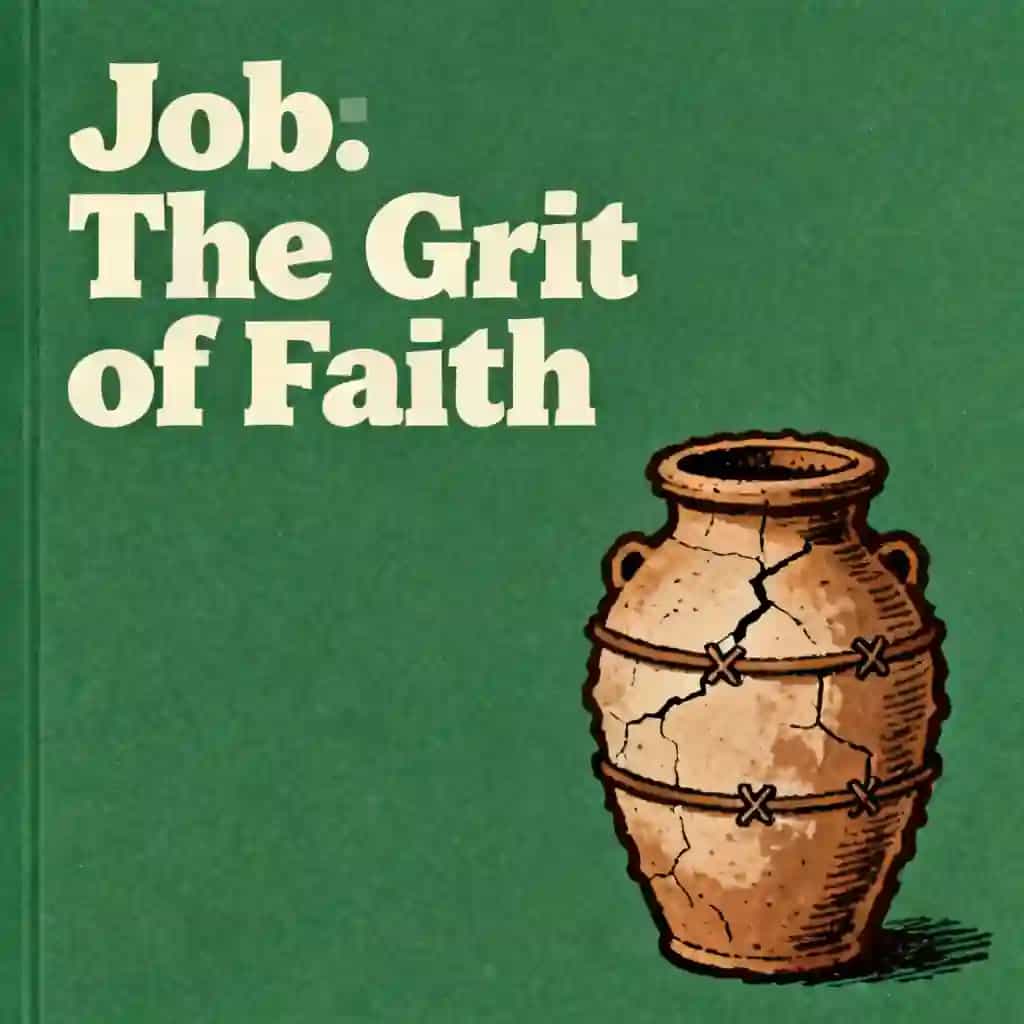
Job appeals to God’s honor as a craftsman by reminding Him that He intimately fashioned Job like clay and knit him together in the womb, a process he describes as "pouring me out like milk" and "curdling me like cheese." By highlighting his "milky" origins and fragile frame, Job is questioning why a Potter would spend so much care creating a delicate vessel only to "spurn the work of His hands" and hunt him like a lion.
According to the script, Job’s "bitter complaint" is actually an act of deep faith and relationship. Unlike his friends who talk about God using safe clichés, Job talks to God with terrifying honesty. The script suggests that bringing honest struggles and "anguished questions" before the Creator is a biblically sanctioned form of lament that values a real relationship over easy, superficial explanations.
샌프란시스코에서 컬럼비아 대학교 동문들이 만들었습니다
"Instead of endless scrolling, I just hit play on BeFreed. It saves me so much time."


"I never knew where to start with nonfiction—BeFreed’s book lists turned into podcasts gave me a clear path."


"Perfect balance between learning and entertainment. Finished ‘Thinking, Fast and Slow’ on my commute this week."
"Crazy how much I learned while walking the dog. BeFreed = small habits → big gains."
"Reading used to feel like a chore. Now it’s just part of my lifestyle."

"Feels effortless compared to reading. I’ve finished 6 books this month already."
"BeFreed turned my guilty doomscrolling into something that feels productive and inspiring."

"BeFreed turned my commute into learning time. 20-min podcasts are perfect for finishing books I never had time for."
"BeFreed replaced my podcast queue. Imagine Spotify for books — that’s it. 🙌"

"It is great for me to learn something from the book without reading it."
"The themed book list podcasts help me connect ideas across authors—like a guided audio journey."
"Makes me feel smarter every time before going to work"
샌프란시스코에서 컬럼비아 대학교 동문들이 만들었습니다
"Instead of endless scrolling, I just hit play on BeFreed. It saves me so much time."
"I never knew where to start with nonfiction—BeFreed’s book lists turned into podcasts gave me a clear path."
"Perfect balance between learning and entertainment. Finished ‘Thinking, Fast and Slow’ on my commute this week."
"Crazy how much I learned while walking the dog. BeFreed = small habits → big gains."
"Reading used to feel like a chore. Now it’s just part of my lifestyle."
"Feels effortless compared to reading. I’ve finished 6 books this month already."
"BeFreed turned my guilty doomscrolling into something that feels productive and inspiring."
"BeFreed turned my commute into learning time. 20-min podcasts are perfect for finishing books I never had time for."
"BeFreed replaced my podcast queue. Imagine Spotify for books — that’s it. 🙌"
"It is great for me to learn something from the book without reading it."
"The themed book list podcasts help me connect ideas across authors—like a guided audio journey."
"Makes me feel smarter every time before going to work"
"Instead of endless scrolling, I just hit play on BeFreed. It saves me so much time."
"I never knew where to start with nonfiction—BeFreed’s book lists turned into podcasts gave me a clear path."
"Perfect balance between learning and entertainment. Finished ‘Thinking, Fast and Slow’ on my commute this week."
"Crazy how much I learned while walking the dog. BeFreed = small habits → big gains."
"Reading used to feel like a chore. Now it’s just part of my lifestyle."
"Feels effortless compared to reading. I’ve finished 6 books this month already."
"BeFreed turned my guilty doomscrolling into something that feels productive and inspiring."
"BeFreed turned my commute into learning time. 20-min podcasts are perfect for finishing books I never had time for."
"BeFreed replaced my podcast queue. Imagine Spotify for books — that’s it. 🙌"
"It is great for me to learn something from the book without reading it."
"The themed book list podcasts help me connect ideas across authors—like a guided audio journey."
"Makes me feel smarter every time before going to work"
"Instead of endless scrolling, I just hit play on BeFreed. It saves me so much time."
"I never knew where to start with nonfiction—BeFreed’s book lists turned into podcasts gave me a clear path."
"Perfect balance between learning and entertainment. Finished ‘Thinking, Fast and Slow’ on my commute this week."
"Crazy how much I learned while walking the dog. BeFreed = small habits → big gains."
"Reading used to feel like a chore. Now it’s just part of my lifestyle."
"Feels effortless compared to reading. I’ve finished 6 books this month already."
"BeFreed turned my guilty doomscrolling into something that feels productive and inspiring."
"BeFreed turned my commute into learning time. 20-min podcasts are perfect for finishing books I never had time for."
"BeFreed replaced my podcast queue. Imagine Spotify for books — that’s it. 🙌"
"It is great for me to learn something from the book without reading it."
"The themed book list podcasts help me connect ideas across authors—like a guided audio journey."
"Makes me feel smarter every time before going to work"