The Myth of the Social Trade-Off
Me: Hey! I’m so glad you’re here. I was actually just thinking about you because I stumbled onto something that completely flipped my perspective on how we build our lives. You know that feeling when you’re staring at your calendar and it’s just a sea of obligations? Work, family, chores—it feels like there’s zero room left for anything else, let alone actually maintaining a social life that doesn't leave you drained. We’ve always been told that we have to choose, right? Like, you can either have a huge, wide network of casual acquaintances—the "party person" route—or you can have two or three ride-or-die best friends, but you can’t have both because time is a finite resource.
Joel: It’s the classic quality versus quantity debate. We treat our social energy like a fixed bank account. If you spend it on a dozen casual coffee dates, you won’t have enough left for that deep, soul-searching late-night talk with your best friend. But here’s what blew my mind—new research coming out of Arizona State University, published just last month in July 2026, is actually challenging that entire trade-off. They looked at over 5,000 people across the globe—places like Egypt, the Philippines, and Brazil—and found that humans don't actually function like that. We aren't naturally wired to pick one or the other.
Me: Wait, so you’re saying we don't actually want to choose? Because I definitely feel the pressure to choose. If I say yes to a group dinner, I feel like I’m "neglecting" my closest friends.
Joel: That’s the social guilt talking! But the data shows that people with a high "friendship making orientation" actually prioritize both wide networks and deep intimacy simultaneously. It’s not a see-saw where one goes up and the other must go down. In fact, the people who reported wanting more emotional closeness weren't usually the ones with "too many friends"—they were often the ones feeling a bit lonely or unsatisfied with their current setup. The desire for intimacy acts like a "gentle alarm". It tells you when your social battery is low on substance, but it doesn't mean you have to burn down your wider network to fix it.
Me: That is such a relief to hear. So, instead of a trade-off, it’s more like a design challenge. If we can have both, how do we actually build a system that supports our focus and our wellbeing without hitting total burnout?
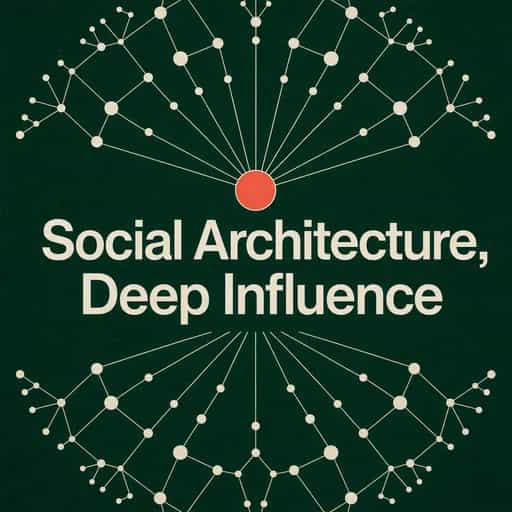
Joel: Exactly. It’s about building a "Social Support Operating System." We’re going to look at three specific rules today—rules for your time, your depth, and your boundaries—that take this research and turn it into a practical framework you can start using by Monday morning. We’re moving away from "accidental socializing" and moving toward "intentional social architecture".
Me: I love that term—intentional social architecture. Let’s dive into how we actually start laying the bricks.