The Hidden Architecture of Your Daily Choices
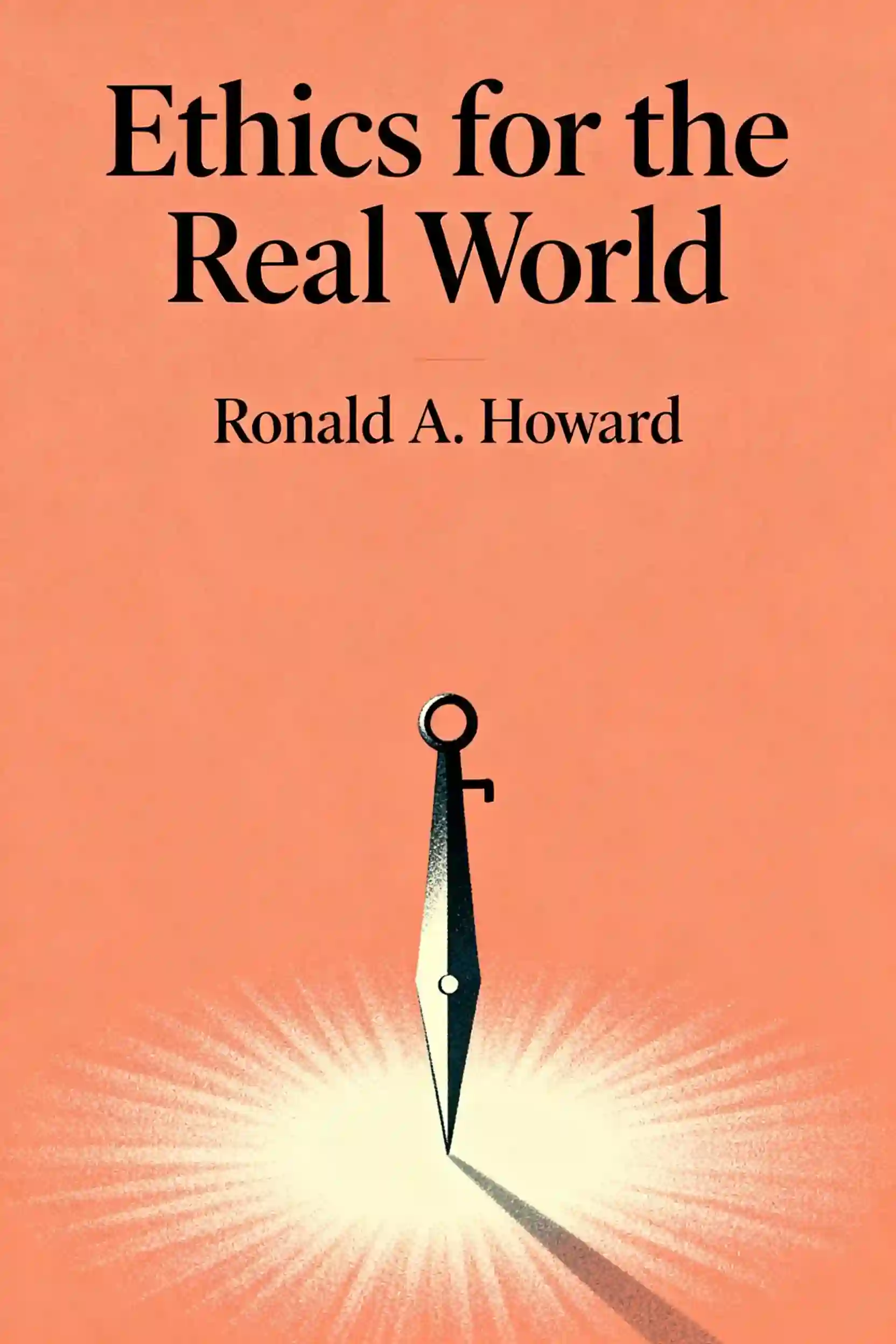
Lena: Imagine you’re standing at a crossroads, not a big, dramatic one with signs pointing to different cities, but a tiny one in your living room. You’ve promised yourself you’d start that new project, but the remote is right there. It feels like a small moment, right? But Ronald A. Howard, a professor at Stanford, argues that these micro-moments are actually the building blocks of your entire ethical identity . It’s a fascinating way to look at life coaching—not just as a way to get more done, but as a way to align your smallest actions with your deepest values.
Miles: That’s a smooth way to put it. It’s like we’re all architects, but instead of using steel and glass, we’re using our decisions. And what Howard points out in his work on virtue ethics is that most of us are building without a blueprint . We’re just reacting to whatever’s in front of us. If you’ve ever felt that disconnect—like you want to be a person of integrity but find yourself telling "white lies" to avoid awkwardness—you’re feeling that lack of a blueprint.
Lena: It’s so true. We often think ethics is just for the "big" stuff—like corporate whistleblowing or high-stakes legal battles. But for you, as someone looking at life coaching, it’s really about the integrity of your day-to-day existence. Ronald A. Howard emphasizes that ethics isn't just a set of rules you follow when someone is watching; it’s the internal compass that guides you when you’re all alone .
Miles: And that compass can get pretty rusty if you don’t use it. Think about the last time you made a promise to yourself. Maybe it was to exercise, or to be more present with your family. When you break that promise, it’s not just a "fail" on your to-do list. According to the framework Howard discusses, it’s actually an ethical lapse against yourself . That’s a heavy thought, but also a really empowering one because it means every small choice is a chance to rebuild that trust.
Lena: I love that idea of "ethical trust" with oneself. It changes the stakes of life coaching. It’s not just about "optimization"—it’s about character. If you can’t trust your own word to yourself, how can you expect to navigate the bigger challenges of life with any sense of peace? Howard really pushes the idea that being "ethical" isn't a destination you reach; it's a practice, like a muscle you have to flex every single day .
Miles: It’s definitely a workout. And just like a workout, the first few sets are the hardest. You might feel clumsy or even a bit fake when you start being hyper-aware of these choices. But Howard suggests that this awareness is exactly where the transformation happens . You start to see that your life isn't happening to you; it’s being created by you, one decision at a time.
Lena: So, if you’re ready to stop just "getting through" the day and start intentionally crafting it, we need to look at what Ronald A. Howard calls the "action-intention gap" . This is where the magic—and the struggle—of personal growth really lives. Let’s dive into how you can start identifying those gaps in your own life.