The Invisible Threads That Bind the Universe Together
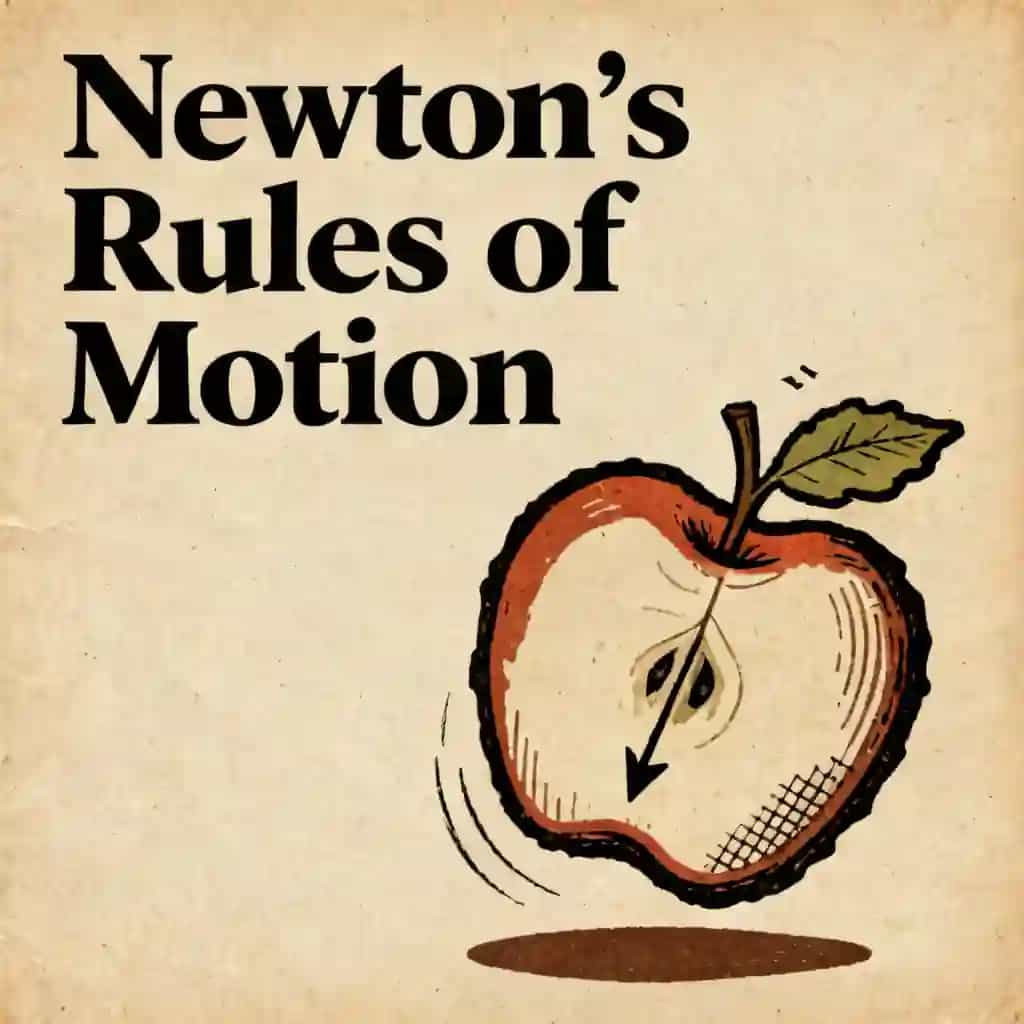
You are currently perched on a massive, spinning rock that is hurtling through a vast, silent vacuum at thousands of miles per hour. Around you, other massive rocks and giant balls of burning gas are performing a perfectly synchronized dance, circling one another in the dark without ever losing their rhythm. It is easy to take this for granted—to look up at the night sky and see a static map of lights—but the reality is a chaotic, high-stakes mechanical system governed by rules that are as rigid as they are invisible. If you have ever wondered why the moon doesn't simply float away or why an apple always falls toward the grass instead of drifting into the clouds, you are asking the very questions that birthed the field of physics. Physics is not just a collection of equations in a dusty textbook; it is the study of the "magic" that makes the universe predictable. One of the most high-value insights you can carry with you is the realization that the same force pulling on your phone when you drop it is the force holding the entire solar system together. This concept, known as the Law of Universal Gravitation, tells us that every single object with mass in the universe is attracting every other object. This means that you, personally, are exerting a gravitational pull on the planet Jupiter, and Jupiter is pulling right back on you. It is a subtle, constant conversation between all matter. Understanding this conversation allows us to predict the future with startling accuracy—from whether a basketball will swish through a hoop to the exact moment a planet will appear on the horizon. We are going to peel back the layers of this mechanical world, starting with the man who first put these invisible rules onto paper, Isaac Newton, and moving through the strange realities of energy, motion, and the curvature of space itself.