Charm and Manipulation: The Seduction Weak Spot
When does magnetic presence become a weapon? Learn how to spot the chemical ambush of coercive charm and protect your judgment from tactical likability.
Charm and Manipulation: The Seduction Weak Spot 베스트 인용
The most dangerous person in the room is rarely the one who frightens you; it is the one who makes you feel, for one brief, brilliant moment, completely safe. But 'feeling safe' and 'being safe' are two very different things.
Generated with BeFreed
The Fine Line Between Charm and Manipulation






자주 묻는 질문
The primary difference lies in consistency and intent. Naturally charming people remain relatively the same regardless of the social status or utility of the person they are talking to, whereas "coercive" charmers recalibrate their personality based on who they want to impress or use. Furthermore, real charm centers on making the other person feel interesting and valued, while tactical charm is an "impression management" strategy designed to make the charmer appear impressive or to data-mine the listener for emotional vulnerabilities.
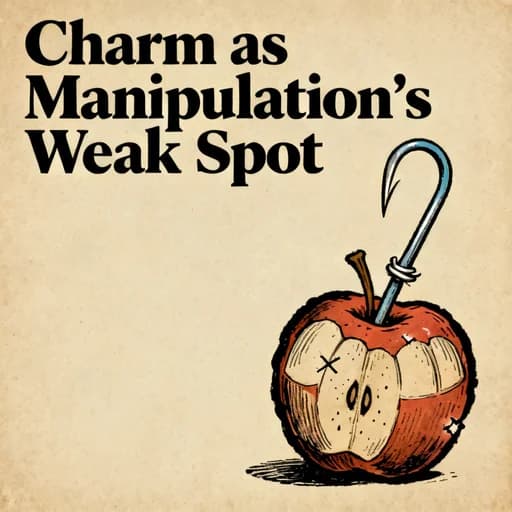
Charisma triggers a "chemical ambush" in the brain, releasing oxytocin, dopamine, and serotonin. These hormones create a "Seduction Weak Spot" where the rational brain essentially goes offline in response to the feeling of being seen and valued. This is often reinforced by the "Halo Effect," a cognitive bias where we assume that because someone possesses a positive trait like warmth or confidence, they must also possess other virtues like integrity and intelligence.
The distinction often comes down to the "strength of the pressure" and the transparency of the interaction. In healthy persuasion, the pressure is overt; you are aware that someone is trying to convince you, and you have the space to push back. Manipulation is covert and seeks to bypass your judgment by making the "wrong" path feel emotionally better than the "right" one. It treats the listener as an object to be played with rather than a rational being to be reasoned with, often leading the victim to make "mistakes" in what they believe or feel.
There are several common roles a manipulator might play, such as "The Disarmer," who uses humor to dodge accountability and boundaries. "The Mirroring Predator" reflects your own interests and values back at you to create a false sense of being "known." Finally, "The Wounded Charmer" weaponizes vulnerability by sharing past pain to activate your protective instincts, making you feel responsible for their happiness and less likely to hold them accountable for their current behavior.
The best defense is to "slow the intoxication" and allow the initial chemical reaction to wear off. Because charm works through speed and intensity, taking time to observe a person’s behavior over a long period is essential. You should pay attention to the "aftertaste" of the interaction—if you feel a nameless unease or hypervigilance despite the person being "perfectly nice," trust your nervous system. Additionally, observe how they handle boundaries or being told "no"; instrumental charm often evaporates into coldness or rage the moment the charmer loses control.
샌프란시스코에서 컬럼비아 대학교 동문들이 만들었습니다
"Instead of endless scrolling, I just hit play on BeFreed. It saves me so much time."


"I never knew where to start with nonfiction—BeFreed’s book lists turned into podcasts gave me a clear path."


"Perfect balance between learning and entertainment. Finished ‘Thinking, Fast and Slow’ on my commute this week."
"Crazy how much I learned while walking the dog. BeFreed = small habits → big gains."
"Reading used to feel like a chore. Now it’s just part of my lifestyle."

"Feels effortless compared to reading. I’ve finished 6 books this month already."
"BeFreed turned my guilty doomscrolling into something that feels productive and inspiring."

"BeFreed turned my commute into learning time. 20-min podcasts are perfect for finishing books I never had time for."
"BeFreed replaced my podcast queue. Imagine Spotify for books — that’s it. 🙌"

"It is great for me to learn something from the book without reading it."
"The themed book list podcasts help me connect ideas across authors—like a guided audio journey."
"Makes me feel smarter every time before going to work"
샌프란시스코에서 컬럼비아 대학교 동문들이 만들었습니다
"Instead of endless scrolling, I just hit play on BeFreed. It saves me so much time."
"I never knew where to start with nonfiction—BeFreed’s book lists turned into podcasts gave me a clear path."
"Perfect balance between learning and entertainment. Finished ‘Thinking, Fast and Slow’ on my commute this week."
"Crazy how much I learned while walking the dog. BeFreed = small habits → big gains."
"Reading used to feel like a chore. Now it’s just part of my lifestyle."
"Feels effortless compared to reading. I’ve finished 6 books this month already."
"BeFreed turned my guilty doomscrolling into something that feels productive and inspiring."
"BeFreed turned my commute into learning time. 20-min podcasts are perfect for finishing books I never had time for."
"BeFreed replaced my podcast queue. Imagine Spotify for books — that’s it. 🙌"
"It is great for me to learn something from the book without reading it."
"The themed book list podcasts help me connect ideas across authors—like a guided audio journey."
"Makes me feel smarter every time before going to work"
"Instead of endless scrolling, I just hit play on BeFreed. It saves me so much time."
"I never knew where to start with nonfiction—BeFreed’s book lists turned into podcasts gave me a clear path."
"Perfect balance between learning and entertainment. Finished ‘Thinking, Fast and Slow’ on my commute this week."
"Crazy how much I learned while walking the dog. BeFreed = small habits → big gains."
"Reading used to feel like a chore. Now it’s just part of my lifestyle."
"Feels effortless compared to reading. I’ve finished 6 books this month already."
"BeFreed turned my guilty doomscrolling into something that feels productive and inspiring."
"BeFreed turned my commute into learning time. 20-min podcasts are perfect for finishing books I never had time for."
"BeFreed replaced my podcast queue. Imagine Spotify for books — that’s it. 🙌"
"It is great for me to learn something from the book without reading it."
"The themed book list podcasts help me connect ideas across authors—like a guided audio journey."
"Makes me feel smarter every time before going to work"
"Instead of endless scrolling, I just hit play on BeFreed. It saves me so much time."
"I never knew where to start with nonfiction—BeFreed’s book lists turned into podcasts gave me a clear path."
"Perfect balance between learning and entertainment. Finished ‘Thinking, Fast and Slow’ on my commute this week."
"Crazy how much I learned while walking the dog. BeFreed = small habits → big gains."
"Reading used to feel like a chore. Now it’s just part of my lifestyle."
"Feels effortless compared to reading. I’ve finished 6 books this month already."
"BeFreed turned my guilty doomscrolling into something that feels productive and inspiring."
"BeFreed turned my commute into learning time. 20-min podcasts are perfect for finishing books I never had time for."
"BeFreed replaced my podcast queue. Imagine Spotify for books — that’s it. 🙌"
"It is great for me to learn something from the book without reading it."
"The themed book list podcasts help me connect ideas across authors—like a guided audio journey."
"Makes me feel smarter every time before going to work"