Amtrak: The High-Stakes Battle for American Rail
Born from a private sector collapse, Amtrak now navigates a complex landscape of record ridership, crumbling Civil War-era infrastructure, and the constant friction of sharing tracks with freight giants.

Amtrak: The High-Stakes Battle for American Rail 베스트 인용
Amtrak is caught between a mandate to provide a public service and a constant pressure to turn a profit, all while owning only a tiny fraction of the tracks they use.
Generated by angela
Give me a very brief overview of Amtrak‘s history and the difficulties this company is facing now


자주 묻는 질문
Amtrak was formed by the federal government in 1971 as a quasi-public corporation to prevent the total collapse of passenger rail in the United States. By 1970, private railroads were losing millions of dollars and had reduced the number of passenger trains from 9,000 to just 450. The private companies were desperate to offload the financial burden of passenger service to focus on profitable freight shipping, so the government stepped in to preserve a national network that would have otherwise ceased to exist.
Amtrak owns only about three percent of the tracks it uses, primarily in the Northeast Corridor. For the vast majority of its routes, Amtrak operates as a "guest" on tracks owned by private freight railroads. Although federal law technically grants passenger trains preference, freight dispatchers often prioritize their own miles-long cargo trains. Because these massive freight trains frequently do not fit into existing sidings, Amtrak trains are forced to pull over and wait, leading to significant delays that Amtrak cannot directly control.
Amtrak is structured as a for-profit corporation but is legally required to operate a national network, including long-distance routes that lose money. This creates a "paradox" where the company is criticized for financial losses while being forbidden from cutting the very routes that cause those losses. These money-losing routes are often politically necessary to maintain broad support in Congress, yet the resulting "deficit" is frequently used as an argument against providing the company with the long-term capital funding it needs for modernization.
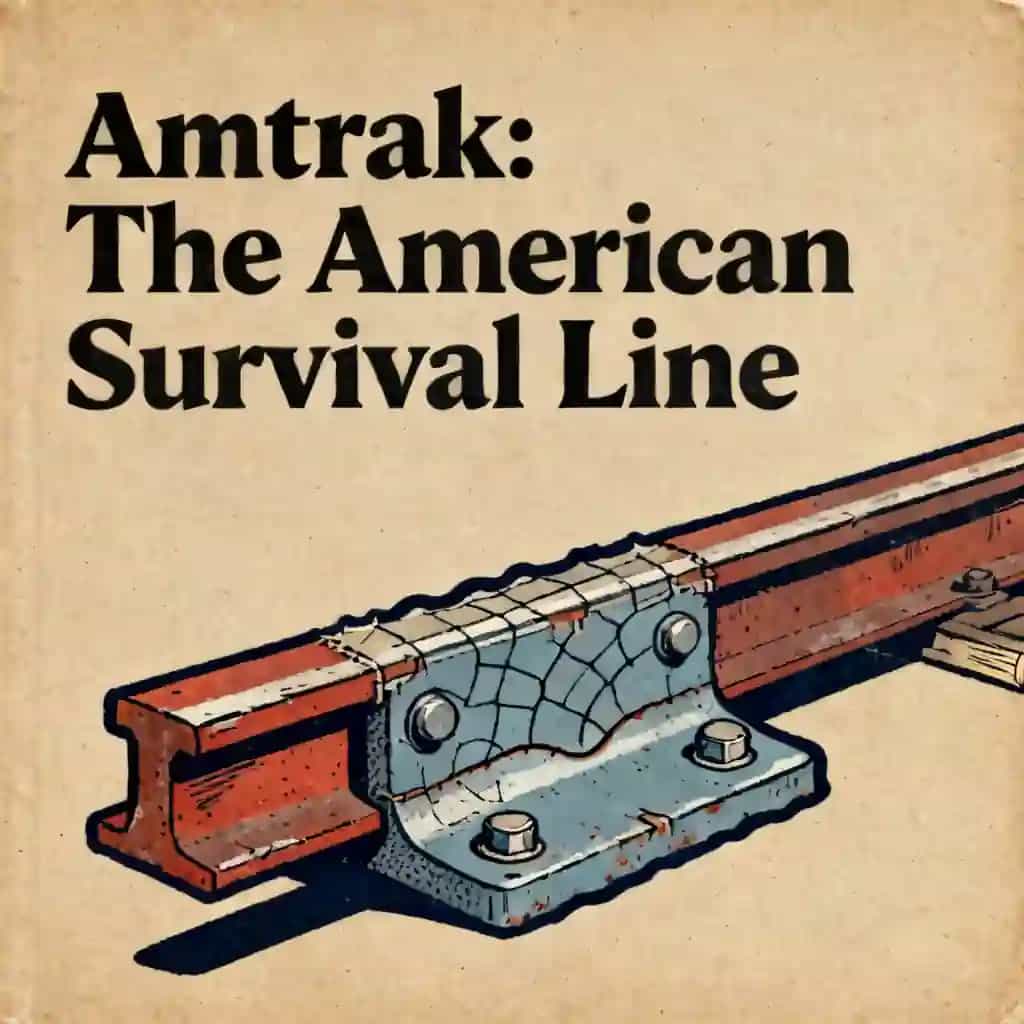
The Northeast Corridor relies on aging infrastructure that, in some cases, dates back to the Civil War era. Key bottlenecks include the North River Tunnels under the Hudson River, which opened in 1910 and suffered significant saltwater damage during Hurricane Sandy, and century-old bridges in Maryland and Connecticut that occasionally get stuck in the open position. These "old and rusty" components limit train speeds and create a massive "state of good repair" backlog that requires billions of dollars in investment just to meet modern safety and reliability standards.
There is a common "subsidy myth" that suggests only rail requires government help. In reality, highways and airports are heavily subsidized through general tax revenue, public bonds, and government-funded systems like air traffic control. However, while society generally views roads and fire departments as public goods, Amtrak is often held to a double standard where it is expected to cover all its infrastructure and operating costs through ticket sales alone. This ignores "positive externalities" like reduced traffic congestion and lower carbon emissions that don't appear on a corporate balance sheet.
샌프란시스코에서 컬럼비아 대학교 동문들이 만들었습니다
"Instead of endless scrolling, I just hit play on BeFreed. It saves me so much time."


"I never knew where to start with nonfiction—BeFreed’s book lists turned into podcasts gave me a clear path."


"Perfect balance between learning and entertainment. Finished ‘Thinking, Fast and Slow’ on my commute this week."
"Crazy how much I learned while walking the dog. BeFreed = small habits → big gains."
"Reading used to feel like a chore. Now it’s just part of my lifestyle."

"Feels effortless compared to reading. I’ve finished 6 books this month already."
"BeFreed turned my guilty doomscrolling into something that feels productive and inspiring."

"BeFreed turned my commute into learning time. 20-min podcasts are perfect for finishing books I never had time for."
"BeFreed replaced my podcast queue. Imagine Spotify for books — that’s it. 🙌"

"It is great for me to learn something from the book without reading it."
"The themed book list podcasts help me connect ideas across authors—like a guided audio journey."
"Makes me feel smarter every time before going to work"
 Ask ChatGPT
 Ask Claude
샌프란시스코에서 컬럼비아 대학교 동문들이 만들었습니다
"Instead of endless scrolling, I just hit play on BeFreed. It saves me so much time."
"I never knew where to start with nonfiction—BeFreed’s book lists turned into podcasts gave me a clear path."
"Perfect balance between learning and entertainment. Finished ‘Thinking, Fast and Slow’ on my commute this week."
"Crazy how much I learned while walking the dog. BeFreed = small habits → big gains."
"Reading used to feel like a chore. Now it’s just part of my lifestyle."
"Feels effortless compared to reading. I’ve finished 6 books this month already."
"BeFreed turned my guilty doomscrolling into something that feels productive and inspiring."
"BeFreed turned my commute into learning time. 20-min podcasts are perfect for finishing books I never had time for."
"BeFreed replaced my podcast queue. Imagine Spotify for books — that’s it. 🙌"
"It is great for me to learn something from the book without reading it."
"The themed book list podcasts help me connect ideas across authors—like a guided audio journey."
"Makes me feel smarter every time before going to work"
"Instead of endless scrolling, I just hit play on BeFreed. It saves me so much time."
"I never knew where to start with nonfiction—BeFreed’s book lists turned into podcasts gave me a clear path."
"Perfect balance between learning and entertainment. Finished ‘Thinking, Fast and Slow’ on my commute this week."
"Crazy how much I learned while walking the dog. BeFreed = small habits → big gains."
"Reading used to feel like a chore. Now it’s just part of my lifestyle."
"Feels effortless compared to reading. I’ve finished 6 books this month already."
"BeFreed turned my guilty doomscrolling into something that feels productive and inspiring."
"BeFreed turned my commute into learning time. 20-min podcasts are perfect for finishing books I never had time for."
"BeFreed replaced my podcast queue. Imagine Spotify for books — that’s it. 🙌"
"It is great for me to learn something from the book without reading it."
"The themed book list podcasts help me connect ideas across authors—like a guided audio journey."
"Makes me feel smarter every time before going to work"
"Instead of endless scrolling, I just hit play on BeFreed. It saves me so much time."
"I never knew where to start with nonfiction—BeFreed’s book lists turned into podcasts gave me a clear path."
"Perfect balance between learning and entertainment. Finished ‘Thinking, Fast and Slow’ on my commute this week."
"Crazy how much I learned while walking the dog. BeFreed = small habits → big gains."
"Reading used to feel like a chore. Now it’s just part of my lifestyle."
"Feels effortless compared to reading. I’ve finished 6 books this month already."
"BeFreed turned my guilty doomscrolling into something that feels productive and inspiring."
"BeFreed turned my commute into learning time. 20-min podcasts are perfect for finishing books I never had time for."
"BeFreed replaced my podcast queue. Imagine Spotify for books — that’s it. 🙌"
"It is great for me to learn something from the book without reading it."
"The themed book list podcasts help me connect ideas across authors—like a guided audio journey."
"Makes me feel smarter every time before going to work"