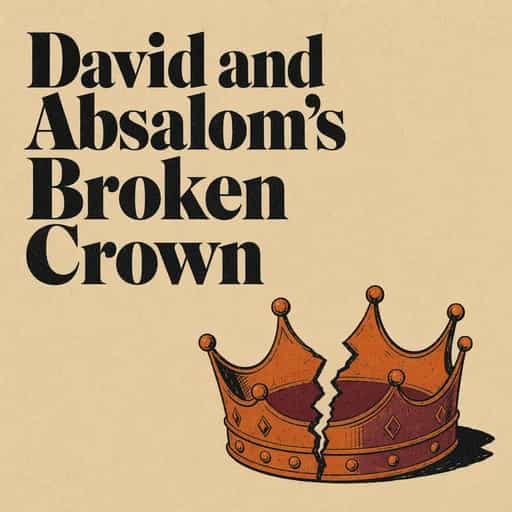
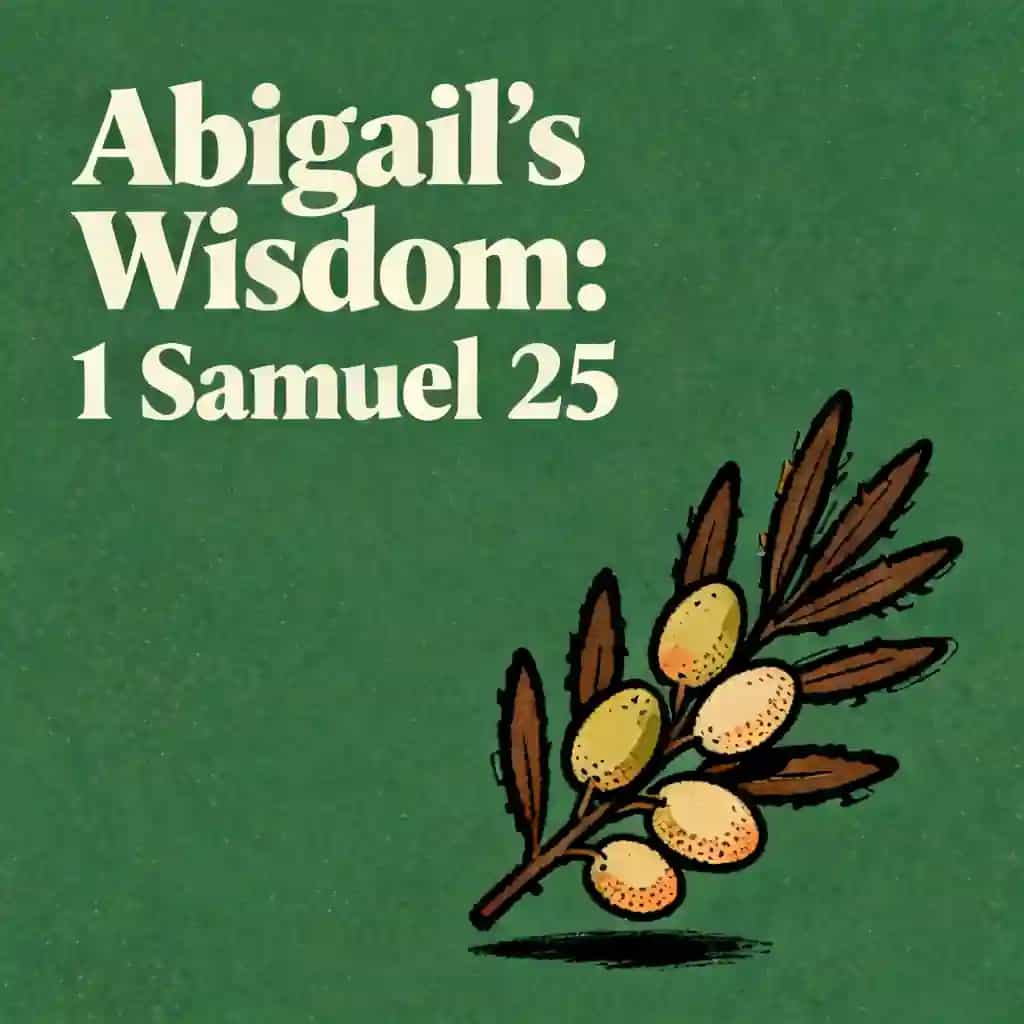
Eli: You know, Lena, we keep coming back to this idea that Nabal is a "fool." But when I look at 1 Samuel 25:3, it mentions he’s from the "House of Caleb." That’s a huge detail! Caleb was one of the two spies who actually trusted God to take the Promised Land. He was a hero! So Nabal has this incredible spiritual pedigree, yet he’s "churlish and evil." It makes me think about how heritage doesn't guarantee holiness. You can have all the "prestige" of a noble ancestry and still be a total disaster in your character.
Lena: That’s such a sharp observation, Eli. It highlights the biblical theme that God looks at the heart, not just the lineage. Nabal is the "fool" who has everything—wealth, a beautiful and wise wife, a great family name—but he has no "understanding." The Hebrew contrast between him and Abigail is so intentional. She is "tovat-sekhel," which means she has "good understanding" or moral discernment. He is "qasheh," meaning "harsh" or "hard." It’s like the difference between a stone and a living spring.
Eli: And speaking of stones—the text says that when Abigail finally told Nabal what she’d done to save the household, his heart "became like a stone." That’s such a vivid image. Some scholars, like Pastor Jason Elder, suggest he might have had a stroke, but the narrative frames it theologically. Ten days later, "the Lord struck Nabal, and he died." It’s this terrifyingly precise divine judgment. It’s like the text is saying, "Nabal lived with a heart of stone, so he died with a heart of stone."
Lena: It’s a sobering reminder that while Abigail is a type of Christ’s mercy, the story also shows us the reality of divine justice. Scripture interprets scripture here—think of the Pharaoh in the Exodus. His heart was hardened, and eventually, that hardness led to his destruction. Nabal is like a mini-Pharaoh in the middle of Judah. He’s feasting "like a king" while insulting the true king. The irony is just dripping off the page. He thinks he’s the master of his domain, but he’s actually just a fool on the edge of a cliff.
Eli: But let’s flip the script to David. He’s the "man after God’s own heart," but in this chapter, his heart is a mess! He’s so offended by Nabal’s rudeness that he’s ready to kill every single male in Nabal’s household. He even takes an oath to do it! If Abigail doesn't show up, David commits a crime that would have haunted his entire reign. It makes me realize that even the most "spiritual" people can be undone by a bruised ego.
Lena: Absolutely. And that’s why Abigail’s intervention is so prophetic. She doesn't just bring food; she brings a mirror. She shows David who he is becoming if he follows through with his anger. She tells him, "The Lord will certainly make my lord a sure house." She’s reminding him of his calling. It’s like she’s saying, "David, you’re destined to be the King of Israel. Don't act like a common bandit." It reminds me of what Robert Alter says in his commentary—that Abigail perceives the moral danger David faces before David himself does. She’s the one who saves David from David.
Eli: That is so profound. "She saves David from David." That’s exactly what Jesus does for us, isn't it? He saves us from our own destructive impulses, our own "warring hearts." Sister Yee mentioned that the Savior can release us from the "sin and weight" of that warring heart. When we’re consumed with anger or the need for revenge, we’re actually in a prison of our own making. Abigail comes into that prison and offers a way out.
Lena: And look at how she does it. She doesn't come in screaming or demanding. She "hurries," she "dismounts," she "bows." She uses the cultural forms of humility to gain a hearing. Pastor Jason Elder points out that her gesture reflects diplomacy rather than mere submission. She’s taking the "lower place" so that she can lift David back up to his "higher calling." It’s a masterful display of what James Hamilton calls "wisdom under pressure." She isn't passive; she’s incredibly active. She’s a peacemaker, which Jesus says are the "blessed" ones.
Eli: It strikes me that she’s also a "prophetess of the provision." She brings 200 loaves of bread—that’s a massive amount! It’s not just a snack; it’s a statement. She’s saying, "God has provided wealth for this house, and I am using it to honor the Lord’s Anointed." She’s reversing Nabal’s stinginess. It reminds me of the "Beauty for Ashes" concept Sister Yee talks about. Abigail takes the "ashes" of Nabal’s foolishness and turns them into a "beauty" of reconciliation.
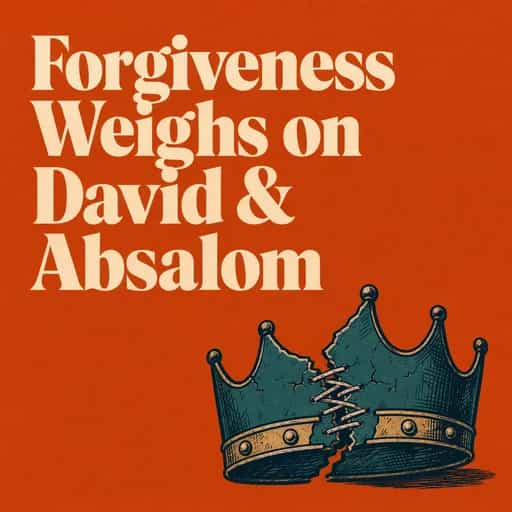
Lena: And that leads us to the moment of forgiveness. When David sees her, hears her, and sees the provision, his anger just... evaporates. He says, "Blessed be the Lord God of Israel, who sent you this day to meet me!" He recognizes that his encounter with her was "divine timing." He realizes that if he’d gone through with his plan, he would have "bloodguilt" on his hands. For everyone listening, think about those moments where someone "interrupted" your anger. Maybe it was a friend, a spouse, or just a quiet thought from the Holy Spirit. That’s the "Abigail moment" in your life—the Savior helping you avoid a mistake you can't take back.
Eli: It’s so true. I’ve had those moments where I was ready to "send a nasty email" or "say that cutting remark," and something just stopped me. David’s capacity to receive correction is actually one of his greatest traits. He’s a powerful warrior with 400 armed men behind him, and he listens to a woman who tells him he’s wrong. That takes a different kind of strength—the strength of humility.
Lena: It does. And that humility is what allows the Atonement to work in our lives. President Nelson said that the Savior will "grant you the ability to forgive anyone who has mistreated you." It doesn't mean what they did was okay. Nabal was objectively a jerk! But forgiveness means their hurtful acts "no longer canker your soul." David was able to ride away in peace, leaving Nabal to God’s justice. That’s the ultimate "spiritual momentum" President Nelson talks about—moving forward without the dead weight of a grudge.












![[e9493572-d918-47f9-8a55-9d4421a111ea:c0000] The Living Word Complete Final.pdf p1-1](/_next/image?url=https%3A%2F%2Fd1y2du6z1jfm9e.cloudfront.net%2Fassets%2Fpodcast%2Fyellow.png&w=1024&q=50)
![[e9493572-d918-47f9-8a55-9d4421a111ea:c0001] The Living Word Complete Final.pdf p1-1](/_next/image?url=https%3A%2F%2Fd1y2du6z1jfm9e.cloudfront.net%2Fassets%2Fpodcast%2Fgreen.png&w=1024&q=50)
![[e9493572-d918-47f9-8a55-9d4421a111ea:c0002] The Living Word Complete Final.pdf p1-1](/_next/image?url=https%3A%2F%2Fd1y2du6z1jfm9e.cloudfront.net%2Fassets%2Fpodcast%2Fpurple.png&w=1024&q=50)
![[e9493572-d918-47f9-8a55-9d4421a111ea:c0003] The Living Word Complete Final.pdf p1-1](/_next/image?url=https%3A%2F%2Fd1y2du6z1jfm9e.cloudfront.net%2Fassets%2Fpodcast%2Fblue.png&w=1024&q=50)