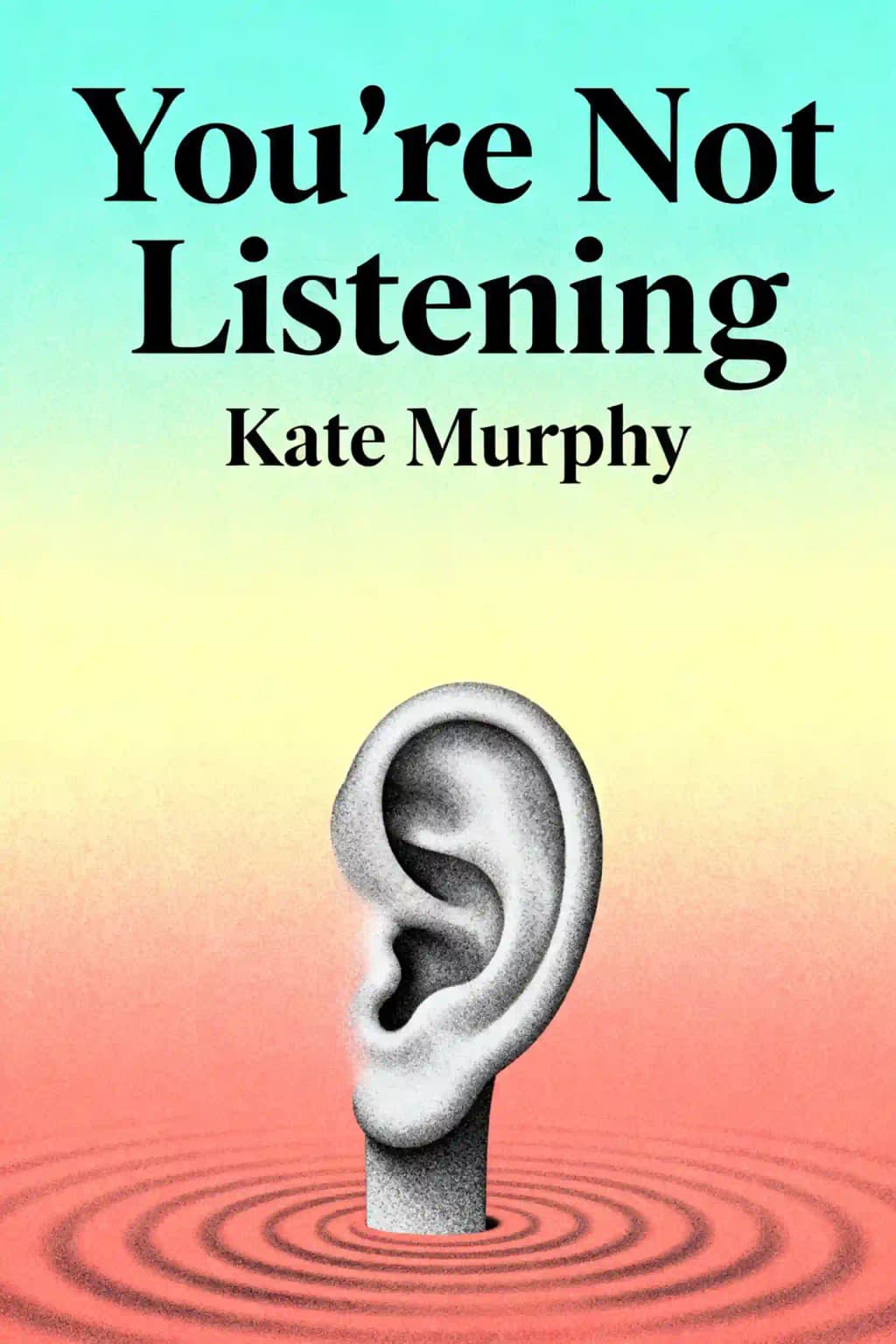
In a world where everyone talks but few truly hear, "You're Not Listening" reveals why our relationships suffer from communication breakdown. Kate Murphy's life-changing insights - endorsed by CIA interrogators and therapists alike - expose how reclaiming the lost art of listening can cure our modern epidemic of loneliness.
Kate Murphy, author of You’re Not Listening, is a Houston-based journalist and trusted voice on human communication, blending insights from psychology, neuroscience, and sociology. A contributor to The New York Times, The Economist, and Texas Monthly, Murphy’s career spans investigative reporting on topics from health to technology, driven by her fascination with human behavior.
Her book—a mix of cultural critique and scientific exploration—draws on interviews with expert listeners like CIA agents and focus group moderators, reflecting her background in industrial psychology and decades of journalistic curiosity.
Murphy’s work has been featured on NPR, TEDx, and in global media, reinforcing her authority on interpersonal dynamics. A licensed commercial pilot, she combines analytical rigor with real-world storytelling. You’re Not Listening has been praised by The Washington Post and The Guardian as a “timely manifesto” on rebuilding meaningful connections, earning a spot on multiple best-of lists for its actionable insights into modern communication struggles.
You're Not Listening explores the modern crisis of listening, explaining why people struggle to connect authentically despite constant communication. Kate Murphy combines psychology, neuroscience, and sociology to reveal how poor listening harms relationships and society, while offering actionable strategies to improve this skill. The book includes insights from professionals like CIA agents and bartenders, framing listening as a transformative tool for empathy and understanding.
This book is ideal for professionals, educators, leaders, and anyone seeking deeper personal or workplace connections. It’s particularly valuable for those navigating digital communication challenges, improving conflict resolution, or building trust in relationships. Murphy’s blend of research and real-world examples makes it accessible for general readers and experts alike.
Yes—Murphy’s engaging storytelling and evidence-based insights make it a timely guide for improving communication in an age of distraction. Readers gain practical tips to combat loneliness, foster collaboration, and enhance emotional intelligence. Critics praise its relevance to both personal growth and professional development.
Key ideas include:
While Quiet focuses on introversion’s strengths, Murphy’s book examines listening as a universal skill for bridging divides. Both highlight undervalued social traits, but You're Not Listening emphasizes actionable communication strategies over inherent personality traits.
Some reviewers note the book prioritizes conceptual insights over step-by-step frameworks. Others argue it could delve deeper into cultural barriers to listening, such as systemic biases or technology addiction.
Murphy highlights listening as critical for leadership, sales, and team cohesion. Examples include focus groups that uncover unspoken customer needs and managers who build trust by validating employee concerns.
These lines underscore the book’s thesis that listening is an active, empathetic practice.
As digital interaction grows, Murphy’s lessons on combating isolation and fostering genuine dialogue remain urgent. The book’s focus on empathy aligns with rising demands for emotional intelligence in AI-driven workplaces and polarized social landscapes.
She describes it as a multisensory process combining auditory, visual, and emotional engagement. Good listeners prioritize understanding over responding, balancing curiosity with patience to uncover deeper meanings.
Murphy interviews a CIA agent honing interrogation techniques, a bartender resolving conflicts, and a furniture salesman building client trust. These cases demonstrate listening’s role in diverse, high-stakes scenarios.
저자의 목소리로 책을 느껴보세요
지식을 흥미롭고 예시가 풍부한 인사이트로 전환
핵심 아이디어를 빠르게 캡처하여 신속하게 학습
재미있고 매력적인 방식으로 책을 즐기세요
Listening may be the most underrated and least understood skill in modern life.
People do not want to be interrogated or lectured. They want to be understood.
Listening is about being present, paying attention, and withholding judgment—all of which can be hard.
If you want to know what people are really thinking and feeling, you have to resist the urge to talk.
The goal of listening should not be to trap people in inconsistencies but to understand them.
You're Not Listening의 핵심 아이디어를 이해하기 쉬운 포인트로 분해하여 혁신적인 팀이 어떻게 창조하고, 협력하고, 성장하는지 이해합니다.
You're Not Listening을 빠른 기억 단서로 압축하여 솔직함, 팀워크, 창의적 회복력의 핵심 원칙을 강조합니다.

생생한 스토리텔링을 통해 You're Not Listening을 경험하고, 혁신 교훈을 기억에 남고 적용할 수 있는 순간으로 바꿉니다.
무엇이든 물어보고, 목소리를 선택하고, 진정으로 공감되는 인사이트를 함께 만들어보세요.

샌프란시스코에서 컬럼비아 대학교 동문들이 만들었습니다
"Instead of endless scrolling, I just hit play on BeFreed. It saves me so much time."
"I never knew where to start with nonfiction—BeFreed’s book lists turned into podcasts gave me a clear path."
"Perfect balance between learning and entertainment. Finished ‘Thinking, Fast and Slow’ on my commute this week."
"Crazy how much I learned while walking the dog. BeFreed = small habits → big gains."
"Reading used to feel like a chore. Now it’s just part of my lifestyle."
"Feels effortless compared to reading. I’ve finished 6 books this month already."
"BeFreed turned my guilty doomscrolling into something that feels productive and inspiring."
"BeFreed turned my commute into learning time. 20-min podcasts are perfect for finishing books I never had time for."
"BeFreed replaced my podcast queue. Imagine Spotify for books — that’s it. 🙌"
"It is great for me to learn something from the book without reading it."
"The themed book list podcasts help me connect ideas across authors—like a guided audio journey."
"Makes me feel smarter every time before going to work"
샌프란시스코에서 컬럼비아 대학교 동문들이 만들었습니다

You're Not Listening 요약을 무료 PDF 또는 EPUB으로 받으세요. 인쇄하거나 오프라인에서 언제든 읽을 수 있습니다.
When was the last time someone truly listened to you? Not the polite nodding while checking a phone, but genuine, undivided attention that made you feel seen and understood? We're experiencing a listening crisis that cuts across every aspect of modern life. Despite our hyperconnected world, nearly half of Americans report lacking meaningful daily conversations. The average person spends less than 10 minutes per day in face-to-face conversation while spending over three hours on social media. Our educational system reinforces speaking skills through debate teams and public speaking courses but offers virtually no training in listening. This deficit begins early. From childhood, we associate "Listen to me!" with unpleasant directives. Media normalizes shouting matches rather than thoughtful dialogue. When asked "Who listens to you?", most people pause uncomfortably before naming only one or two individuals-typically a spouse or close family member. Others admit to paying therapists or hairdressers simply to be heard. Many consider it "burdensome" to ask friends to listen to anything meaningful beyond social pleasantries. The cost extends beyond personal relationships. In healthcare, doctors interrupt patients within 11 seconds on average, leading to misdiagnoses. In education, students retain only 25% of what they hear. In workplaces, employees who feel heard are 4.6 times more likely to perform their best work, yet only 30% feel their voices matter.