1장
Reimagining Education for All: A Journey to True Inclusion
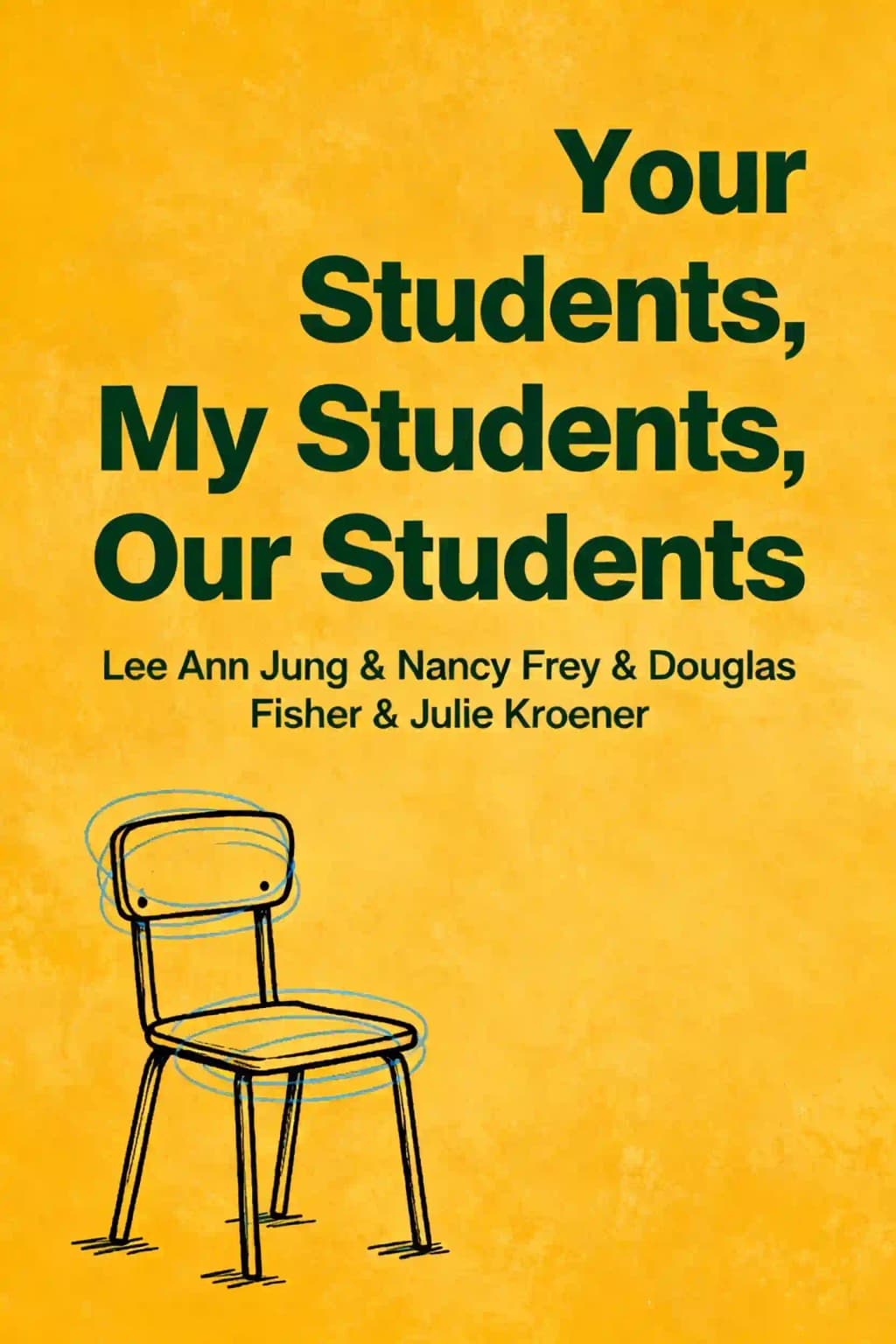
When Kevin, a middle school student with autism, described special education as a place where students do what they're "not good at all day long," he captured the fundamental flaw in our educational system. Kevin's life transformed when his family moved him from a segregated classroom to an inclusive general education setting. In this new environment that supported all students' needs, Kevin thrived-eventually graduating with honors, earning an engineering degree, and securing employment at a company that values people with autism for their unique analytical abilities. His journey illustrates how inclusive education can prepare students for inclusive workplaces and communities, allowing them to experience the same joys and challenges as everyone else while maintaining their authentic selves. This groundbreaking book "Your Students, My Students, Our Students" has become a cornerstone text in teacher education programs nationwide, praised by education reformers and cited by the U.S. Department of Education as a model for reimagining special education services.
2장
The Inclusion Imperative: Understanding Where We Are and Where We Need to Go
Despite remarkable technological advancements making our world more accessible through features like voice recognition, text transcription, screen readers, and adaptive devices, our schools continue to systematically minimize the intersection of people with and without disabilities. This disconnect stems from a deeply entrenched 200-year medical model that catalogs impairment and focuses on "fixing" individuals rather than viewing disability as a social construct shaped by policy, ethics, and environmental barriers. The marginalization of students with disabilities reflects deeper values embedded in school structures-as one superintendent astutely noted, "Show me your master schedule, and I'll tell you what your values are." This scheduling often reveals segregated special education programs and limited opportunities for meaningful inclusion.
Disability is now understood as one critical dimension of identity alongside race, ethnicity, language, gender, sexual orientation, and lived experience. Modern disability theory recognizes that disability identity intersects with and is shaped by these other aspects of human diversity. Segregating students by disability status not only marginalizes them and threatens their identity as full citizens but also significantly limits the experiences of students without disabilities, who miss valuable opportunities to know peers with disabilities as complete individuals with unique personalities, quirks, challenges, talents, and successes. This separation perpetuates harmful stereotypes and prevents the development of authentic relationships.
While Americans often assume the U.S. leads in special education due to long-standing legislation like IDEA and ADA, other countries like Italy have implemented more successful and comprehensive inclusive approaches. Italian schools include students of all ability levels in general education classrooms throughout the entire school day, from kindergarten through high school. For Italians, inclusion isn't viewed as controversial or experimental-students with disabilities are welcomed simply because they're human beings deserving of dignity and belonging. Italian general education teachers take full ownership of all students' learning, including those with significant disabilities, and use paraprofessionals strategically and sparingly, primarily for non-instructional support rather than as primary instructors.
In team-based inclusive education, all students benefit from coordinated support within general education classrooms through co-teaching, universal design for learning, and differentiated instruction. Decades of research consistently shows students taught in inclusive settings achieve higher academic outcomes than those pulled from general education classrooms for segregated instruction. They're also significantly more likely to pursue postsecondary education, maintain employment, live independently, and show higher social and communication outcomes throughout their lives. Inclusive education also elevates overall instruction quality as general education teachers develop skills to adapt to a broader range of learning profiles and specialists gain deeper understanding of the general curriculum and grade-level standards. This collaborative approach creates a richer learning environment that benefits all students through increased instructional creativity, peer support systems, and celebration of human diversity.
3장
Building a Culture of Equity and Inclusion: The Foundation of Change
Meaningful school improvements only take root when adults fundamentally reevaluate their deeply held beliefs about labels, instruction, service delivery, roles, and expectations. Through compelling stories like Shanice's-a student who transformed from a struggling learner in segregated special education to an honor roll student when moved to general education classes with appropriate supports-we see how philosophical shifts drive systemic change. Equity and inclusion must become more than buzzwords; they must form the school's foundational ethos, with excellent education for all students as the north star guiding every initiative and decision.
Research consistently demonstrates that teachers exhibit both conscious and unconscious bias toward labeled students, expecting less academically, providing fewer opportunities for advanced work, and evaluating behavior more negatively. This practice extends far beyond disability categories, with particularly troubling patterns in the disproportionate labeling of African American boys with behavioral disorders - often at 3-4 times the rate of their peers. John Hattie's comprehensive meta-analysis found that not labeling students has a significant positive effect size of .61, accelerating learning by more than a year. We must critically examine and dismantle tracking practices that trap students in lower-level instruction, preventing advancement even when capable. Additionally, schools must adopt people-first language that emphasizes that all students are "our students" deserving expert assistance when needed, rather than defining them by their challenges.
The "prove you belong" mindset that emerged with 1970s "mainstreaming" continues to create barriers today. Consider Justine, denied access to general education until she mastered personal care skills, or Brad, required to learn sight words before joining regular classes - arbitrary prerequisites that delayed their academic growth. The widespread practice of segregating students with disabilities into special education classrooms taught by teachers without deep content knowledge leads to consistently poor outcomes in core subjects. Multiple longitudinal studies show that an inclusive approach where students receive both high-quality general education instruction and targeted supplemental support produces significantly better academic and social outcomes than the traditional "pull out and replace" model.
Special education legislation, while well-intentioned, established a problematic binary system that sorts students into those with defined disabilities and those without, determining service access through rigid cutoff scores and categories. This oversimplified sorting mechanism ignores the reality that students' needs exist on a complex continuum-some students without disability labels require intensive academic or behavioral support, while some with labels need minimal specialized assistance. A student's disability status often functions merely as a "sociopolitical passport to services," rather than an accurate reflection of their learning needs or potential. Progressive schools are moving toward needs-based support systems that provide appropriate assistance to any student requiring it, regardless of formal classification or label. This shift requires reimagining both the structure and delivery of educational support services to create truly responsive learning environments.
4장
Reimagining Special Education Structures for Equitable Access
When Kathryn tried to enroll her son Jamie, who has a visible disability, in their neighborhood school, she was redirected to a "cluster program" miles away. Though Jamie eventually attended his local school, Kathryn had to fight through bureaucracy to make it happen, leaving her exhausted from the process. This scenario plays out daily across America, where placement disparities in special education have persisted for decades.
In the late 1980s, a child with intellectual disability in Massachusetts was 16 times more likely to be in general education than a similar child in California. Today, large urban centers like New York City, Los Angeles, and Chicago maintain the most restrictive placements nationwide. Many districts maintain separate facilities for students with IEPs that fill year after year, like the "Field of Dreams" principle: "If you build it, they will come." Federal law explicitly prohibits placement decisions based on disability category, delivery system configuration, service availability, space, or administrative convenience. Yet geography and system capacity often determine placement more than individual needs.
The infused skills grid provides a framework for making effective placement decisions that honor the least restrictive environment principle. This approach uses the general education classroom and curriculum as the default setting, conducting an ecological inventory of the school day to determine where students can work toward their IEP goals. When Lee Ann observed kindergartners pulled from class to practice cutting with scissors in an occupational therapist's room, she questioned why this couldn't happen in their regular classroom with adapted scissors. The grid maps priority skills against daily settings to identify natural opportunities for intervention.
True inclusive education requires not just placing students in the least restrictive environment but also implementing the least restrictive service delivery model. Simply changing the location of services from segregated to integrated settings doesn't guarantee inclusion. Clustering many students with disabilities in a few classrooms, having specialists work with students in isolated corners, or assigning one-on-one paraprofessionals who create dependency all technically comply with LRE requirements but miss the spirit of inclusive education.
When schools cluster too many students with disabilities into designated "inclusion classrooms," they create problematic conditions. This approach violates natural proportions, as students with disabilities should be distributed across classrooms reflecting their percentage in the school population (typically around 10%). To determine if your school has equitable distribution, compare the percentage of students with disabilities in your school to the percentage within individual classrooms.
5장
Leveraging Collective Expertise: Breaking Down Professional Silos
The division between general and special education begins on the first day of most teacher preparation programs, where future special educators follow entirely separate paths from general education teachers. This traditional arrangement has serious consequences, as special educators must support students in the least restrictive environment without understanding general education curriculum and pacing, while general educators must teach students with disabilities with minimal preparation in differentiation and accommodation strategies. This disconnect creates immediate barriers to collaboration and effective inclusive practices.
General educators are often marginally involved in IEP meetings, sometimes with only one teacher present despite a student having multiple general education teachers across subjects. Some are even pulled randomly from hallways to satisfy legal requirements, a practice that undermines the serious nature of these meetings. After briefly reporting on student performance, they're typically excused, sending the harmful message that they aren't essential partners in supporting students with disabilities. This limited participation prevents the development of truly comprehensive and effective educational plans.
The outdated axiom that general educators know content while special educators know intervention must change for inclusive education to thrive. This territorialism divides caring educators into camps, undermining the sharing of knowledge that teams possess. School change requires collective effort, whether closing achievement gaps, reducing disciplinary inequities, or supporting students in poverty. Successful inclusive schools demonstrate that when expertise is shared freely across traditional boundaries, all students benefit from the combined knowledge and skills of their educators.
Today's special educators are shifting from categorical disability-focused training to more collaborative arrangements in inclusive environments. Their instructional role now includes providing individual and small-group instruction within general education classrooms, co-teaching using various models (parallel, station, team teaching), designing accommodations and modifications that preserve learning objectives, and introducing universal design strategies that general educators can eventually implement independently. Rather than being the sole deliverer of interventions, they coordinate comprehensive supports for students' academic, behavioral, and medical needs, often serving as case managers who facilitate communication between all stakeholders.
General educators in inclusive schools teach increasingly diverse student populations while communicating daily with special education staff they once rarely interacted with. Their instructional responsibilities still center on primary instruction for all students, but now include using varied arrangements like flexible grouping, differentiated instruction, and technology integration to meet diverse needs. They consult regularly with special educators to co-design instruction, implement universal design principles, and monitor academic progress through data-driven assessment to identify necessary adaptations.
Paraprofessionals have become ubiquitous in modern classrooms, with over 90 percent of U.S. public schools employing them. In instruction, paraprofessionals implement teacher-designed lessons and provide accommodations and modifications while avoiding "accidental modifications" that unintentionally lower expectations or change learning outcomes. They support small groups, assist with classroom management, and help collect student performance data. Crucially, they should never be assigned to a single student, as this creates unhealthy dependency and hinders peer relationships essential for social development. Instead, they should rotate among students and support the entire classroom community under teacher direction.
6장
Collaborative Instruction: Transforming Teaching and Learning
At Great Lakes Middle School, 7th grade teachers recognized that their approach to supporting students with disabilities in writing was creating dependency rather than building skills. When struggling students were sent to the resource room for one-on-one help completing assignments, they received acceptable grades but showed no improvement in writing ability over time. The real goal should be developing students' lifelong skills for happiness and success, not just completing individual assignments.
Response to Intervention (RTI) is often misunderstood as a tiered system where struggling students move from general education classrooms (Tier 1) to intervention classes (Tier 2) and finally to special education (Tier 3). However, RTI was designed as a prevention model with remediation added only when excellent instruction proves unsuccessful. True RTI is a whole-school initiative focused on systematically improving general education instruction to minimize intervention needs.
Multi-tiered systems of support (MTSS) expand RTI principles to address behavioral needs and social-emotional learning for all students, regardless of IEP status. This schoolwide process provides specialized academic, behavioral, and emotional supports through counseling, self-regulation instruction, family supports, and instructional coaching. MTSS requires flexible movement between tiers based on ongoing assessment and progress monitoring. Students shouldn't be stuck in "Tier 2 intervention classes" all year due to scheduling constraints.
Through co-teaching, services are brought into the general education classroom using a "zone defense" structure where teachers help any student who needs support. General and special educators share responsibility for all students, with teaching, re-teaching, paperwork, and progress monitoring not solely the responsibility of one teacher. True co-teaching involves co-planning, co-instruction, co-assessment, and co-reflection, with teachers trading lead and supporting roles as needed.
The gradual release of responsibility (GRR) instructional framework provides common ground for co-teachers to plan effective learning experiences. This model includes focused instruction ("I do it"), guided instruction ("We do it"), collaborative learning ("You do it together"), and independent learning ("You do it alone"). Research shows this framework improves classroom instruction and increases student learning across all populations, including English learners and students with IEPs. When any phase is omitted, vulnerable students pay the steepest price, as all four instructional moves are crucial for accelerating learning.
7장
Honoring Student Dreams: Person-Centered Planning for the Future
This chapter examines how educators can honor students' aspirations and dreams rather than limiting them based on disability labels. It opens with Kelly's story-a student with Down syndrome who wanted to become a police officer. While some educators dismissed her dream as unrealistic, a new school helped her pursue it, leading to an internship and eventual employment at a police department. Planning for post-high school transitions should begin earlier, with educators helping students explore their aspirations from a young age to improve engagement and outcomes.
The Individualized Education Program (IEP) process has drifted from its original intent. Rather than being aspirational goal-setting sessions with meaningful problem-solving, IEP meetings often become sterile reviews of numbers and legal requirements. Many families enter IEP meetings to find conversations already started without them, reviewing predetermined goals with little opportunity for input. Students themselves are often absent from meetings or present merely as observers while adults make decisions about them. The authors argue that goals should be developed with students rather than for them.
Traditional IEP meetings often start with present levels of performance and deficits rather than student aspirations. The authors advocate for beginning with student dreams and priorities, gathering this information well before goals are drafted. Person-centered planning practices like Making Action Plans (MAPs) can help by engaging the student's entire support network in articulating possibilities. This process helps identify what outcomes would support the student's ultimate dream, allowing educators to work backward to determine immediate next steps.
Many IEP goals fail to reveal anything meaningful about the student or intended outcomes. Goals frequently become discipline-driven ("speech goals," "PT goals") rather than student-centered. The chapter illustrates better practice through Alex's story, where teachers helped a 17-year-old junior connect his welding interests to meaningful goals about operating his own auto body shop, taking business classes, and developing customer service skills-all directly supporting his aspirations rather than focusing solely on deficits.
Setting aspirational goals is only the beginning-IEPs rarely include sufficient detail for implementing and measuring progress. Goal attainment scales bridge this gap by creating personalized measurement tools for each goal. These scales help teachers track progress simply within everyday routines, starting with a baseline description, identifying the end-of-year goal, and describing intermediary points.
The authors criticize federal regulations requiring transition planning only at age 16, arguing this is too late. They advocate beginning transition planning in elementary school for all students, not just those with disabilities. Supporting student aspirations represents equity-driven education that tells students "We see you" and families "We are here for you."
8장
Creating Sustainable Change: The Path to True Inclusion
The path to true inclusion requires persistent effort and systemic change. When schools build inclusive education systems, students and educators rise to new levels of excellence. Clark Elementary School demonstrates this journey, having transformed into a fully inclusive school by closing segregated classrooms and bringing neighborhood students with disabilities back. Their success proves that inclusive education isn't created through a single action but through ongoing commitment to positive change.
While schools often seek new interventions to close achievement gaps, they overlook the power of social capital-the norms, relationships, collegiality, and trust within an organization. Schools with high social capital show improved achievement scores and higher graduation rates, even overcoming demographic challenges. When special education operates as an isolated entity, social capital diminishes, creating division rather than unity.
The National Equity Project's liberatory design approach helps break institutional barriers that create "separate journeys through the same school." This approach recognizes that design processes typically reproduce existing patterns, must address power imbalances explicitly, and offer opportunities for decision-makers to transform their understanding of inequity. True innovation requires collaboration with those who will use the system-students with and without IEPs, families, and educators-building organizational social capital that changes achievement trajectories for all students.
Equity audits expose hidden curricular inequities but require careful planning and transparency. Before conducting an audit, teams must agree on its purpose, focus, introduction methods, prioritization process, participants, and timeline. Most importantly, there must be commitment to act on the results, as failing to address uncomfortable truths causes more damage.
Basing instructional decisions on disability status creates a false dichotomy. Many students without IEPs need modified instruction and accommodations, while labeling students (particularly students of color) as having disabilities can pathologize their needs. True inclusion means providing quality instruction and supports to all students regardless of IEP status, setting challenging expectations, and delivering necessary supports for everyone to reach their goals.
The least restrictive environment is more than a checkbox on an IEP-it's a student right and moral imperative. Rather than clustering students with disabilities in resource rooms or designated "inclusion classrooms," schools should design individualized supports for general education settings. Inclusion is fundamentally an equity issue-all students deserve the best instruction possible within general education classrooms alongside peers.
9장
The Inclusive Future: A Call to Action
The inequitable schooling experienced by many students stems from deep-rooted institutional and sociocultural factors that demand comprehensive systemic change. While individual teachers can improve their classroom practices through differentiated instruction and universal design for learning, these isolated efforts, though valuable, cannot fully address the broader systemic barriers. Too many students with IEPs haven't had their aspirations intentionally nurtured or their capabilities fully recognized, causing them to fall short of their potential in both academic achievement and personal growth.
Every educator must embrace the fundamental truth that all students belong to all of us-this is where transformative change begins. Though change starts with individual mindset shifts and classroom practices, it must expand beyond isolated classrooms to impact entire school communities. Educators must actively discuss inclusion and equity in department meetings, professional development sessions, and policy discussions, making it known as a non-negotiable professional priority. Those who champion this cause will quickly discover networks of allies-fellow teachers, administrators, parents, and community members-ready to support and amplify this vital work.
The journey toward true inclusion requires reimagining our entire educational system from the ground up. It means establishing inclusive cultures that champion equity through concrete actions: restructuring master schedules to facilitate co-teaching, providing comprehensive professional development, and allocating resources equitably. We must reimagine least restrictive environment structures to ensure they truly serve student needs rather than administrative convenience. This involves leveraging all educators' strengths through meaningful collaboration, implementing evidence-based co-teaching models, and delivering instruction and interventions that respond to diverse learning needs while maintaining high expectations for all.
When we create educational environments where all students are genuinely welcomed, supported, and appropriately challenged, we not only improve outcomes for students with disabilities but elevate the experience for the entire school community. Research consistently shows that inclusive practices benefit all students through increased academic achievement, enhanced social-emotional development, and improved critical thinking skills. The ultimate goal isn't just inclusion for inclusion's sake, but creating a society where every person can contribute their unique gifts and live fulfilling lives as valued community members.
As we move forward, let's remember Kevin's journey from segregation to inclusion-from being defined by his disability to being celebrated for his unique abilities and contributions. His story exemplifies the transformative power of inclusive education: from struggling in a self-contained classroom to thriving in general education settings, from limited peer interactions to meaningful friendships, from low expectations to achieving college acceptance. His experience reminds us that with the right supports, opportunities, and belief in their potential, every student can thrive. The question isn't whether we can afford to create truly inclusive schools-considering both the human and economic costs of exclusion-but whether we can afford not to. Our shared future depends on building educational systems that serve all learners effectively and equitably.