1장
The Time Traveler Within Us: Meeting Our Future Selves
Imagine walking through a dense forest and suddenly encountering a wrought iron gate labeled "Pathway to the Future." Following the path, you come face-to-face with yourself-twenty years older. What would you ask? What would you want to know about your health, finances, career, and happiness? Most importantly, how would this encounter change your present life?
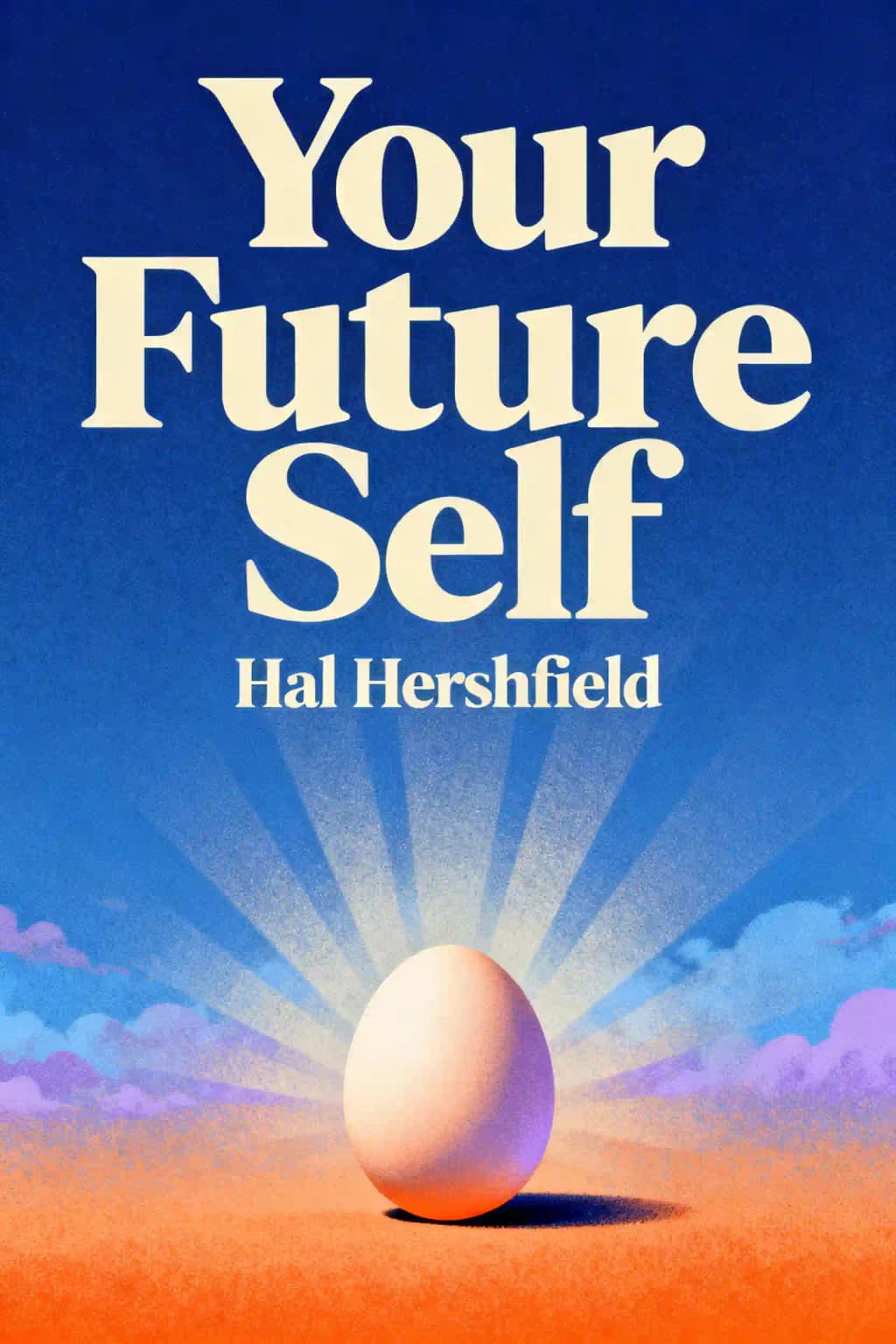
This thought experiment lies at the heart of Hal Hershfield's groundbreaking work on our relationship with our future selves. The book has become a favorite among tech executives and behavioral economists, with figures like Daniel Pink calling it "one of the most important books on decision-making of our generation." During the pandemic, platforms like FutureMe saw explosive growth as millions wrote letters to their future selves, seeking perspective during uncertain times. This connection between present and future selves isn't just philosophical-it's crucial for managing emotions and making better decisions about everything from finances to health to relationships.
2장
Who Are We Across Time? The Philosophical Foundations
The story of Pedro Rodrigues Filho-one of history's most prolific serial killers who later transformed into a peaceful advocate for nonviolence-raises profound questions about identity over time. Born with a dented skull after his father beat his pregnant mother, Pedro began his violent path at thirteen. By eighteen, he'd earned the nickname "Pedro Matador" and tattooed "I kill for pleasure" on his arm. After murdering at least 47 inmates during his imprisonment (he claims over 100), Pedro was eventually released due to Brazilian law limiting sentences to thirty years.
Remarkably, upon release, Pedro transformed completely. Now living in a remote cottage, maintaining a rigorous exercise routine, and running a YouTube channel with inspirational messages, he claims to no longer feel the urge to kill. When interviewed, Pedro stated he was "disgusted" by his former self and considered himself "a new person."
This dramatic transformation echoes Plutarch's ancient Ship of Theseus paradox: if you gradually replace every part of a boat during a journey, is it still the same vessel when you return? Similarly, how many aspects of ourselves need to change before we become someone else?
Most of us instinctively believe we remain the same person throughout our lives despite surface-level changes. The child who knocked out their tooth in second grade is still fundamentally "me." Yet research from Project Talent, which tracked individuals over 50 years, reveals a more nuanced picture: while some traits remain relatively stable (with about 60% predictability), others change significantly. Most people show meaningful change in one core personality trait per decade while four remain stable.
What truly anchors our identity? Physical continuity seems obvious-your high school friends recognize you at reunions because you inhabit the same body. But thought experiments challenge this notion. If a mad scientist transferred your mind to another body, which would you consider "you"-the body with your original appearance but someone else's mind, or the unfamiliar body housing your thoughts and memories?
John Locke proposed that consciousness-particularly memory-creates identity continuity. If your thirty-five-year-old self remembers being fifteen, and that fifteen-year-old remembered being twelve, this chain of memory preserves identity across time. But this theory has problems: Does forgetting yesterday's breakfast make you a different person?
Research by Nina Strohminger reveals that our "moral self"-our kindness, empathy, and character-may be the most essential element of identity continuity. When moral traits fundamentally change, relationships are altered too. When core moral traits remain intact, we can see continuity in people despite other changes-like Pedro ex-Matador transforming from killer to nonviolence advocate.
3장
The Stranger in the Mirror: How We Perceive Our Future Selves
How we view our future selves-as extensions of who we are today or as strangers-profoundly affects our present choices. Philosopher Laurie Paul's vampire thought experiment illustrates our inability to truly know our future selves. Just as becoming a vampire is an irrevocable transformation where your future feelings remain unknowable beforehand, so too are many life transitions like becoming a parent.
Philosophers have challenged the notion of a stable self. David Hume rejected the idea entirely, arguing that our constantly changing opinions and preferences make continuous identity impossible. Derek Parfit proposed through thought experiments like the Mars tele-transporter that we might be collections of separate selves rather than a single continuous entity. This "separate selves" model resembles a small startup with different employees over time-connected through overlapping relationships but potentially becoming strangers with enough temporal distance.
Why does it matter if future versions of ourselves seem like strangers? Because we treat strangers differently. When our future selves feel distant, we prioritize immediate gratification over future well-being. Just as we might decline helping a casual coworker move furniture, we neglect our future selves by eating extra cake, buying expensive TVs instead of saving for retirement, or skipping the gym.
Using fMRI brain scanning, researchers discovered that our brains process information about our future selves differently than our present selves. The medial prefrontal cortex, which activates strongly when thinking about oneself versus others, shows reduced activity when contemplating future selves. In neuroimaging research, participants' brain activity when thinking about their future selves resembled the patterns observed when thinking about celebrities rather than their current selves.
Our tendency to view future selves as strangers may stem from basic perception quirks. Just as distant objects appear blurry compared to those nearby, our future selves lack the vivid detail of our present self. Psychologists Sasha Brietzke and Meghan Meyer found that while people can distinguish between their present self and a three-month future self, they tend to "smoosh together" future selves that are more distant.
What truly matters is what sort of "other people" our future selves are to us. If they're strangers, there's little reason to sacrifice for them. But if they're emotionally close-more like best friends or loved ones-we're considerably more likely to make choices today that benefit us tomorrow.
4장
Relationships Across Time: Building Connections With Future You
Ben Franklin once wished to be preserved in Madeira wine and revived a century later to see what became of America. Today, a growing community pursues a similar vision through cryonics, with organizations like Alcor preserving bodies at subfreezing temperatures in hopes of future revival.
Founded in 1972 by Linda and Fred Chamberlain, Alcor has grown from just five committed members to housing nearly 200 cryopreserved patients with 1,400 members. Despite the $200,000+ cost and uncertain outcomes, cryonics members demonstrate profound connections to their future selves. Linda Chamberlain, for instance, has adopted a vegan diet and exercise regimen specifically to optimize her brain health for eventual revival.
Beyond the cryonics community, our relationships with future selves have broader implications. When initially researching this connection, the author found that simply asking people if they liked their future selves wasn't effective-almost everyone claimed strong positive feelings, which didn't match observed behaviors around saving and health.
Drawing on Art Aron's research on close relationships-particularly his visual "circles measure" showing overlapping selves in intimate relationships-the author adapted this approach to measure connections to future selves. In studies with college students, participants who selected more overlapping circles (indicating greater similarity to their future selves ten years ahead) were significantly more likely to delay financial gratification, choosing larger future rewards over smaller immediate ones.
This finding held true in community samples as well: people reporting stronger connections to their future selves had accumulated more assets over time, even when controlling for age, education, income, and gender. The Consumer Financial Protection Bureau found similar results in a nationwide survey: stronger future-self connection correlated with better financial outcomes.
The connection to our future selves extends beyond financial decisions. People who feel more connected to their future selves are more likely to make ethical choices, get better grades, and exercise more regularly. Perhaps most significantly, this connection impacts psychological well-being. Data from the Midlife Development in the United States survey revealed that adults who envisioned greater similarity between their current and future selves reported higher life satisfaction a decade later, regardless of whether they anticipated positive or negative changes.
Evidence suggests that feeling connected to our future selves leads to better long-term decisions rather than the reverse. When researchers experimentally manipulated college seniors' perceptions of personality stability, those led to believe their core traits would remain similar were more likely to make patient financial choices.
5장
Missing Your Flight: When We Fail to Consider the Future
I once planned to use a Groupon deal to buy just two dress shirts, bringing my wife along to keep me accountable. Despite my intentions, the salesman expertly "anchored" me with an $18,000 gold-threaded suit, making my eventual purchase of four shirts seem reasonable by comparison. This illustrates how we get stuck on initial numbers, failing to adjust properly-just as we often focus too much on our present selves rather than our future needs.
Like missing a flight because you're enjoying airport drinks, we often fail to "make the trip to the future" mentally. Instead, we anchor on our present whims, missing opportunities to benefit our future selves. This manifests in our tendency to discount future rewards-preferring smaller immediate gains over larger delayed ones.
When given choices between smaller-sooner versus larger-later rewards, we often exhibit preference reversals. While we might choose $1,000 in a year and a half over $900 in a year, we'll reverse that preference when the choice is immediate: taking $900 now rather than waiting six months for $1,000. This pattern appears in studies where participants choose healthy food for their future selves but junk food when the choice is immediate.
Our impulsive nature partly stems from future uncertainty. The ancient proverb that "a sparrow held tight in the hand is better than a thousand birds flying about in the air" captures this sentiment-the present is knowable while the future contains no guarantees. Yet this explanation falls short when the future is relatively certain, suggesting multiple causes for our present-bias.
The emotions we feel in the present moment seem more important than past or future feelings-the present is viewed through an emotional magnifying glass. Liz Dunn, a psychology professor who survived a shark attack, couldn't recall contextual details because her attention was completely consumed by the immediate threat. Even in less extreme situations, present emotions dominate our attention. This explains why we buy too much when shopping hungry or give in to immediate temptations.
Einstein's famous relativity analogy-an hour with a pretty girl feels like a minute while a minute on a hot stove feels like hours-illustrates how subjectively we experience time. Research confirms this perception: a one-year span only feels about 1.2 times longer than three months (though objectively it's four times as long). Time compresses as it moves away from "now," meaning a day from the present feels longer than that same day three months from now.
6장
Poor Trip Planning: When We Misjudge Future Feelings
Mozart, despite his musical genius, was notorious for procrastination-once writing the Don Giovanni overture just hours before its premiere while his wife kept him awake with stories. About 20% of people are chronic procrastinators, with 85% reporting it bothers them. This isn't just an inconvenience-research links chronic procrastination to anxiety, hypertension, and cardiovascular disease.
When procrastinating, we prioritize our present self's desire to avoid negative emotions while failing to deeply consider how our future self will feel. It's like planning a Boston vacation but making minimal arrangements-you'll still take a trip, but one vastly different from what you intended.
Professor Tim Pychyl's research with college students revealed that those who felt stronger similarity and emotional connection with their future selves were less likely to procrastinate. Additionally, students who could vividly imagine future scenarios also reported stronger relationships with their future selves and procrastinated less.
When we procrastinate, self-forgiveness can be a powerful tool. Pychyl recommends acknowledging that your past self has harmed your present self, then genuinely forgiving yourself. This reduces negative emotions associated with avoided tasks, making you more likely to tackle them. In Pychyl's research, students who practiced self-forgiveness after procrastinating on their first midterm experienced fewer negative emotions and less procrastination for their second midterm, resulting in better grades.
We struggle to accurately imagine our future feelings, typically believing they'll be less intense than present emotions. In studies, people predicted they'd feel less happiness winning money in the future than winning it today. This psychological quirk makes procrastination more likely-we convince ourselves future-us won't mind tackling painful tasks that present-us avoids.
We also overestimate our ability to predict our future feelings. Harvard researchers found that women who based dating predictions on others' experiences were twice as accurate as those who relied on their own simulations. Despite our resistance to this idea, the collective experiences of others-even AI algorithms processing thousands of similar cases-can provide superior predictions about our future satisfaction than our own imagination.
Danny Wallace's "Yes Man" experiment demonstrates the Yes/Damn effect-saying yes to future commitments when our calendars look empty, only to regret them later. This happens because we consistently underestimate how busy our future selves will be, failing to account for the small daily interruptions that consume our time. Research shows people rate their future time availability as significantly higher than present availability (8.2 on a 10-point scale).
7장
Packing the Wrong Clothes: Projecting Present Feelings Onto the Future
Greg Tietz's story exemplifies how we sometimes make permanent decisions based on temporary feelings. After moving to San Francisco for a fresh start, Greg spotted a Casa Sanchez restaurant sign offering free food for life in exchange for tattooing their logo-a boy surfing on an ear of corn-on his body. Seeing it as the perfect spontaneous opportunity, Greg became one of the first to take the deal, enjoying 40-50 free meals before the restaurant closed.
While Greg's story ended well, many others regret their tattoos, with approximately 25% of tattooed Americans regretting at least one, fueling a $4.7 billion removal industry growing at 15% annually. This mental error resembles packing winter clothes for a Miami vacation while experiencing Chicago's February chill. Despite knowing Miami will be warmer, you might still pack sweaters and jackets "just in case," only to find them unnecessary in Miami's 82-degree humidity.
George Loewenstein, a renowned economist and outdoor enthusiast, describes jogging up a steep Pittsburgh hill that left him utterly exhausted. Yet remarkably, within half a minute of reaching the top and beginning his descent, he'd think "That wasn't that big of a deal!" The pain that seemed overwhelming moments before would quickly fade from memory.
This projection bias affects everyday decisions in predictable ways. Office workers choosing snacks for future meetings select unhealthy options when hungry but healthier ones when full. Car buyers purchase more convertibles on unusually warm days and more four-wheel drives after snowstorms. South Korea's mandatory cooling-off period for divorces led to decreased divorce rates as intense emotions had time to dissipate.
The real problem with projection bias isn't that we use current feelings to predict future preferences-it's how dramatically we overdo it, leading to outcomes our future selves regret. Economist Marc Kaufmann illustrates this with a student studying for exams who starts fresh and optimistic but fails to anticipate later fatigue. We expend too much energy early in projects, misjudging our future stamina.
Our musical tastes evolve dramatically over time, yet we struggle to imagine this continued evolution. Research by Jordi Quoidbach found that people across age groups consistently believe they've changed significantly from their past selves but will change much less in the future. Study participants were willing to pay 60% more for future concerts of current favorite bands than for present concerts of past favorites.
This tendency to recognize past change while underestimating future change has been labeled the "end-of-history illusion." Psychologist Dan Gilbert once believed that by age forty, his personality would stabilize and life would become "imperceptibly different." Looking back at sixty-four, he discovered "sixty-four is more different from fifty-four than fifty-four was from forty-four."
8장
Bridging the Gap: Making the Future Feel Closer
The Saturday Night Live skit where future selves travel back in time to warn their younger counterparts about climate change, only to be met with disappointment when the younger selves learn about their future divorces and debt, raises an intriguing question: if we could meet our future selves, what would we learn and how might it change our present behavior?
Jane Fonda once participated in a virtual reality experiment where she walked across a beam that appeared to span a deep pit. Unlike many research subjects who fearfully refused to cross, Fonda confidently navigated the beam. This demonstration showcased VR's immersiveness, but the real interest was in using virtual reality to help people meet their future selves. The premise was simple but powerful: if people could see and interact with older versions of themselves, would they form stronger emotional bonds with their future selves?
Making future selves more identifiable works through the "identifiable victim effect." When three-year-old Alan Kurdi drowned as a Syrian refugee and his photo appeared in media, donations to related causes increased hundredfold, despite the Syrian crisis having already claimed 250,000 lives. Similarly, Cecil the lion's killing generated international outrage while statistics about mass suffering rarely produce comparable responses.
Using age-progression technology, researchers created digital avatars that were then run through an algorithm that sagged skin, added age spots, whitened hair, and made other realistic aging changes. Rather than simply showing these images to participants, the researchers created a virtual reality environment with a mirror that reflected either current or age-progressed versions of the participants.
The research findings were striking: participants who interacted with their age-progressed images allocated significantly more money to long-term savings compared to those who only saw their current selves. In a follow-up online experiment with working adults, those who viewed their future selves while deciding on 401(k) contributions set aside about 6% of their paychecks versus just 2% for those seeing their present selves.
Beyond finances, visualizing future selves has improved health behaviors, ethical decision-making, and even decreased delinquent behaviors in high school students. While these interventions aren't a panacea, they serve as aids to imagination, making our future selves more tangible and enhancing our ability to empathize with them.
Author Ann Napolitano began writing letters to her future self at age fourteen, inspired by L.M. Montgomery's character Emily. Every decade, she writes to herself ten years in the future, describing her current life and hopes for the future. Reading these letters years later provides perspective on her life's trajectory. Research supports this approach: college students who wrote letters to themselves twenty years in the future exercised more in the following week than those who wrote to their three-month future selves.
9장
Commitment Strategies: Helping Our Present Selves Stay the Course
James Cannon's experiment with Antabuse-a small white pill that, when combined with alcohol, creates immediate hangover symptoms-represents a perfect example of a commitment device: something that makes our journey harder to derail but the desired outcome easier to achieve. For Cannon, who had developed a twelve-pack-a-day drinking habit, Antabuse offered a way to make just one decision each day rather than repeatedly fighting the urge to drink.
For Cannon, Antabuse eliminated the constant internal dialogue about when and how much to drink. This freedom allowed him to confront the actual triggers that prompted his desire for alcohol. When his youngest daughter accidentally undid his computer repairs, his typical response would have been to suppress frustration and plan his next drink. Instead, the "voice of Antabuse" reminded him that drinking wasn't an option, forcing him to develop new coping strategies.
Commitment devices like Antabuse make it difficult for our present selves to derail our future plans. Common examples include buying 100-calorie snack packs to limit consumption, or scheduling workout classes to prevent laziness. This concept of pre-commitment was formally introduced by economist Thomas Schelling in 1956, initially discussing how nations could prevent conflict escalation by committing to specific actions in advance.
The concept extends to everyday situations, like photographing meals to share with a nutritionist-an accountability measure that helped one person lose fifteen pounds. This represents a "psychological commitment" or "soft commitment" that works through accountability rather than physical restrictions. Research shows these approaches can be effective, like Shlomo Benartzi and Richard Thaler's Save More Tomorrow program that quadrupled employee savings rates.
Sometimes stronger measures are needed to overcome temptation. Dave Krippendorf created the Kitchen Safe (later renamed KSafe)-a lockbox with a timer that physically removes temptations from reach. This approach works by completely eliminating options rather than relying on willpower. Economist Nava Ashraf found similar success with SEED accounts in the Philippines that locked away savings until predetermined dates, increasing savings by 82%.
The limitation of simple restriction strategies is illustrated through Arnold Lobel's children's story "Cookies," where Frog and Toad try increasingly elaborate methods to stop eating cookies. Each restriction Frog proposes (box, string, high shelf) is easily circumvented until he finally feeds the cookies to birds. Yet Toad's response-going home to bake cake instead-reveals the fundamental challenge: commitment devices must balance being strong enough to limit behavior but not so harsh they're rejected.
10장
Making the Present Easier: Finding Balance Between Now and Later
Rather than focusing solely on our future selves, we can also make present-day "sacrifices" feel subjectively easier. The tension between current discomfort and future benefit is captured in Groucho Marx's quip: "Why should I care about future generations-what have they ever done for me?"
In the 1970s, Stanford psychiatrist David Spiegel pioneered "supportive-expressive group therapy" for women with metastatic breast cancer. These sessions allowed participants to process difficult information together rather than ignoring it. Women in the therapy showed remarkable improvements: less anxiety and depression, better quality of life, and in early studies lived approximately eighteen months longer than those without such support.
Psychologist Jeff Larsen has demonstrated that we can simultaneously experience different emotional states like happiness and sadness. When facing stressors, we have three options: wallow in negativity, avoid unpleasant feelings entirely, or experience joy alongside discomfort. Research by the author and Jon Adler found that therapy patients who expressed mixed emotions in their journal entries showed greater improvements in psychological well-being than those experiencing single emotions alone.
Behavioral economist Katy Milkman developed "temptation bundling" to overcome her own challenges with gym motivation by only allowing herself to read engaging novels while exercising. Her research showed this strategy increased workout frequency by 51% in students who could only access audiobooks at the gym. A related concept called "tangential immersion," developed by UCLA's Allie Lieberman, helps extend time spent on boring but important tasks like toothbrushing by pairing them with moderately engaging activities.
Advertisers have long used the strategy of "pennies a day" to make large expenses feel more manageable. The author tested this principle with Acorns, asking users to save $150 a month, $35 a week, or $5 a day-all roughly equivalent amounts. Four times as many users signed up when framing savings in daily terms, and this approach even closed the income savings gap between wealthier and less wealthy consumers.
Sometimes sacrificing for tomorrow comes at too high a cost for today. Carl Richards, a financial planner, nearly skipped an expensive sea-kayaking trip in New Zealand to save money for the future-until he realized that some experiences shouldn't be postponed. The FIRE (Financial Independence, Retire Early) movement exemplifies extreme future focus, with followers saving aggressively to retire in their twenties or thirties. But some discover that cutting all present pleasures drastically reduces well-being. Balance is essential-living only for tomorrow deprives future selves of the memories and experiences that make life worth living.
Recent global catastrophes have increased anxiety worldwide, with depression and anxiety disorders rising by over 25% in 2020 alone. Many young adults question the value of saving for an uncertain future, with nearly half of 18-35 year-olds seeing little point in planning ahead "until things return to normal." Despite this collective weariness, there's hope in how these disruptions have prompted reflection on what truly matters. The pandemic created what collaborators Adam Galinsky and Laura Kray call a "universal midlife crisis," forcing people to reconsider how they allocate their precious resources of time and money.
By understanding our relationship with our future selves and learning to bridge the gap between present desires and future needs, we can make better decisions today that create happier tomorrows. Unlike in science fiction stories, we don't need a time machine to meet our future selves-we can connect with them through imagination, visualization, and thoughtful planning, creating a better future one present moment at a time.