1장
From Homeless to Venture Capitalist: The Power of Radical Self-Belief
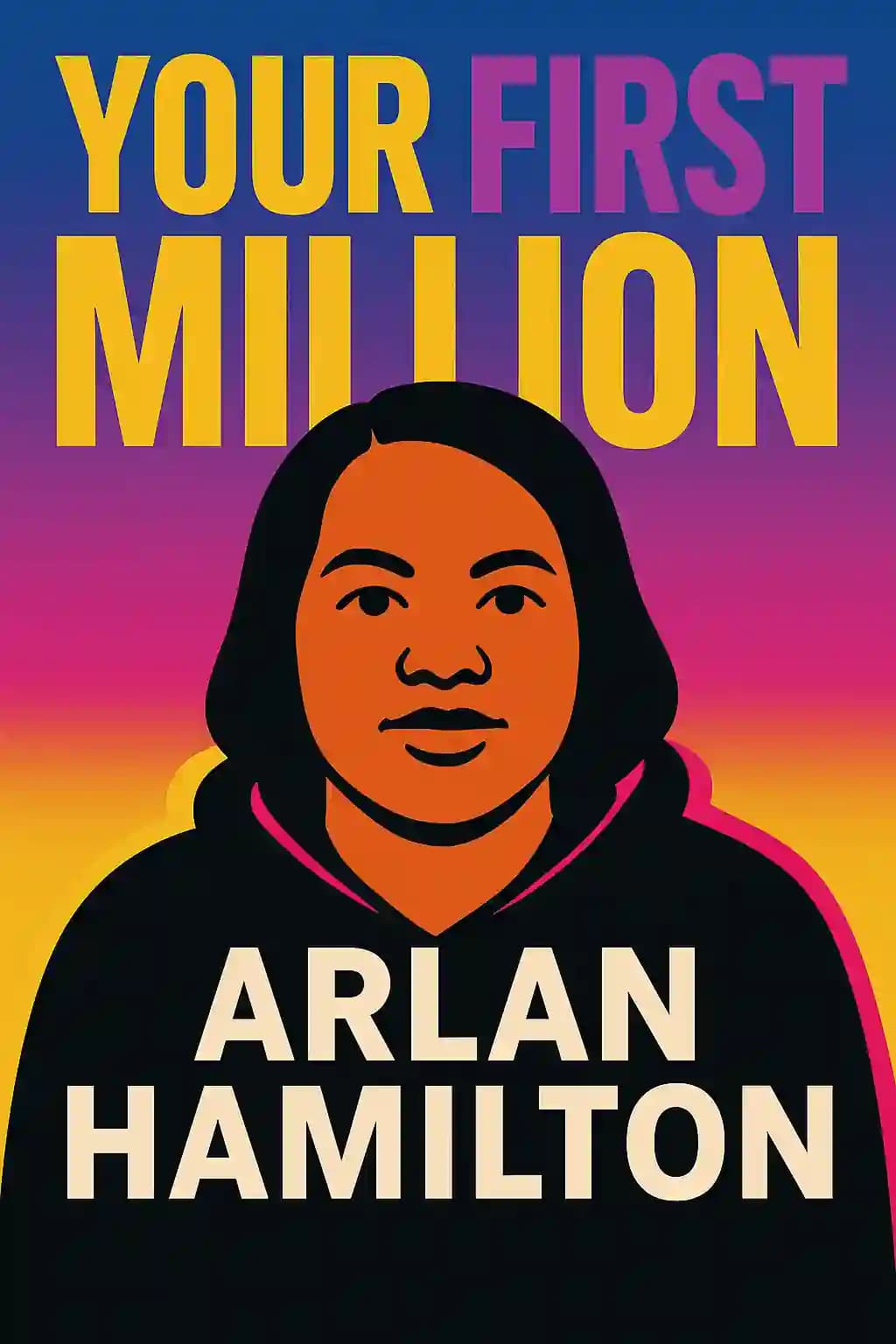
In 2018, Arlan Hamilton found herself in Beverly Hills, bidding on Janet Jackson's 1956 Chevrolet Cameo truck at Julien's Auctions. When the gavel fell at $90,000 and she won, emotion overwhelmed her-not just about winning her hero's truck, but realizing how far she'd come from sleeping on the San Francisco airport floor just six years earlier. This remarkable journey from homelessness to becoming a pioneering venture capitalist who has invested in over 200 companies led by underrepresented founders isn't just inspiring-it's revolutionary. Hamilton's book has become required reading in business schools nationwide, with celebrities like Serena Williams and Mark Cuban citing it as influential in their investment approaches. Beyond business circles, it's sparked conversations about who gets access to capital in America and why. As Hamilton often says, "It's not about getting rich quick-it's about gaining control and using money as a tool."
2장
The Audacity to Challenge Silicon Valley's Status Quo
When Arlan Hamilton discovered that only 0.02% of venture capital went to Black women in 2017, she didn't just see a statistic-she saw a broken system begging to be disrupted. This stark reality was even more alarming considering that Black women were starting businesses at six times the national average during this period. As a gay Black woman with no college degree, connections, or money, she quickly realized she embodied everything Silicon Valley wasn't looking for in either a founder or an investor. Even when underrepresented founders secured pitch meetings, they spent three-quarters of their time proving their basic worth rather than discussing their business ideas, facing questions about their background that their white male counterparts rarely encountered.
This realization sparked Hamilton's revolutionary concept for Backstage Capital-what if instead of seeking investment herself, she became the investor for underestimated founders? "I don't want to find one unicorn that makes a CEO a billionaire," she explains. "I want to inspire a thousand millionaires from underestimated groups who will invest in their communities, creating generational wealth where it never existed before." This vision challenged the traditional venture capital model that prioritized finding the next Facebook or Google, instead focusing on building sustainable businesses that could transform communities.
The foundation of Hamilton's approach is radical self-belief-especially crucial for the underestimated. Growing up surrounded by strong Black role models who instilled an unshakable sense of self-worth, she somehow knew with certainty, even at age five standing in line at daycare while her single mother struggled to make ends meet, that her circumstances would change-that the world would know her name. Her mother's resilience, working multiple jobs while pursuing her own dreams, became a powerful example of perseverance that shaped Hamilton's worldview.
This deep-seated conviction helped her avoid impostor syndrome, even when she was thirty-four, broke, and trying to start Backstage Capital without money, home, or degree. She spent nights sleeping on floors and in airports, learning about venture capital through podcasts and Twitter. When she announced her plan to invest in 100 companies led by underrepresented founders by 2020, people laughed. She achieved it by 2018, investing in companies across diverse sectors from technology to consumer products, proving that talent is equally distributed but opportunity is not.
"Self-belief doesn't erase systemic barriers," Hamilton acknowledges, "but it provides essential equipment for the journey. It's time for more 'entitled' Black women to step forward and say, 'I deserve to be here.'" Her approach has inspired a new generation of investors and entrepreneurs to question traditional patterns of venture capital allocation and create their own paths to success. Through Backstage Capital, she's demonstrated that investing in underestimated founders isn't just about social justice-it's about capturing overlooked market opportunities and unleashing untapped potential in the startup ecosystem.
3장
Everyone Has Expertise Worth Monetizing
Silicon Valley's fixation on Ivy League credentials is a myth that needs dismantling. While prestigious degrees can open doors, they're not prerequisites for success in entrepreneurship. Your life experience is its own valuable education, shaped by unique circumstances, challenges, and victories that others haven't encountered. Everyone has expertise in something valuable-whether from job experience, customer perspective, specialized knowledge, or even seemingly mundane daily experiences that could solve problems for others.
"More than anything," Hamilton emphasizes, "you're the expert in your own life. There are billions of people, but only one you." This uniqueness is a competitive advantage that can't be replicated or outsourced.
The best ideas come from personal experience and lived challenges. There's no better research than living through something and no stronger motivation than experiencing a problem yourself. Take Mahmee founders Linda Hanna-Sperber and Melissa Hanna, who witnessed firsthand the gaps in maternal healthcare. Their personal experiences with fragmented care coordination led them to develop their patient-centric platform after just eighteen months of research. The platform now connects thousands of women with essential maternal care services, proving that personal insight can drive meaningful innovation.
Similarly, SoLo Funds founders Rodney Williams and Travis Holoway created a platform for community members to help each other with non-exploitative loans instead of turning to predatory lenders. Growing up in communities where payday loans were common, they understood the devastating impact of predatory lending. Their platform now facilitates millions in peer-to-peer lending, demonstrating how personal experience can transform into systemic change.
Your idea might seem small or niche at first, but it could create meaningful change for a specific community or industry. You don't need to look, act, or speak a certain way, or have attended prestigious schools. These expectations were created by homogenous groups to maintain their advantage and don't reflect the diverse nature of successful entrepreneurship.
Even failures become valuable expertise when viewed through the right lens. At twenty-three, Hamilton created INTERLUDE magazine without any startup experience. Though the publication was aesthetically successful and garnered attention, it financially drained her for five years before the 2008 economic crash forced its closure. This experience, while painful, provided invaluable lessons about financial planning, resource allocation, and the importance of sustainable business models.
"I no longer view these experiences as failures because they've taught me so much," she reflects. "With time, you can see how each setback leads to something new and recognize the skills and knowledge gained along the way." Every misstep becomes part of your unique expertise, contributing to a knowledge base that others can learn from and potentially transforming into future opportunities.
Your community knowledge, cultural understanding, and personal experiences - even the challenging ones - are assets that can be transformed into valuable solutions for others facing similar situations. The key is recognizing that expertise comes in many forms, and sometimes the most valuable insights arise from lived experience rather than formal education.
4장
Taking Ownership of Your Financial Future
Many of the world's wealthiest people started with generational wealth-family money that gave them advantages like debt-free education and funding for their first businesses. Generational wealth often provides the "friends and family round" that many entrepreneurs rely on to launch their companies.
Hamilton started Backstage Capital to be that support system for those without generational wealth-for people who don't have connections who can invest $25,000 in their business. Dr. Pamela Jolly, founder of Torch Enterprises Inc., has spent fifteen years developing data-driven strategies to preserve wealth in underestimated communities. Her company "stands for passing the torch from one generation to the next to build legacy wealth."
Dr. Jolly explains that people with generational wealth do two things: "They own things and they cooperate." Taking ownership of your financial future means becoming the CEO of your personal economy.
One crucial strategy is diversifying income streams. Most millionaires have at least seven revenue sources. Hamilton's mother exemplified this, working as a telecom sales executive by day and at 7-Eleven by night while raising two children. When COVID-19 canceled Hamilton's book tour in 2020, costing her six figures in speaking engagements and sales, her seven income streams provided crucial stability.
These income streams include: salary as managing partner of Backstage Capital, publishing deals, investment returns, speaking engagements (generating over a million dollars most years), media deals, online courses and digital products, and consulting.
For those just starting, try adding just one new income stream. Consider where your expertise could be monetized-perhaps through online courses or offering services. Look for intersections of your skills, like being both an accountant and skilled at sewing. Not every hobby needs monetizing-avoid side-hustling your way to burnout.
Taking ownership of your finances means actively steering your life rather than letting life happen to you. Start by auditing your resources, desires, and aspirations, then identify what you need to bridge the gap between your current situation and your goals.
5장
Preserving Your Equity: The True Power of Ownership
Mark Cuban exemplifies the power of ownership-creating and owning companies that sold for millions and billions, giving him tremendous influence, political power, and quality of life. When you own, you control your work's impact, its societal contribution, and your legacy.
Ownership of your business builds power, income, and legacy, but requires capital. As a venture capitalist receiving thousands of funding applications yearly, Hamilton emphasizes considering all financing options before taking investors. Remember: accepting investment means going into business with someone, so choose partners carefully.
The critical factor is equity-your ownership percentage. Each investment round dilutes your equity, potentially leaving you without decision-making control or the majority of returns if your company exits.
While venture capital gets the most publicity, it funds less than 1% of US companies. VC investors expect 10x returns and rapid growth, often diluting founder equity across multiple funding rounds. You could even lose your CEO position if too diluted.
Hamilton's favorite approach is bootstrapping-funding your company through sales revenue and personal savings without outside investment. This preserves control and equity. Despite media narratives, a founder's primary job isn't raising capital but developing customers, business models, products, and teams.
Bootstrapping means staying true to your original vision without answering to investors. It gives you freedom to make mistakes, learn from them, and move at your own pace. Blended Designs exemplifies this approach-starting as a T-shirt business before pivoting to backpacks featuring characters of color, then to children's masks during the pandemic. Because founders Casey and Harvey Kelley bootstrapped initially, they could make nimble decisions without investor approval.
For bootstrapping success: reduce expenses, do work yourself before outsourcing, use affordable resources like website builders and online courses, consider keeping your day job while building your business, and explore pitch competitions.
Despite advocating bootstrapping, Hamilton became a venture capitalist because VC is powerful and underrepresented people deserve representation there. Seven of the world's ten most valuable companies are venture-backed, driving industries and creating generational wealth.
6장
The Power of Strategic Collaboration
No one in this world is truly "self-made." Collaboration isn't just important-it's a hack Hamilton has used throughout her career. There's no medal for doing things the hard way, and working with others increases both your value and theirs. By collaborating, you can hack your way into wider audiences, more innovative technology, and larger-scale social change.
When Hamilton imagines the future, she sees underestimated people building mini empires in their communities. Silicon Valley no longer needs to be the center of all startups-technology has proven we can work from anywhere, creating equal opportunities regardless of location.
This is why Backstage Accelerator launched in diverse cities: Los Angeles, Philadelphia, London, and Detroit. Geographic disparity is another barrier keeping underestimated people out of venture capital.
Not all business partnerships are equal-choosing collaborators wisely can make or break your business. When starting Backstage Capital, despite her desperate financial situation, Hamilton turned down capital from two successful European investors after their first call. Though she initially sought them as a "Trojan horse" to access rooms she couldn't enter alone, they immediately bulldozed her, talking over her and dismissing her input.
She walked away from badly needed money because she recognized that true collaboration requires equality and respect. When money creates power imbalances, you must protect your vision from being diluted.
Strategic partnerships create unexpected wins. Natasha Case, cofounder of Coolhaus ice cream (a Backstage Capital investment), explained that the best collaborations come from surprising pairings. Rather than partnering with obvious choices like chocolate companies, Coolhaus created buzz through unexpected collaborations with brands like French's Mustard and Ritz Crackers.
These partnerships weren't just attention-grabbing-they were strategically beneficial. When partnering with French's (owned by McCormick), Coolhaus gained access to major PR resources while contributing their "cool factor" and speed to market. The result was "marketing that pays for itself, plus some."
7장
Building a Network That Becomes Your Safety Net
Your network's value isn't just in who you know-it's in who you can connect. Every new connection multiplies your ability to create valuable introductions for others.
Breaking into tech is as simple as engaging online-reading, following others, and building relationships. While networks have historically excluded underestimated founders, social media and virtual events have democratized access.
The most valuable networks today aren't just about quality or quantity, but diversity. Connecting with five people from different backgrounds offers more value than fifty identical perspectives. Horizontal networking-connecting with peers at similar stages-can be more valuable and accessible than pursuing relationships with those far ahead of you.
Even billionaire Mark Cuban invested $6 million in Hamilton's fund because "You're in rooms I'll never be in." Your reputation-not just your brand-is what people say when you're not around. Build relationships for the long term without expecting immediate returns.
Sometimes breaking into the right rooms requires ingenuity when you lack resources. Hamilton once traveled to Arizona on a $15 bus ticket with nowhere to stay, volunteering at a convention's front desk in exchange for access. Those conversations at the entrance proved more valuable than the lectures, landing her a gig with Toni Braxton after meeting her production manager.
Dawn Dickson, who became the first Black woman to raise $1 million through equity crowdfunding, mastered horizontal networking-building relationships with peers over time. Before Backstage Capital invested in her company PopCom, she spent eight months consistently showing up and supporting others without immediately asking for anything.
When traditional venture capitalists weren't interested, Dawn turned to her community instead. Her tribe helped her secure platforms like The Breakfast Club to reach potential investors, creating wealth not just for herself but for 2,300 community members. As Dawn says, "Horizontal networking increases vertical advancement. We build up together."
8장
Redefining Success Beyond Silicon Valley's Unicorns
Everyone wants to feel and be seen as successful, but what that looks like changes with cultural trends. Sometimes it's expensive possessions, exclusive access, or the right educational pedigree. But flaunting status symbols isn't true success.
Our society is plagued by comparisons-following influencers and yearning for their lifestyles. When we measure success through comparison, we'll always fall short. If success means being the most wealthy or having the most followers, none of us succeed until we can build our own space rocket.
Hamilton measures success by impact, change, and legacy. Money is merely the tool; success is the action it enables. Silicon Valley celebrates "unicorn" companies worth billions, but this narrow lens misses companies making millions with loyal customers and healthy growth. If your business generates revenue that pays your bills and employees while staying profitable, that's success.
The key to defining success on your own terms is ditching FOMO (fear of missing out). Hamilton no longer aspires to be anyone else-not Oprah, Beyonce, or any other icon. She can admire them without wanting their lives. Her goal is to be Arlan-nothing more, nothing less.
Not having FOMO keeps her focused. In 2017, when she was excluded from magazine covers featuring female investors, she celebrated those women instead of feeling bitter. Her time came in 2018 with a life-changing Fast Company cover.
What does success look like when shared with others and extended to communities? When starting Backstage Capital, Hamilton had to decide between joining Silicon Valley's boys' club or creating a fund to invest in underestimated founders. She kept asking: Who wins when I win?
Backstage headliner Denise Woodard exemplifies shared success through her company Partake Foods, which she founded after her daughter was diagnosed with multiple food allergies. Beyond creating allergy-safe snacks, Woodard partnered with organizations like No Kid Hungry to make these products accessible to low-income families and those in food deserts.
By becoming a Certified B Corporation in 2023, Partake Foods publicly committed to prioritizing positive social and environmental impact alongside profits. This is what sharing success with your community truly looks like.
9장
Catalyzing Change Through Intentional Impact
Fast Company featured Hamilton on their 2018 cover as a "Venture Catalyst"-a title that perfectly captures her mission. Before every decision, she asks: What does this change? Who could be affected? When evaluating investments, she considers global impact and life-changing potential, not just financial returns.
Her work focuses on creating inflection points-moments where she can accelerate someone's journey at scale. She's not interested in the illusion of change that comes when a few underestimated people succeed while 99.9% face the same barriers. She wants to demolish the entire system of inequality.
By August 2020, Hamilton was exhausted from dealing with venture capital firms who claimed to support Black founders but rarely followed through. She decided to move Backstage Capital away from traditional VC investments-not because she couldn't raise money that way, but because she was tired of feeling like she was begging for scraps.
This led her to crowdfunding as a way to democratize investment opportunities. Backstage created a syndicate that allows both accredited and unaccredited investors to invest in promising companies. Their first deal raised $500,000 in two weeks for Akash Systems, proving they didn't need to rely on just a few powerful individuals.
They then used Republic to crowdfund Backstage itself, offering ownership for as little as $100. They raised $1.07 million in eight hours, then hit $5 million when regulations changed-becoming the first venture fund to crowdfund operations costs at this scale in the US. With over 6,000 investors now, Hamilton is motivated knowing that when she wins, thousands of others win too.
We can't catalyze change if we take our gains and ignore those we leave behind. When you're invited to the table, pull out a chair for someone else. Hamilton never wants to be the one exception-when you understand the struggle of being underestimated, you must use that knowledge to knock down the stairway and build an elevator.
After visiting Oxford University in 2018 and noticing the lack of diversity, Hamilton established the first-ever scholarship specifically for Black students at Oxford. She's since given nearly a million dollars in scholarships, including one at Dillard University (an HBCU) with her mother, and funding for a Black female pilot student-a true unicorn in an industry where she's flown a thousand flights and never once seen a Black female pilot.
Beyond scholarships, she's created an apprenticeship program at Backstage Capital where participants not only receive mentoring but also share 1% ownership in the company-worth about $25,000 each. She also practices radical transparency by building her company Runner "in public," sharing both successes and failures through her podcast so others can learn alongside her.
10장
Creating a Legacy of Wealth Redistribution
Through hundreds of interviews with millionaires and billionaires, Hamilton has uncovered three fundamental truths that challenge conventional wisdom about wealth creation. First, millionaire status is achievable for almost anyone, regardless of background or starting point. Second, successful millionaires consistently demonstrate mastery of two key skills: ownership (of assets, businesses, and intellectual property) and collaboration (building strategic partnerships and networks). Third, the path to wealth can be systematically taught and learned, dispelling the myth that financial success is purely based on luck or inherent talent. This democratization of wealth creation means that your socioeconomic background doesn't have to determine your financial destiny.
Hamilton's personal journey from poverty provides a powerful lens through which to view wealth creation. Growing up, money was a constant source of stress and anxiety, with every decision filtered through the lens of survival. This scarcity mindset transformed as she built her own wealth, shifting from viewing money as a means of survival to seeing it as a powerful tool for community transformation and generational impact. Her mother's wisdom - "Sometimes the seed doesn't see the petal" - encapsulates the long-term vision required for creating lasting change.
Impact and influence manifest in numerous ways beyond monetary contributions. Small business support through intentional spending, mentorship programs, pro-bono consulting, skills-based volunteering, and creating first-time opportunities for others all contribute to community development. Most people underestimate their sphere of influence, which often extends through multiple networks, communities, and generations. The key lies in strategic deployment of existing resources, whether time, knowledge, connections, or capital.
Hamilton's framework for catalyzing systemic change rests on four interconnected pillars. Investment focuses on directing capital to underserved entrepreneurs and communities. Execution emphasizes implementing effective strategies and operational excellence. Amplification involves elevating voices and stories that often go unheard. Education centers on sharing knowledge and building capacity within communities. These pillars work together to address historical inequities in venture capital and broader wealth distribution.
The journey to becoming a millionaire transcends mere financial accumulation - it's about creating a blueprint for others to follow. Imagine the transformative power of thousands of new millionaires emerging from diverse backgrounds, each representing different communities and experiences. This vision of inclusive wealth creation could reshape economic landscapes and social structures. Success ultimately depends on personal agency - your determination to learn, adapt, and persist, combined with strategic application of these principles, creates the foundation for lasting financial success and social impact.
The true measure of wealth lies not in personal accumulation but in its ripple effects through communities and generations. By focusing on both wealth creation and redistribution, individuals can build financial security while simultaneously creating pathways for others to follow, establishing a sustainable cycle of economic empowerment and social progress.