1장
The Transformative Power of Art: How Aesthetics Reshape Our Brains and Bodies
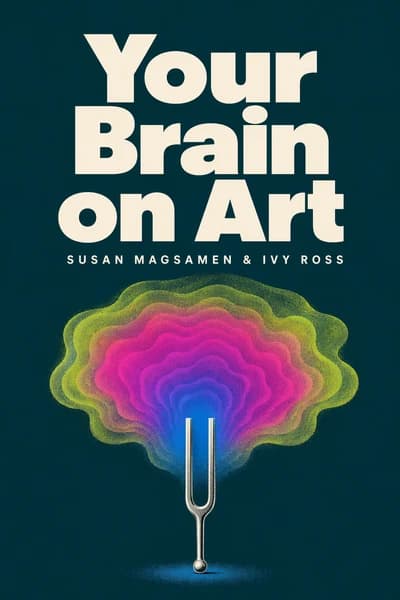
Ever wondered why certain songs bring tears to your eyes, or why walking through a forest instantly calms your racing mind? The answer lies not in some mystical connection, but in the profound biological relationship between art and our nervous system. In "Your Brain on Art," neuroscientist Susan Magsamen and Google design executive Ivy Ross reveal the revolutionary science of neuroaesthetics-showing how even brief, twenty-minute "acts of art" like doodling or humming provide immediate physiological benefits. This isn't just feel-good speculation; it's backed by cutting-edge research that has transformed how we understand the arts. The book has become required reading in medical schools and design programs alike, with Time magazine calling it "a landmark work" that bridges the divide between science and creativity. From Alzheimer's patients recognizing family after hearing curated music to cancer hospitals designed with sensory experiences that accelerate healing, this groundbreaking exploration reveals how aesthetic experiences fundamentally change our biology, healing bodies and minds in ways we're only beginning to understand.
2장
The Aesthetic Mindset: Seeing the World Through New Eyes
An aesthetic mindset represents a way of being in the world-consciously recognizing and purposefully incorporating arts and aesthetics into our daily lives. Those who possess this mindset share four key attributes: high curiosity, love of playful exploration, keen sensory awareness, and a drive to engage with creative activities both as makers and observers. As Irish poet John O'Donohue eloquently noted, "Art is the essence of awareness." This mindset fosters presence and attunement to our environment, creating an ongoing connection to sensory experiences that ultimately transforms us.
The depth of our aesthetic responsiveness varies widely between individuals. Some people experience intense emotional reactions to music, while others might feel nothing. Some notice subtle color variations in a sunset, while others barely glance up. These differences aren't simply matters of taste-they reflect how our brains and bodies process sensory information. Researchers have developed tools like the Aesthetic Mindset Index to measure these responses across three categories: Aesthetic Appreciation (how responsive we are to beauty), Intense Aesthetic Experience (how deeply we feel aesthetic responses), and Creative Behavior (how actively we engage in making art).
Understanding your own aesthetic mindset isn't about judgment but self-knowledge. When you recognize how deeply certain sensory experiences affect you, you can intentionally cultivate those experiences to enhance well-being, learning, and connection. The aesthetic mindset isn't reserved for artists or connoisseurs-it's available to everyone willing to slow down and pay attention to how their senses engage with the world around them.
3장
The Neuroscience of Aesthetic Experience: How Art Changes Your Brain
Our bodies are fundamentally wired for arts and aesthetic experiences, with our sensory systems forming the biological foundation for how art affects our health and wellbeing. These systems are remarkably sophisticated-our sense of smell can detect one trillion odors through 400 types of receptors, with direct connections to the temporal lobe affecting emotions and memory. Our 10,000-plus taste buds process through the gustatory cortex, encoding powerful emotional memories. Our hearing processes sound waves through the auditory cortex, where different tempos and sounds can synchronize brain waves and alter emotional states.
The brain itself resembles a globe with four irregular continents mirrored on both sides, connected by the corpus callosum. Within this complex structure, neuroplasticity-the brain's ability to rewire itself-involves a vast network of 100 billion neurons, each connected to about 10,000 others. When neurons fire together with sufficient intensity, they form stronger connections, particularly during salient experiences that release neurochemicals like dopamine. Arts and aesthetic experiences serve as powerful conduits for this saliency, literally rewiring our neural pathways.
Our surroundings have cumulative effects on brain development, with enriched spaces promoting positive outcomes in learning, health, and relationships. Neuroscientist Marian Diamond proved this by placing rats in three different environments: enriched (with toys and novel objects), standard, and impoverished. After several weeks, rats from enriched environments showed a 6% thicker cerebral cortex, while those from impoverished settings lost brain mass.
When we interact with aesthetically pleasing art, we experience an "aha!" moment where we see the world in a new way. This meaning-making process happens within our Default Mode Network (DMN), which activates when we're focused internally rather than on the outside world. This network helps optimize what we remember and forget, aids in envisioning our future, and serves as your personal filter for determining what's beautiful, memorable, or meaningful.
A fascinating demonstration of how environments affect us occurred in 2019 with "A Space for Being," an immersive installation at Milan's design fair. Visitors wore biometric bracelets while moving through three differently designed rooms, revealing fascinating disconnects between conscious preferences and biological responses. One journalist discovered her body was most at ease in the room she consciously disliked-revealing how deep-seated emotions related to race, class, and personal history affected her experience of designed spaces. While we might lie to ourselves about our sense of belonging, our bodies reveal biological truths.
4장
Harnessing the Arts for Mental Wellbeing
The arts serve as powerful tools for managing mental well-being, providing relief from anxiety and burnout regardless of artistic skill level. Research by Girija Kaimal shows just 45 minutes of making art reduces cortisol levels, while Daisy Fancourt's extensive studies demonstrate that regular arts engagement significantly improves life satisfaction across socioeconomic levels. As mental health challenges increase globally-with nearly one billion people struggling-understanding our emotional landscape becomes crucial.
Sound therapy works by tapping into our physiology to disrupt stress cycles. When specific sound vibrations like the C and G notes are applied, they resonate with Earth's core frequency to create harmony. Sound works unconsciously, literally changing bodily vibrations through energy and frequency. Studies show sound therapies increase nitric oxide production, enhancing blood flow and relaxation.
Colors profoundly affect our physiology-red raises skin response more than green or blue, while people in gray rooms experience higher heart rates and anxiety than those in colorful spaces. Cultural context shapes these responses: red signifies luck in China but danger in America. The simple act of coloring for twenty minutes reduces anxiety by providing structured focus that mimics meditation's effects, diminishing amygdala activity and lowering physical stress indicators.
Nature provides our most powerful aesthetic experiences, directly activating our parasympathetic "rest and digest" nervous system. Just twenty minutes in natural settings significantly lowers cortisol levels, while simply gazing at a horizon triggers brain stem mechanisms that reduce anxiety. Our evolutionary need to connect with nature inspires both outdoor experiences and design choices that "bring the outdoors in." Globally, nature-based wellness practices are emerging-from Japanese forest bathing to South Korean "hitting mung" (zoning out) in healing forests.
Poetry's power to soothe and heal dates back to ancient Greece, where it was prescribed alongside medical interventions. Modern neuroscience confirms what T.S. Eliot intuited in 1929-that "genuine poetry can communicate before it is understood." Research shows poetry triggers physiological responses like chills and goosebumps, activating brain reward centers similar to music. Poetry engages both emotional centers and meaning-making areas, helping process difficult emotions from safety.
Boston pediatrician Michael Yogman writes "arts prescriptions" for his young patients-daily playful activities like dancing, drawing, or pretend play tailored to each child's developmental needs. This "social prescribing" movement treats arts as precision medicine-physicians prescribing singing classes for stress, museum visits for anxiety, and nature walks for burnout. Simple activities like morning doodling, creating mandalas, or making found poems can immediately improve mood.
5장
Healing Trauma Through Creative Expression
Trauma isn't the difficult event itself but its imprint on brain and body-what happens when strong emotions can't be regulated. Somatic therapist Resmaa Menakem defines trauma as having two components: feeling stuck while simultaneously experiencing urgency. "Trauma is anything that happens that is too much, too fast, too soon, or too long that occurred without repair."
Brain scans show trauma victims physiologically react as if past events are still occurring, with the body's alarm system-particularly the amygdala-triggering stress hormones and autonomic responses. Trauma manifests in multiple forms: historical, intergenerational, persistent/institutional, and personal, affecting everyone in ways both large and small.
The arts are vital for healing trauma as they engage joy, awe and wonder-emotions that trauma suppresses. Arts induce meditative-like states that help regulate physiology and quiet the prefrontal cortex's judgment centers, fostering perspective-taking and connection. Artist Judy Tuwaletstiwa's journey through intergenerational trauma illustrates this healing power. Born to "fanatical Communist" parents with her father suffering violent temper and mental disorders, Judy survived by compartmentalizing difficult emotions. A transformative solo camping trip led to artistic breakthrough when she created "Continuing Paintings"-large canvases where she painted, photographed, then painted over images repeatedly. This process allowed unconscious material to emerge, creating a container for processing trauma.
Combat veterans often describe PTSD as "a war within yourself that never goes away." Many returning soldiers can't articulate their experiences because trauma literally shuts down Broca's area-the brain region responsible for speech. Bessel van der Kolk's fMRI studies confirmed this "speechless horror," showing Broca's area going offline during flashbacks, similar to stroke damage. The Creative Forces program offers mask-making therapy where service members externalize their inner experiences through visual symbols. This approach works because visual creativity evolved before language and uses different neural pathways than speech.
For communities of color, mental health stigma is particularly damaging, with many reporting that even mild mental health issues would be considered "crazy" among peers. The arts combat stigma by increasing activity in the brain's cognitive control network, lowering self-criticism and inhibition. Creative Growth Art Center in Oakland demonstrates this approach, providing a space where artists with mental health challenges can express themselves without judgment.
Six-year-old Marina from Mexico City was devastated when her beloved grandfather died suddenly. Her teacher, trained in Save the Children's HEART program, invited Marina to use "The Calm Corner"-a soothing blue-painted space with art supplies-to process her grief through drawing. The program combines relaxation techniques, structured group art activities, and free creative expression, followed by sharing circles where children explain their creations. For Marina, drawing became a healing ritual; eventually, she folded a drawing against her chest and told her teacher she felt better, knowing she carried her grandfather with her forever.
6장
Art as Medicine: Transforming Physical Health
The power of art extends beyond mental healing into physical restoration. At Stanford University, cardiologist Sean Wu sought to generate heart tissue in the lab using sound waves to arrange cells. By placing heart cells in a gel and manipulating sound wave patterns, the cells formed extraordinary visual arrangements resembling intricate quilt patterns, demonstrating how aesthetics can be harnessed in biomedical research.
The arts are being used in six distinct ways to heal the body: as preventative medicine, for symptom relief, as treatment for illness, as psychological support, for managing chronic conditions, and for end-of-life care. Researchers have identified over 600 mechanisms-psychological, biological, social, and behavioral-through which arts affect health. Unlike medications that target one or two pathways, arts trigger hundreds of mechanisms working in concert.
The arts have proven particularly valuable for addressing pain-the number one reason people seek healthcare, affecting 30% of people globally. Research shows arts engagement can reduce chronic pain risk, alleviate headaches through mindful dance movement therapy, and even help reduce opioid dependence. For severe burn patients, virtual reality programs like SnowWorld create immersive, soothing environments that significantly reduce pain intensity during excruciating wound care by engaging neural pathways that would otherwise process pain signals.
Epidemiologist Daisy Fancourt's groundbreaking research reveals profound preventative health benefits of arts engagement. By analyzing longitudinal cohort studies tracking thousands of people over decades, she's found that people who engage in arts activities every few months have a 31% lower risk of dying early compared to non-participants, while even annual engagement reduces mortality risk by 14%. The arts build cognitive reserve against neurodegeneration, potentially preventing dementia through cognitive stimulation, social support, and emotional expression.
Dance offers remarkable therapeutic effects for Parkinson's disease patients-over 10 million worldwide. The disease damages the basal ganglia, reducing dopamine and inhibiting automatic movements like walking. At Dance for PD classes in Brooklyn, tremors subside, gait improves, and fluidity returns. A 2021 longitudinal study confirmed these benefits, showing participants experienced less motor impairment and improvements in speech, tremors, balance and rigidity compared to non-dancers. Program director David Leventhal explains that dance helps patients become conscious of movement quality, essentially rewiring their brains.
In 1978, Concetta Tomaino was considered eccentric for bringing a guitar into a dementia ward. During that first visit to patients with end-stage dementia-many overmedicated, lethargic, or agitated-Tomaino sang "Let Me Call You Sweetheart." Remarkably, screaming patients fell silent, sleeping patients awoke, and half began singing along. Neurologic music therapy is now well-documented for mitigating dementia symptoms and rewiring stroke-damaged brains. Music's complexity-timbre, pitch, rhythm, cultural significance-activates multiple brain regions: the auditory cortex processes tones, the nucleus accumbens and amygdala form emotional reactions, and the hippocampus creates context and memories, explaining how dementia patients remember lyrics when they can't recall their own names.
Neuroscientist Li-Huei Tsai has pioneered an innovative approach to treating Alzheimer's disease using light and sound. Her research focuses on gamma brain waves (25-80 Hz), which are disrupted in AD. Tsai developed a device producing 40 Hz gamma waves through flickering light and sound tones. After just seven consecutive days of treatment, researchers observed dramatic reductions in beta amyloid in both the auditory cortex and hippocampus while improving cognitive function. The treatment appears to work by engaging multiple brain systems, stimulating immune cells that clear debris, and enhancing cerebrospinal fluid circulation.
7장
Amplifying Learning Through Aesthetic Experiences
Kurt Vonnegut once advised high school students to practice any art form "not to get money and fame, but to experience becoming, to find out what's inside you, to make your soul grow." This wisdom captures the essence of learning-the creation of something new, whether it's art or knowledge itself. Learning is fundamentally about generating new synaptic connections, a process our brains are naturally designed for.
Gustavo Dudamel's life transformed in 2007 when, at just 26, he conducted Venezuela's Simon Bolivar Symphony Orchestra in London to thunderous acclaim. His journey began in poverty, but at age four he received a violin through El Sistema-a program bringing free musical instruction to impoverished youth not to create professional musicians, but to foster crucial developmental skills. Research on these programs tracks how music training enhances social-emotional skills like competence, confidence, caring, character, and connection. Dr. Assal Habibi's five-year study found that musical training changes brain structure, boosts decision-making networks, and "accelerates brain maturity in areas responsible for sound processing, language development, speech perception, and reading skills."
The arts amplify learning through brain plasticity-the brain's ability to form new neural connections through experience. Research shows musicians develop more robust hippocampal connections and gray matter not because they were born that way, but because practicing music builds these neural pathways. Children receiving music instruction develop larger brain regions for processing sound and stronger connectivity in the corpus callosum, which connects the brain's hemispheres.
Executive function-our capacity to manage thoughts, actions, and emotions to achieve goals-develops through neural networks in the prefrontal cortex, parietal cortex, basal ganglia, thalamus, and cerebellum. The arts activate and strengthen the neural connections related to executive function's three primary components: working memory, cognitive flexibility, and inhibitory control. Studies demonstrate that seven-year-olds with arts in their curriculum for six months showed higher skills in collaboration, conflict management, inclusion, vocabulary, and confidence.
Daniel Levitin, troubled by research showing students typically retain only 10 percent of course material after a year, transformed his teaching approach by incorporating music and humor. Memory formation involves three interconnected cognitive processes: attention, learning, and memory. Music particularly enhances memory by activating brain areas associated with memory, reasoning, speech, emotion, and reward. Brain research confirms humor's power in learning-laughter activates multiple brain regions, releasing dopamine, serotonin and endorphins that enhance motivation and memory formation.
Play is fundamental to human development and learning. When children learn playfully with agency, activity, and collaboration, they achieve the "gold standard of learning: transfer"-applying knowledge across contexts. The Playful Learning Landscapes Action Network transforms everyday public spaces into learning environments through arts and games, creating intergenerational learning opportunities.
Hands-on making is a powerful learning approach where tactile engagement creates embodied cognition. Lorne Buchman, president of ArtCenter College of Design, calls this process "make to know"-where creation precedes understanding. This approach requires discipline and comfort with uncertainty, allowing questions to emerge through the making process rather than following preconceived notions.
8장
The Path to Human Flourishing
Like IN-Q's poem about goldfish growing beyond their bowls, flourishing explores what constitutes a good life and how we might achieve our full potential. Modern researchers like Harvard's Tyler VanderWeele have identified five metrics of flourishing: happiness and life satisfaction, mental and physical health, meaning and purpose, character and virtue, and close social relationships. Flourishing isn't about perfection but embracing a lifelong quest for growth through states like awe, curiosity, novelty, and surprise-all enhanced through an aesthetic mindset.
At Johns Hopkins Hospital, psychiatrist Meg Chisolm leads physicians in examining art to cultivate curiosity-a building block of flourishing. Curiosity, neurologically rooted in the hippocampus, evolved as part of our threat-detection systems and releases dopamine when satisfied. The arts excel at cultivating curiosity because they tap into our need to understand while being comfortable with ambiguity. Research shows curiosity induces positive emotions, expands empathy, and strengthens relationships.
The profound neurological phenomenon of awe-feeling connected to something larger than oneself-can transform our perception. Psychologist Dacher Keltner explains that awe is embedded in our DNA, often triggered when looking up at natural wonders. When awestruck, your pulse quickens, your default mode network downregulates, and neurotransmitter floodgates open, creating a "peak experience." Awe shifts your mind from self-centeredness to community-focus, heightens creativity, and increases generosity and empathy.
Most of us received the message around third grade that creativity requires "talent." Artist Nicholas Wilton's mission is reconnecting people to their dormant creative spark. Through his Art2Life program, he teaches students to approach art-making as "feeling more alive in your life" rather than producing perfect objects. The biggest obstacle is our inner critic-our need to know what we're doing and be good at it. By embracing the unknown, art becomes not the goal but an artifact of becoming yourself.
Changing habits is difficult because neuroplasticity creates neural pathways that become entrenched. As Annie Dillard wrote, "How we spend our days is, of course, how we spend our lives." Harvard researcher Tyler VanderWeele found that imagining one's best potential self by shifting personal narratives toward positivity is key to flourishing. The Ritual4Return program at Stella Adler Studio of Acting demonstrates this transformative power, helping formerly incarcerated individuals create new identities through theatrical ritual.
While ritual and routine provide structure, the human brain requires novelty and surprise to truly flourish. Novelty-anything that registers as new and different to our brain-captures our attention more effectively than familiar stimuli. Surprise, which defies our expectations, is processed in the nucleus accumbens of the basal ganglia. When surprised, our pupils dilate, our attention focuses, and our brains become highly absorptive. Pleasant surprises activate our reward system, creating positive feelings and refreshing our perception of the world.
9장
Building Community Through Shared Aesthetic Experiences
Since humanity's beginnings, the ways we gather have evolved while the reasons remain unchanged. As ultra-social creatures biologically evolved for belonging, we need connections to survive and thrive. Our success as a species follows a simple formula: art creates culture, culture creates community, and community creates humanity.
Around prehistoric fires, pragmatism gave way to mystery as we developed stories, songs, dance, myths, and metaphors that transmitted group values. These creative expressions became evolutionary priorities, stimulating our neurobiological reward systems while fostering social connections that improve cognitive function, lower stress, and build empathy.
When communities face oppression, their cultural expressions are often the first things targeted for erasure. Maria Rosario Jackson, chair of the National Endowment for the Arts, advocates for creating "cultural kitchens"-spaces where marginalized communities can repair their cultural roots and forge new traditions. Emmanuel Pratt's Sweet Water project in Chicago's Englewood neighborhood exemplifies this concept. Once dubbed "the murder capital of Chicago," this area has been transformed through urban gardening, art, and community-driven development.
When Vivek Murthy became surgeon general in 2014, his nationwide tour revealed a surprising undercurrent beneath America's physical health problems: loneliness. This "hiding-in-plain-sight mental health crisis" affects more than half of Americans frequently. Murthy identified three dimensions where humans need connection: intimate loneliness (lacking a close confidante), relational loneliness (yearning for quality friendships), and collective loneliness (hunger for community with shared purpose).
Our brains are fundamentally wired for social connection. Neuroscientist Matthew Lieberman found that when our brain isn't actively engaged in analytical tasks, it defaults to thinking about others' minds and our social relationships. This "social brain" function is so essential that rejection registers in the brain similar to physical pain. A 2022 study concluded that "art essentially engages the social brain" by recruiting the same neural networks as complex social behavior.
David Byrne exemplifies this connection between art and social bonding. Though naturally introverted, he found music and performance allowed him to express himself and build community. His Broadway show "American Utopia" culminates in audience-wide synchronized dancing, creating what neuroscientists call "synchrony"-coordinated movement that builds stronger social ties, increases generosity, trust and tolerance. As synchrony researcher Laura Cirelli explains, this evolutionary adaptation allows us to bond with large groups simultaneously, offering both neurobiological benefits and survival advantages.
10장
The Future of Neuroaesthetics: Where Art and Science Converge
Around the time Susan and Ivy began exploring this book, Chinese geologists discovered what may be the world's oldest artwork-226,000-year-old fossilized hand and foot impressions deliberately arranged on limestone in Tibet's high plateau. This finding confirms that artistic expression has been central to humanity since the last ice age, with our bodies serving as our first creative tools.
Our sensory capabilities extend far beyond the traditional five senses. Research suggests we may possess up to fifty-three distinct senses, including thermoception (heat perception), equilibrioception (balance), and proprioception (body awareness). Technological breakthroughs are enabling researchers to capture increasingly sophisticated biological data. Beyond basic wearable tech, engineers are developing skin sensors that analyze hormones and proteins in real time, and "smart threads" woven invisibly into clothing that stream continuous biometric data.
The boundary between physical and virtual realities is increasingly blurring, creating mixed reality experiences that enhance our sensory engagement. At Johns Hopkins, researchers developed "I Am Dolphin," an immersive video game where controlling a simulated dolphin helps patients recover from strokes and neurological conditions. UCLA researchers discovered that VR significantly enhances theta waves in the hippocampus, which are associated with learning, memory, and spatial navigation.
Artists like Refik Anadol are leading this revolution, creating monumental "AI data paintings" and "AI data sculptures" that transform complex neural data into immersive, dreamlike environments. His installation "Melting Memories" visualizes brain-wave activity from UCSF's Neuroscape Laboratory into swirling, cosmic-like displays that affect viewers at a cellular level. These technological art forms don't remove us from sensory experience-they intensify it, making us "more human through multisensory triggers."
For neuroarts to reach its full potential and become universally accessible, it requires sustainable support through interdisciplinary research, practitioner training, policy development, funding, and effective communication. A significant milestone came in 2021 with the release of the Neuroarts Blueprint-a five-year initiative co-directed by Susan through the IAM Lab and Ruth Katz at the Aspen Institute. As Ruth Katz notes, "Achieving well-being is both an art and a science, and neuroarts bridges that gap."
Living with an aesthetic mindset means seamlessly integrating arts and aesthetics into your daily routine. Your home reflects your unique aesthetic triad rather than popular trends. Your daily art practice-whether sketching to reduce cortisol, working with tactile materials to achieve flow, or simply observing nature's beauty-activates neurochemicals like dopamine and serotonin. For physical discomfort, you might use dance as medicine; for anxiety, sound therapy with tuning forks.
The arts provide emotional resilience through life's challenges. Even daily activities become aesthetic experiences-cooking a meal, choosing comfortable fabrics, adjusting lighting to a warm 3,000 kelvin before sleep. The arts transform us from sickness to health, stress to calm, sadness to joy. They offer profound altered states, changing our very physiology. The arts have always offered the highest form of hope, and science now provides knowledge we can immediately use. The world and its beauty await you.