Why do we get sick? Nesse and Williams revolutionized medicine by applying Darwin's principles to illness, revealing that many symptoms are actually evolutionary adaptations. This groundbreaking text challenges conventional wisdom - fever, morning sickness, and anxiety aren't malfunctions but ancient protective mechanisms still shaping human health today.
Randolph M. Nesse, MD, and George C. Williams (1926–2010) coauthored the groundbreaking book Why We Get Sick: The New Science of Darwinian Medicine, establishing themselves as pioneers in evolutionary medicine.
Nesse, a clinical psychiatrist and research professor at Arizona State University’s Center for Evolution and Medicine, combines decades of medical practice with evolutionary biology to explain disease vulnerabilities. Williams, an influential 20th-century evolutionary biologist, revolutionized theories on aging and natural selection through works like Adaptation and Natural Selection.
Their collaboration redefined how medicine interprets human health through an evolutionary lens, addressing questions about senescence, immune responses, and genetic trade-offs. Nesse further expanded these ideas in Good Reasons for Bad Feelings: Insights from the Frontier of Evolutionary Psychiatry, exploring mental disorders.
Translated into over eight languages, Why We Get Sick remains a foundational text, cited in academic curricula and medical research worldwide. The book’s enduring legacy is underscored by its role in sparking the International Society for Evolution, Medicine & Public Health, which Nesse helped establish.
Why We Get Sick explores how evolutionary biology explains vulnerabilities to diseases like cancer, heart disease, and mental disorders. Authors Randolph Nesse and George Williams argue that traits causing modern illnesses often persisted due to evolutionary trade-offs, such as fever being a defense mechanism or genetic adaptations favoring reproductive success over longevity.
This book is ideal for readers interested in evolutionary biology, medicine, or public health. It offers insights for medical professionals, students, and anyone curious about why humans remain susceptible to diseases despite millennia of natural selection.
Yes—it’s a seminal work in evolutionary medicine, praised for challenging conventional views on disease origins. The book’s blend of scientific rigor and accessible examples, like the “Red Queen Principle,” makes it valuable for understanding health through an evolutionary lens.
The book posits that diseases persist because evolution prioritizes reproductive fitness over perfect health. Traits like inflammation or genetic mutations may have provided survival advantages in ancestral environments but now contribute to modern ailments.
Fever is framed as an evolved defense mechanism to combat infections by raising body temperature, not a direct symptom of illness. Suppressing fevers can inadvertently prolong infections, highlighting the body’s adaptive responses.
This concept describes the evolutionary arms race between hosts and pathogens. Just as the Red Queen in Alice in Wonderland says, “It takes all the running to stay in place,” pathogens and humans continuously adapt to outpace each other, ensuring diseases like the flu persist.
Critics note that some hypotheses lack direct evidence, particularly around mental health disorders. The book’s speculative approach, while thought-provoking, leaves room for further research in emerging evolutionary medicine fields.
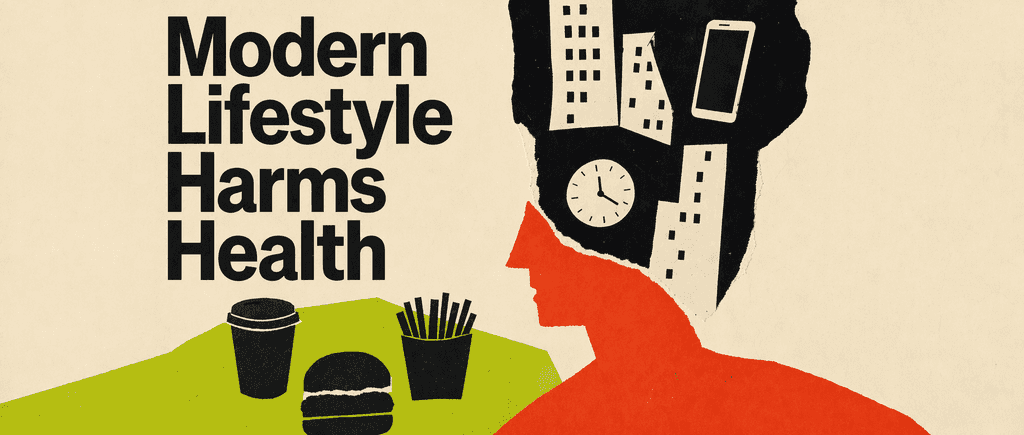
Evolutionary mismatches—such as calorie-rich diets clashing with ancient metabolic adaptations—explain rising obesity rates. Our bodies, optimized for scarcity, struggle in environments of abundance and sedentary lifestyles.
Natural selection favors genes that enhance early reproduction over longevity. Traits beneficial in youth, like rapid wound healing, may have trade-offs later, such as increased cancer risk.
It suggests conditions like anxiety and depression may stem from evolved defense mechanisms misaligned with modern stressors. For example, low mood might historically have prevented risky behaviors but now manifests as chronic disorders.
Darwinian medicine uses evolutionary principles to understand disease origins. It examines why natural selection left vulnerabilities, such as childbirth difficulties from bipedalism or wisdom teeth impaction from dietary changes.
As a foundational text, it pioneered the field by framing diseases through evolutionary trade-offs. Unlike niche academic works, it balances scientific depth with readability, making it a gateway to broader evolutionary health literature.
저자의 목소리로 책을 느껴보세요
지식을 흥미롭고 예시가 풍부한 인사이트로 전환
핵심 아이디어를 빠르게 캡처하여 신속하게 학습
재미있고 매력적인 방식으로 책을 즐기세요
Evolution has neither plan nor direction, and chance makes its future course unpredictable.
Natural selection doesn't create health, harmony, or stability—it promotes health only when it serves our genes' interests.
Every adaptation involves trade-offs.
Natural selection avoids overdesign—if something works well enough, selection can't improve it.
Why We Get Sick의 핵심 아이디어를 이해하기 쉬운 포인트로 분해하여 혁신적인 팀이 어떻게 창조하고, 협력하고, 성장하는지 이해합니다.
Why We Get Sick을 빠른 기억 단서로 압축하여 솔직함, 팀워크, 창의적 회복력의 핵심 원칙을 강조합니다.

생생한 스토리텔링을 통해 Why We Get Sick을 경험하고, 혁신 교훈을 기억에 남고 적용할 수 있는 순간으로 바꿉니다.
무엇이든 물어보고, 목소리를 선택하고, 진정으로 공감되는 인사이트를 함께 만들어보세요.

샌프란시스코에서 컬럼비아 대학교 동문들이 만들었습니다
"Instead of endless scrolling, I just hit play on BeFreed. It saves me so much time."
"I never knew where to start with nonfiction—BeFreed’s book lists turned into podcasts gave me a clear path."
"Perfect balance between learning and entertainment. Finished ‘Thinking, Fast and Slow’ on my commute this week."
"Crazy how much I learned while walking the dog. BeFreed = small habits → big gains."
"Reading used to feel like a chore. Now it’s just part of my lifestyle."
"Feels effortless compared to reading. I’ve finished 6 books this month already."
"BeFreed turned my guilty doomscrolling into something that feels productive and inspiring."
"BeFreed turned my commute into learning time. 20-min podcasts are perfect for finishing books I never had time for."
"BeFreed replaced my podcast queue. Imagine Spotify for books — that’s it. 🙌"
"It is great for me to learn something from the book without reading it."
"The themed book list podcasts help me connect ideas across authors—like a guided audio journey."
"Makes me feel smarter every time before going to work"
샌프란시스코에서 컬럼비아 대학교 동문들이 만들었습니다

Why We Get Sick 요약을 무료 PDF 또는 EPUB으로 받으세요. 인쇄하거나 오프라인에서 언제든 읽을 수 있습니다.
Have you ever wondered why, despite millions of years of evolution, our bodies still break down? Why we suffer from cancer, allergies, and infections despite being marvels of biological engineering? The answer lies in viewing disease through an evolutionary lens. Rather than seeing illnesses as simple mechanical failures, they're often consequences of our evolutionary history-compromises, trade-offs, and adaptations that once benefited our ancestors but may harm us in modern environments. This perspective, pioneered by Randolph Nesse and George Williams, has transformed medicine's understanding of why we get sick. Our bodies simultaneously showcase engineering brilliance and apparent design flaws. Our bones are stronger than steel yet lighter than aluminum. Our kidneys filter blood with remarkable precision. Yet we have airways that cross food passages creating choking hazards, widespread nearsightedness, and arteries prone to cholesterol buildup. Understanding this paradox requires distinguishing between proximate causes (how the body works) and evolutionary causes (why natural selection hasn't eliminated harmful traits). Both explanations are necessary for a complete picture of disease.