1장
History's Forgotten Lessons: The Wisdom We Keep Ignoring
In a world increasingly dominated by information overload, one book stands out as a timeless beacon of clarity. B.H. Liddell Hart's "Why Don't We Learn From History?" has quietly influenced military strategists, political leaders, and thoughtful citizens for decades. This slim volume, written by a man Winston Churchill once called "the captain who teaches generals," offers insights that transcend its military origins. Michelle Obama reportedly kept it on her nightstand during White House years, finding its wisdom on human nature particularly relevant during political crises. The book's enduring appeal lies in its uncomfortable truth: humanity's persistent failure to apply historical lessons to present challenges is not a knowledge problem but a psychological one. As we face unprecedented global challenges, Liddell Hart's penetrating analysis of why we repeatedly stumble into the same traps feels more urgent than ever.
2장
The Essential Value of Historical Perspective
History's primary purpose is disarmingly simple: to discover truth-what happened and why. While it cannot provide detailed blueprints for future action, it serves as a warning system by revealing mankind's most common mistakes. Its practical value lies in offering universal experience far beyond any individual lifetime. As Bismarck wisely noted, fools learn from their own experiences while the wise learn from others'. A student of history has access to three thousand years of accumulated human wisdom.
This perspective proved remarkably practical during World War II, when Liddell Hart accurately predicted military developments by projecting patterns from past conflicts. His forecasts weren't mystical but based on recognizing recurring human behaviors under similar circumstances. History records humanity's slow, stumbling progress forward and frequent slips backward-not to condemn our predecessors but to avoid repeating their errors.
What makes historical study particularly valuable is its breadth. While personal experience is limited, history offers diverse experiences across countless situations. Napoleon's famous dictum that "the moral is to the physical as three to one" captures an essential truth: while weapons and technologies change dramatically between conflicts, the psychological and moral factors remain relatively constant. Understanding these human constants provides the most reliable guide through uncertain futures.
Rather than being a specialist subject, history serves as the essential corrective to specialization itself. It embraces every aspect of human experience, providing context that specialized fields often lack. Without this broader view, we become trapped in narrow perspectives that miss crucial connections and patterns. History teaches us to see the forest despite our tendency to focus on individual trees.
3장
The Historian's Challenge: Finding Truth Among Fictions
The benefit we derive from history depends entirely on taking a broad view. While deep research into one area teaches valuable methodology, wider context prevents "missing the wood for the trees." Unfortunately, increasing academic specialization has decreased history's intelligibility and community benefit, creating silos of knowledge that fail to connect.
Personal experience in witnessing history's creation reveals the importance of accidental factors that rarely appear in official documents-personal disputes, physical ailments, domestic troubles, and especially the lunch hour. Committee decisions often hinge on approaching mealtimes, with shrewd members delaying interventions until hunger accelerates decision-making. The physical state of participants' stomachs influences not just timing but courage and passion in ways rarely recorded.
This reveals a dangerous tendency among "hermit historians" who overvalue documents while failing to recognize that many were written specifically to deceive. During World War I, Liddell Hart witnessed commanders fabricating documents "pour l'histoire," destroying unflattering records, and creating fictitious orders to protect reputations while appearing heroic. The gap between official records and actual events can be enormous.
Modern historians like Veronica Wedgwood demonstrate that good history and readable prose can coexist, despite lingering academic suspicion of literary style. Clear writing requires greater effort than cloudy expression and promotes clearer thinking-misstatements are more easily spotted in crystal-clear sentences. While deeper psychological analysis of historical figures is valuable, it shouldn't overshadow their actual accomplishments.
History is both science and art: scientific in its approach to evidence and accuracy, but requiring imagination and intuition for interpretation. Selection of evidence is inevitable and inherently subjective, though it should be controlled by scientific method. The German historical school under Ranke, in attempting pure scientific objectivity, produced history too dull to read and devoid of meaning, creating a void filled by dangerous new myths with appalling consequences.
4장
The Scientific Mind Versus Military Thinking
Adapting to changing conditions requires seeing problems clearly and analyzing them scientifically-free from prejudice yet with discernment and proportion. Though discernment may be innate, freedom from prejudice can be cultivated through self-criticism and precise expression. The scientific mind responds to criticism by first asking "Is it true?" rather than reacting emotionally or questioning motives.
Military thought has often failed by being subjective rather than objective. The soldier's profession presents a fundamental difficulty: military training inculcates unquestioning acceptance of doctrine, and doubt undermines the faith necessary in combat. The narrow margin between necessary optimism and blind folly is easily crossed, making soldiers vulnerable to becoming victims of their own faith.
This contrasts sharply with the Chinese Lung Ming Academy's approach of beginning with doubt-a method that produced more adaptable military thinking. Throughout history, most people have resented matter-of-fact commentary on their institutions, with falsehood persisting largely because good people refuse to acknowledge uncomfortable truths. The ideal approach is to face life with clear eyes rather than stumbling through it blindly, yet rarely does one meet anyone whose first reaction is to question truth.
The most dangerous delusions arise from manipulating history for national and military morale. In 1935, a German general advocated "camouflaging" unpleasant historical facts, citing an "English dictum" that "Anything that works is true"-illustrating how even those who suffered most from historical distortion eagerly embrace more of the same. This camouflaged history not only conceals fixable faults but engenders false confidence, the dry rot of armies that has often spurred leaders toward war.
5장
The Evasion of Truth: A Human Pattern
Men have constantly echoed Pilate's question "What is truth?" as a smoke screen for personal or political evasion. Our troubles often stem from suppressing known truths out of self-interested devotion to causes or institutions. The Passchendale offensive of 1917 exemplifies this pattern-Field Marshal Haig, eager to win single-handedly before American arrival, concealed unfavorable facts, exaggerated favorable ones, and continued sacrificing men despite mounting evidence of failure.
Even honorable men with dim moral lights deceive themselves and encourage subordinates to tell them what they wish to hear. Liddell Hart's experience with ambitious officers revealed how many would stoop to anything for advancement, while others "bottled up" their ideas until promotion, only to find them evaporated when finally uncorked. Moral courage proved rarer than physical courage, with career ambition and financial concerns about children's education undermining integrity.
Those most disloyal to superiors often preach loyalty most fervently to subordinates. Loyalty, while noble when not blind, too frequently becomes "a conspiracy for mutual inefficiency"-essentially selfish and demeaning to both parties. These misplaced loyalties severely damage historical truth. While the historian's calling demands searching for truth wherever it leads, many are diverted by sentiment, kinship, or audience expectations.
Military historians face particular challenges, as soldiers' ingrained loyalty to country, regiment and comrades makes impartial reflection difficult. General Edmonds, despite excellent qualifications, initially glossed over damaging truths in official WWI histories out of loyalty to fellow generals, eventually hypnotizing himself into believing his protective covering was the truth itself. This practice fatally hindered learning from WWI's lessons before WWII. Truth may not be absolute, but we come nearest it through scientific detachment from all loyalties save truth itself.
6장
Authority's Blindness and Democracy's Restraints
All humans err, but the wise recognize their tendency toward error-a recognition that authority dangerously lacks. During WWI, when warned about neglected Verdun defenses, General Joffre indignantly demanded names of the complainants, declaring that bypassing hierarchical channels "disturbs profoundly the spirit of discipline." Within two months, his doctrine of infallibility collapsed with tragic consequences, though ironically the whistleblower became an early victim while Joffre temporarily gained fresh laurels.
This pretense to infallibility is instinctive in hierarchies but enormously harmful. History repeatedly vindicates critics of authority who were once rebuked in self-righteous tones. Being "agin the Government" may be philosophically sound, as all governments inherently tend to infringe standards of decency and truth, making the watchful citizen's oversight essential against this necessary evil.
Democracy naturally puts a premium on conventionality, preferring those who keep step with the slowest march of thought while frowning upon potential disturbers of mutual inefficiency. This system tends toward mediocrity and excludes first-rate ability combined with honesty. Yet the alternative-despotism-almost inevitably entails the triumph of stupidity, making democracy the lesser evil.
What's truly valuable and worth defending in Western democracies is the tradition of freedom-the guarantee of vitality in our civilization. Despite theoretical drawbacks, the two-party system has proven practically superior to other governmental systems, while socialism inevitably tends toward its logical end: the totalitarian state.
While "power politics" between nations is increasingly recognized, how power operates within democracies remains poorly understood. In democratic systems, power ostensibly resides in committees, but reality differs markedly from constitutional theory. Small, informal gatherings-often dinner parties-frequently outweigh formal committees. The intimate circle around a Prime Minister typically shapes decisions before they reach the Cabinet for mere ratification. A Prime Minister with a prepared plan rarely faces serious opposition in Cabinet meetings. This pattern repeats throughout government departments and the business world, where boards typically modify and ratify rather than originate policy.
7장
The Hidden Influencers Behind Political Power
The "intimate advisers" of political leaders rarely become publicly known despite their significant influence. Those already prominent often face more suspicion and jealousy. Before World War I, Lord Esher wielded remarkable influence despite declining high offices like Secretary of War and Viceroy of India. J.A. Spender, editor of Westminster Gazette, was so close to the Prime Minister that his insider knowledge actually hampered his journalistic function.
Other notable behind-the-scenes figures included Lord Thomson for Ramsay MacDonald, John Buchan linking MacDonald and Baldwin, J.C.G. Davidson influencing Baldwin, and Sir Horace Wilson who became so powerful under Chamberlain that ministers complained of having to go through him to reach the Prime Minister. Churchill relied on Brendan Bracken, Lord Beaverbrook, Professor Lindemann (Lord Cherwell), and Major Desmond Morton. In America, Edward M. House functioned as President Wilson's "other half" during World War I, while Harry Hopkins played a similar role for Roosevelt during World War II.
These shadow advisers often wield more actual power than cabinet ministers, shaping policy before it reaches formal decision-making bodies. Their influence remains largely invisible to the public, yet they frequently determine the course of nations. Understanding this hidden power structure is essential to comprehending how democracies actually function beneath their constitutional facades.
8장
The Recurring Pattern of Dictatorships
Despotic rulers follow a remarkably consistent pattern throughout history. In gaining power, they exploit popular dissatisfaction, attack existing regimes while making unlimited promises, claim to want absolute power only temporarily, and manufacture conspiracies against themselves to gain sympathy. Once in power, they eliminate their chief helpers by branding them traitors, suppress criticism, enlist religion or create a new one, spend lavishly on impressive public works to compensate for lost freedoms, manipulate currency to mask economic realities, start wars to divert attention from domestic problems, and use patriotism to strengthen their authority.
They expand state structures while undermining foundations-breeding sycophants instead of honest collaborators, appealing to grandiose spectacle rather than true values, and fostering romantic rather than realistic views. This political confidence trick has been repeated throughout the ages, yet each new generation falls for it anew.
The effect of power on the dictator's mind remains remarkably consistent across ages and countries. Napoleon's Russian campaign illustrates this psychology perfectly. Dissatisfied with Russia's attempts to moderate his Continental System against England, Napoleon invaded against his wisest advisors' counsel. Assembling 450,000 troops in June 1812, he confidently declared Russia would sue for peace within two months. Despite losing a third of his army in five weeks, his self-deception continued.
Upon reaching Moscow in September, he found it evacuated and soon ablaze. Though this sobered him and made him seek peace, he couldn't comprehend the bitterness he'd provoked. His prolonged stay in burned Moscow only revealed his growing desperation before his reluctant retreat began on October 25. By November 9, his army had shrunk to 50,000, and after nearly facing disaster at the Beresina, Napoleon abandoned his troops to return to Paris. To the historian, Napoleon appears more fool than knave, his devastating folly enabled by smaller, more admiring fools. Almost exactly 129 years later, Hitler would demonstrate that mankind's "great men" do not learn from history.
9장
Freedom's Fragility and the Fallacy of Compulsion
While authoritarian regimes have produced some good fruits-implementing social reforms quickly, supporting public works, art, and archaeology that democracies might neglect-their fundamental flaws outweigh these benefits. Like war, they stimulate community service and comradeship temporarily, but ultimately decay the system from within. Bad means lead to no good end.
The thinking person must oppose authoritarianism because it fears inconvenient thoughts. Writers must oppose it because it believes in censorship. Historians must oppose it because it leads to repeated follies and deliberate historical distortion. Scientists must oppose it because it refuses to recognize criticism as essential to science. Any seeker of truth must oppose it because it subordinates truth to state expediency, which ultimately leads to stagnation.
Democratic countries today face increasing handicaps to freedom compared to the past. Excessive "security-mindedness," more bureaucratic than realistic, often reaches ludicrous extremes, making it harder for Parliament or Congress to acquire knowledge needed for meaningful oversight of defense matters. The growth of "P.R.-mindedness" particularly restricts commentary by serving officers. While heretical military ideas once published by Fuller and Liddell Hart eventually became orthodox, today's military thinkers might find it even more difficult to publish fresh criticism or forward-looking ideas that challenge existing doctrine.
History teaches that compulsion ultimately fails in practice. While preventing actions is feasible, forcing positive action generates friction and subtle evasion that undermines the intended outcome. Efficiency springs from enthusiasm, which is spontaneous and incompatible with compulsion. The more accustomed to freedom a people are, the more deadening compulsion becomes.
Military conscription-born ironically from Revolutionary France-proved fundamentally inefficient as warfare became increasingly technical and dependent on individual initiative. Conscription precipitated war in 1914 by making mobilization disruptive and negotiation impossible. During that conflict, the least free states collapsed first, while the Australian Corps-which rejected conscription-became the best fighting force by the fourth year.
10장
The Pursuit of Power and the Failure of Expediency
History reveals that the myth of the "great man" hinders genuine progress. While "greatness" may apply comparatively to specific qualities, the concept is largely a clay idol built by our natural desire to look up to someone. Those who gain power often have good qualities, but maintaining power typically leads them to appeal to the lowest common denominator-to instinct rather than reason, expediency rather than principle. Though appearing practical, this approach entangles leaders in a vicious circle of endless complications, as determining true expediency proves exceptionally difficult.
History teaches that expediency rarely proves expedient, yet modern statesmen continually speak its language, fearing the "unpractical" label of principled positions. True realism would acknowledge idealism's force and combine foresight with practical considerations. Britain's policy strength has been adaptability, but its weakness lies in failing to forestall difficulties through forethought. British policy has been most effective when approaching honesty, as evidenced by the century of contradictory relations with Turkey.
The British temperament, with its moral scruples, is inherently disadvantaged in amoral competition, suggesting Britain might fare better with consistent morality. The maladjustment between morality and materialism has repeatedly created dilemmas, as with supporting the Sultan against Young Turk reformers, driving them toward Germany. The world would function better with more decency, honesty, and foresight. Those who maintain private decency while advocating international jungle law are particularly illogical, as are those who preach patriotic self-sacrifice while embracing national selfishness-preserving only the husk without the soul.
Civilization rests on keeping promises-a seemingly modest attainment that nonetheless forms the foundation of all human relations and constructive efforts. This principle applies directly to collective security among nations. Pre-war critics charged that covenant supporters risked war through excessive respect for agreements. While they may have misjudged implementation conditions, they showed fundamental honor and wisdom compared to those advocating appeasement, which history repeatedly shows to be the greatest delusion.
11장
War's True Origins: The Human Factor
War's germs flourish among those directing national affairs, inflamed by power's atmosphere. World War I's origins reveal that while economic factors predisposed conflict, human nature-possessiveness, competitiveness, vanity, and pugnacity-provided deeper causes, fomented by dishonesty. The Kaiser's vanity and complex feelings toward England, sharpened by Edward VII's snubs, significantly influenced events.
In the crisis's crucial phase, Austrian and Russian governments, nursing past humiliations, risked millions' suffering rather than swallow injured pride. The Archduke's murder by Serbian-connected Slavs ironically eliminated their potential ally. Austria exploited this for action against Serbia, supported by the Kaiser's royal indignation. When he later tried moderating his position, it was too late-Austria feared losing German support and hastily declared war.
Russia mobilized to protect Serbia, but military leaders insisted on full mobilization including the German frontier. German generals used this to overcome the Kaiser's caution, arguing for immediate action. Their inflexible war plan required attacking France through Belgium, violating neutrality and drawing in Britain, which had made semi-detached arrangements with France complicated by unauthorized military staff coordination.
Similar influences repeatedly sabotaged chances to end World War I before mutual exhaustion. In 1917, Germany's peace party gained ascendancy and was willing to withdraw from conquered territories and cede most of Alsace-Lorraine to France. This opportunity was wrecked by petty jealousy when French Foreign Minister Ribot, resenting that the approach came through Briand, kept the British government uninformed. By the time this became known, the Kaiser had been driven back to the war party.
Similarly, when Austria's Emperor attempted to break from Germany and make peace, his overture was rebuffed due to Italian Foreign Minister Sonnino's and France's Poincare's excessive ambitions. They cunningly undermined the effort by informing Germany of Austria's proposal. General Hoffmann's reflection on the German High Command's internal power struggles applies universally: personal ambitions, slander and hatred flourish among influential people on all sides, with the "race for power" corrupting character. War's true history runs deeper than strategy and politics, shaped by these personal currents.
12장
The Mirage of Victory and the Path to Peace
History teaches that complete victory never yields the anticipated good and lasting peace. Instead, it sows seeds for fresh conflict by breeding desire for vindication among the vanquished and raising new rivals. This pattern is especially common after alliance victories, when the removal of a strong third-party check complicates peace settlements. Without counterbalancing opposition to control victors' appetites, alliance members' divergent interests transform wartime comradeship into mutual dissatisfaction-yesterday's ally becomes tomorrow's enemy.
True victory means achieving a better state of peace than before the war, possible only through quick results or economically proportioned efforts. Nations might often come closer to their objectives by negotiating during lulls rather than pursuing exhausting "victories." When sides are evenly matched, statesmen should apply strategic psychology: just as leaving an opponent a retreat line loosens resistance, providing a diplomatic "ladder" for descent facilitates resolution.
History reveals that after prolonged wars, survivors typically agree there were no victors-only common losers. War profits only through quick victory, possible only for aggressors. When aggression fails, wars become mutually destructive unless ended by agreement. Aggressors, fighting for gain, often seek peace terms earlier, while defenders, driven by vengeance, pursue victory-though experience shows this is a mirage in protracted conflicts.
The defender should listen to peace proposals; once an enemy government begins negotiating, it typically improves its offers and weakens its people's resolve. Democracy, while restraining war preparation, paradoxically struggles to limit warfare once begun-emotion dominates reason, especially in modern democracies with their larger emotional pressures. Wellington exemplified wise peacemaking after victory, protecting French civilians, curbing allies' revenge, and opposing Prussia's demands for dismemberment and huge indemnities. His moderation secured lasting peace because he understood war's true purpose was peace, unlike Napoleon who fell in love with war itself.
13장
The Search for World Order: Beyond Simple Solutions
History clearly shows that governmental agreements endure only when both parties recognize continued adherence serves their interests. International relations are governed by interests, not moral principles, making "the sanctity of treaties" a hollow phrase. Treaties' validity depends on mutual convenience, with better prospects when both sides' strength is closely balanced-creating recognition that one-sided victory would be outweighed by mutual exhaustion.
The Romans' maxim "If you wish for peace, prepare for war" contains a fallacy demonstrated by endless subsequent conflicts. As Calvin Coolidge noted, "No nation ever had an army large enough to guarantee it against attack in time of peace, or ensure it victory in time of war." A truer maxim would be "If you wish for peace, understand war." Peace plans often fail by disregarding human nature and can precipitate war when high hopes collapse.
Instead of formulas, peace requires practical principles: study war's history, maintain strength, keep cool, exercise patience, never corner opponents, help them save face, see through their eyes, avoid self-righteousness, and abandon delusions of victory and unlimited war-principles first articulated in Sun Tzu's work 2,500 years ago.
While world federation seems the obvious solution for preventing war-requiring nations to surrender absolute sovereignty-history shows unification rarely produces real progress or freedom. Unification typically ends either in paralyzing uniformity of ideas or in artificial unity that eventually disrupts through discord. True vitality springs from diversity with mutual toleration, where progress continues through balanced forces creating mutual checks in both domestic and international spheres.
The "balance of power" theory worked when properly maintained but has frequently collapsed into war, driving the search for more stable solutions through fusion or federation. Federation offers more hope than unification because it embodies cooperation rather than monopoly, though even federations require careful balancing factors to prevent power corruption. While federation has successfully preserved peace among different nationalities in the United States and more remarkably in Switzerland, world federation currently has no practical chance of acceptance.
14장
Learning from History: The Path Forward
How strange appears the optimism about human progress that peaked at London's Great Exhibition of 1851, hailed as the inauguration of a Golden Age of peaceful prosperity through scientific progress. That dream has become a nightmare, though not without justification, as all material conditions for its fulfillment developed beyond expectation. The causes and consequences might be summed up: "People who live in glass houses should not throw stones."
Our best chance lies in developing deeper understanding of modern warfare and mutual responsibility. Science has transformed physical conditions more in the past hundred years than in the previous two thousand, yet nations employ these tremendous powers as recklessly as primitive means, without regard for difference in effect. Modern governments have ceased considering post-war effects that earlier statesmen wisely bore in mind.
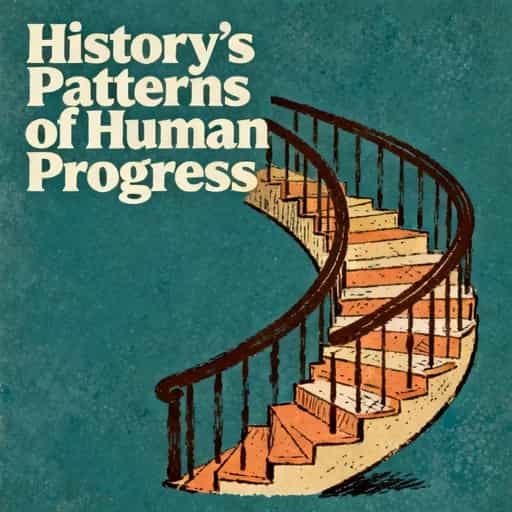
War germs focus in the belief that "the end justifies the means"-yet history clearly shows bad means deform the end. If we take care of the means, the end will take care of itself. Truth is a spiral staircase-what looks true on one level may not be on the next higher level. Ascending this spiral reveals that individual security increases with societal growth, local security with wider organization, and national security when nationalism decreases and sovereignty merges into super-national bodies.
The futility of pursuing progress by compulsion ranks second only to pursuing ends reckless of means. History shows influence on thought has been the most influential factor in progress. The smallest permanent enlargement of thought is a greater achievement than material construction that crumbles or conquests that collapse.
What can individuals learn from history? Not what to do but what to strive for-and what to avoid. The importance of seeing clearly and behaving decently. It's strange how people assume no training is needed in pursuit of truth, when this requires detaching thinking from every desire, interest, sympathy and antipathy.
Though the world may be a jungle, if one has seen that simple principles of decency and kindliness could make it better, then one must practice these consistently and live as if they were general. Following this light through the jungle, one should remember the practical guidance provided nearly two thousand years ago: "Be ye therefore wise as serpents, and harmless as doves."





![[the-lessons-of-history-by-will-durant:c0000] The Lessons of History p1-1](/_next/image?url=https%3A%2F%2Fd1y2du6z1jfm9e.cloudfront.net%2Fassets%2Fpodcast%2Fyellow.png&w=1024&q=50)
![[the-lessons-of-history-by-will-durant:c0002] The Lessons of History p1-1](/_next/image?url=https%3A%2F%2Fd1y2du6z1jfm9e.cloudfront.net%2Fassets%2Fpodcast%2Fgreen.png&w=1024&q=50)


