1장
The Workplace Revolution: How Wellbeing Transforms Organizations
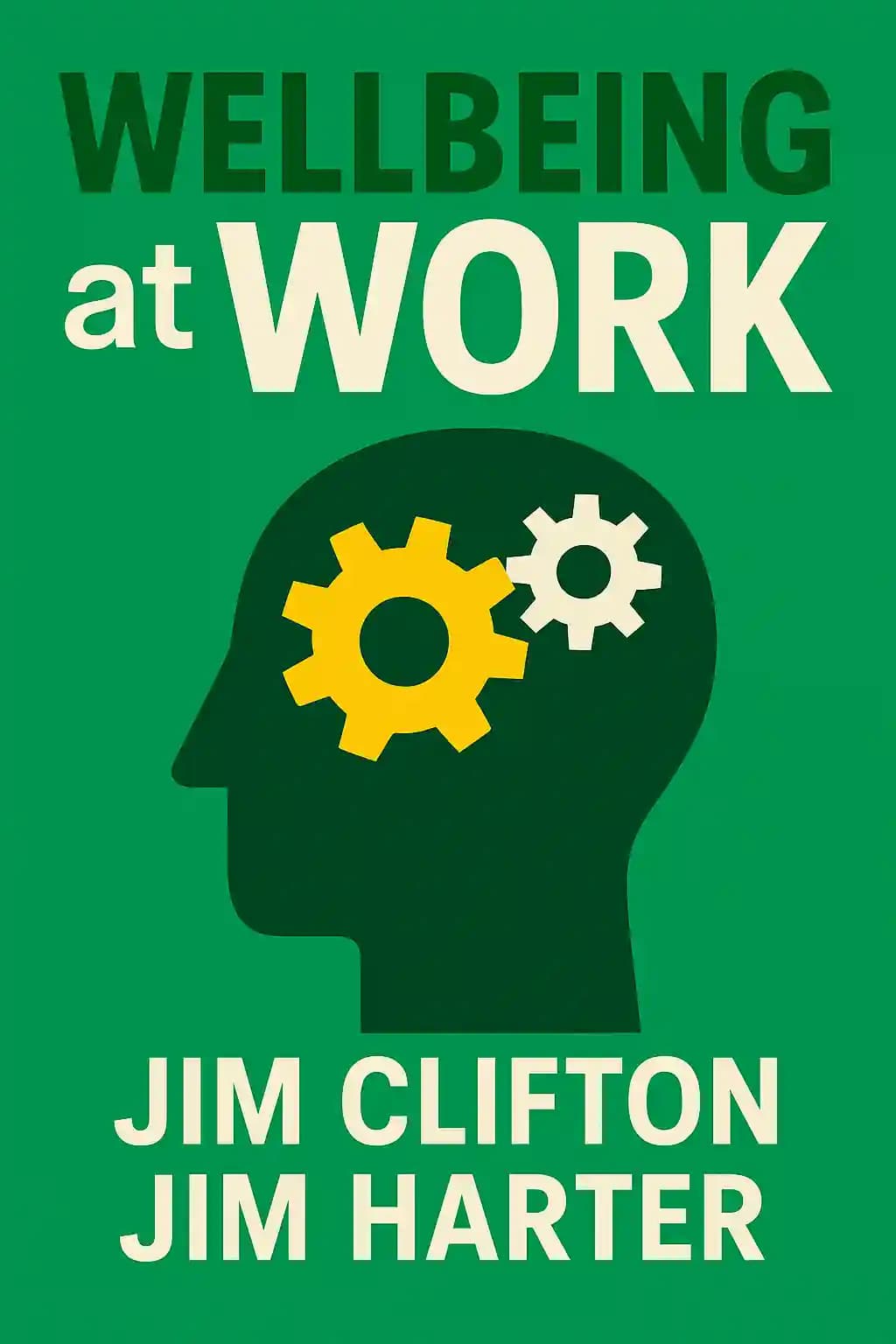
What if the next global pandemic isn't viral, but mental? According to Gallup's groundbreaking research, we're already in the midst of it. With a third of Americans showing clinical anxiety or depression and "deaths of despair" soaring from 65,000 in 1995 to 158,000 in 2018, our collective wellbeing is in crisis. This mental health emergency isn't just a personal tragedy-it's driving declining economic dynamism worldwide. Jim Clifton and Jim Harter's "Wellbeing at Work" arrives at this critical moment, offering a revolutionary framework backed by decades of research across 160 countries.
The book has become required reading for forward-thinking executives at companies like Microsoft and Google, where leaders recognize that employee wellbeing directly impacts bottom-line results. Oprah Winfrey called it "essential reading for anyone who cares about creating thriving organizations," while Adam Grant praised its "practical roadmap for building cultures where people can do their best work and live their best lives." Beyond corporate circles, the book has influenced public health policy, with its five elements of wellbeing framework adopted by healthcare systems and government agencies worldwide.
2장
The Science of Thriving: Measuring What Matters Most
While organizations meticulously track financial metrics, customer satisfaction, and environmental impact, most lack formal measurements for employee wellbeing. We know Earth's temperature to a fraction of a degree and the moon's distance down to the centimeter, yet have few reliable metrics on the world's psychological climate. This measurement gap represents a critical blind spot in organizational leadership, particularly as workplace mental health becomes increasingly central to business success.
Gallup's solution is elegantly simple yet profoundly powerful: the Gallup Net Thriving (GNT) metric. This two-part question asks people to rate their current life and anticipated future on a 0-10 ladder scale, serving as the "other GDP" for countries or the "other stock price" for organizations. The metric identifies three distinct states: Thriving (scoring 7+ current, 8+ future), Struggling (moderate or inconsistent ratings), and Suffering (4 or below on both). This classification system provides organizations with a clear snapshot of their workforce's mental state and future outlook, enabling targeted interventions and support.
What makes this approach revolutionary is its predictive power across multiple dimensions of organizational performance. Thriving employees show dramatically better outcomes across all performance metrics-53% fewer health-related absences, 81% lower absenteeism, and 23% higher profitability. The difference between engaged employees who are thriving versus those who aren't is striking: the latter group shows 61% higher burnout risk, 48% higher daily stress, and double the rates of sadness and anger. These emotional states directly impact innovation, customer service quality, and team collaboration.
This science of thriving isn't merely theoretical - it's producing measurable results in diverse organizational contexts. When Microsoft implemented Gallup's wellbeing framework, they saw employee thriving rates increase by 12% within one year, while turnover decreased by 16%. Similar success stories have emerged from companies like Walmart, which saw a 10% increase in customer satisfaction scores after focusing on employee wellbeing, and Adobe, which reported a 15% boost in innovation metrics after implementing wellbeing initiatives.
The framework's universality is equally impressive-whether in Nordic countries with thriving rates approaching 87% or struggling regions with rates as low as 8%, the five elements consistently predict life satisfaction and performance. Cultural variations may affect baseline scores, but the fundamental relationship between thriving and performance holds true across geographical and cultural boundaries. Companies operating globally have found that focusing on these universal elements of wellbeing transcends cultural differences and creates consistent positive outcomes.
The implementation of wellbeing metrics has also revealed surprising insights about organizational dynamics. For instance, teams with high thriving rates show 35% better adaptation to change, 42% stronger innovation capabilities, and 28% better crisis resilience. These findings demonstrate that employee wellbeing isn't just a feel-good initiative - it's a fundamental driver of organizational success in today's complex business environment.
3장
The Five Elements: Building Blocks of a Thriving Life
Through decades of research involving millions of people across 160 countries, Gallup identified five universal elements that determine whether someone is thriving or suffering: career, social, financial, physical, and community wellbeing. These elements work together synergistically-each additional thriving element exponentially reduces negative outcomes like unhealthy days, burnout, and anxiety. For example, individuals thriving in three elements report 50% fewer unhealthy days compared to those thriving in two, while those thriving in all five elements experience 81% fewer unhealthy days annually.
Career wellbeing encompasses more than job satisfaction - it's about finding purpose and enjoyment in daily activities. Social wellbeing involves having strong relationships and love in life. Financial wellbeing means effectively managing economic life to reduce stress and increase security. Physical wellbeing includes good health and enough energy to get things done daily. Community wellbeing relates to engagement where you live and a sense of safety and pride in your community.
What makes this framework particularly valuable is its recognition of interdependence. Career wellbeing serves as the foundation for the other elements, but all five influence each other in complex ways. Poor financial wellbeing, for instance, creates stress that undermines physical health, while strong social connections can buffer against career challenges. Research shows that people with a best friend at work are seven times more likely to be engaged in their jobs, demonstrating how social wellbeing enhances career satisfaction.
The framework also acknowledges that wellbeing isn't determined by genetics alone. While we each have natural "set points" for happiness, our environment and choices can significantly alter our wellbeing trajectory. Studies show that approximately 40% of our happiness is influenced by intentional activities and behaviors, while only about 50% is genetic. This insight offers hope-organizations can meaningfully improve employee wellbeing regardless of individual predispositions.
Perhaps most importantly, the five elements framework provides a practical structure for organizational wellbeing initiatives. Rather than implementing disconnected wellness programs, companies can strategically address all five dimensions, creating comprehensive approaches that meet employees' full spectrum of needs. Leading organizations have found success by integrating financial education programs, flexible work arrangements, social connection opportunities, wellness challenges, and community service initiatives. Companies that effectively address all five elements typically see 41% lower healthcare costs and 21% higher productivity compared to those focusing on traditional wellness programs alone.
The framework also enables precise measurement and tracking of wellbeing progress. Organizations can assess baseline levels across each element, identify specific areas for improvement, and monitor the impact of various initiatives. This data-driven approach allows for continuous refinement of wellbeing strategies and clear demonstration of return on investment, transforming wellbeing from a nice-to-have perk into a strategic business imperative with measurable outcomes.
4장
Career Wellbeing: The Foundation of a Thriving Life
Only 20% of employees strongly agree they like what they do every day-a statistic with profound implications for both organizational performance and individual health. Poor career wellbeing manifests physically through elevated stress hormones, contributing to an estimated 120,000 deaths annually and 5-8% of healthcare costs in the United States alone. These costs extend beyond direct medical expenses to include decreased productivity, increased absenteeism, and higher turnover rates, creating a cascade effect throughout organizations.
The research reveals a stark physiological reality: disengaged workers show higher cortisol levels on workdays but not weekends, experiencing what amounts to a recurring stress cycle that damages health over time. Studies monitoring employee stress hormones found cortisol levels up to 40% higher during work hours compared to leisure time. This biological response helps explain why burnout-now officially recognized by the World Health Organization as an occupational syndrome-affects between 26-40% of employees across developed nations, with rates climbing even higher in high-stress industries like healthcare and technology.
Perhaps most troubling is the finding that time spent with managers ranks as the worst part of many employees' days. Studies show that 75% of voluntary turnover is directly attributed to poor management relationships. Abusive supervision contributes to drinking problems, drug use, insomnia, and unsafe behaviors, while even indifferent management causes emotional exhaustion and disengagement. Research indicates that employees who report to toxic managers are 60% more likely to suffer from cardiovascular issues. The good news? When managers transition from bosses to coaches, focusing on strengths and providing meaningful feedback, employee wellbeing dramatically improves, with engagement scores typically rising by 30% or more.
Organizations that excel at career wellbeing create environments where employees wake up thinking about interesting, challenging work they're skilled to accomplish. These companies implement regular strength assessments, provide clear career progression paths, and offer continuous learning opportunities. These employees find work intrinsically rewarding, not just for the paycheck, and know their contributions are noticed and appreciated. The "live for the weekend" mindset disappears as they experience positive spillover between work and personal life, with studies showing that high career wellbeing correlates with better family relationships and increased community involvement.
Forward-thinking organizations address career wellbeing through four key strategies: ensuring everyone knows their strengths through regular assessments and development plans, removing toxic managers through improved screening and accountability measures, upskilling managers to provide meaningful coaching through structured training programs, and incorporating wellbeing into career development conversations. Companies like Google and LinkedIn now require manager training in emotional intelligence and coaching skills. When Microsoft implemented these approaches, they saw engagement scores increase by 15% and burnout decrease by 12% within a single year. Additionally, they reported a 20% reduction in turnover and a 25% increase in employee-reported job satisfaction, demonstrating the tangible benefits of prioritizing career wellbeing.
5장
Social Wellbeing: The Power of Meaningful Connections
Our social connections profoundly shape our wellbeing in ways that extend far beyond simple enjoyment. Research shows health behaviors like smoking and obesity are influenced by people up to three degrees removed-even those you've never met. Having at least three or four close relationships correlates with better health and engagement, while studies find friends' wellbeing predicts your happiness better than income does.
The workplace represents a critical social environment, yet only 30% of employees strongly agree they have a best friend at work. This represents a massive missed opportunity, as Gallup's research shows workplace friendships dramatically increase productivity, safety, customer ratings, and profit margins. Experience sampling reveals engaged employees consistently enjoy who they work with throughout the day, while disengaged workers experience a rollercoaster of social interactions, likely complaining about colleagues during breaks.
Quantity matters too-mood improves with each hour of social time up to six hours daily, though in-person interaction delivers the greatest benefits. Far from wasting time, workplace socializing builds essential human capital, with engaged workers averaging just one more hour of daily social time than disengaged colleagues.
The COVID-19 pandemic highlighted how crucial social relationships are to wellbeing, as humans are fundamentally social beings whose identity and sense of meaning are shaped by close relationships. Organizations that recognized this reality adapted quickly, creating virtual social opportunities and checking in on employees' social wellbeing during remote work.
Leaders can foster social wellbeing by incorporating socializing into onboarding programs, helping new employees build crucial partnerships and friendships within their first year. Getting to know employees by asking who they enjoy working with creates opportunities for productive partnerships. While organizations can't force friendships, creating regular opportunities for meaningful work-based interactions allows human nature to take its course, whether in remote or in-person settings.
6장
Financial Wellbeing: Security Beyond the Paycheck
Only one in four Americans report no money worries, and financial struggle is the strongest predictor of daily stress for employed people. Rather than asking if money buys happiness, the better question is how money affects wellbeing. The answer is nuanced and surprising.
Financial wellbeing isn't about wealth but about security-the perception of having enough to do what you want without worry has three times the impact on wellbeing as actual income. While higher incomes correlate with better life ratings, daily emotions improve only up to about $90,000 annually (in 2021 dollars). More important than income is financial independence and freedom of choice, with studies across 63 countries showing autonomy predicts wellbeing better than wealth.
This explains why many high earners feel financially insecure despite substantial incomes. They've fallen into consumption patterns that create perpetual financial stress, while others with modest incomes achieve security through good money management and automated financial systems. The key difference isn't how much they make but how they manage what they have.
Financial wellbeing is deeply interconnected with other wellbeing elements. Nearly half of Americans live paycheck to paycheck, with financially troubled employees twice as likely to report poor health, higher stress, more absences and lower engagement. While employees may change jobs for better pay, engaged workers typically require a 20% raise to leave, while disengaged workers will leave for almost any increase.
Perhaps the most avoided manager conversation is about pay. Behavioral economics reveals that financial satisfaction depends more on comparisons with others than absolute amounts. A PayScale study of 71,000 employees found that 35% of those paid above market value incorrectly believed they were underpaid, while 64% of those paid at market value thought they were underpaid. This perception gap means organizations must prioritize transparent pay conversations over simply increasing compensation.
Leaders can improve financial wellbeing by providing planning resources, encouraging retirement savings through opt-out default programs, training managers for effective pay conversations, considering team incentives alongside individual ones, and designing comprehensive benefits packages that enhance overall employee wellbeing.
7장
Physical Wellbeing: The Energy for Life's Demands
Physical wellbeing isn't just about preventing illness-it's about maintaining energy for daily activities. The pandemic exposed how underlying health conditions impact resilience, with remarkable accuracy in predicting COVID-19 outcomes based on risk factors. Leaders must view physical wellbeing as essential to organizational health, focusing on sleep, exercise, and diet as key factors in employee resilience.
Sleep acts as a reset button for mood and immunity, with 7-9 hours being optimal. Only 4% of Americans get adequate sleep, though it provides decreased stress, improved learning, and enhanced problem-solving. Exercise boosts mood almost immediately, with just 20 minutes significantly improving outlook and combating fatigue better than prescription drugs. Even exercising twice weekly reduces stress substantially.
Diet impacts "metaflammation"-chronic metabolic inflammation affecting immunity-with processed foods and sugary drinks stripping away natural nutrients the body needs, while sedentary behavior compounds these issues regardless of exercise habits. Together, these three factors-sleep, exercise, and diet-create the foundation for physical resilience that enables employees to bring their best selves to work.
Organizations can promote physical wellbeing by emphasizing behaviors with immediate benefits that build long-term resilience. Making physical wellbeing communication an expectation for managers encourages them to share corporate wellness programs and celebrate team members' health successes. Managers should model best practices, recognizing the contagion effect of healthy behaviors. Providing employees with fact-based nutritional guidance from experts who stay current with scientific literature helps cut through the noise of special interest groups and sensationalized media coverage.
Companies like Johnson & Johnson have demonstrated the business impact of physical wellbeing initiatives, saving an estimated $250 million in healthcare costs over a decade through comprehensive wellness programs. Their approach focuses not just on traditional wellness metrics but on energy management-ensuring employees have the physical capacity to meet work demands while maintaining personal vitality.
8장
Community Wellbeing: Finding Purpose Beyond Yourself
Community wellbeing strongly differentiates between good and great lives, with thriving individuals reporting life exceeding their expectations. People find fulfillment in being part of something larger than themselves, making meaningful local contributions where their efforts have greatest impact. A meta-analysis of 100 studies shows caring for others links to higher wellbeing, particularly when there's personal connection alongside altruism.
This dimension has taken on new importance as one-third of job seekers now prioritize organizations having positive community impact. Companies with better corporate social responsibility reputations outperform peers financially, making this a leadership imperative. The World Economic Forum's ESG metrics measure sustainable value creation, while a meta-analysis of 52 studies confirms that social responsibility reputation strongly predicts financial success.
Employees thriving in community wellbeing feel safe where they live and believe their community aligns with their desired lifestyle. They take pride in their community's direction, make meaningful contributions, and experience the "helper's high" that enhances mood and energy across all life domains. Community wellbeing both supports and is supported by the other wellbeing elements, creating a virtuous cycle where physical health and financial security enable giving back.
Leaders should understand which community issues matter most to employees, recognizing that interests evolve with life stages. Encouraging employees to choose personally meaningful community programs rather than mandating participation increases engagement and impact. Creating opportunities for employees to leverage their unique talents in service projects doubles as team-building experiences. Publicly recognizing and rewarding community contributions allows employees to share their involvement with coworkers.
Patagonia exemplifies this approach with its Environmental Internship Program, allowing employees to work for environmental organizations while receiving full pay and benefits. This initiative has strengthened employee commitment while enhancing the company's reputation for authentic social responsibility. The key is encouraging employees to do something, whatever their passions may be, rather than prescribing specific causes or activities.
9장
Building a Culture of Thriving: From Insight to Action
A net thriving culture brings high energy, innovation, and agility to meet customer needs in both good times and crises. To develop such a culture, leaders must first be thriving themselves, as their wellbeing naturally spreads throughout the organization. Leaders need to understand that each employee's development is an end in itself, affecting not just the individual but their family's wellbeing too.
The key is making it easier for people to do what's in their best interest by aligning short-term rewards with long-term goals. Organizations can build a net thriving culture by using the five elements as an organizing structure for benefits programs, ensuring wellbeing initiatives come from the CEO's office, equipping managers to include wellbeing in performance management, developing networks of wellbeing coaches, and auditing practices and policies through key cultural accelerators.
However, several risks threaten thriving cultures. Leaders often think they've addressed culture by creating values and mission statements, but only 22% of U.S. employees strongly agree their company's leaders have clear direction. Despite similar values statements across major organizations, only 27% of employees strongly believe in their company's values. The root issue is trust-only one in three employees strongly trust leadership.
Organizations also mistakenly believe policies, programs, and perks can legislate culture and improve net thriving. Research shows the quality of work experience matters far more than specific policies. Working from home brings freedom but requires better management, as remote workers report less meaningful feedback. Engaged employees working long hours maintain better wellbeing than disengaged employees with shorter workdays-quality of work experience has three times the impact on wellbeing as hours worked.
Perhaps the greatest risk is poorly skilled managers. Managers are the single most important factor in workforce engagement and performance, best positioned to navigate changes and bring clarity to employees' daily lives. Managers who provide frequent, meaningful feedback have more engaged employees, with even greater benefits for remote workers. Across all risks to net thriving culture, the evidence points to managers as the critical factor in designing engaging workplaces that foster wellbeing and mental health.
10장
The Fastest Path to Thriving: Leveraging Natural Strengths
Achieving net thriving doesn't require extreme measures or fundamental personality changes. Rather than becoming athletes, millionaires, or social butterflies, employees need only moderate daily physical activity, financial management within their means, and energizing relationships. The key to improving wellbeing lies in changing habits by identifying employees' unique strengths and directing them toward high wellbeing activities.
Wellbeing conversations between managers and employees must be built on a foundation of trust to be effective. Starting these discussions with an employee's strengths creates a positive approach that avoids awkward criticism, identifies their unique qualities, and establishes a common language for strengths-based development. When managers understand an employee's specific strengths, they can have meaningful conversations and match wellbeing activities to individual interests.
Based on Dr. Don Clifton's lifetime work, Gallup has identified 34 talent themes through the CliftonStrengths assessment. Each strength offers unique pathways to wellbeing-someone with the Strategic strength might excel at planning financial security, while someone with the Woo strength might thrive through community involvement that leverages their people skills.
This strengths-based approach transforms wellbeing from a generic corporate program into a personalized journey. Instead of imposing one-size-fits-all wellness initiatives, organizations can help employees discover their natural talents and apply them across all five wellbeing elements. The result is higher adoption rates, greater sustainability, and ultimately, more thriving employees.
Companies like Stryker Corporation have demonstrated the power of this approach, integrating strengths-based development with wellbeing initiatives to achieve 90% employee engagement-nearly five times the national average. Their secret isn't lavish benefits or cutting-edge wellness programs, but rather a fundamental commitment to helping each employee understand and apply their unique strengths across all dimensions of wellbeing.
In a world facing unprecedented mental health challenges, this strengths-based path to wellbeing offers hope-not just for individual flourishing, but for creating organizations where people can truly thrive. The science is clear: when we build cultures that nurture wellbeing through natural strengths, we create the conditions for sustainable success, resilience in crisis, and lives that exceed our wildest expectations.