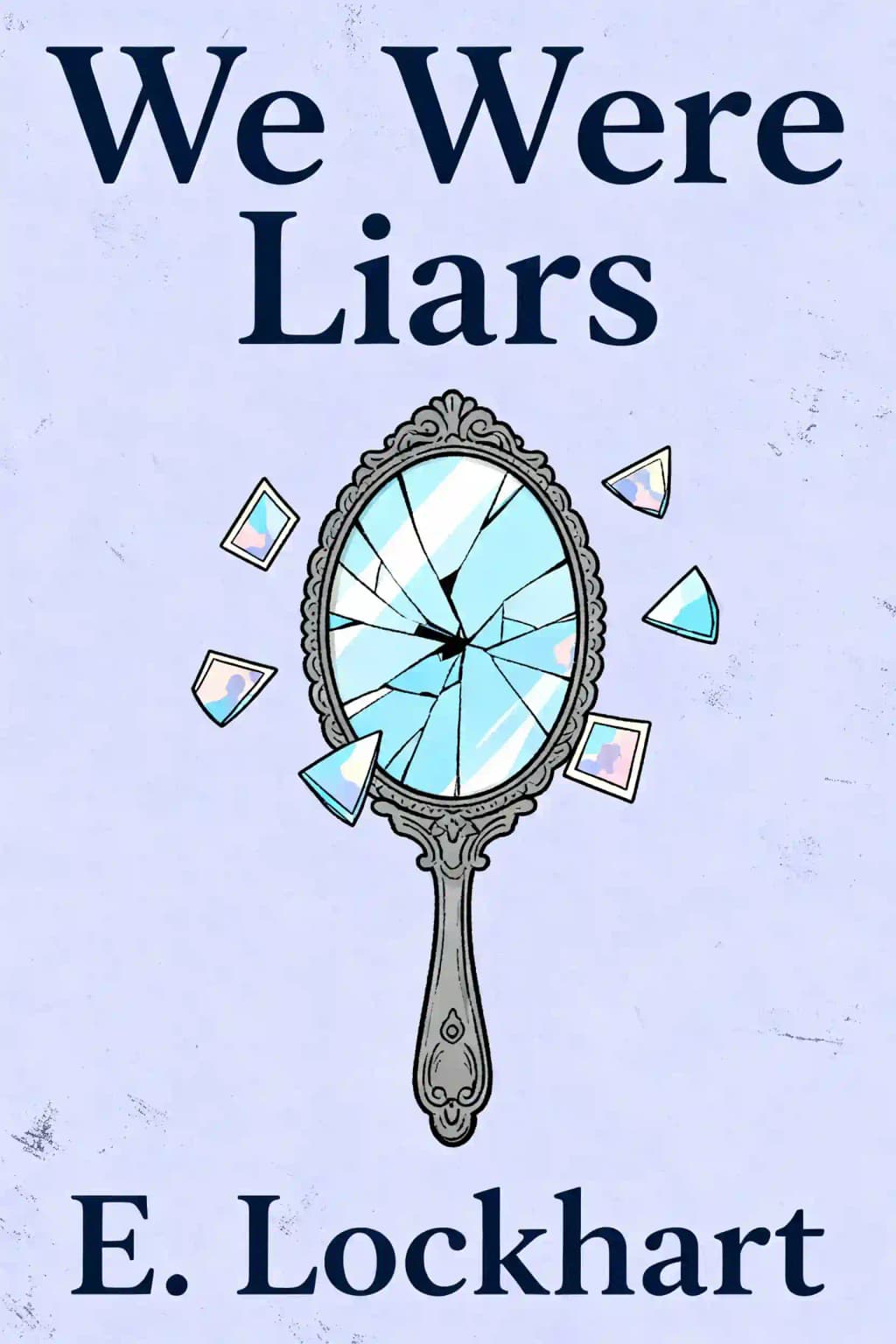
A haunting tale of privilege and deception, "We Were Liars" became a New York Times Bestseller that captivated readers with its shocking twist. This Goodreads Choice Award winner sparked viral discussions about wealth and trauma, leaving readers questioning everything they thought they knew.
E. Lockhart, pen name of Emily Jenkins, is the #1 New York Times bestselling author of We Were Liars, a young adult novel exploring themes of familial privilege, trauma, and the unreliability of memory.
A National Book Award finalist and Printz Honor recipient for The Disreputable History of Frankie Landau-Banks, Lockhart combines her Ph.D. in 19th-century English literature from Columbia University with sharp social commentary in her psychologically layered YA works. She also writes acclaimed children’s picture books under her birth name, including the Toys series and Lemonade in Winter.
Lockhart’s novels, such as the Ruby Oliver quartet and Family of Liars (the prequel to We Were Liars), often feature complex family dynamics and morally ambiguous protagonists. Her DC Comics graphic novel Whistle: A New Gotham City Hero showcases her versatility in blending coming-of-age narratives with superhero lore. We Were Liars has sold over 2 million copies, been translated into 36 languages, and is in development for a major streaming adaptation.
We Were Liars is a YA psychological thriller following Cadence Sinclair, a wealthy teenager grappling with memory loss after a mysterious accident during her fifteenth summer on her family’s private island. As she uncovers buried secrets about her cousins, friends, and the fire that destroyed their estate, the story explores themes of privilege, guilt, and the destructive lies binding the Sinclair family.
Fans of twist-driven mysteries and unreliable narrators, like Gone Girl or One of Us Is Lying, will enjoy this book. It’s ideal for YA readers aged 14+ who appreciate layered family dramas and ambiguous endings. Those interested in critiques of wealth and identity will find the Sinclair family’s dynamics compelling.
Yes—it’s a New York Times bestseller praised for its lyrical prose and shocking finale. The novel’s nonlinear storytelling and exploration of mental health make it a standout in YA fiction, though some critics note its pacing splits audiences. Over 2 million copies sold since its 2014 release.
The fire symbolizes the Liars’ rebellion against their family’s greed and bigotry. By burning Clairmont House, they试图destroy the physical manifestation of inheritance disputes and prejudice (e.g., Gat facing racism). Ironically, it becomes a tragic act of self-destruction.
Cadence realizes she accidentally caused the fire that killed her cousins Johnny and Mirren, plus Gat, her love interest. The “Liars” she’s interacted with post-accident are hallucinations, a coping mechanism for her guilt. The finale underscores themes of accountability and healing.
Beechwood Island represents both paradise and prison—a idyllic facade masking the Sinclairs’ dysfunction. Its isolation mirrors the family’s emotional detachment, while the ocean embodies Cadence’s turbulent subconscious.
Gat dies in the Clairmont fire, trapped in the basement. His death highlights the consequences of the Liars’ recklessness and the family’s prejudice, as his outsider status (due to his Indian heritage) contributed to their marginalization.
Cadence’s migraines and memory loss metaphorize PTSD, while her hallucinations reflect dissociation from trauma. The book critiques how her family dismisses her pain to maintain their “perfect” image.
Like Genuine Fraud, it features complex female protagonists and twisted plots, but We Were Liars leans more into poetic ambiguity than action-driven thrills. Both dissect societal expectations and identity.
Some readers critique its pacing and disorienting narration, while others argue the twist risks romanticizing mental illness. However, its unflinching look at generational trauma and racism sparks meaningful discussion.
As of 2025, no official adaptation has been announced. Lockhart has hinted interest in a limited series to explore the Sinclair family’s backstory.
저자의 목소리로 책을 느껴보세요
지식을 흥미롭고 예시가 풍부한 인사이트로 전환
핵심 아이디어를 빠르게 캡처하여 신속하게 학습
재미있고 매력적인 방식으로 책을 즐기세요
We understood each other. All the way.
A truck rolling over the bones of my neck and head.
No one is a criminal. No one is an addict. No one is a failure.
tall, merry and rich like princesses.
We Were Liars의 핵심 아이디어를 이해하기 쉬운 포인트로 분해하여 혁신적인 팀이 어떻게 창조하고, 협력하고, 성장하는지 이해합니다.
We Were Liars을 빠른 기억 단서로 압축하여 솔직함, 팀워크, 창의적 회복력의 핵심 원칙을 강조합니다.

생생한 스토리텔링을 통해 We Were Liars을 경험하고, 혁신 교훈을 기억에 남고 적용할 수 있는 순간으로 바꿉니다.
무엇이든 물어보고, 목소리를 선택하고, 진정으로 공감되는 인사이트를 함께 만들어보세요.

샌프란시스코에서 컬럼비아 대학교 동문들이 만들었습니다
"Instead of endless scrolling, I just hit play on BeFreed. It saves me so much time."
"I never knew where to start with nonfiction—BeFreed’s book lists turned into podcasts gave me a clear path."
"Perfect balance between learning and entertainment. Finished ‘Thinking, Fast and Slow’ on my commute this week."
"Crazy how much I learned while walking the dog. BeFreed = small habits → big gains."
"Reading used to feel like a chore. Now it’s just part of my lifestyle."
"Feels effortless compared to reading. I’ve finished 6 books this month already."
"BeFreed turned my guilty doomscrolling into something that feels productive and inspiring."
"BeFreed turned my commute into learning time. 20-min podcasts are perfect for finishing books I never had time for."
"BeFreed replaced my podcast queue. Imagine Spotify for books — that’s it. 🙌"
"It is great for me to learn something from the book without reading it."
"The themed book list podcasts help me connect ideas across authors—like a guided audio journey."
"Makes me feel smarter every time before going to work"
샌프란시스코에서 컬럼비아 대학교 동문들이 만들었습니다

We Were Liars 요약을 무료 PDF 또는 EPUB으로 받으세요. 인쇄하거나 오프라인에서 언제든 읽을 수 있습니다.
What happens when the golden children of American aristocracy decide to burn it all down? "We Were Liars" opens with a family that seems to have everything-old money, a private island, the kind of effortless privilege that turns heads at country clubs. The Sinclairs are "tall, merry and rich," blessed with athletic builds and trust funds that stretch back generations. But beneath the monogrammed towels and carefully maintained smiles lurks something rotten. This isn't just a story about wealthy people behaving badly-it's a psychological unraveling that forces us to question memory itself, to wonder how well we truly know the people we love, and to confront what happens when the pressure to be perfect becomes unbearable.