4장
The Road to Obstruction: Sessions' Recusal and Comey's Firing
On March 1, 2017, nearly six weeks into his presidency, Trump struggled to read aloud the Constitution during filming for an HBO documentary. Despite selecting Article II, which addresses presidential power, Trump stumbled over the language, growing irritated and blaming the crew for distractions rather than acknowledging his difficulties. This symbolic moment foreshadowed his troubled relationship with constitutional constraints.
The next day, Attorney General Jeff Sessions recused himself from the Russia investigation after failing to disclose campaign meetings with Russian ambassador Sergei Kislyak. Trump erupted in fury, believing Sessions had left him unprotected. The president ordered Don McGahn to stop the recusal, shouting so loudly that staff in the hallway could hear him. Despite Trump's public statement of "total" confidence in Sessions, the attorney general followed Justice Department ethics rules and recused himself, explaining that most people "don't know the rules."
Trump's fury over Sessions' recusal was explosive. Aboard Air Force One returning from Virginia, he railed about Sessions being "weak" and "horrible," saying he should never have appointed him. Some junior staffers put on headphones to block out Trump's yelling. Trump invoked Roy Cohn repeatedly, telling McGahn that Cohn "would have told them all to go to hell." Despite his advisers explaining that the attorney general serves the American people, not the president personally, Trump demanded Sessions be fired. "Where is my Bobby Kennedy? Where's my Eric Holder? Where's my Roy Cohn?" Trump bellowed, citing attorneys general who he believed had protected their presidents.
When FBI Director James Comey confirmed in congressional testimony that the bureau was investigating possible coordination between Russia and Trump's campaign, the president became increasingly desperate to clear his name. Over several days in March 2017, Trump directed various officials-McGahn, Coats, Pompeo, Rogers, and Comey himself-to publicly state he wasn't under investigation. When none complied with these inappropriate requests, Trump's fury escalated.
On May 8, Trump summoned McGahn to the Oval Office where nearly a dozen aides had gathered. Sessions and Rosenstein joined them for lunch in McGahn's office, where Sessions agreed firing Comey would be legal while Rosenstein surprisingly supported the idea. Despite Priebus's warning that "this is the wrong way" to handle the firing, Trump proceeded, sending his bodyguard Keith Schiller to deliver the termination letter - not realizing Comey was in Los Angeles.
The day after Comey's firing, panic spread through FBI headquarters and the Justice Department. Trump met with Russian Foreign Minister Lavrov and Ambassador Kislyak in the Oval Office, boasting to them, "I just fired the head of the FBI. He was crazy, a real nut job. I faced great pressure because of Russia. That's taken off." He also assured them: "I'm not under investigation."
5장
The Mueller Investigation: A Special Counsel Arrives
On May 16, 2017, Robert Mueller was secretly brought to the White House while Trump interviewed FBI director candidates. The seventy-two-year-old former FBI director with his chiseled jaw and silver hair was a living legend in law enforcement - Princeton grad, Marine Corps platoon leader, and FBI director through twelve years of the war on terrorism. Though Mueller made clear he wasn't interested in returning to the FBI, Sessions had urged the meeting to help Trump understand the bureau's importance and independence.
The next day, while Trump was delivering a self-pitying commencement address at the Coast Guard Academy, Rosenstein appointed Mueller as special counsel to oversee the Russia investigation. When Sessions delivered this news to Trump in the Oval Office, the president slumped in his chair and exploded: "Oh, my God. This is terrible. This is the end of my presidency. I'm fucked!" Trump turned his fury on Sessions: "It's your fucking fault. You're weak." When Sessions offered to resign, Trump demanded he do so, leaving the attorney general fighting back tears.
Trump was genuinely frightened by Mueller - a tenacious, unblemished antagonist whose reputation for being apolitical and above reproach made him a formidable adversary. Mueller had built his reputation over two decades prosecuting mob bosses and terrorists, becoming FBI director just days before 9/11. Known for his gruff demeanor, high standards, and early-morning work ethic, Mueller inspired fierce loyalty despite his demanding nature. Unlike his predecessor Louis Freeh who titled his memoir "My FBI," Mueller saw himself as merely "a temporary caretaker" of the Bureau.
Trump's desperate search for legal counsel revealed his insecurity as a client. Kasowitz and partner Mike Bowe attempted to recruit experienced scandal lawyers, but faced numerous rejections. John Dowd, a 76-year-old legal legend and former Marine who had led Justice Department organized crime prosecutions, offered to help pro bono. Despite being past his prime, Dowd knew the inner workings of the Justice Department and had valuable Washington contacts, making him a useful supporting player on Trump's hastily assembled legal team.
True to form, Trump wanted to solve his problems through personal relationships, repeatedly instructing his lawyers to "go see Mueller" and explain how the investigation was impairing his ability to function as president. He even suggested using Secretary of Defense Jim Mattis as leverage, noting their shared Marine background might engender sympathy from Mueller. His lawyers firmly rejected these approaches as "inappropriate and legally unsound."
6장
The President and Putin: A Disturbing Relationship
Trump was impatient to meet Vladimir Putin from the beginning, repeatedly asking during transition, "When can I meet with Putin?" despite advisers explaining the diplomatic impropriety of meeting before inauguration. When they finally met at the G20 summit in Hamburg 168 days into his presidency, Trump went to extraordinary lengths to conceal details of their conversation, personally taking the interpreter's notes and forbidding discussion with other officials.
At their first face-to-face meeting on July 7, 2017, Trump greeted Putin saying "It's an honor," while Putin flattered him with "Your Excellency." Though they discussed Russia's election interference, Trump quickly accepted Putin's denials, leaving Russians with the impression Trump wouldn't hold them accountable. Trump later shocked officials by taking the interpreter's notes and instructing them not to discuss the conversation, leaving intelligence agencies with no detailed record beyond Tillerson's media briefing. The only detail that emerged was Trump responding to Putin's denials with "I believe you," infuriating former CIA Director John Brennan.
Trump's eagerness to connect with Putin continued at the G20 gala dinner, where he left his seat beside Japanese Prime Minister Abe to speak with Putin for an hour, accompanied only by a Kremlin interpreter. While many world leaders sought Trump's favor through flattery-Japan's Abe giving him an expensive gold club, Britain's May rushing to Washington-Trump remained fixated on Putin.
Tillerson, who knew Putin well from his Exxon days, tried educating Trump about Putin's character, warning that Putin was playing a long game to destabilize Western alliances and "wakes up every morning asking, 'Where is America having problems? Let's go there now and make it worse.'" After meeting Putin face-to-face in Hamburg on July 7, Trump declared himself the Russia expert, dismissing Tillerson's years of experience: "I have had a two-hour meeting with Putin. That's all I need to know... I've sized it all up."
A year later, Trump met with Putin in Helsinki despite knowing U.S. investigators had built an "airtight case" proving Russian election interference. In their two-hour private meeting with only interpreters present, Trump refused to confront Putin. At their joint news conference, Trump rejected U.S. intelligence conclusions, stating, "I don't see any reason why it would be" Russia who interfered, instead taking Putin's denial at face value. This performance horrified Washington's national security establishment, with Senator McCain calling it "one of the most disgraceful performances by an American president in memory."
7장
"Shocking the Conscience": The Tank Meeting
Inside the Pentagon's sacred "Tank" conference room, Trump's advisers staged an intervention to preserve world order. Secretary Mattis, Gary Cohn, and Rex Tillerson organized a tutorial to address alarming gaps in Trump's understanding of history and global alliances. Using maps and dollar-sign-filled charts, they attempted to explain why U.S. troops were deployed worldwide and how America's safety depended on trade deals and alliances.
But Trump grew impatient with the schoolhouse atmosphere, interrupting repeatedly with complaints about NATO, South Korea, and Afghanistan. "We should make money off of everything," he insisted, treating international relations like real estate deals. The meeting quickly deteriorated as Trump dismissed their explanations, railed against the Iran nuclear deal, and called Afghanistan a "loser war."
The July 20, 2017 meeting in the Tank turned catastrophic when Trump told military leaders, "I wouldn't go to war with you people. You're a bunch of dopes and babies." These words stunned everyone in the sacred Pentagon space. Some officers looked down at their papers, others considered walking out, all wondering how a commander-in-chief who had avoided Vietnam service through a bone spurs diagnosis could speak this way to decorated military leaders.
While Mattis sat silent with his head bowed and Pence remained "frozen like a statue," Tillerson finally erupted: "No, that's just wrong. Mr. President, you're totally wrong... The men and women who put on a uniform don't do it to become soldiers of fortune." After the meeting, a deflated Tillerson called Trump "a fucking moron" to a small group in the hallway. Military leaders were so shocked they tried keeping the incident secret, with Dunford later misleadingly describing it as merely an "energetic and interactive dialogue" when asked publicly.
During an April 2018's Situation Room meeting about Afghanistan troop deployments, Trump repeated his demand that countries pay the U.S. for military protection, insisting "We need to be making a profit." When Trump said "We need to get our money back," Tillerson stood up, turned his back to the president, and addressed the military officers directly: "Every person who has put on a uniform... they don't do it to make a buck. They did it for their country." Trump grew red-faced but didn't engage.
8장
The Resistance Within: Staff Efforts to Contain Trump
As Trump's presidency progressed, a pattern emerged of staff working to contain his worst impulses. When Trump wanted to send a letter to Senate Intelligence Committee Chairman Burr with exculpatory news articles, McGahn refused, explaining it would jeopardize judicial confirmations. When Christie entered, Trump asked him instead, but Christie also declined, prioritizing judge confirmations over "whatever the fucking letter says." Trump dismissed them both as "jokes," prompting McGahn to confide to Christie, "I wish you were around every day...Because then I wouldn't be the only dick in the building."
John Kelly centralized power in the White House after becoming chief of staff in July 2017, imposing rigid structures that ran counter to Trump's spontaneity. Kelly restricted access to the president, screened his calls, and pre-vetted papers before they reached Trump's desk. This control irritated Trump, who began calling Kelly "the church lady" behind his back. Kelly refused to give Ivanka and Kushner special treatment, telling Mattis privately that he thought they were "idiots" who needed to leave the White House.
Despite these tensions, lawmakers like Senator Bob Corker considered Kelly, Mattis and Tillerson essential "guardrails" that "separate our country from chaos." On September 5, 2018, The New York Times published an unprecedented anonymous op-ed by a "senior official" describing efforts to contain an "impetuous" president. The editorial claimed there had been "early whispers" about invoking the 25th Amendment. Alarmed White House aides texted each other that "the sleeper cells have awoken."
Kelly's credibility, built over decades of military service, was severely damaged by the Rob Porter scandal in February 2018. When allegations of domestic abuse emerged against Porter, the White House staff secretary who controlled the flow of paper to the president, Kelly initially defended him as "a man of true integrity and honor." After The Intercept published photos of Porter's ex-wife with a black eye, Kelly issued a second statement claiming shock. At a February 9 meeting, Kelly claimed he had taken action within forty minutes of learning the allegations were credible, but staffers believed he was "blatantly lying."
The scandal revealed that Porter had been working with an interim security clearance despite the FBI flagging derogatory information to the White House in July 2017. Press Secretary Sarah Sanders became so frustrated with the misleading information that she confronted Don McGahn in a shouting match heard by a dozen staffers, refusing to speak publicly until provided more information.
9장
The Mueller Investigation Advances
By March 2018, Robert Mueller's investigation remained completely opaque to Trump's team. While the president aired his thoughts hourly, Mueller maintained strict silence, giving no interviews or public appearances. The White House had provided extensive documentation to Mueller's team under Ty Cobb and John Dowd's strategy of full cooperation.
For many Trump aides, Mueller interviews were terrifying experiences, conducted in windowless government buildings with half a dozen prosecutors and FBI agents, sometimes including body language experts observing their responses. The witnesses feared both oversharing and slipping into a lie, knowing either could be disastrous. The Mueller team's questioning was thorough and meticulously prepared, asking the same questions multiple ways to elicit revealing answers. As one witness noted, "They don't ask any question they don't know the answer for."
On April 9, 2018, FBI agents raided Michael Cohen's hotel room, apartment, and office, seizing phones, computers, and boxes of financial records. The warrant cited potential bank fraud, mail fraud, and campaign finance violations. Cohen's lawyer Steve Ryan, interrupted during his morning workout, was stunned by the news and immediately contacted prosecutors demanding the return of privileged documents. The raid was extraordinary - Cohen wasn't merely Trump's attorney but "his virtual vault-the keeper of his secrets." As one former U.S. attorney remarked, "This search warrant is like dropping a bomb on Trump's front porch."
Trump was furious upon learning of the raid, peppering White House lawyer Ty Cobb with questions about its legality and precedent. He wanted to know who authorized it, suspecting Deputy Attorney General Rod Rosenstein. Trump's personal lawyers canceled their scheduled meeting with Mueller that day, convinced the Cohen investigation was a backdoor way to pressure Cohen to reveal private conversations with the president.
On August 21, Michael Cohen pleaded guilty to eight felony counts in Manhattan, testifying that he made hush-money payments "in coordination and at the direction of" Trump. Simultaneously, a Virginia jury found Paul Manafort guilty of eight counts including tax fraud, bank fraud, and failure to disclose foreign bank accounts. As these legal blows landed, Trump was en route to a West Virginia rally where he denounced the Mueller investigation as a "witch hunt."
10장
The Report and Its Aftermath
On March 22, 2019, Mueller delivered his completed 448-page report to the Justice Department. Ed O'Callaghan, Bill Barr, Rod Rosenstein, and Brian Rabbitt immediately began reviewing it, surprised that Mueller's team hadn't redacted sensitive grand jury material as they had expected. The 448-page report was a detailed catalog of presidential misconduct, with Volume 2 examining ten potential obstruction of justice episodes. It revealed a presidency consumed by paranoia, with Trump pressuring aides to lie and create false records.
Inside Mueller's office, prosecutors had vigorously debated how to articulate their findings on obstruction, particularly given the Office of Legal Counsel opinion prohibiting charging a sitting president. Some prosecutors believed they had substantial evidence meeting prosecution requirements, while others felt they lacked hard proof of Trump's intent. The debate centered on how clearly to communicate the gravity of Trump's actions to Congress and the public.
Barr, Rosenstein, and O'Callaghan reviewed the report over the weekend, finding the evidence "truly disturbing" but concluding they couldn't prove corrupt intent. They struggled to find quotable material in what they considered a "garbled mess." O'Callaghan suggested including Mueller's line that "while this report does not conclude that the President committed a crime, it also does not exonerate him." When Mueller's team declined to review Barr's draft summary, they missed a crucial opportunity to shape the public narrative.
When Barr's four-page letter was released declaring "no collusion" and insufficient evidence of obstruction, euphoria swept through Trump's camp. The president declared "complete and total exoneration" despite Barr's letter explicitly stating otherwise. Mueller's team was livid at Barr's characterization of their work. In a formal letter on March 27, Mueller objected that Barr's summary "did not fully capture the context, nature, and substance" of their investigation, warning this "threatens to undermine a central purpose" of appointing a Special Counsel.
On April 18, Barr released the report with a press conference emphasizing "no collusion" and offering sympathetic explanations for Trump's potentially obstructive acts. Democrats and former prosecutors denounced Barr as partisan, but Trump was thrilled, telling Christie, "I love this guy. He's a warrior." Despite over 1,000 former federal prosecutors signing a letter stating Trump's conduct would normally result in multiple felony charges, Democrats failed to generate sufficient momentum for impeachment, while the White House blocked requests for records and testimony.
Mueller ultimately fumbled his moment by refusing to answer questions about his findings until his July testimony and by producing a 448-page report that few would fully absorb. His silence allowed Trump and Barr to control the narrative. As former FBI colleague Frank Figliuzzi observed, Mueller "ended up getting played" by being too invested in institutional norms under assault, though history might eventually vindicate his approach to restoring faith in institutions.
11장
A Presidency Unbound
On July 25, 2019, believing himself invincible after Mueller's inconclusive congressional testimony, Trump called Ukrainian President Zelensky and asked for "a favor" - to investigate Joe Biden and his son Hunter. This brazen attempt to leverage military aid for political dirt triggered a whistleblower complaint and formal impeachment inquiry. The episode revealed how Trump, now free from restraining advisers, had grown increasingly unbound by norms or laws.
By October, his impulsive withdrawal of troops from Syria abandoned Kurdish allies and created regional chaos, prompting bipartisan horror. Former officials observed a fundamental shift: the "presidency of one" had replaced the earlier ethos of advisers trying to educate and moderate Trump. His solipsism and obsession with personal benefit over national interest threatened to become his undoing.
On June 18, 2019, in sweltering Orlando, Trump officially launched his reelection campaign before 20,000 rapturous supporters. Televangelist Paula White opened with a prayer declaring Trump would "overcome every strategy from hell." Trump's followers embraced his narrative completely - Democrats were liars, the Russia investigation a witch hunt, and Mueller's conclusion a "total exoneration." Trump framed the 2020 election as a referendum on investigators' "un-American conduct" and declared himself victorious over "the greatest witch hunt in political history," still refusing to accept Russian interference despite his own intelligence agencies' conclusions.
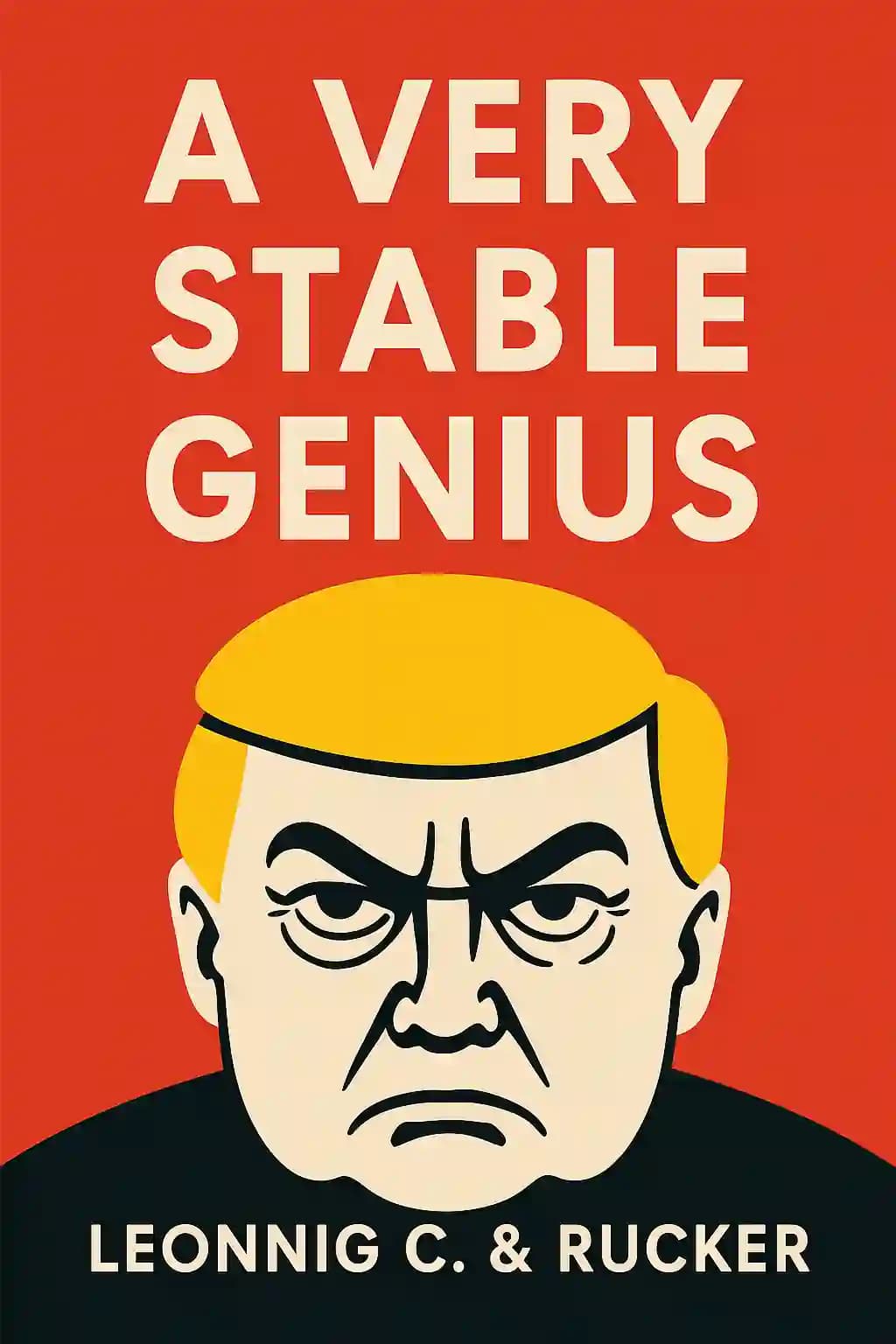
The book leaves readers with a disturbing portrait of a presidency where traditional guardrails had fallen away. What began as an administration with experienced advisers attempting to channel Trump's impulses into coherent policy had evolved into a government serving primarily the president's personal interests and grievances. As one official observed, "There was more of an ethos in the place" earlier that prevented such behavior. The question remaining was whether America's democratic institutions could withstand the unprecedented strain of a president who viewed himself as above the law and the nation as an extension of his personal brand.