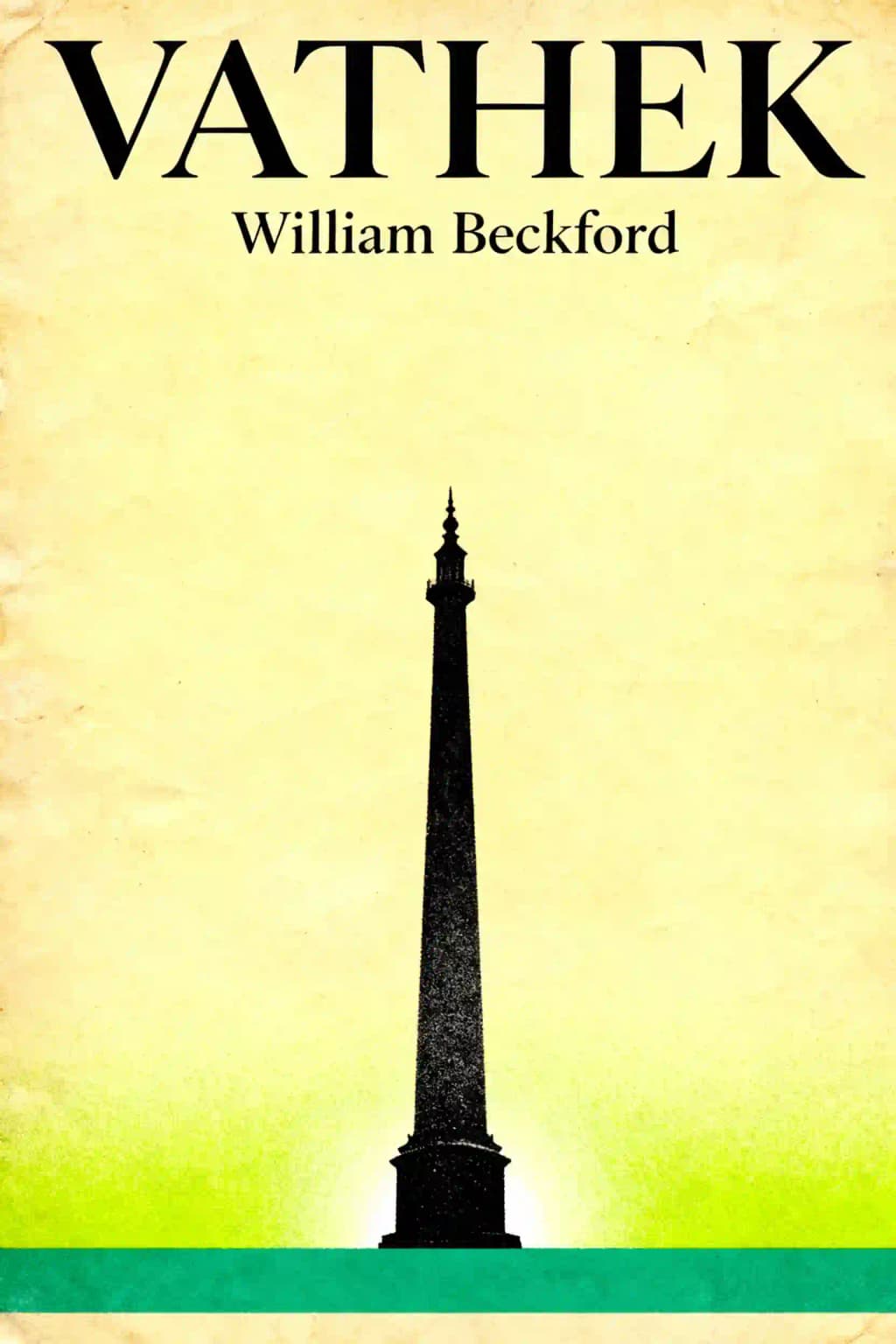
Beckford's "Vathek" - written in just three days by a 21-year-old - pioneered Gothic-Oriental horror that captivated H.P. Lovecraft and Jorge Luis Borges. This darkly surreal journey into forbidden knowledge remains eerily relevant. What cosmic terrors await in its pages?
William Thomas Beckford (1760-1844) was an eccentric English nobleman, traveler, and author of Vathek, a seminal work in Gothic literature.
Born into immense wealth in London, Beckford inherited vast estates and developed a lifelong fascination with Arabian culture and The Thousand and One Nights. This obsession culminated in Vathek, a dark fantasy novel originally written in French during the first four months of 1782—reportedly conceived in a single creative outburst over three days and two nights.
The tale follows an impious Arabian caliph through supernatural adventures that end in damnation, blending exotic sensuality, occult speculation, and grandiose visions. Beyond Vathek, Beckford authored travel writings and satirical works including Biographical Memoirs of Extraordinary Painters. He was also known for constructing the extravagant Fonthill Abbey, an orientalist architectural marvel.
Vathek achieved cult status and profoundly influenced 19th-century Romantic writers including Lord Byron, cementing Beckford's legacy as a pioneering voice in Gothic fiction.
Vathek by William Beckford tells the story of Caliph Vathek, a hedonistic and ambitious Arabian ruler who renounces Islam in pursuit of forbidden knowledge and supernatural power. After encountering a demonic stranger called the Giaour, Vathek sacrifices fifty children and embarks on a journey to the mountains of Istakhar to reach Eblis's Palace of Underground Fire. The novel culminates in Vathek's damnation as his heart catches fire as punishment for his crimes.
William Beckford was a wealthy English novelist, art collector, and politician who lived from 1760 to 1844. Beckford wrote Vathek in French during 1782, completing the initial outline in just three days and two nights after conceiving the story during a lavish Christmas party. His fascination with Arabic culture and Oriental themes, combined with his own experiences as an eccentric outsider in British society, influenced the Gothic tale's exploration of forbidden desires and moral consequences.
Vathek by William Beckford is worth reading for fans of Gothic literature and those interested in the origins of dark fantasy. The novel holds cult status and significantly influenced 19th-century Romantic writers like Lord Byron. Its unique blend of Arabian Nights-inspired settings, supernatural horror, and moral allegory makes Vathek a fascinating historical artifact, though modern readers should expect the formal prose style typical of 18th-century literature and moralistic undertones about the dangers of ambition.
Vathek by William Beckford appeals to readers interested in Gothic literature, early fantasy fiction, and Orientalist narratives. Literature students studying the development of horror and supernatural fiction will find valuable insights, as will fans of writers like Edgar Allan Poe or Mary Shelley. The novel also suits readers curious about how 18th-century European writers imagined Eastern cultures, making it relevant for those exploring colonialism and cultural representation in literature.
The Giaour in Vathek represents demonic temptation and the destructive pursuit of forbidden knowledge. This hideous stranger functions as a devil figure who tests Vathek's moral boundaries by offering access to supernatural powers and the Palace of Underground Fire in exchange for renouncing Islam and committing atrocities. The Giaour's ability to transform, disappear, and manipulate Vathek demonstrates how unchecked ambition and curiosity can lead individuals toward their own damnation through seemingly irresistible promises.
The Palace of Underground Fire in Vathek symbolizes the ultimate destination of those who pursue power through evil means. Ruled by Eblis, the lord of darkness, the palace initially appears magnificent with treasures and wonders but ultimately becomes a place of eternal torment. When Vathek and Nouronihar finally reach this subterranean realm, their hearts catch fire as punishment, representing how ambition and moral transgression lead to spiritual destruction rather than the enlightenment Vathek sought.
Vathek sacrifices fifty children in William Beckford's novel because the Giaour demands this horrific act as payment for access to the Palace of Underground Fire and its forbidden knowledge. This atrocity marks Vathek's complete moral degradation and his willingness to commit unspeakable evil for personal gain. The sacrifice of innocents serves as a turning point that alienates Vathek from his subjects, triggers public outrage, and seals his eventual damnation, illustrating the novel's Gothic exploration of unchecked power.
Carathis is Vathek's Greek mother in William Beckford's novel, a practitioner of dark magic and Zarathustrianism who encourages her son's descent into evil. She conducts sinister rituals, sacrifices citizens of Samarah, and shows complete disdain for religious customs, amplifying the novel's supernatural horror elements. Carathis eventually joins Vathek at Eblis's palace, where her heart also catches fire as punishment. Her character represents how corrupting influences, even from family, can enable moral destruction.
Vathek by William Beckford differs from other Gothic novels through its Arabian setting and Orientalist themes, contrasting with the European castles typical of works like Ann Radcliffe's The Mysteries of Udolpho or Horace Walpole's The Castle of Otranto. While sharing Gothic elements like supernatural horror, moral transgression, and ultimate punishment, Vathek's exotic locale and its focus on religious renunciation make it unique. The novel influenced later Romantic poets and helped establish the "Oriental Gothic" subgenre.
The moral message of Vathek centers on the consequences of renouncing faith, pursuing forbidden knowledge, and committing evil for personal gain. William Beckford illustrates how Vathek's hedonism, ambition, and willingness to sacrifice innocent lives lead inexorably to eternal damnation. The burning hearts that Vathek, Nouronihar, and Carathis suffer represent spiritual torment resulting from moral corruption. The novel serves as a cautionary tale warning against unchecked desires, supernatural dabbling, and the dangerous belief that power justifies immoral actions.
Critics of Vathek often cite its Orientalist perspective, as William Beckford presents Arabian culture through a European lens filled with exotic stereotypes and fantastical exaggerations. Some readers find the moralistic ending heavy-handed, while others note the novel's uneven pacing and the episodic nature of Vathek's journey. Modern scholars also examine how Beckford's privileged background—wealth derived from Jamaican slave plantations—influences the text's treatment of power, exploitation, and moral transgression, complicating contemporary readings.
Vathek remains relevant in 2025 as a pioneering work of Gothic fantasy that explores timeless themes of ambition, moral corruption, and the pursuit of forbidden knowledge—issues resonating in our age of technological advancement and ethical dilemmas. The novel's examination of how leaders justify atrocities for personal gain offers cautionary parallels to contemporary politics and corporate power. Additionally, Vathek's status as early speculative fiction makes it essential reading for understanding the genre's evolution and its influence on modern dark fantasy literature.
저자의 목소리로 책을 느껴보세요
지식을 흥미롭고 예시가 풍부한 인사이트로 전환
핵심 아이디어를 빠르게 캡처하여 신속하게 학습
재미있고 매력적인 방식으로 책을 즐기세요
Vathek's ambitions transcended ordinary bounds of both morality and physics.
His charisma created a cult of personality that masked growing darkness.
His addiction to novelty and stimulation reflects modern society's endless pursuit of new sensations.
His belief in his exemption from moral law echoes the behavior of today's autocrats.
ambition blinds us to danger when it promises to fulfill our deepest desires.
History of the Caliph Vathek의 핵심 아이디어를 이해하기 쉬운 포인트로 분해하여 혁신적인 팀이 어떻게 창조하고, 협력하고, 성장하는지 이해합니다.
History of the Caliph Vathek을 빠른 기억 단서로 압축하여 솔직함, 팀워크, 창의적 회복력의 핵심 원칙을 강조합니다.

생생한 스토리텔링을 통해 History of the Caliph Vathek을 경험하고, 혁신 교훈을 기억에 남고 적용할 수 있는 순간으로 바꿉니다.
무엇이든 물어보고, 목소리를 선택하고, 진정으로 공감되는 인사이트를 함께 만들어보세요.

샌프란시스코에서 컬럼비아 대학교 동문들이 만들었습니다
"Instead of endless scrolling, I just hit play on BeFreed. It saves me so much time."
"I never knew where to start with nonfiction—BeFreed’s book lists turned into podcasts gave me a clear path."
"Perfect balance between learning and entertainment. Finished ‘Thinking, Fast and Slow’ on my commute this week."
"Crazy how much I learned while walking the dog. BeFreed = small habits → big gains."
"Reading used to feel like a chore. Now it’s just part of my lifestyle."
"Feels effortless compared to reading. I’ve finished 6 books this month already."
"BeFreed turned my guilty doomscrolling into something that feels productive and inspiring."
"BeFreed turned my commute into learning time. 20-min podcasts are perfect for finishing books I never had time for."
"BeFreed replaced my podcast queue. Imagine Spotify for books — that’s it. 🙌"
"It is great for me to learn something from the book without reading it."
"The themed book list podcasts help me connect ideas across authors—like a guided audio journey."
"Makes me feel smarter every time before going to work"
샌프란시스코에서 컬럼비아 대학교 동문들이 만들었습니다

History of the Caliph Vathek 요약을 무료 PDF 또는 EPUB으로 받으세요. 인쇄하거나 오프라인에서 언제든 읽을 수 있습니다.
In the opulent courts of 18th-century Arabia, Vathek-the ninth Caliph of the Abassides-towers over his subjects both physically and in his boundless ambition. His most terrifying feature? An eye so penetrating it can strike dead anyone who provokes his displeasure. This is no ordinary ruler, but one whose appetites know no limits. While ordinary monarchs might be satisfied with traditional pleasures, Vathek constructs five extraordinary palaces dedicated to sensory excess-from "The Eternal Banquet" where three hundred cooks work in perpetual shifts to "The Retreat of Joy" housing the world's most beautiful women. But what truly sets Vathek apart is his intellectual hunger. He surrounds himself with scholars from every tradition-astronomers, alchemists, mystics-rewarding those who please him with unimaginable wealth while imprisoning those who disappoint. Despite divine warnings, he builds a tower rivaling Nimrod's to study celestial movements and await a prophesied stranger who will unlock even greater mysteries. What makes Vathek's character so compelling-and disturbing-is how his flaws mirror our own modern concerns. His addiction to novelty and stimulation reflects our society's endless pursuit of new sensations. His belief in his exemption from moral law echoes the behavior of today's powerful figures. Aren't we all, in some small way, susceptible to the seduction of knowledge without ethical boundaries?