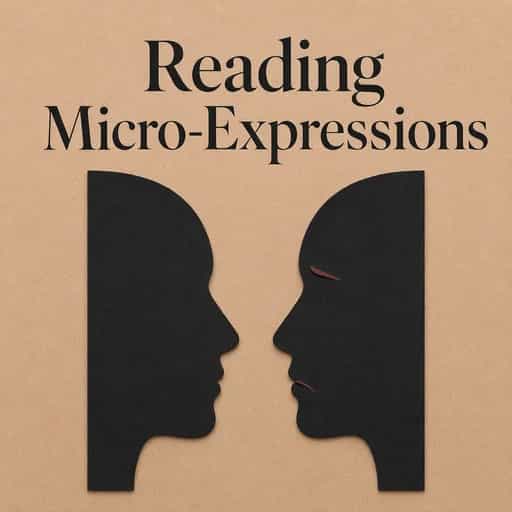
Unmasking the Face decodes our hidden emotions through universal facial expressions. Ekman's groundbreaking research inspired hit TV show "Lie to Me" and trains FBI agents to spot microexpressions - those split-second tells that reveal what we're desperately trying to hide. Can you spot deception?
Paul Ekman, born February 15, 1934, and Wallace V. Friesen are pioneering psychologists and co-authors of Unmasking the Face: A Guide to Recognizing Emotions from Facial Clues, a seminal work in psychology and nonverbal communication. Ekman, a professor emeritus at the University of California, San Francisco, revolutionized the study of emotions through his discovery of universal facial expressions and microexpressions. Friesen, his longtime collaborator, co-developed the Facial Action Coding System (FACS), the gold standard for analyzing facial movements, which underpins their research in the book.
Unmasking the Face merges their expertise in emotion recognition and deception detection, offering practical tools to decode hidden feelings. Ekman’s influential career includes bestselling books like Telling Lies and Emotions Revealed, while his work with the CIA, FBI, and TSA established real-world applications for lie detection.
The book’s framework has informed academic research, security training, and popular culture—including the TV series Lie to Me. Translated into multiple languages, this 1975 classic remains a cornerstone in psychology, blending rigorous science with accessible insights into human behavior.
Unmasking the Face explores how to identify universal emotions like happiness, anger, and fear through facial expressions. Paul Ekman explains techniques to detect concealed or falsified emotions, such as microexpressions and facial management strategies. The book combines scientific research with practical exercises, making it a foundational guide for understanding nonverbal communication and emotional authenticity.
This book is ideal for psychologists, law enforcement professionals, actors, and anyone seeking to improve emotional intelligence. It offers actionable insights for detecting deception, enhancing interpersonal skills, and interpreting subtle facial cues in personal or professional settings.
Yes—it’s a seminal work on nonverbal communication, backed by decades of research. Readers gain tools to recognize genuine emotions, navigate social interactions, and understand the psychology behind facial expressions. Its blend of theory and real-world applications makes it valuable for both academic and practical use.
Ekman’s six universal emotions are surprise, fear, disgust, anger, happiness, and sadness. Each emotion corresponds to distinct facial muscle patterns, which remain consistent across cultures. The book provides detailed visual and textual guides to recognize these expressions.
The book teaches readers to spot microexpressions—brief, involuntary facial movements that reveal hidden emotions—and contrasts them with voluntary facial actions. It also explains how people simulate, neutralize, or mask emotions, offering strategies to identify inconsistencies between words and expressions.
Microexpressions are fleeting facial reactions lasting less than half a second, often signaling concealed emotions. Ekman discovered these while studying depressed patients who hid suicidal intentions. In Unmasking the Face, he details how to train oneself to detect these critical clues.
While Ekman emphasizes universal emotions, he acknowledges cultural display rules that dictate when and how emotions are expressed. For example, some cultures discourage public displays of anger, leading individuals to mask true feelings with socially acceptable expressions.
Absolutely. The book’s insights help professionals interpret colleagues’ unspoken emotions during negotiations, feedback sessions, or team interactions. Recognizing microexpressions can enhance empathy, reduce misunderstandings, and foster trust in collaborative environments.
Unlike Telling Lies, which focuses broadly on deception, Unmasking the Face specifically decodes facial expressions. It complements his research by providing visual frameworks and exercises, making it more accessible for non-academic readers.
Some critics argue Ekman’s model oversimplifies emotions by focusing solely on facial cues, neglecting contextual factors like body language or tone. Others note that real-world applications require extensive practice to avoid misinterpretations.
Police and security agencies use its principles to detect deceit during interrogations. For example, a microexpression of contempt or fear might indicate concealed guilt, prompting further investigation. The book includes case studies demonstrating these practical applications.
Ekman provides step-by-step drills to differentiate genuine smiles (“Duchenne smiles”) from fake ones, identify asymmetrical expressions, and track rapid facial shifts. These exercises help readers build observational skills through repetition and analysis.
저자의 목소리로 책을 느껴보세요
지식을 흥미롭고 예시가 풍부한 인사이트로 전환
핵심 아이디어를 빠르게 캡처하여 신속하게 학습
재미있고 매력적인 방식으로 책을 즐기세요
The face is humanity's most sophisticated communication system.
Expressions are typically brief-lasting only seconds.
Surprise is the shortest-lived emotion.
People manage their expressions through qualification, modulation, interruption, or complete inhibition.
The challenge is distinguishing genuine from controlled displays.
Unmasking the face의 핵심 아이디어를 이해하기 쉬운 포인트로 분해하여 혁신적인 팀이 어떻게 창조하고, 협력하고, 성장하는지 이해합니다.
Unmasking the face을 빠른 기억 단서로 압축하여 솔직함, 팀워크, 창의적 회복력의 핵심 원칙을 강조합니다.

생생한 스토리텔링을 통해 Unmasking the face을 경험하고, 혁신 교훈을 기억에 남고 적용할 수 있는 순간으로 바꿉니다.
무엇이든 물어보고, 목소리를 선택하고, 진정으로 공감되는 인사이트를 함께 만들어보세요.

샌프란시스코에서 컬럼비아 대학교 동문들이 만들었습니다
"Instead of endless scrolling, I just hit play on BeFreed. It saves me so much time."
"I never knew where to start with nonfiction—BeFreed’s book lists turned into podcasts gave me a clear path."
"Perfect balance between learning and entertainment. Finished ‘Thinking, Fast and Slow’ on my commute this week."
"Crazy how much I learned while walking the dog. BeFreed = small habits → big gains."
"Reading used to feel like a chore. Now it’s just part of my lifestyle."
"Feels effortless compared to reading. I’ve finished 6 books this month already."
"BeFreed turned my guilty doomscrolling into something that feels productive and inspiring."
"BeFreed turned my commute into learning time. 20-min podcasts are perfect for finishing books I never had time for."
"BeFreed replaced my podcast queue. Imagine Spotify for books — that’s it. 🙌"
"It is great for me to learn something from the book without reading it."
"The themed book list podcasts help me connect ideas across authors—like a guided audio journey."
"Makes me feel smarter every time before going to work"
샌프란시스코에서 컬럼비아 대학교 동문들이 만들었습니다

Unmasking the face 요약을 무료 PDF 또는 EPUB으로 받으세요. 인쇄하거나 오프라인에서 언제든 읽을 수 있습니다.
Have you ever wondered why someone's smile doesn't quite reach their eyes? Or felt that inexplicable sense that someone is lying despite their words? Our faces reveal what we often try to conceal. Paul Ekman's groundbreaking research uncovered a universal emotional language-identical facial expressions that transcend cultural boundaries. After studying remote New Guinea tribes who had never seen television or movies, Ekman confirmed that humans everywhere express basic emotions through the same facial patterns. This discovery transformed our understanding of communication and launched applications in fields from psychology to national security. The FBI, CIA, and TSA now implement techniques for detecting deception through facial "leakage"-those brief, involuntary expressions that reveal our true feelings. The face is humanity's most sophisticated communication system, capable of producing over 10,000 distinct expressions. Yet despite our reliance on facial cues for emotional understanding, most of us receive no formal training in reading them. Our interpretation develops haphazardly through childhood experiences, often missing crucial information hidden in plain sight.