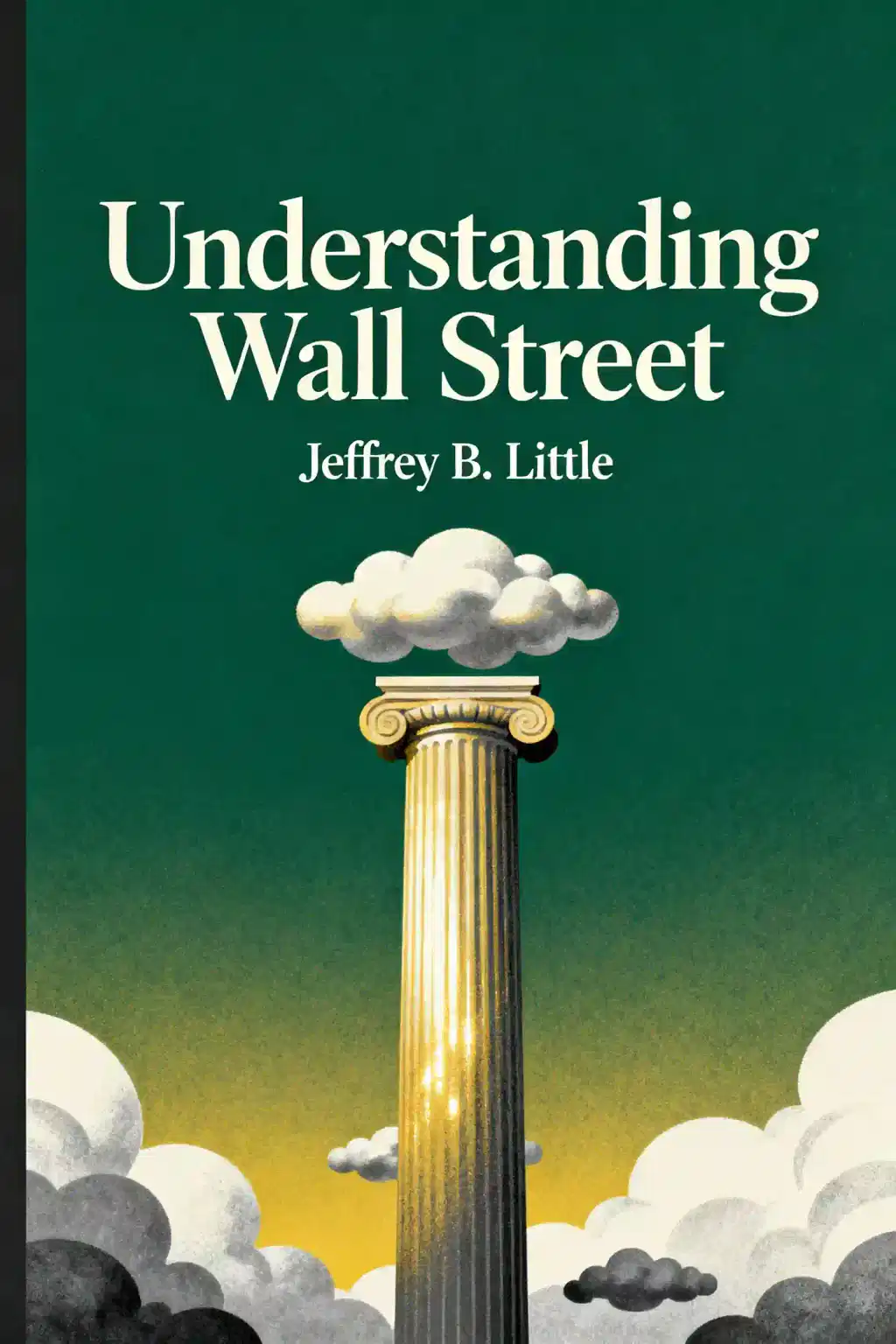
Wall Street demystified! For 30+ years, this investor's bible has guided millions through market complexities. Now in its fifth edition, Little's legendary guide reveals why Booklist called it "an excellent introduction to stock market intricacies" - your essential roadmap to financial confidence.
Jeffrey B. Little (1943–2019), author of Understanding Wall Street, was a renowned stock market analyst and financial educator with four decades of experience in securities markets. A former senior analyst at Morgan Stanley and vice president at T. Rowe Price Associates, Little specialized in translating complex financial concepts into accessible insights for retail investors. His expertise spans equity analysis, portfolio management, and market mechanics—core themes woven throughout Understanding Wall Street, which remains a foundational text in investing literature since its initial publication.
Little’s career-informed approach in Understanding Wall Street reflects his dual perspective as a Wall Street insider and educator, offering readers practical strategies for navigating markets. He also authored The Great Index Mania and contributed to financial software development, blending technical knowledge with pragmatic guidance.
The book has endured as a staple resource for investors, praised for its clear explanations of fundamental analysis, technical indicators, and corporate structures. Its multi-decade shelf life and inclusion in professional training programs underscore its status as a trusted primer in financial education.
Understanding Wall Street is a comprehensive guide to stock market fundamentals, covering topics like stock ownership, exchange mechanics, and investment strategies. Updated in its fifth edition, it explains modern tools like ETFs, internet-based investing, and global economic impacts while retaining foundational concepts like P/E ratios and dividend yields.
Beginner to intermediate investors seeking clarity on market basics will benefit most. The book’s accessible explanations of stocks, bonds, and options make it ideal for new investors, while its analysis of technical tools appeals to those refining their strategies.
Yes—it’s praised as a “great foundation for future investors” with practical insights into company valuation and risk management. While some examples feel outdated, the fifth edition adds relevance with sections on digital trading and post-crash market dynamics.
The book emphasizes earnings, growth potential, and industry trends. It teaches readers to assess companies using fundamental analysis, contrasting speculative trading with long-term value investing.
New chapters cover internet-based research tools, ETFs, and lessons from the 2008 crash. It also addresses modern challenges like algorithmic trading and global market interdependence.
While both teach foundational investing, Understanding Wall Street focuses on market mechanics and tools, whereas The Intelligent Investor emphasizes value-investing philosophy. Little’s book is more accessible for beginners.
Some reviewers note outdated analogies (e.g., “computing machines”) and a lack of depth on advanced topics like derivatives. However, its clarity for newcomers remains a strength.
These lines underscore the book’s focus on ownership and systemic thinking.
It analyzes historical crashes to highlight indicators like overvaluation and debt bubbles. The fifth edition adds post-2008 strategies, stressing diversification and disciplined reinvestment.
Yes—the updated edition explains ETFs’ structure, tax efficiency, and role in portfolios. It contrasts them with mutual funds and traditional index funds.
Despite market changes, its core principles—like interpreting financial statements and assessing risk—remain timeless. Updated digital tools sections ensure applicability to modern trading platforms.
저자의 목소리로 책을 느껴보세요
지식을 흥미롭고 예시가 풍부한 인사이트로 전환
핵심 아이디어를 빠르게 캡처하여 신속하게 학습
재미있고 매력적인 방식으로 책을 즐기세요
Successful investing remains accessible to anyone willing to learn the fundamentals.
People buy stocks for different reasons and with different approaches.
Despite intimidating financial headlines, stock market investing can be straightforward.
Wall Street began as an insignificant dirt path nearly 400 years ago.
Understanding how to read financial statements can give investors a significant edge.
Understanding Wall Street의 핵심 아이디어를 이해하기 쉬운 포인트로 분해하여 혁신적인 팀이 어떻게 창조하고, 협력하고, 성장하는지 이해합니다.
Understanding Wall Street을 빠른 기억 단서로 압축하여 솔직함, 팀워크, 창의적 회복력의 핵심 원칙을 강조합니다.

생생한 스토리텔링을 통해 Understanding Wall Street을 경험하고, 혁신 교훈을 기억에 남고 적용할 수 있는 순간으로 바꿉니다.
무엇이든 물어보고, 목소리를 선택하고, 진정으로 공감되는 인사이트를 함께 만들어보세요.

샌프란시스코에서 컬럼비아 대학교 동문들이 만들었습니다
"Instead of endless scrolling, I just hit play on BeFreed. It saves me so much time."
"I never knew where to start with nonfiction—BeFreed’s book lists turned into podcasts gave me a clear path."
"Perfect balance between learning and entertainment. Finished ‘Thinking, Fast and Slow’ on my commute this week."
"Crazy how much I learned while walking the dog. BeFreed = small habits → big gains."
"Reading used to feel like a chore. Now it’s just part of my lifestyle."
"Feels effortless compared to reading. I’ve finished 6 books this month already."
"BeFreed turned my guilty doomscrolling into something that feels productive and inspiring."
"BeFreed turned my commute into learning time. 20-min podcasts are perfect for finishing books I never had time for."
"BeFreed replaced my podcast queue. Imagine Spotify for books — that’s it. 🙌"
"It is great for me to learn something from the book without reading it."
"The themed book list podcasts help me connect ideas across authors—like a guided audio journey."
"Makes me feel smarter every time before going to work"
샌프란시스코에서 컬럼비아 대학교 동문들이 만들었습니다

Understanding Wall Street 요약을 무료 PDF 또는 EPUB으로 받으세요. 인쇄하거나 오프라인에서 언제든 읽을 수 있습니다.
What does a single share of Berkshire Hathaway worth over $400,000 tell us about wealth creation? That patient, informed investors who understand the market's fundamentals can transform modest investments into extraordinary fortunes. Yet for most Americans, Wall Street remains a bewildering maze of cryptic symbols and seemingly irrational price swings. The gap isn't intelligence-it's education. Strip away the jargon, and the stock market reveals itself as a surprisingly logical system built on timeless principles: ownership, value, and human psychology. Wall Street began 400 years ago as a literal wall-Dutch settlers built it to contain livestock and exclude Native Americans from their trading post. That defensive barrier evolved into a commercial street connecting river docks, then into the world's financial nerve center. Today, "Wall Street" means far more than a physical location. It's an ecosystem where capital flows from those who have it to those who need it, with everyone taking a cut along the way. In 1792, twenty-four merchants signed the Buttonwood Agreement under a tree, pledging to trade only among themselves-the original NYSE members. By 1952, fewer than 10 million Americans owned stocks. Today, 84 million do, and institutional investors control nearly 60% of all equities, worth roughly $7 trillion. The real question isn't whether you're smart enough to invest. It's whether you're willing to learn the language.