1장
The Coder's Dilemma: Tidying in the Age of Complexity
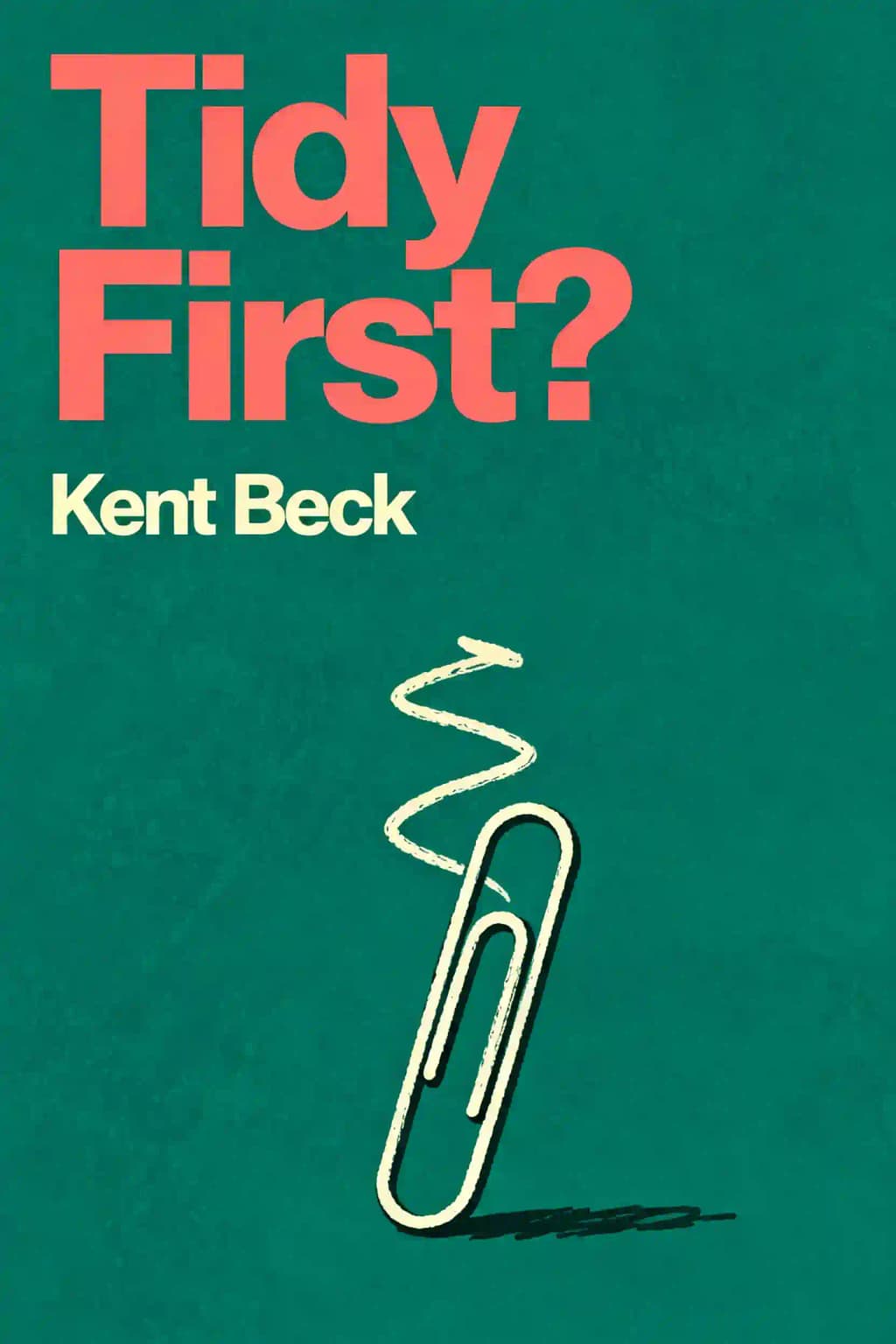
Imagine staring at a screen full of tangled code, feeling that familiar knot in your stomach as you contemplate making changes to this digital labyrinth. Should you clean it up first or dive straight into adding new features? This question haunts developers daily, and Kent Beck's "Tidy First?" offers a refreshing perspective on this age-old dilemma. As one of the founding fathers of Extreme Programming and a key architect of the Agile Manifesto, Beck brings decades of wisdom to this deceptively simple question.
The book has quietly become a cult favorite among senior developers at tech giants like Google and Amazon, with engineering leaders often citing it as required reading for their teams. Its influence extends beyond traditional programming circles - even Elon Musk reportedly referenced Beck's tidying principles when discussing Tesla's codebase restructuring. What makes this work so compelling is how it transforms the seemingly mundane act of code cleaning into a profound exploration of human relationships and economic value. In a world obsessed with shiny new frameworks and technologies, Beck reminds us that sometimes the most revolutionary act is simply tidying what we already have.
2장
Breaking Down the Tidying Philosophy
Tidying code isn't merely about aesthetics - it's about creating sustainable value. Beck introduces a framework where software design is fundamentally about "beneficially relating elements" within a codebase. This perspective shifts our understanding of design from abstract principles to practical, everyday decisions that accumulate over time.
The approach begins with recognizing that all code exists within a hierarchy of elements, each with boundaries and relationships. A function calls another function, a module imports another module - these relationships form the backbone of our systems. Good design isn't about creating perfect structures but about crafting relationships that make future changes easier and less costly.
What's particularly striking is how Beck frames tidying as a series of small, safe, and reversible changes. Rather than advocating for massive refactoring projects that disrupt development, he suggests incremental improvements that can be integrated into daily work. This philosophy aligns perfectly with modern continuous delivery practices, where small, frequent changes reduce risk and increase feedback.
The true power of tidying emerges when we understand it as creating options for future development. Each small improvement opens pathways for future changes, reducing the "messiness tax" that accumulates in neglected codebases. When viewed through this lens, tidying becomes less about perfection and more about creating economic value through increased adaptability.
3장
Guard Clauses: The Gateway to Cleaner Logic
Have you ever struggled to follow the logic in a deeply nested if-else statement? It's like trying to navigate a maze while blindfolded. Beck's first tidying technique - guard clauses - offers an elegant solution to this common problem.
Guard clauses flip the traditional approach to conditional logic. Instead of nesting deeper with each condition, we check for exceptional cases early and return immediately. Consider this transformation:
With guard clauses, this becomes:
The difference is striking. The second version makes the preconditions explicit and keeps the main logic path clear. Our eyes can follow a straight line down to the core functionality without getting lost in nested conditions. This pattern makes code more analyzable - we can understand what's happening without holding complex state in our heads.
But Beck cautions against overusing this technique. When guard clauses themselves become numerous or complex, they can create their own form of cognitive load. The goal is clarity, not rigid adherence to a pattern. This nuanced approach reflects Beck's empirical philosophy - use what works in context, not what dogma dictates.
4장
The Courage to Delete: Embracing Simplicity
Why is it so hard to delete code? We labor over every line, crafting it carefully, and then struggle to let it go even when it's no longer needed. Beck confronts this emotional attachment head-on with his second tidying technique: removing dead code.
Unused code is more than just digital clutter - it's a cognitive burden. Every time we scan a file, our brains unconsciously process everything there, trying to understand its purpose and relationships. Dead code forces us to repeatedly evaluate and dismiss information, draining mental energy that could be better spent elsewhere.
The justification for keeping dead code often sounds reasonable: "We might need it later" or "It represents hours of work." Beck counters these arguments with a simple truth: version control systems already preserve this history. If we truly need the code again, we can retrieve it from git or other repositories.
The psychological aspect of deletion is fascinating. Many developers report a sense of liberation after removing unnecessary code. It's like clearing out a cluttered room - suddenly there's space to think and move. This feeling of lightness contributes to what Beck calls the "joy of programming," an often overlooked but crucial element of sustainable development.
The technique itself is straightforward: identify code that isn't called or referenced, verify its isolation through tests or analysis tools, and delete it in small, reversible increments. What's powerful is how this simple act embodies a deeper philosophy of valuing simplicity and focusing on what truly matters in a system.
5장
Finding Harmony in Code: Normalizing Symmetries
Have you noticed how code tends to grow organically, with similar problems solved in slightly different ways throughout a codebase? This inconsistency creates what Beck calls "asymmetries" - variations in pattern that make code harder to understand and modify.
Normalizing symmetries involves identifying these variations and unifying them under a single pattern. For example, imagine a codebase where some objects are lazily initialized with null checks, others with optional types, and still others with factory methods. Each approach works, but the inconsistency forces readers to switch mental models constantly.
The process of normalization doesn't necessarily mean choosing the "best" pattern - it means choosing a consistent one. By aligning similar code structures, we reduce the cognitive load required to understand and modify the system. This consistency creates a rhythm that makes the code feel more natural and predictable.
What's particularly valuable about this technique is how it reveals deeper design issues. When normalizing becomes difficult, it often indicates that the underlying abstractions are misaligned. The resistance we feel when trying to unify patterns can guide us toward more fundamental improvements in the code's structure.
Beck suggests starting with small, localized normalizations before attempting broader changes. This incremental approach allows us to build confidence and understanding before tackling larger asymmetries. The result is a codebase that feels more coherent and intentional, where patterns reinforce rather than contradict each other.
6장
Designing from the Outside In: New Interface, Old Implementation
One of Beck's most powerful insights is that we can separate the design of interfaces from their implementations. This separation allows us to evolve systems incrementally, improving their structure without disrupting their behavior.
The technique is deceptively simple: design the interface you wish existed, then adapt the old implementation to work with it. This approach creates a clean boundary between what the code does and how it does it, making future changes easier to manage.
Consider a complex function with many parameters and side effects. Rather than trying to untangle it all at once, we can define a new, cleaner interface that expresses what the function should do in ideal terms. Then, we implement this interface using the existing code as a foundation.
This pattern embodies what Beck calls the essence of software design: creating beneficial relationships between elements. The new interface serves as a protective layer, shielding clients from the complexity of the implementation while providing a clear path for future improvements.
What makes this technique particularly valuable is how it aligns with modern development practices like test-driven development. By focusing on the interface first, we naturally think about how the code will be used rather than how it will be built. This user-centered perspective leads to more intuitive and maintainable designs.
7장
The Psychology of Reading Code: Ordering for Comprehension
How we organize code profoundly affects how easily others can understand it. Beck explores two complementary ordering strategies that enhance readability: reading order and cohesion order.
Reading order arranges code to follow a natural narrative flow, placing related elements in a sequence that tells a coherent story. This approach recognizes that code is fundamentally a form of communication between humans, not just instructions for machines.
For example, in a user registration system, we might organize functions to follow the user journey: validateInput, createUser, sendWelcomeEmail, logRegistration. This sequence mirrors how we would explain the process to another person, making it easier to follow and remember.
Cohesion order takes a different approach, grouping related elements together based on their functional relationships. Functions that operate on the same data or contribute to the same feature are placed near each other, creating clusters of high cohesion.
These ordering techniques might seem superficial, but their impact on comprehension is profound. Well-ordered code reduces the mental effort required to understand a system, freeing cognitive resources for solving the actual problem at hand.
Beck cautions that reordering should be done carefully, especially in languages where declaration order affects execution. He also emphasizes the importance of making one type of change at a time - don't mix reordering with other tidyings, as this can complicate reviews and increase the risk of errors.
8장
The Power of Naming: Variables, Constants, and Meaning
Have you ever looked at a piece of code and wondered, "What does this actually do?" Often, the culprit is poor naming - cryptic variables, magic numbers, and unclear expressions that obscure the code's intent. Beck offers several tidying techniques to address this fundamental issue.
Explaining variables involves breaking down complex expressions into named components that reveal their purpose. Instead of:
We can transform this into:
This transformation makes the code's intent immediately clear. We're not just manipulating abstract values; we're implementing a specific business rule about holiday discounts for valuable customers.
Similarly, explaining constants replaces magic numbers and strings with named values that express their meaning. The number 86400000 becomes MILLISECONDS_PER_DAY, making its purpose obvious without requiring mental calculation.
These naming techniques do more than improve readability - they embed domain knowledge directly into the code. When we name things well, we create a shared vocabulary that bridges the gap between technical implementation and business understanding. This alignment reduces errors and makes the codebase more resilient to change.
Beck emphasizes that good names should reveal intent, not just content. A variable named customerData doesn't tell us much, but activeSubscribers or unpaidInvoices immediately conveys purpose and meaning. This distinction makes code self-documenting, reducing the need for external explanations.
9장
Chunking and Extraction: Breaking Down Complexity
Long functions and methods are notorious for being difficult to understand and modify. Beck addresses this challenge with two complementary techniques: chunking statements and extracting helpers.
Chunking involves adding blank lines to visually separate logical sections within a function. This simple technique creates breathing room in the code, allowing readers to process it in manageable pieces rather than as an overwhelming whole.
For example, a user registration function might be chunked into validation, database interaction, notification, and logging sections. Each chunk forms a conceptual unit that can be understood independently before connecting it to the larger context.
Extraction takes chunking a step further by moving these logical sections into separate helper functions with descriptive names. This transformation makes the main function's structure explicit and creates reusable components that can be tested and modified independently.
What's particularly valuable about these techniques is how they gradually reveal the underlying design of the code. As we chunk and extract, patterns emerge that might suggest deeper restructuring opportunities. A series of chunks that all operate on the same data might indicate a class waiting to be born. Repeated chunks across different functions might reveal cross-cutting concerns that could be abstracted.
Beck notes that modern IDEs and refactoring tools make extraction particularly safe and efficient. With automated refactoring support, we can quickly create helper methods without introducing errors, making this one of the most accessible tidying techniques for developers at all experience levels.
10장
Managing the Tidying Process: When and How
With a toolkit of tidying techniques established, Beck turns to the crucial question of process: when and how should we apply these techniques in our daily work?
The core principle is separation - keeping tidying changes distinct from behavior changes. This separation makes reviews simpler, reduces the risk of introducing bugs, and creates a clearer history in version control. Beck suggests committing tidying changes separately, with clear messages that distinguish them from functional modifications.
This separation extends to the rhythm of development. Beck describes a natural cadence where tidying precedes behavior changes in areas that need modification. By cleaning up the code first, we create a more hospitable environment for the new functionality, reducing the friction and risk associated with the change.
The ideal batch size for tidying changes depends on team context. Smaller batches reduce the risk of conflicts and make reviews easier, but may increase overhead if the review process is heavyweight. Beck suggests finding a balance that minimizes total cost while maintaining the benefits of separation.
When tidying becomes entangled with behavior changes - a common occurrence in complex work - Beck offers practical advice: consider starting fresh rather than trying to untangle the changes. This counterintuitive approach often saves time and produces cleaner results, especially when the entanglement is complex.
Perhaps most importantly, Beck addresses the fundamental question of when to tidy: first, after, later, or never? His nuanced answer considers factors like the messiness of the code, the immediacy of benefits, and the likelihood of future changes in the same area. The general guidance is to tidy first unless there's a compelling reason not to, as small tidying efforts are low-risk and often immediately rewarding.
11장
The Economic Foundation: Time Value and Optionality
Underlying Beck's practical advice is a sophisticated economic framework that explains why tidying matters. This framework centers on two key concepts: the time value of money and optionality.
The time value principle recognizes that money (or value) today is worth more than the same amount tomorrow. This concept directly applies to software development - features delivered today generate value sooner than those delivered later. This creates tension with design activities like tidying, which may delay immediate delivery in favor of future benefits.
Optionality provides the counterbalance. In financial terms, an option is the right (but not obligation) to take an action in the future. Well-designed software creates options - the ability to implement new features or respond to changes with minimal cost and risk. Tidying increases optionality by making the codebase more adaptable.
The interaction between these principles explains many common development patterns. The pressure to deliver quickly (time value) often leads to technical debt, while the desire for flexibility (optionality) encourages investment in design. The optimal approach balances these forces, creating enough options to support future needs without unnecessarily delaying current value.
Beck connects these economic concepts to specific tidying decisions. For example, extracting a helper method might delay a feature by an hour but could save days of work if that area needs to change in the future. The decision to tidy becomes an economic calculation: does the option value created exceed the time value lost?
This economic perspective transforms tidying from a matter of preference or pride to a business decision with measurable impacts. It provides a language for discussing design choices with non-technical stakeholders and aligns software development with broader organizational goals.
12장
The Relational Heart of Software Design: Coupling and Cohesion
At the theoretical core of Beck's approach are two fundamental concepts from software engineering: coupling and cohesion. These principles, first articulated by Larry Constantine in the 1970s, remain essential to understanding software design today.
Coupling measures how changes in one part of a system affect other parts. Highly coupled systems are fragile - a small change can cascade through the codebase, requiring widespread modifications and increasing the risk of errors. Decoupling elements reduces this ripple effect, making changes more localized and predictable.
Cohesion measures how strongly the elements within a module relate to each other. High cohesion means that a module's components work together toward a single purpose, while low cohesion indicates scattered, unrelated functionality. Cohesive modules are easier to understand, test, and modify because they do one thing well.
Beck connects these theoretical concepts to practical tidying decisions. Guard clauses reduce coupling by making preconditions explicit rather than implicit. Explaining variables increases cohesion by grouping related calculations. Extracting helpers creates more cohesive units with clearer boundaries and responsibilities.
What's particularly valuable is Beck's emphasis on the economic implications of coupling and cohesion. Constantine's Equivalence principle states that the cost of a software system is dominated by the cost of change, not the cost of initial development. This insight shifts our perspective - design decisions should be evaluated based on their impact on future changes, not just their immediate efficiency.
The balance between coupling and decoupling becomes an economic trade-off. Decoupling incurs immediate costs but may reduce future change costs. The optimal decision depends on the likelihood and nature of future changes - another application of the optionality principle from Beck's economic framework.
13장
The Human Element: Joy and Relationship in Software Design
Throughout "Tidy First?", Beck returns to a theme that distinguishes his approach from purely technical treatments of software design: the human experience of programming. He explicitly frames software design as fundamentally about human relationships - between developers, between developers and users, and between present and future selves.
The joy of programming emerges as a crucial consideration. Tidying creates satisfaction by bringing order to chaos and making future work more pleasant. This emotional benefit isn't merely a nice-to-have; it directly affects productivity, creativity, and sustainability in software development.
Beck acknowledges the social dimensions of tidying as well. Code reviews, team standards, and organizational priorities all influence when and how tidying occurs. The most technically perfect tidying approach will fail if it doesn't account for these social realities.
Perhaps most profoundly, Beck connects tidying to the relationship between present and future developers (who might be our future selves). Each tidying decision is a communication across time - a message saying "I thought about you and tried to make your work easier." This perspective transforms tidying from a technical activity to an act of professional care and responsibility.
This human-centered approach explains why Beck's work resonates so deeply with experienced developers. Beyond the technical benefits, tidying acknowledges and addresses the lived experience of programming - the frustrations, satisfactions, and relationships that define our work with code.
14장
From Theory to Practice: The Empirical Design Journey
"Tidy First?" concludes by bringing together its practical techniques and theoretical foundations into a cohesive approach to software design. Beck calls this "empirical software design" - a process guided by feedback and experience rather than rigid rules or abstract principles.
The empirical approach recognizes that software design is inherently uncertain. We can't perfectly predict which areas of code will need to change or how requirements will evolve. Instead of trying to design perfect systems upfront, we make small, reversible changes guided by actual experience and feedback.
Tidying plays a crucial role in this process. Each tidying technique creates options without committing to major structural changes. We can improve the code incrementally, learning as we go and adjusting our approach based on what we discover.
This empirical mindset extends beyond individual techniques to the entire design process. We continuously evaluate the costs and benefits of design decisions, using real feedback rather than theoretical models. We embrace uncertainty and create systems that can evolve rather than trying to eliminate change through perfect initial design.
Beck's approach is both humble and powerful. It acknowledges the limits of our knowledge while providing practical tools to improve our code despite these limits. It balances immediate value with future options, technical considerations with human factors, and theoretical understanding with practical application.
The result is a design philosophy that works in the messy reality of software development - with changing requirements, imperfect knowledge, and human teams. By starting with small, safe tidyings, we begin a journey of continuous improvement that can transform even the most challenging codebase into a joy to work with.