1장
When Love Collides with the Past: A Story of Redemption and Second Chances
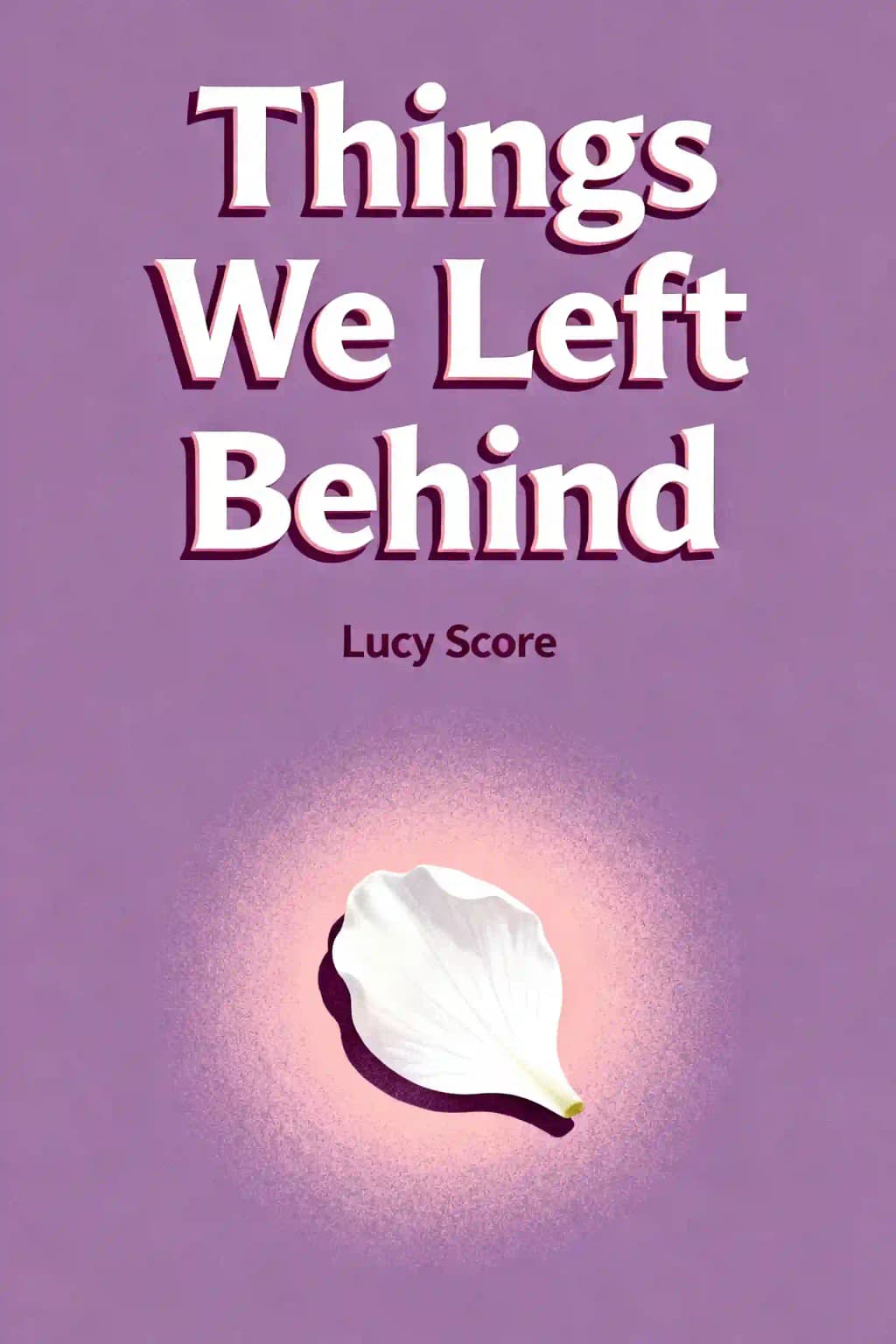
Lucy Score's bestselling romance "Things We Left Behind" has captivated readers worldwide, reaching #1 on the New York Times bestseller list and becoming a TikTok sensation with over 2 billion views under its hashtag. The third installment in her Knockemout series follows the enemies-to-lovers journey of Sloane Walton and Lucian Rollins, childhood friends turned bitter adversaries who must confront their painful shared past. What makes this book particularly compelling is Score's ability to weave themes of forgiveness, healing from trauma, and finding love despite seemingly insurmountable obstacles. Even Taylor Swift reportedly recommended it to her inner circle, praising its emotional depth and steamy romance that perfectly balances vulnerability with passion.
2장
The Complicated Dance of Attraction and Animosity
Sloane Walton's grief over her father's death is interrupted when Lucian Rollins appears at the funeral. Their first encounter in years crackles with tension-she's annoyed by his self-control and cold demeanor, while he's frustratingly attentive, ordering her favorite breakfast burrito and lending her his expensive coat. Their interaction reveals years of unspoken history and mutual antagonism that masks a deeper connection.
Their relationship operates on a delicate balance of give and take. When Sloane returns Lucian's coat with a burger and fries, she declares, "You don't count as company," establishing their pattern of never exchanging thanks, only maintaining equilibrium. Their banter is sharp and cutting, with Sloane calling him "Lucifer" while he pushes her away despite an obvious attraction. The tension between them is palpable when they accidentally touch, with Lucian warning, "Don't play with me, Pixie," using her old nickname.
This antagonistic dynamic stems from their complicated past. As teenagers, they formed an unlikely friendship that ended traumatically. Lucian was the boy from the troubled home next door who found sanctuary in Sloane's bedroom, listening to Shania Twain and finding rare moments of peace. When Sloane tried to help by calling the police during a violent incident with his abusive father, it led to Lucian's arrest and a permanent rift between them.
The adult Sloane and Lucian circle each other warily, neither willing to acknowledge their shared history directly. Their friends see what they refuse to admit-Knox observes that Lucian looks at Sloane "like she's the goddamn sun." Despite their mutual declarations that they're terrible for each other, their bodies betray them whenever they're close, creating a delicious tension that eventually becomes impossible to resist.
3장
Healing from Trauma and Breaking Cycles of Abuse
The novel delves deeply into how childhood trauma shapes adult relationships, particularly through Lucian's character. As the son of an abusive father and a mother who couldn't protect herself or her child, Lucian grew up believing he had to be the protector, the one who maintained control at all costs. His therapist Emry points out that Lucian's identity is bound to how he sees his father, causing him to sabotage his own happiness because he feels unworthy of love.
Lucian's fear that he might become like his father drives him to maintain rigid control over his emotions and relationships. He limits himself to one cigarette per day, avoids emotional attachments, and has even had a vasectomy to ensure he never creates a family that could suffer as he did. "Not everyone gets to be happy," he tells Sloane, revealing his belief that he doesn't deserve joy or connection.
The novel doesn't shy away from depicting the reality of domestic violence. Through flashbacks, we see teenage Lucian protecting his mother, receiving beatings himself, and eventually fighting back against his father in a confrontation that leads to his arrest. These scenes are handled with sensitivity while showing the lasting impact of such experiences.
Sloane, too, carries trauma from her involvement in the Rollins family violence. When she was seventeen, she made the difficult decision to call the police despite promising Lucian she wouldn't. Later, when she tried to intervene directly, Lucian's father broke her wrist in three places-scars she proudly displays as "a reminder of my bravery" rather than seeking plastic surgery as Lucian suggests.
The path to healing requires both characters to confront their past. In a pivotal scene at his therapist's house, Lucian finally acknowledges his misplaced anger at Sloane for calling the police, recognizing that "You were trying to save me, and I've been punishing you for it ever since." This breakthrough allows him to begin separating himself from his father's legacy and open himself to the possibility of happiness.
4장
Power, Justice, and Moral Complexity
Beyond the romance, the novel explores themes of power and justice through multiple storylines. Lucian's professional life as a powerful consultant reveals his complex moral code-he uses his influence and wealth to manipulate and blackmail when necessary, but always with a sense of justice. When he forces Congressman Trip Armistead to resign after discovering he hired underage sex workers, Lucian ensures a principled replacement is ready to take his place.
The novel presents Lucian as someone who uses morally ambiguous means to achieve noble ends. He secretly funds a halfway house for abuse and trafficking victims while maintaining a ruthless public persona. This duality creates tension in his character-he wants to be seen as the cold, calculating businessman while privately working to protect the vulnerable.
Sloane's quest to help Mary Louise Upshaw, a woman serving a twenty-year sentence for a first-time drug offense, forms a parallel narrative about justice. Mary Louise took the fall for her teenage son, accepting a plea deal that promised six months but resulted in an excessive sentence from a judge who wanted to "set an example." This storyline highlights the inequities in the criminal justice system and connects to the larger conspiracy involving private prisons.
The novel's primary antagonist, crime boss Anthony Hugo, represents corruption at its most dangerous. His criminal empire includes private prisons that provide him profits through government contracts while giving him power over inmates. When Sloane's investigation threatens to expose this connection, Hugo escalates from threatening notes to leaving dead rats on her porch to burning down the library.
The climactic takedown of Hugo's organization comes not through violence but through financial investigation and legal means. Sloane's breakthrough realization connects Hugo to private prisons through shell corporations, providing the evidence needed for his arrest. This resolution emphasizes that justice, while sometimes requiring unconventional methods, ultimately depends on truth and accountability rather than vengeance.
5장
The Transformative Power of Community
Throughout the novel, the small town of Knockemout serves as more than just a setting - it's a living, breathing character in its own right, representing the profound healing power of community bonds. When the library burns down in a devastating fire, the town's response exemplifies their collective spirit. The GoFundMe campaign not only raises $30,000 for children's books but sparks a chain reaction of generosity, with local businesses offering temporary space for reading programs and community members donating their personal collections. Local religious organizations step forward to cover the summer free breakfast program for kids, ensuring no child goes hungry while the library rebuilds.
The core friend group - Nash and Lina, Knox and Naomi, Stef and Jeremiah - embodies the concept of chosen family, demonstrating how relationships can transcend traditional familial boundaries. Their dynamic is rich with complexity: they trade barbs at weekly dinner gatherings, challenge each other's self-defeating behaviors, and provide shoulders to cry on during life's inevitable crises. When Sloane finally reveals her painful history with Lucian to the group during a particularly emotional evening, their response showcases the true meaning of friendship - offering not just sympathy, but practical support, perspective, and a fierce protective instinct that proves invaluable in her healing journey.
Even minor characters contribute meaningful threads to this tapestry of community support. Bean, the intuitive diner owner, doesn't just serve food - she serves as an unofficial town therapist, knowing exactly when to remove butter knives during Sloane and Lucian's heated arguments or when to offer a free slice of pie to a troubled patron. Holly, a formerly homeless single mother whom Lucian hired on the spot despite her lack of traditional qualifications, becomes a living testament to second chances and challenges Sloane's preconceptions about Lucian's character. The town's mechanic offers payment plans without being asked, and the local coffee shop becomes an unofficial community center where people share not just beverages but their lives.
The novel powerfully suggests that true healing happens not in isolation but through meaningful connection with others. Lucian's transformation from a cold, calculating businessman to a community pillar serves as the prime example of this theme. His evolution begins when he stops viewing Knockemout as merely a business opportunity and starts seeing it as a home. His decision to establish the Simon Walton Foundation, with Mary Louise and Allen at its helm, represents more than just charitable giving - it's a fundamental shift from viewing wealth as a means of power to seeing it as a tool for community strengthening. The foundation's focus on local education and small business development demonstrates how individual success can be channeled into collective growth.
Through these interconnected relationships and acts of kindness, the novel illustrates how a strong community can transform not just individuals but entire social dynamics, creating a resilient network of support that catches people when they fall and lifts them higher than they could rise alone.
6장
Vulnerability as Strength, Not Weakness
One of the novel's most powerful themes is the idea that true strength comes from vulnerability rather than control. Lucian initially equates strength with emotional detachment, believing that suppressing feelings is necessary for survival. When his therapist asks him to name emotions he acknowledges, he can only offer, "I'm hungry and annoyed right now." This emotional numbness extends to all aspects of his life - he keeps his apartment spartan, maintains superficial relationships, and approaches his work with mechanical precision. Even his clothing choices reflect this philosophy, favoring dark colors and utilitarian styles that help him blend into shadows.
Sloane, by contrast, lives with her heart open despite past hurts. She dreams of a house full of children and maintains close friendships despite the risk of loss. Her library office bursts with personality - featuring colorful artwork from local children, a collection of worn paperbacks with dog-eared pages, and a wall of Post-it notes capturing her thoughts and dreams. Her willingness to be vulnerable initially appears to Lucian as a dangerous weakness, similar to his mother's inability to leave his abusive father. He sees echoes of his mother's misplaced trust in every kind gesture Sloane makes.
The novel challenges this perception by showing how Sloane's openness actually requires tremendous courage. When she confronts Anthony Hugo with nothing but a butter knife, declaring "I'm a librarian, asshole. Everything is my fucking business," she demonstrates that vulnerability doesn't preclude bravery - it enables it. Her willingness to care deeply gives her something worth fighting for. This manifests in multiple ways throughout the story: her fierce protection of troubled teens who find refuge in her library, her unwavering support of her sister through a difficult divorce, and her determination to break through Lucian's walls despite his repeated attempts to push her away.
Lucian's journey toward emotional vulnerability is gradual and hard-won. Each step forward is marked by small but significant changes - letting Sloane decorate his apartment, agreeing to weekly dinners with her family, finally adopting the stray cat that's been visiting his porch. When he finally admits to Sloane that he's been punishing her for trying to save him, he takes his first real step toward healing. This confession comes not in a dramatic moment but during a quiet morning over coffee, highlighting how true intimacy often emerges in life's simple moments.
By the epilogue, set ten years after their wedding, he has transformed into a man capable of deep connection - a loving husband, father to four children, and grandfather who can openly express his feelings. His office now contains family photos, his children's artwork adorns the refrigerator, and he's learned to say "I love you" without hesitation. The contrast between his former self and the man he becomes is most evident in scenes with his youngest daughter, where he comforts her after nightmares - something his own father never did.
The novel ultimately suggests that true strength lies not in avoiding pain or maintaining control but in having the courage to risk being hurt because connection is worth the potential cost. As Emry tells Lucian, "Embracing the messiness of life is where you find its greatest treasures." This message resonates throughout the story in various relationships and situations, from Sloane's work with at-risk youth to Lucian's eventual reconciliation with his estranged sister. The author demonstrates how vulnerability, far from being a liability, becomes the foundation for genuine human connection and personal growth.
7장
Balancing Independence with Intimacy
Both Sloane and Lucian struggle to find the delicate balance between independence and intimacy in their relationship. Sloane fiercely values her autonomy, having built her life and career through self-reliance, and is deeply reluctant to become dependent on Lucian despite their powerful attraction. Her independent streak manifests in small ways - insisting on driving herself to work, maintaining separate finances - and in larger ones, like her initial resistance to moving in together. When he installs a comprehensive security system in her house without permission, she's furious at the invasion of her space and independence, viewing it as a direct challenge to her ability to protect herself.
Lucian, shaped by past traumas and his protective nature, tries to control every aspect of their relationship. His need for control extends from mundane decisions about dinner plans to crucial choices about how they handle threats to their safety. His protective instincts, while well-intentioned, often manifest as domination rather than partnership - scheduling her days, vetting her friends, and making unilateral decisions about their future. When he discovers Hugo's threats, he immediately moves to end their relationship to protect her, making life-altering choices without consulting her wishes or feelings.
Their journey toward a healthy relationship requires both to fundamentally adjust their boundaries and expectations. Sloane must learn that accepting help isn't a sign of weakness - a lesson that comes painfully during a confrontation with Hugo where Lucian's intervention proves crucial. She gradually recognizes that partnership can enhance rather than diminish her strength. Meanwhile, Lucian must confront his controlling tendencies and acknowledge that protecting someone doesn't mean dictating their choices. Their explosive confrontation at Emry's house becomes a turning point, where raw emotions force them to see that true intimacy requires both vulnerability and respect for each other's autonomy.
By the epilogue, they've achieved a remarkable balance in their relationship. Their home has become the vibrant gathering place for their extended family - hosting Sunday dinners, holiday celebrations, and impromptu gatherings - while still maintaining their private rituals and spaces. They've established their own traditions, like sneaking out to the porch swing on their anniversary or taking spontaneous weekend trips. Lucian has learned to embrace the unpredictable nature of family life rather than attempting to control every aspect, finding joy in the chaos of group gatherings. Sloane, in turn, has discovered that allowing someone to care for her - whether it's Lucian handling home repairs or supporting her during work crises - doesn't compromise her independence but rather enriches her life. Their relationship demonstrates that true partnership can strengthen rather than diminish individual identity.
8장
The Redemptive Power of Love
At its core, "Things We Left Behind" is about redemption through love. Both Sloane and Lucian carry deep-seated guilt from their past - she for breaking her promise and calling the police during that fateful night, he for failing to protect his mother from years of abuse and for subsequently punishing Sloane for trying to help. Their parallel journeys toward forgiveness, both of themselves and each other, drives the emotional arc of the story and illustrates how healing often requires both giving and receiving grace.
Lucian initially believes he's beyond redemption, telling Sloane, "I don't deserve forgiveness." His self-imposed isolation and workaholic tendencies serve as armor against vulnerability and connection. His transformation begins when he realizes that by refusing happiness and maintaining emotional walls, he's allowing his father to continue controlling him from beyond the grave. When Sloane confronts him, accusing him of "letting Ansel win" by living a hollow life, it forces him to confront how his past trauma isn't just history - it's actively poisoning his present relationships and potential for joy.
The novel suggests that love doesn't erase trauma but provides the motivation and support necessary to heal from it. Through carefully crafted scenes and dialogue, we see how Lucian's growing love for Sloane gives him the courage to face his demons, attend therapy, and gradually open himself to trust. Similarly, Sloane's love for him helps her forgive herself for actions that, while well-intentioned, caused devastating consequences. Their relationship demonstrates how healing often requires both individual work and the safety of unconditional support. Together, they create something neither could achieve alone - a future not defined by their past wounds but built on mutual understanding and growth.
This redemptive arc culminates in their Christmas Eve wedding, deliberately chosen to transform a holiday associated with grief and loss into one of joy and new beginnings. The ceremony includes touching tributes to Lucian's mother and symbolic elements representing their journey from darkness to light. The Simon Walton Foundation they establish together becomes more than just a charitable organization - it symbolizes their commitment to turning past pain into future good. By helping others like Mary Louise who have been failed by the justice system, they create meaning from their own experiences of injustice. The foundation's work with domestic violence survivors and advocacy for legal reform demonstrates how personal healing can ripple outward to create broader social change.
Through their story, the novel explores how true redemption often requires both personal accountability and the courage to accept love when it's offered. Their journey shows that while the past cannot be changed, its meaning can be transformed through understanding, forgiveness, and purposeful action.
9장
Sexual Chemistry as Character Development
The novel's explicit sexual content serves a narrative purpose beyond mere titillation, functioning as a sophisticated lens through which the characters' deeper natures emerge. The physical relationship between Sloane and Lucian reveals aspects of their personalities that remain carefully guarded in their professional and social lives. In bed, Lucian's typically rigid need for control transforms into an almost reverent attentiveness to Sloane's pleasure, while her natural playfulness successfully penetrates his serious facade - drawing out rare moments of genuine warmth and humor.
Their first sexual encounter occurs after they agree to "one night to get this tension out of our systems" - a premise both recognize as self-deception even as they voice it. The raw intensity of their physical connection forces them to confront the depth of their emotional bond, despite their calculated attempts to frame it as merely physical attraction. The author skillfully uses their intimate moments to highlight how their bodies betray the truth their words deny, from lingering touches to the way they instinctively seek each other's warmth even in sleep.
Throughout their relationship, sex becomes a vital form of communication when words prove insufficient or when their professional personas create barriers. After Sloane publicly defends Lucian against his mother's cutting remarks at a charity gala, they barely make it home before "tearing into each other," their passion fueled by her fierce protectiveness and his profound gratitude. These moments of physical vulnerability create crucial openings for emotional intimacy that might otherwise remain closed, with each encounter peeling away another layer of their carefully constructed defenses.
The novel masterfully uses their sexual relationship to track the evolution of their emotional connection. Early encounters are marked by power struggles and calculated attempts to maintain emotional distance despite their overwhelming attraction. Their initial intimacy is characterized by competitive energy - each trying to maintain control while fighting their instinct to surrender completely to the other. As the story progresses, these encounters transform, reflecting their growing trust and emotional vulnerability. By the final chapters, their lovemaking has evolved into something more profound - tender moments where neither feels compelled to hide their feelings or maintain their usual facades. The power dynamics shift from a battle for control to a mutual surrender, with both characters finally secure enough to be truly vulnerable with each other.
The author particularly excels at using these intimate scenes to reveal character growth, showing how their physical intimacy parallels their emotional journey from adversaries to partners. Small details - like how Lucian eventually allows Sloane to take control, or how she learns to voice her needs instead of using seduction as deflection - become powerful indicators of their personal growth and deepening trust.
10장
Building a Future from the Ruins of the Past
The epilogue, set ten years after Sloane and Lucian's wedding, offers a glimpse of the life they've built together. Their home has become the gathering place for an extended family that includes their four children (two adopted from foster care, two biological), their first grandchild, and their close friends with their own growing families.
This future represents everything Lucian once thought impossible for himself-a loving family, emotional openness, and genuine happiness. His transformation from the man who had a vasectomy in his twenties because "I already knew I had no intentions of ever starting a family" to a devoted father and grandfather demonstrates the novel's central message about the possibility of change.
The cherry blossom Sloane gives Lucian on their anniversary symbolizes this transformation. The cherry tree outside her childhood bedroom window was where he once sought refuge from his abusive home. Now, its blossoms represent the beauty that has grown from those painful beginnings-"the hope, love, and family" they've built together.
In the novel's final moments, amid the chaos of their holiday gathering, Sloane tells Lucian that her father would have loved the man he's become. His response-"All for you. Always"-acknowledges that love has been the catalyst for his transformation. By choosing love over fear, vulnerability over control, and connection over isolation, both characters have created a future neither could have imagined alone.
Through Sloane and Lucian's journey, "Things We Left Behind" offers a powerful message about the possibility of healing from even the deepest wounds. Their story suggests that while we cannot change our past, with courage, support, and love, we can build something beautiful from what we've left behind.