1장
The Primal Code of Manhood: What Makes a Man in Today's World
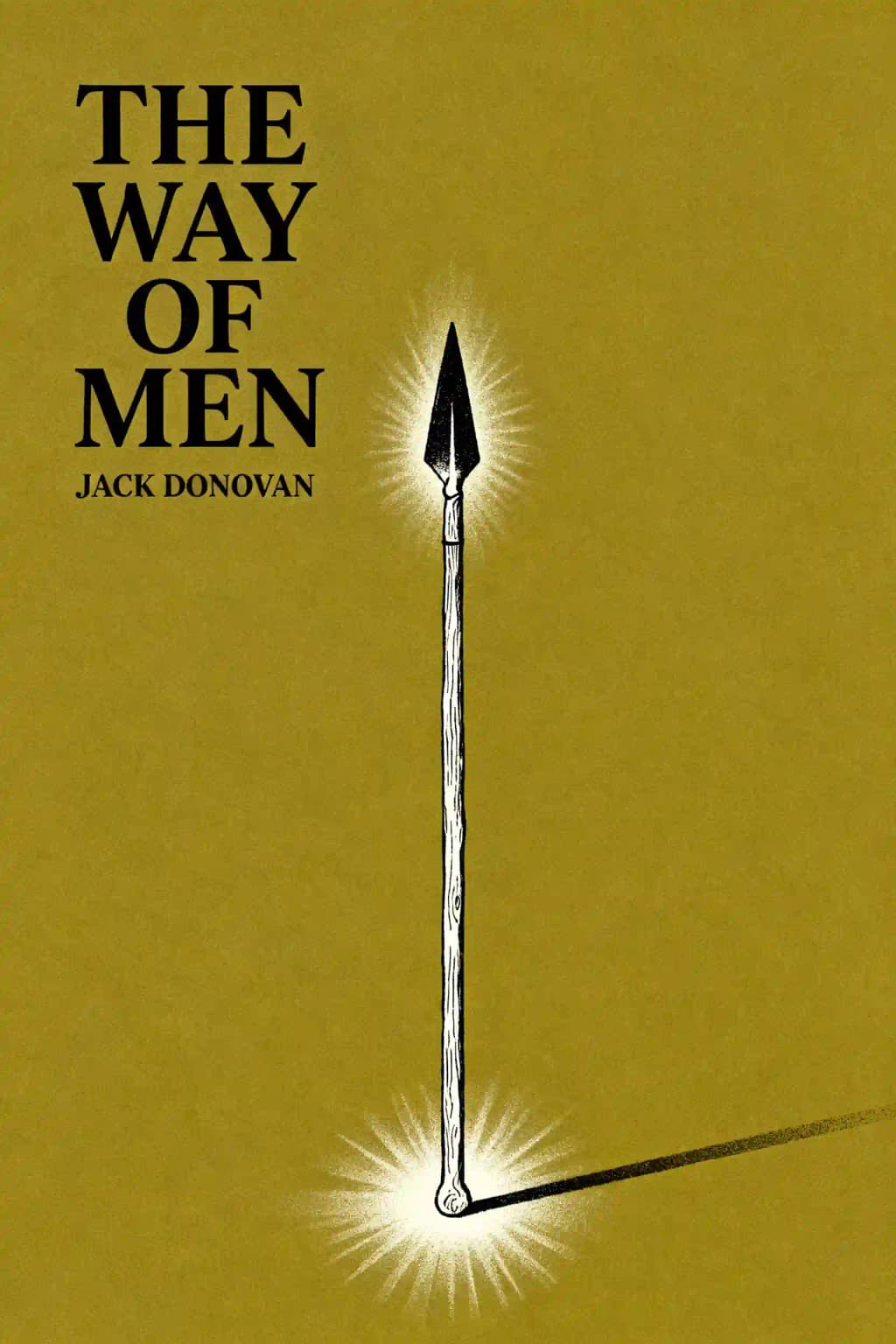
What does it truly mean to be a man? This question has haunted modern society for decades, with endless debates about "toxic masculinity" versus "positive masculinity." Yet Jack Donovan's controversial work cuts through these debates with a startling clarity that has made it both celebrated and criticized since its publication. Embraced by figures ranging from military leaders to men's rights advocates, "The Way of Men" has become something of an underground classic, selling hundreds of thousands of copies despite minimal mainstream publicity.
The book's influence extends far beyond its sales numbers. Its ideas have permeated discussions about masculinity across political lines, from traditional conservatives to radical feminists (albeit for different reasons). What makes Donovan's work so compelling is his anthropological approach - rather than prescribing what men should be, he examines what men have always been across cultures and throughout history. This isn't a self-help manual for becoming a "better man" - it's an unflinching look at the primal nature of masculinity that continues to shape our world, whether we acknowledge it or not.
2장
The Gang Theory of Masculinity
Masculinity isn't merely a social construct or biological destiny - it's a path men walk together. To understand what makes a man, we must look beyond individual traits to examine how men relate to other men. When someone tells a man to "be a man," they're really saying: "be more like the men we respect."
But who defines what men respect? Different groups want different things from men. Religious authorities demand morality and self-sacrifice. The wealthy want duty and obedience. Merchants want you to purchase their version of masculinity. Women want protection and provision. With so many competing demands, modern men often feel pulled in contradictory directions.
To cut through this confusion, Donovan reduces male social organization to its most basic form: the small survival band competing with other bands. This primal scenario - men working together to survive against external threats - reveals the fundamental nature of masculinity. The qualities men value in other men emerge from this survival imperative.
This "gang theory" explains why men naturally form hierarchies, compete for status, and bond through shared adversity. It's not coincidental that military units, sports teams, and even corporate structures mirror this ancient pattern. The male gang, with its internal competition balanced against external cooperation, represents the nucleic form of masculine social organization.
Consider how boys naturally organize their play - they form teams, establish rules, compete vigorously, but maintain group cohesion against outsiders. This isn't socialized behavior; it emerges spontaneously across cultures. Even in our complex modern world, men instinctively evaluate each other according to their value within this primal framework. The Way of Men is the way of the gang.
3장
Guarding the Perimeter: The Primal Role of Men
Imagine your small band fighting for survival in a hostile world. Your first priority is establishing a perimeter - creating a boundary between safety and danger, between "us" and "them." This boundary must be defended against threats, whether animal predators or rival human groups.
The biological realities of human reproduction naturally pushed men toward this defensive role. Women, vulnerable during pregnancy and focused on nursing infants, couldn't consistently perform the most dangerous tasks. Men, generally stronger and unburdened by pregnancy, became the natural guardians of the perimeter.
This isn't arbitrary cultural prejudice but vital strategic discrimination that kept human groups alive. The male world begins at this boundary between safety and danger - the perimeter that separates civilization from chaos.
Men naturally organize like chimpanzees on a party-gang basis, forming larger alliances when necessary but maintaining tighter, stable smaller groups. Military organization demonstrates this pattern perfectly, from massive armies down to fireteams of 2-4 men. The strength of bonds increases as unit size decreases. Sebastian Junger found soldiers would unhesitatingly risk their lives for platoon members, but this loyalty diminished at brigade level.
Our brains can only maintain meaningful relationships with about 150 people - roughly a military company or primitive tribe size. Within that circle, we form even smaller groups of deep trust, typically 2-15 men - large enough for tactical effectiveness but small enough for genuine connection. This isn't theoretical; it's how men naturally organize when facing challenges together.
As perimeter guardians, men occupy a role apart - their value determined by how well they fulfill their protective function. Those who excel earn respect and trust, while those who prove undependable are dishonored. In complex modern societies, most live deep within the perimeter, celebrating qualities unrelated to survival. Yet when men evaluate each other as men, they still instinctively look for the virtues needed to guard the boundary between safety and threat.
4장
The Four Tactical Virtues
The Latin word "vir" means "man," and "virtus" originally meant manliness expressed through martial valor. This etymological connection reveals how deeply intertwined the concepts of masculinity and combat capability were in ancient societies. As civilization grew more complex, manliness became increasingly metaphorical for men living deep within the perimeter of protected society. While civilized virtue expanded to include civic and moral qualities like wisdom, temperance, and justice, the core manly virtues remained the fighting virtues - those directly related to survival and protection.
These four tactical virtues form the foundation of masculine value, each serving a vital function in group survival:
Strength: Physical and mental power are fundamental requirements for protecting the group. You need strong men to do heavy work, carry wounded companions, handle weapons effectively, and fight off threats. Strength isn't just about muscles - it's about having the capacity to exert force when necessary and endure hardship. In primitive times, this meant lifting rocks and wielding spears; today it might mean working long hours or maintaining emotional resilience under pressure.
Courage: The ability to face danger despite fear is essential for group survival. You need men who won't flee when the group needs them to stand firm, whether facing physical threats or moral challenges. Courage manifests in both dramatic moments of crisis and in daily acts of perseverance. It's the virtue that enables all other virtues to function under pressure.
Mastery: Technical competence and skill development are crucial. You need men who've mastered essential skills, from hunting and fighting to strategic thinking and leadership. Mastery requires dedication, patience, and the willingness to learn from failure. It's about becoming reliably good at things that matter to the group's survival and success.
Honor: The social glue that holds warrior bands together, honor is about maintaining credibility within the group. You need men committed to the group who care about their reputation within it and will sacrifice for the collective good. Honor creates accountability and ensures men can trust each other in dangerous situations.
These practical virtues are amoral but not immoral - their morality exists within a closed circle where winning means survival and losing means death. They belong to no particular god or creed, but are universal requirements for men who must protect their interests and pursue their goals in challenging environments.
Men will constantly shift between in-group competition and cooperation against external threats. They'll challenge each other within the gang, competing for status and respect, but unite immediately when facing outside dangers. This ability to prioritize different levels of conflict - knowing when to compete and when to cooperate - is essential to understanding The Way of Men. A man's reputation within his group and his group's reputation among others can determine survival in a world without formal protection systems. This dynamic played out in primitive tribes, ancient armies, and continues today in military units and other male groups facing shared challenges.
5장
Strength: The Foundation of Masculine Power
Strength isn't just a cultural value arbitrarily assigned to men - it's one of the fundamental biological differences between males and females. Men are, on average, significantly physically stronger than women, and this isn't something we should be coy about. While strength isn't always advantageous in our mechanized modern world, it remains a defining characteristic of masculinity.
Women can demonstrate strength, but a woman isn't considered less womanly if she's physically weak. In fact, many female celebrities considered beautiful are thin and appear fragile. Conversely, a man who lacks strength is regarded as less manly. This isn't cultural - there is no human society where weak men are considered manlier or muscular women more womanly.
In our primal gang scenario, strength becomes immensely valuable. A man who can carry twice as much or hit twice as hard is worth more to the group. Strength is both the ability to exert force and to withstand outside pressure - to move and to become immovable. It's the defining metaphor of manhood because it's what differentiates most males from females throughout human history.
The modern gym culture among men isn't merely vanity - it's an attempt to reclaim this fundamental aspect of masculinity in a world that increasingly renders physical strength obsolete. When men lift weights, they're not just building muscle; they're connecting with an essential aspect of their masculine identity.
6장
Courage: The Will to Face Danger
While strength is straightforward and physical, courage is kinetic - it initiates movement and action. Courage exercises strength. The "cowardly lion" who stands aside while weaker men take risks is worth less than those who step into the arena.
Courage implies risk and is measured against danger. All courageous acts are exertions of will, though not all exertions of will require courage. Aristotle considered courage a moral virtue, particularly evident in facing noble death, especially in war. He distinguished between those forced to fight and those who demonstrate courage of their own free will, suggesting that "brave men act for honor's sake, but passion aids them."
For Aristotle and Romans alike, courage was synonymous with manliness itself. The Roman word virtus (from vir, meaning "man") originally meant courage in battle. True courage involves willful risk of bodily harm for the good of the group. Modern usage cheapens courage by applying it to any struggle, but historically it referred to heroic risk-taking.
Courage requires both "high courage" (willingness to risk for the group) and "low courage" (comfort with risk-taking generally). Men naturally goad each other into taking risks, building this capacity. Courage also manifests as "gameness" - the spirit to continue fighting despite pain or disadvantage - and gravitas, the quality of being taken seriously. A man with courage won't be pushed around.
In its most basic form, courage is the will to fight at any cost; in its moral form, it's the decisive willingness to risk harm for others' survival.
7장
Mastery: The Uniquely Human Virtue
Men have always identified with animals, adopting their imagery for strength and courage. Yet mastery - the uniquely human virtue - requires intellect beyond animal instinct. While animals succeed through genetic fitness, humans develop skills through reasoning and practice.
For men, "carrying your own weight" is fundamental to masculine identity. Unlike women who historically required group support during childbearing, men gain respect by demonstrating competence. Dependency equals powerlessness, making masculine loathing of dependence a natural resistance to welfare states that reduce men to childlike supplicants.
The gang ethos values mastery as a tactical virtue essential for winning. Men with specialized skills beyond basic hunting and fighting become more valuable to the group. Mastery can be supplementary, enhancing a strong man's worth, or compensatory, allowing physically weaker men to earn respect through valuable contributions.
Though not exclusively masculine, mastery drives men's competition for status and their desire to control their environment, ultimately differentiating humans from beasts. Men who lack strength or courage can sometimes compensate through exceptional mastery, finding their place in the male hierarchy through specialized skills. This explains why intellectual men who might struggle in physical confrontations can still earn respect through technical expertise, strategic thinking, or creative problem-solving.
The modern emphasis on specialization and expertise reflects this ancient value. Men who master difficult skills - whether coding, carpentry, or combat - gain status among other men regardless of their physical attributes. Mastery represents man's triumph over nature and chaos through skill and intelligence.
8장
Honor: The Golden Light of Male Esteem
Honor - that golden light everyone seeks - is fundamentally about esteem and status. Thomas Hobbes defined it as deference acknowledging power, directly related to strength, courage, and mastery in primitive settings where these virtues ensure survival.
In secure societies, honor becomes detached from its violent roots, with wealth or popularity conferring power. James Bowman identified two forms: reflexive honor (the instinct to retaliate against threats, signaling "no one attacks me with impunity") and cultural honor (traditions governing proper violence).
Honor must be hierarchical to have meaning. Despite American ideals of equality, men naturally form meritocratic hierarchies. Throughout history, honor has been about the esteem of men by other men, with male-dominated societies determining what behaviors earned respect. While specifics changed with circumstances, the fundamental tactical necessity of reflexive honor remained, judging men by their strength, courage and mastery.
Honor depends on the "honor group" - the male gang that shares identity. Face-to-face connections create accountability, explaining why men who grow up together or bunk together care more about honor than mobile, cosmopolitan men. At its core, honor is a man's reputation for strength, courage and mastery within his male honor group, and the virtue of honor is showing concern for this reputation.
Understanding dishonor reveals honor's tactical importance. "Deficient masculinity" (lacking strength, courage or mastery) results in low status but rarely provokes hate. "Flamboyant dishonor" - openly rejecting masculine values - invites contempt because it advertises weakness and submission, making the group appear vulnerable. Men shun the flamboyantly dishonorable to project strength and unity.
In peaceful times, honor broadens beyond tactical virtues to include being a "good man" according to tribal values, but its root remains demonstrating value to other men through strength, courage and mastery.
9장
Being Good vs. Being Good at Being a Man
Men naturally want to see themselves as heroes rather than villains, yet their cultural preferences reveal a fascination with morally ambiguous characters who embody raw masculinity. Despite moral posturing about what "real men" do, men are drawn to gangsters, hitmen, outlaws and warriors in fiction precisely because these characters excel at traditionally masculine virtues - they may not be good men, but they're good at being men.
Throughout history, cultures have wrestled with defining virtuous manhood. Modern efforts like The Good Men Project and The Art of Manliness attempt to reclaim positive masculine virtues. Brett McKay distinguishes between being "good at being a man" (fulfilling culture-specific male roles) and being "a good man" (developing moral virtues like honesty and compassion).
This distinction reveals a fundamental tension in masculine identity. The tactical virtues that make men valuable in survival situations don't necessarily align with moral virtues. A man can be strong, courageous, masterful, and concerned with honor among his peers while still behaving immorally by broader societal standards.
Consider how we celebrate fictional characters like James Bond, Tony Soprano, or Walter White. These men embody masculine virtues while often acting immorally. Their appeal lies precisely in this contradiction - they excel at being men while failing (often spectacularly) at being good men.
Moral codes for men typically involve restraint of natural male impulses, suggesting an inherent tension between being good and being manly. While respecting men who strive to be "good men," there's a point where self-sacrifice becomes self-destruction, where a man feels "used" rather than "useful."
The healthiest societies find ways to align tactical masculine virtues with moral goods - channeling strength toward protection rather than domination, courage toward justice rather than recklessness, mastery toward creation rather than destruction, and honor toward integrity rather than vanity.
10장
The Crisis of Modern Masculinity
What happens when men have no land to settle and no one to fight? Our minds and bodies evolved for a harsher world, yet we now live in a modern environment our psychology isn't adapted for. Men's primal role has always been to keep the perimeter, face danger, and hunt or fight in bands with strong group identity.
Evolutionary biologists Richard Wrangham and Dale Peterson call this "male demonism" - men gathering in self-aggrandizing bands, identifying enemies across some divide, and engaging in the compelling drama of group belonging and conflict. Though this strategy worked for our species' survival for millennia, civilized society must find ways to channel this energy constructively.
Every generation of young men can't be guaranteed a war or crisis to give their lives meaning. Instead, men seek substitutes for fighting - hunting, sports, and other ritualized competitions. William James proposed a "moral equivalent of war" through mandatory service in industries like fishing or mining where men could toil together. He warned that "a permanently successful peace-economy cannot be a simple pleasure-economy."
For civilization to prosper, men's gang tendencies must be redirected through meaningful substitutes that keep them invested in society rather than tearing it apart. These substitutes take three main forms:
1. Simulated Masculinity: Military or police service, team sports, or cooperative gaming that directly channels primal gang aggression.
2. Vicarious Masculinity: Watching others participate in wars, guardian work, survival games, team sports, or consuming media about men demonstrating masculine virtues.
3. Intellectualized Masculinity: Economic competition, political debates, metaphorical internal battles focused on self-mastery, or ascetic self-denial.
These aren't a simple progression but have existed in various forms throughout human history. Individual men and civilizations channel masculinity through simulation, vicariousness, and intellectualization simultaneously, with changing emphasis based on opportunity.
Modern civilization has drastically reduced opportunities for men to engage in the hunting and survival activities they evolved to perform. As these opportunities decrease, society emphasizes simulated, vicarious, and intellectualized channels of masculinity to maintain order while allowing men to feel masculine.
11장
Finding Meaning in a Domesticated World
The author draws disturbing parallels between modern society and bonobo primates, suggesting we've created a "peace of plenty" that's emasculating men. Today's men are "spoiled mamma's boys without father figures" lacking hunting, fighting or brother-bonds, with sex as their only masculine outlet. Modern men rarely experience war, hunger, or genuine hardship. Physical labor has been replaced by gym workouts that simulate the work humans evolved to do.
Despite civilization's goal to eliminate work and risk, our bodies still crave physical challenge and our minds need conflict. Even in peaceful future visions like Star Trek, conflict remains essential to the story. As society increasingly restricts violence and risk, men retreat to virtual experiences through video games and vicarious thrills.
The Epic of Gilgamesh, one of humanity's earliest literary works, shows that the "crisis of masculinity" has existed since civilization's dawn. The epic tells of Gilgamesh and his wild equal Enkidu, who abandons nature for civilization only to complain that his "arms had grown weak" and he was "oppressed by idleness."
This ancient wisdom reveals the eternal tension between primal masculinity and civilization's constraints. While women naturally try to domesticate men during peaceful times, men need meaningful challenge and risk to feel truly alive. Men need strength, courage, mastery, and honor - qualities that require opposition, danger, and accountability to other men. Without these elements, men become "little more than boys playing at being men."
The author laments that modern society offers men only "a decorated cage" with entertainment and comforts but no true purpose. He argues that men need tribal connection and identity beyond consumerism - they need an "us" which requires a "them." Civilization may offer many benefits, but it exacts "a toll of virility" by forcing men to abandon their tribal gangs and submit to institutions.
12장
Reclaiming Brotherhood in a Fractured World
The author identifies the gang as "the essence of patriarchal masculinity" and argues that men who want to follow "The Way of Men" should "start a gang" - meaning form an honor group with similar values. He explains that honor requires an honor group where the possibility of dishonor exists among peers whose respect you value.
The author dismisses the idea that a wife or girlfriend can replace male companionship, stating bluntly that even the strongest woman "is not worth eight men." He argues that men have been negotiating the tension between domesticity and gang life for centuries, and that part of our current problem is that men stopped depending on each other and started depending on the State.
He defines a gang as "a bonded, hierarchical coalition of males allied to assert their interests against external forces" - essentially creating an "us" against "them." He then provides practical advice for starting a gang:
1. Create proximity by living near like-minded men
2. Choose your "us" based on shared values
3. Create fraternity through face-time and shared activities
The author emphasizes tactical activities like shooting, hunting, martial arts, and building things together. While online bonding has limits, in-person interaction builds the trust needed for real friendship. He recommends setting aside time specifically for male bonding without women present, as men aren't honest in the same way when women are around.
This isn't about rejecting women or family life, but about recognizing that men need meaningful bonds with other men to feel complete. Throughout history, men have balanced domestic responsibilities with male fellowship, creating spaces where they could express and develop their masculine virtues together.
The modern atomization of society has severed these connections, leaving many men isolated and directionless. By consciously rebuilding male honor groups, men can reclaim the brotherhood that once gave their lives meaning and purpose.