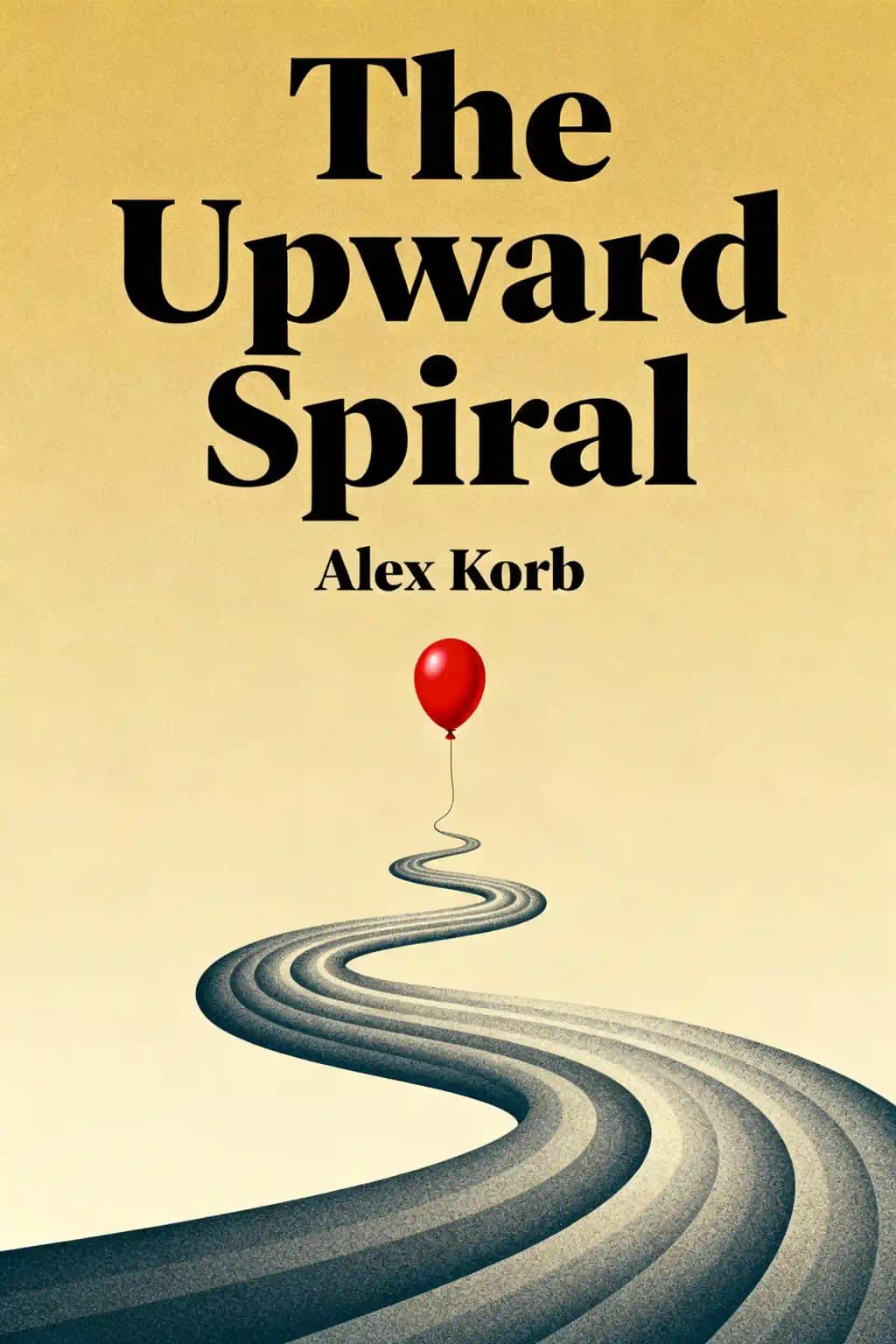
The Upward Spiral
Using Neuroscience to Reverse the Course of Depression, One Small Change at a Time
The Upward Spiral 개요
Unlock your brain's power to fight depression with "The Upward Spiral," the neuroscience guide endorsed by bestselling author Daniel J. Siegel. Translated into 12 languages with 175,000+ copies sold, it reveals how small daily choices can rewire your brain toward happiness.

The Upward Spiral의 핵심 주제
- neuroplasticity and depression
- behavioral activation
- neural circuitry regulation
- prefrontal cortex strengthening
- neurotransmitter modulation
The Upward Spiral의 명언
Thoughts aren't feelings or actions-they're just thoughts, not who you are.
Intentions alone won't improve depression-actual engagement in activities creates change.
Depression creates a cruel paradox: the things that would help most become hardest to do.
Like wild animals that don't thrive in captivity, our brains suffer when we're sedentary.
The small amount of exercise you actually do is infinitely more beneficial than the large amount you plan but never complete.
The Upward Spiral의 등장인물
- Alex KorbNeuroscientist and author of the book
저자 소개
The Upward Spiral의 저자 소개
Alex Korb, Ph.D., is the bestselling author of The Upward Spiral: Using Neuroscience to Reverse the Course of Depression, One Small Change at a Time and a leading neuroscientist specializing in mental health and brain behavior.
With over two decades of research experience, including a Ph.D. in neuroscience from UCLA and ongoing work as an adjunct assistant professor in UCLA’s Department of Psychiatry, Korb bridges cutting-edge brain science with actionable strategies for overcoming depression and anxiety. His book, blending self-help and neuroscience, draws from his peer-reviewed studies on depression and neuromodulation, as well as his signature Upward Spiral Method coaching program designed to reprogram stress and unlock human potential.
A sought-after speaker and consultant, Korb contributes to Psychology Today, runs a popular neuroscience blog, and advises organizations on employee wellbeing. His unique approach integrates mindfulness, fitness, and neuroscience—principles he also applies as head coach of UCLA’s Women’s Ultimate Frisbee team. The Upward Spiral has become a trusted resource in mental health circles, praised for transforming complex brain research into practical steps for lasting emotional resilience.
The Upward Spiral 요약 다운로드
The Upward Spiral 요약을 무료 PDF 또는 EPUB으로 받으세요. 인쇄하거나 오프라인에서 언제든 읽을 수 있습니다.
이 책에 대한 FAQ
The Upward Spiral explains how depression and anxiety arise from interconnected brain processes, offering neuroscience-backed strategies to reverse these patterns. Dr. Alex Korb emphasizes small, actionable steps—like improving sleep, exercise, and social bonds—to shift the brain from a "downward spiral" of negativity to an "upward spiral" of improved mental health.
This book is ideal for individuals struggling with depression or anxiety, as well as those interested in brain science. It’s also valuable for students, coaches, and mental health professionals seeking evidence-based tools to address mood disorders.
Yes, particularly for its practical, science-driven approach. With over 175,000 copies sold and translations in 12 languages, it distills complex neuroscience into accessible strategies—like mindfulness and habit adjustments—making it a actionable guide for long-term mental health.
Korb explains how the limbic system (emotional brain) and prefrontal cortex (thinking brain) interact. Depression often stems from imbalanced activity in these regions, but small changes—like gratitude practices or physical activity—can recalibrate neural circuits, fostering resilience.
- Limbic system dominance: Overactive emotional brain driving negativity.
- Upward vs. downward spirals: Self-reinforcing cycles of brain activity and behavior.
- Intervention levers: Sleep, exercise, decision-making, and social connection as tools to reshape neural pathways.
Yes. Strategies include:
- Prioritizing sleep to improve prefrontal cortex function.
- Engaging in social activities to boost oxytocin.
- Practicing gratitude to reduce limbic system hyperactivity.
It emphasizes neuroplasticity over abstract theories, providing a granular, brain-based roadmap. Unlike generic self-help guides, Korb ties each recommendation to specific neural mechanisms, such as serotonin regulation or amygdala calming.
Some readers may find the neuroscience-heavy sections challenging, though Korb simplifies concepts for laypeople. Others note that severe depression might require professional therapy alongside the book’s strategies.
Yes. The same brain circuits involved in depression (e.g., amygdala hyperactivity) drive anxiety. Techniques like diaphragmatic breathing and mindful decision-making directly target these pathways, reducing overall stress.
- Exercise: Increases BDNF (brain-derived neurotrophic factor), aiding neural growth.
- Hugging: Triggers oxytocin release, calming the limbic system.
- Decision-making: Even small choices activate the prefrontal cortex, breaking rumination cycles.
Korb holds a PhD in neuroscience from UCLA, has published peer-reviewed research on mood disorders, and developed UCLA courses on brain health. His coaching experience bridges science and practical wellbeing.
As mental health awareness grows, its blend of actionable steps and neuroscience remains timeless. The focus on small, sustainable habits aligns with modern trends in micro-productivity and personalized health strategies.