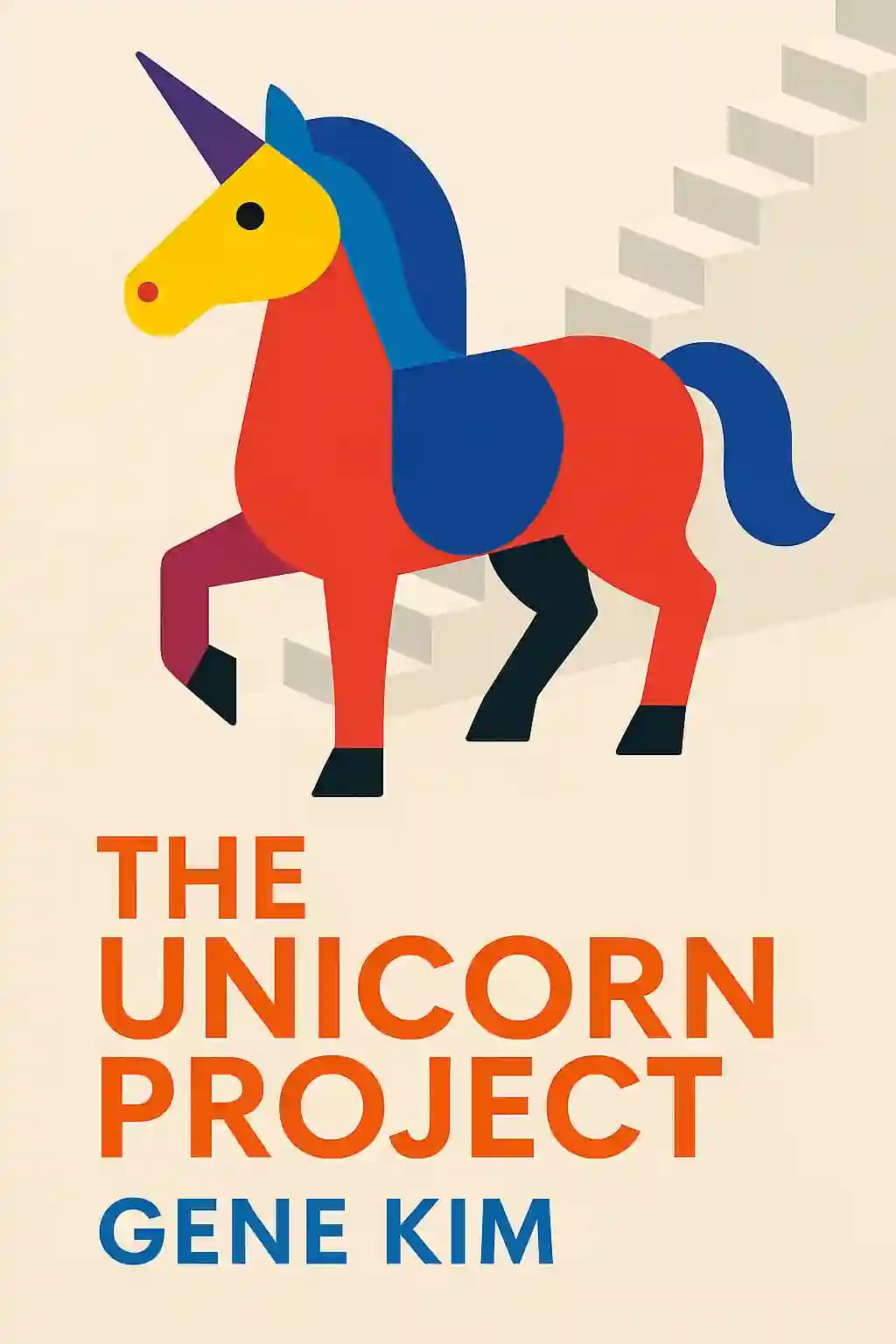
In "The Unicorn Project," Gene Kim reveals how rebellious developers transform a century-old retailer facing digital disruption. This DevOps bible introduced the revolutionary "Five Ideals" framework that's reshaping how tech giants approach innovation. What could your organization achieve with psychological safety and customer obsession?
Gene Kim is the Wall Street Journal bestselling author of The Unicorn Project and a pioneering researcher in DevOps and high-performing technology organizations.
A former founder and 13-year CTO of Tripwire, Kim has shaped modern IT practices through influential works like The Phoenix Project (a novel exploring DevOps transformation) and the Shingo Award–winning Accelerate, co-authored with Dr. Nicole Forsgren and Jez Humble.
His writing blends technical expertise with narrative-driven insights, reflecting his two decades of studying elite tech teams at companies like Microsoft and AOL. Kim’s leadership extends to founding the DevOps Enterprise Summit, a global forum for enterprise IT innovation.
Recognized as one of Computerworld’s “Forty Technology Innovators Under Forty,” his books have been translated into over 15 languages, with The Phoenix Project surpassing 1 million copies sold worldwide.
The Unicorn Project explores DevOps principles through a fictional narrative, focusing on overcoming bureaucratic and technical hurdles in software development. It introduces the Five Ideals: Locality & Simplicity, Focus, Flow, Joy, and Improvement, emphasizing team autonomy, streamlined workflows, and continuous learning. The story follows a developer navigating organizational chaos to deliver value in a fast-paced tech environment.
This book is ideal for software engineers, IT managers, and DevOps practitioners seeking to improve workflow efficiency and organizational culture. It’s particularly valuable for those in legacy tech environments or dysfunctional teams, offering actionable insights into breaking silos and fostering collaboration. Leaders aiming to drive digital transformation will also benefit from its principles.
Yes, especially for professionals navigating DevOps adoption or Agile transformations. The novel format makes complex concepts accessible, though some critics note its dense storytelling. It complements The Phoenix Project by focusing on developers’ perspectives, making it a practical guide for improving software delivery.
Key concepts include:
While The Phoenix Project centers on IT operations, The Unicorn Project focuses on developer challenges, providing a parallel narrative. Both emphasize DevOps principles, but the latter highlights innovation and empowerment for engineering teams, making them complementary reads.
Critics argue the story’s complexity can obscure its lessons, requiring readers to “wade through” detailed scenarios. Some find the fictional format less actionable than traditional guides, though it effectively humanizes technical struggles.
The book tackles legacy system modernization, compliance bottlenecks, and cross-team misalignment through relatable characters. It advocates for decentralized decision-making and automated workflows to accelerate delivery—a reflection of Gene Kim’s research on high-performing organizations.
A pivotal idea is: “The goal is not to eliminate constraints but to identify and elevate them.” This underscores the importance of addressing systemic blockers rather than temporary fixes. Another key quote emphasizes “optimizing for learning” over short-term output.
Its focus on adaptability in digital transformation aligns with current trends like AI-driven development and cloud-native architectures. The Five Ideals remain applicable for organizations balancing innovation with operational stability.
Unlike the IT-focused Visible Ops Handbook or The Phoenix Project, this book targets developer empowerment within DevOps. It expands on ideas from Accelerate, providing narrative-driven examples of measuring and improving software delivery.
Teams can adopt:
It combines actionable DevOps strategies with relatable storytelling, bridging the gap between theory and practice. Gene Kim’s expertise in high-performing IT organizations lends credibility, making it a staple in enterprise agile transformations.
저자의 목소리로 책을 느껴보세요
지식을 흥미롭고 예시가 풍부한 인사이트로 전환
핵심 아이디어를 빠르게 캡처하여 신속하게 학습
재미있고 매력적인 방식으로 책을 즐기세요
"it would be the worst product ever."
"I've finally found my tribe."
"sovereign states on the brink of war"
"complected" (intertwined) systems
"complexity debt" because it affects business outcomes.
The Unicorn Project의 핵심 아이디어를 이해하기 쉬운 포인트로 분해하여 혁신적인 팀이 어떻게 창조하고, 협력하고, 성장하는지 이해합니다.
The Unicorn Project을 빠른 기억 단서로 압축하여 솔직함, 팀워크, 창의적 회복력의 핵심 원칙을 강조합니다.

생생한 스토리텔링을 통해 The Unicorn Project을 경험하고, 혁신 교훈을 기억에 남고 적용할 수 있는 순간으로 바꿉니다.
무엇이든 물어보고, 목소리를 선택하고, 진정으로 공감되는 인사이트를 함께 만들어보세요.

샌프란시스코에서 컬럼비아 대학교 동문들이 만들었습니다
"Instead of endless scrolling, I just hit play on BeFreed. It saves me so much time."
"I never knew where to start with nonfiction—BeFreed’s book lists turned into podcasts gave me a clear path."
"Perfect balance between learning and entertainment. Finished ‘Thinking, Fast and Slow’ on my commute this week."
"Crazy how much I learned while walking the dog. BeFreed = small habits → big gains."
"Reading used to feel like a chore. Now it’s just part of my lifestyle."
"Feels effortless compared to reading. I’ve finished 6 books this month already."
"BeFreed turned my guilty doomscrolling into something that feels productive and inspiring."
"BeFreed turned my commute into learning time. 20-min podcasts are perfect for finishing books I never had time for."
"BeFreed replaced my podcast queue. Imagine Spotify for books — that’s it. 🙌"
"It is great for me to learn something from the book without reading it."
"The themed book list podcasts help me connect ideas across authors—like a guided audio journey."
"Makes me feel smarter every time before going to work"
샌프란시스코에서 컬럼비아 대학교 동문들이 만들었습니다

The Unicorn Project 요약을 무료 PDF 또는 EPUB으로 받으세요. 인쇄하거나 오프라인에서 언제든 읽을 수 있습니다.
Picture a developer at a Fortune 500 company who can't even compile code on her laptop. Sounds absurd, right? Yet this is precisely the reality at countless established corporations today. Parts Unlimited, a century-old auto parts retailer, has become so tangled in its own bureaucracy that talented engineers spend weeks just getting access to their own code. Meanwhile, twelve-year-olds in coding clubs can build and deploy apps in minutes. This jarring disconnect sits at the heart of Gene Kim's The Unicorn Project-a story that has become required reading at companies from Microsoft to Amazon, not because it's fiction, but because it's uncomfortably real. What unfolds is a blueprint for how legacy companies can rediscover their innovative spirit without abandoning what made them successful in the first place.