1장
From Rice Paddies to Global Phenomenon
Sushi-once a humble street food of fermented fish and rice-has transformed into a global culinary sensation that inspires devotion, artistry, and even healing. The California Sushi Academy in Los Angeles represents this transformation perfectly, where aspiring chefs from diverse backgrounds gather to learn an art that traditionally required years of apprenticeship in Japan. Among these students is Kate Murray, a 20-year-old with no culinary experience who discovered sushi during a health crisis and felt it literally saved her life. Her journey mirrors the evolution of sushi itself-from necessity to passion, from outsider to devotee. The academy's founder, Toshi Sugiura, revolutionized sushi training by condensing the traditional five-year Japanese apprenticeship into just months, making this once-exclusive craft accessible to Americans. This democratization of sushi training reflects how this cuisine has transcended cultural boundaries to become one of the most influential food trends of our time, spawning countless restaurants, celebrity fans, and even changing how Americans view raw fish-once considered inedible, now celebrated as the pinnacle of freshness and purity.
2장
The Unlikely Apprentice's Journey
Kate Murray's path to sushi school was anything but straightforward. Growing up in middle America on a diet of chicken casseroles and deep-fried fish, she developed into an athletic, sociable teenager with a strong personality who preferred hanging out with guys rather than girls. Her promising high school career in soccer and video production came to an abrupt halt when she broke her finger during her senior year. This seemingly minor injury spiraled into depression and then a mysterious kidney disease that landed her in the hospital.
With no health insurance and doctors prescribing a protein and iron-rich diet she couldn't afford, Kate's health deteriorated further. Her poor eating habits only exacerbated her condition until a friend convinced her to try sushi. This moment proved transformative. At her local sushi bar, Kate not only discovered nourishment that seemed to restore her health but also found a community. She developed a special bond with a sushi chef who made her feel valued and seen.
Kate's experience echoed the 1939 story by Japanese author Kanoko Okamoto about a sickly boy cured by his mother's handmade sushi. For Kate, the clean, fresh food became both medicine and comfort. As her health improved, her sociability returned, though depression still lingered beneath the surface. After cycling through various customer service jobs, she yearned for work that would allow for deeper connections with people.
When Kate spotted the California Sushi Academy sign, it planted a seed that took a year to germinate. Despite her family's skepticism ("You want to be a what?"), her boyfriend's disapproval, and her own doubts about her capabilities, Kate eventually enrolled. On her first day, she arrived late, immediately becoming the center of attention among her eight classmates. The chief instructor, Zoran Lekic-a Yugoslav-Australian former military man and bodybuilder-introduced the students to their hand-forged Japanese knives worth $600.
Kate's struggle began immediately. With no cooking experience, she found herself completely out of her depth with basic knife techniques like katsura-muki (cucumber peeling) and sengiri (precision chopping). By the second day, her unsharpened knives had already rusted, earning her public criticism from Zoran. As the week progressed, Kate questioned her decision daily, yet something kept her coming back-perhaps the same healing connection to sushi that had restored her health was now guiding her future.
3장
The Alchemy of Fermentation
The foundation of sushi's distinctive flavor lies in an unexpected source: mold. During the first week of training, instructor Zoran took Kate's class to Miyako Oriental Foods, a miso factory with roots tracing back to pre-World War II Japanese immigrants. There, the students discovered that sushi's essential flavor profiles depend on Aspergillus oryzae-commonly known as koji-a carefully cultivated fungus that Japanese specialists have managed for centuries.
In the factory's state-of-the-art incubator, this remarkable mold rapidly processes 6,600 pounds of rice, performing a kind of pre-digestion by breaking down complex molecules into simpler compounds. One crucial product of this process is glutamate, an amino acid that triggers the umami sensation-that deeply satisfying, savory taste that makes certain foods irresistibly delicious. Interestingly, glutamate also plays essential roles in human brain function, perhaps explaining our evolutionary attraction to these flavors.
After the koji completes its work and dies, other microorganisms take over. Bacteria and yeasts continue the fermentation process, creating acids and esters that contribute layers of complex flavors. The students learned that soy sauce-now inseparable from sushi-originally emerged as a by-product of miso production. Centuries ago, refined Japanese chefs noticed a brown liquid oozing from fermenting miso and began collecting it for aristocratic palates, eventually developing methods to produce it deliberately.
Both soy sauce and rice vinegar-the two fundamental flavor components that define sushi-depend entirely on this moldy fermentation process. Without these microbial transformations, sushi as we know it wouldn't exist. This revelation offers a profound insight: what appears simple on the surface-a piece of fish on rice-actually represents centuries of microbial cultivation, fermentation expertise, and flavor development.
Back at school, while Kate struggled with basic knife skills and faced Zoran's pointed criticism, she was unwittingly becoming part of this ancient tradition of transformation-raw ingredients becoming something greater through time, technique, and patience. The parallel between her personal journey and the fermentation process itself wasn't lost on her: both required breaking down before building up something new and better.
4장
The Ancient Origins of a Modern Delicacy
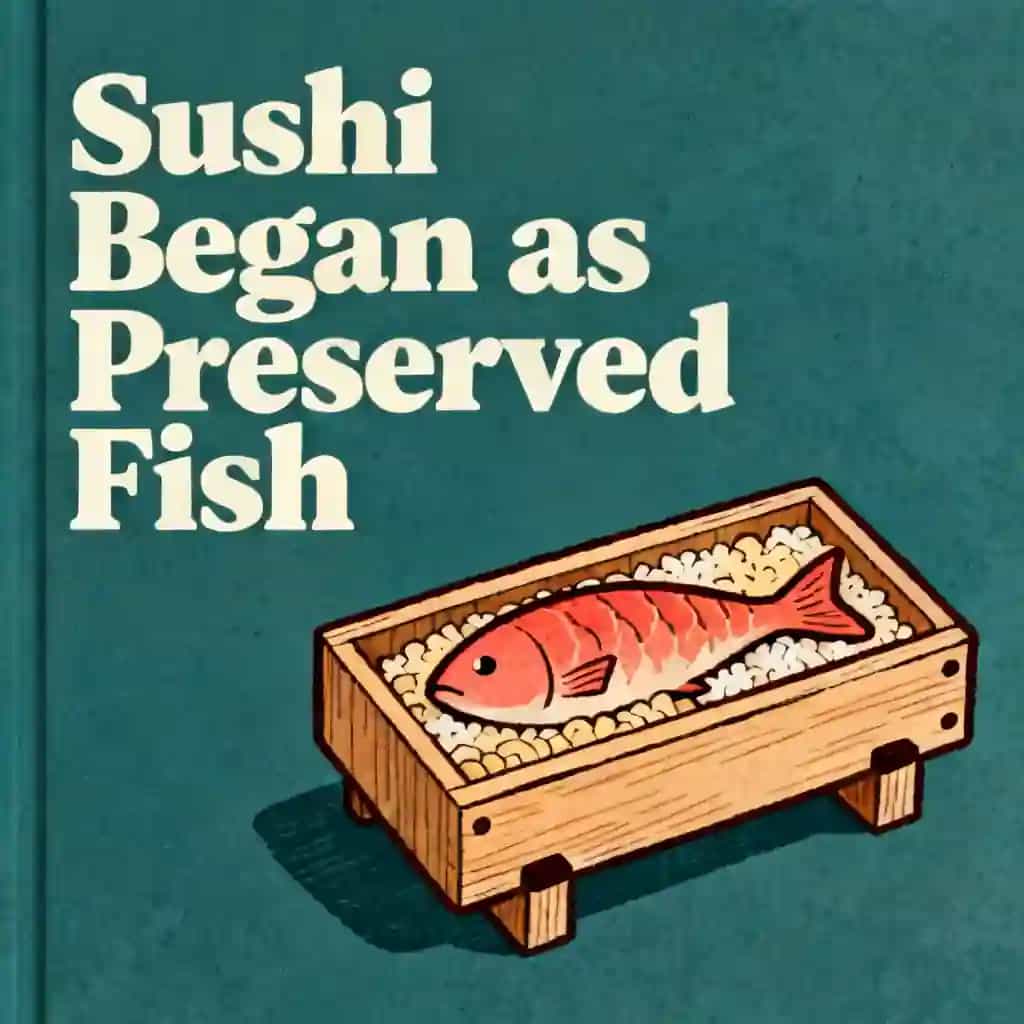
Contrary to popular belief, sushi did not begin as the elegant, bite-sized delicacy we recognize today. Its origins trace back over a thousand years to Southeast Asia, where people discovered that cooked rice could preserve fish through fermentation. The process was remarkably practical: fish was packed in cooked rice, which fostered beneficial bacteria that produced lactic acid, effectively pickling the fish and extending its edibility from days to months.
This preservation method spread to Japan around the 8th century, where it was called narezushi. The fermentation process could take months or even years, and initially, the rice was discarded-serving only as the fermentation medium while the preserved fish was consumed. This early form of sushi bore little resemblance to today's version; it was pungent, acidic, and developed as a necessity in a world without refrigeration.
By the 1600s, Japanese cooks had discovered that adding vinegar to the rice could accelerate the fermentation process. This innovation led to hayazushi ("quick sushi"), which reduced preparation time from months to days. The Edo period (1603-1868) saw another crucial development: people began eating the vinegared rice along with the fish, creating a more complete dish.
The true revolution came in the early 19th century when a clever street vendor named Hanaya Yohei began serving fresh fish atop vinegared rice in Tokyo (then called Edo). This "Edomae-zushi" (literally "in front of Edo" sushi, referring to fish caught in Tokyo Bay) eliminated the fermentation process entirely. Instead of preserving fish, the vinegar now simply flavored the rice. This innovation transformed sushi from a preservation method to a celebration of freshness.
Yohei's creation-recognizable as the direct ancestor of modern nigiri sushi-was essentially fast food, sold from street carts to busy workers who ate it with their hands. Far from the refined restaurant experience we associate with sushi today, it was casual, affordable, and designed for immediate consumption.
The Great Kanto Earthquake of 1923 inadvertently spread this Tokyo-style sushi throughout Japan, as sushi chefs fled the devastated capital. After World War II, outdoor sushi stalls were banned for hygiene reasons, pushing sushi indoors and beginning its transformation into a more formal dining experience. When sushi arrived in America in the 1960s, it underwent further evolution, adapting to Western tastes with creations like the California roll while gradually educating American palates about traditional forms.
This remarkable journey-from preservation technique to street food to global culinary art-reveals how sushi has continuously adapted while maintaining connections to its ancient origins. The vinegared rice that once preserved fish now showcases it, a transformation that mirrors humanity's own evolution from survival-focused to pleasure-seeking in our relationship with food.
5장
The Rice: Heart and Soul of Sushi
While most Westerners fixate on the fish, true sushi connoisseurs understand that properly prepared rice-shari-is the foundation of exceptional sushi. At the California Sushi Academy, students spent days mastering rice preparation before ever touching fish. The process begins with selecting the right variety: short-grain Japanese rice with high starch content that creates the perfect stickiness when cooked.
The washing process is crucial and surprisingly complex. Students learn to rinse the rice in circular motions without crushing the grains, changing the water repeatedly until it runs clear. This removes excess starch that would make the rice too gummy. After soaking for precisely 30 minutes-no more, no less-the rice is cooked in a precise ratio of water to rice, traditionally in a donabe (clay pot) but now often in electric rice cookers specifically designed for sushi rice.
The real magic happens after cooking. The rice must be transferred to a hangiri-a wide, shallow wooden tub made of cypress-and seasoned while still hot. The seasoning mixture, called sushi-zu, combines rice vinegar, sugar, and salt in proportions that represent each chef's personal signature. As Zoran demonstrated to Kate's class, the rice must be cut and folded with a wooden paddle (shamoji), not stirred, while being fanned to cool it quickly. This simultaneous cutting, folding, and cooling creates rice with a glossy surface where each grain remains distinct yet sticky enough to hold together.
The temperature of properly prepared sushi rice is crucial-ideally body temperature or slightly warmer, creating a subtle temperature contrast with the cool fish. This attention to temperature reveals the sensory complexity of sushi: beyond taste, texture and temperature play essential roles in the experience.
For Kate, mastering rice preparation became a meditative practice. The rhythmic motions of washing, the precise timing of soaking, the careful folding while fanning-these repetitive actions required complete presence. She found herself forgetting her struggles with knife skills as she lost herself in the rice process, experiencing what psychologists call "flow state." When she finally produced a batch that earned Zoran's approval-"Not terrible"-she felt a sense of accomplishment that transcended the simple task.
This rice obsession reflects sushi's agricultural origins. Before becoming associated with seafood, sushi was fundamentally about rice preservation. The word "sushi" itself refers not to fish but to the acidic rice preparation. Even today, in Japan, sushi chefs are judged primarily on their rice, with fish selection and cutting technique considered secondary skills. As one Japanese saying goes: "Good rice, good sushi; bad rice, bad sushi." Through her rice training, Kate wasn't just learning cooking techniques-she was connecting to the agricultural heart of Japanese culture and the centuries-old tradition that transformed a simple grain into an art form.
6장
The Sacred Dance of Knife and Fish
In traditional Japanese sushi culture, the relationship between chef and knife transcends mere utility-it approaches the spiritual. At the academy, students received hand-forged Japanese knives worth $600, tools they would come to view as extensions of themselves. These weren't simply cooking implements but expressions of a philosophy where precision, respect for ingredients, and mindful presence converge.
The yanagiba, or willow-blade knife, serves as the sushi chef's primary tool. Its single-beveled edge and long, narrow design allows for the uninterrupted drawing cuts that produce pristine fish slices. Unlike Western knives that push through food, the yanagiba slices in a single, fluid motion-a technique that preserves cellular structure and enhances both texture and flavor. Students learned that a properly sharpened yanagiba should be able to slice through paper at any point along its blade, a standard that required hours of practice with sharpening stones of progressively finer grits.
Kate's struggles with knife skills highlighted the immense technical demands of sushi preparation. Basic techniques like katsura-muki (creating paper-thin cucumber sheets) and sengiri (precision julienne cutting) required hand-eye coordination and muscle memory that could only develop through repetition. When her unsharpened knives rusted overnight, Zoran's public criticism emphasized that knife maintenance wasn't just about functionality-it reflected one's character and commitment to the craft.
Fish fabrication represented another level of complexity. Students learned to break down whole fish according to Japanese methods that differ significantly from Western approaches. Rather than cutting across the spine, Japanese technique follows the natural seams between muscle groups, preserving texture and maximizing yield. Each fish required specific approaches: tuna demanded different cutting techniques than flatfish, which differed from eel or shellfish.
The philosophy behind these methods emphasized mottainai-the concept that waste is shameful-and respect for the animal's sacrifice. Students learned to use every part of the fish: the prime cuts for sashimi and nigiri, trimmings for rolls, bones and heads for stock. This comprehensive utilization reflected both practical economics and deeper cultural values about humanity's relationship with food sources.
For Kate, mastering knife skills became a journey of personal transformation. The concentration required to maintain proper blade angle, hand position, and cutting rhythm forced her into a state of complete presence. Her previous life concerns-health problems, relationship issues, career uncertainties-temporarily dissolved when she focused entirely on the knife's edge meeting fish flesh. This meditative aspect of knife work represents one of sushi's hidden dimensions: beyond culinary technique, it offers practitioners a path to mindfulness through physical discipline.
As Kate gradually improved, she experienced moments of what Japanese martial arts call "no-mind"-brief periods when technique flowed naturally without conscious thought. These glimpses of mastery, though fleeting, sustained her through the frustrations of learning. The sacred dance between knife, hand, and fish was teaching her not just how to make sushi, but how to approach life with greater presence and precision.
7장
The Ocean's Bounty: Understanding Seafood
Sushi's evolution has always been intertwined with Japan's intimate relationship with the sea. As an island nation with limited arable land, Japan developed sophisticated techniques for harvesting and preparing marine life long before refrigeration existed. At the academy, students received a crash course in marine biology and seafood handling that revealed the extraordinary diversity of edible sea creatures and the knowledge required to prepare them properly.
The students learned to distinguish dozens of fish species, each requiring specific handling techniques. Tuna-the king of sushi fish-comes in varieties ranging from the affordable yellowfin to the prized bluefin with its specialized cuts: akami (lean red meat), chutoro (medium-fatty belly), and the most coveted otoro (fattiest belly portion). Beyond tuna, they studied white-fleshed fish like tai (sea bream) and hirame (flounder), silver-skinned fish like kohada (gizzard shad) and aji (horse mackerel), and blue-skinned fish like saba (mackerel) that require curing to be safe for consumption.
The class visited Los Angeles fish markets where they learned to assess freshness through clear eyes, firm flesh, and the absence of fishy odor. They discovered that truly fresh fish has virtually no smell-the "fishy" aroma most Americans associate with seafood actually indicates decomposition. This revelation changed Kate's perception entirely; what she had always thought of as the natural smell of fish was actually the scent of decay.
Contrary to popular belief, the students learned that sushi-grade fish often isn't served immediately after catching. Many fish benefit from aging under controlled conditions-a process called nekaseru that allows rigor mortis to resolve and enzymes to break down proteins, enhancing flavor and texture. This controlled decomposition, similar to dry-aging beef, requires precise temperature management and expert judgment about when each species reaches its peak.
The class also explored shellfish preparation, from shucking live scallops to properly cleaning squid and octopus. They learned that shrimp for sushi should ideally be alive until moments before serving, then briefly boiled to achieve the perfect texture. These techniques highlighted how sushi chefs must be part marine biologist, part butcher, and part chemist-understanding the biological composition of each species and how it responds to different preparations.
Perhaps most surprising to Kate was learning about the traditional methods of fish preservation that preceded modern refrigeration. Techniques like kobujime (wrapping fish in konbu seaweed) and shime (marinating in vinegar) were originally developed for food safety but are still used today for their flavor-enhancing properties. These methods revealed sushi's paradoxical nature: while celebrating absolute freshness, it simultaneously embraces controlled fermentation and curing.
As Kate handled various marine creatures-some still moving-she confronted her own disconnection from food sources. Modern Americans rarely face the reality that eating animals means taking life. In Japanese culinary tradition, this reality isn't hidden but acknowledged through the concept of itadakimasu-an expression of gratitude before meals that recognizes the sacrifice of plants and animals. This philosophy transformed Kate's relationship with seafood from mere consumption to a more mindful appreciation of the ocean's bounty and the responsibility that comes with harvesting it.
8장
The Art of Presentation and Service
In Japanese culinary tradition, visual presentation holds equal importance to flavor-a principle encapsulated in the phrase "me de taberu" (eating with the eyes). At the academy, students discovered that sushi's apparent simplicity masks complex aesthetic considerations rooted in centuries of Japanese cultural development.
Traditional sushi presentation follows principles derived from Japanese art forms like ikebana (flower arrangement) and bonsai. Students learned about asymmetrical balance, the importance of negative space, and the seasonal nature of presentations. Colors should complement rather than compete, with arrangements typically featuring odd numbers of items-considered more pleasing to the eye than even numbers. Even the direction fish slices face on a plate carries meaning, with each piece positioned to be eaten in a specific sequence that builds flavors progressively.
The class studied traditional serving vessels, from minimalist pottery to lacquerware and bamboo leaves. They learned that plates should enhance rather than distract from the food, with seasonal motifs subtly reinforcing the connection to nature. Summer calls for glass plates that suggest coolness, while winter dishes might be served on darker ceramics that retain heat. These vessels aren't merely functional but contribute to the narrative of the meal, connecting diners to seasonal rhythms and natural environments.
For nigiri sushi, the hand-pressing technique itself constitutes an art form. Students practiced forming rice balls with precisely the right pressure-firm enough to hold together when picked up but loose enough to separate in the mouth. The rice should have a slight arch that mirrors the curve of the fish topping, creating both visual harmony and proper mouthfeel. Each piece should be sized for a single bite, as sushi is designed to be consumed immediately after preparation, before the temperature contrast between warm rice and cool fish dissipates.
Beyond aesthetics, students learned the etiquette of sushi service. In traditional settings, chefs hand pieces directly to customers across the counter-a practice that preserves optimal temperature and texture while creating an intimate connection between maker and consumer. They discovered proper gari (pickled ginger) placement, wasabi application techniques, and the correct pouring of soy sauce. These details might seem fussy to outsiders but represent the culmination of generations of refinement.
Kate struggled with the precision required for consistent nigiri formation. Her first attempts were either too tight (creating dense, chewy rice balls) or too loose (falling apart when picked up). Zoran demonstrated the proper hand position-cupped left palm, two fingers on top, thumb creating the arch-and the precise pressure sequence that creates the perfect texture. When Kate finally produced a batch of consistently shaped nigiri, she experienced a satisfaction that transcended the technical achievement. She was connecting to an aesthetic tradition that valued subtlety, restraint, and mindful attention-values increasingly rare in contemporary American food culture.
The students also learned about otsumami (small appetizers) and zensai (seasonal starters) that traditionally precede sushi, creating a complete dining progression. These supporting dishes showcase seasonal ingredients and preparation techniques that complement the sushi to follow. Through these lessons, Kate began to understand that sushi isn't merely food but a comprehensive dining philosophy that engages all senses while honoring natural cycles and human craftsmanship.
9장
From Tradition to Innovation: Sushi's Global Evolution
The final weeks at the academy explored sushi's remarkable global journey from regional Japanese specialty to international phenomenon. This transformation represents one of the most successful culinary migrations in history, but not without significant adaptations and controversies along the way.
Traditional Edomae sushi-the style that developed in 19th-century Tokyo-followed strict conventions regarding fish selection, preparation techniques, and serving order. When sushi first appeared in America in the 1960s, these traditions faced immediate challenges. American customers were skeptical of raw fish, unfamiliar with Japanese etiquette, and possessed different palate preferences. Early sushi chefs in Los Angeles and New York made crucial adaptations to bridge these cultural gaps.
The California roll represents the most famous innovation from this period. Created in Los Angeles in the 1970s (likely by chef Ichiro Mashita), it placed avocado and crab inside a roll with rice on the outside-concealing the seaweed that Americans found visually unappealing while using familiar ingredients. This inside-out roll became the gateway that introduced countless Americans to sushi, demonstrating how culinary traditions can evolve through cultural exchange rather than remain static.
At the academy, students debated the merits of traditional versus creative approaches. Zoran encouraged them to master classical techniques before attempting innovations, comparing it to learning musical scales before improvising jazz. The class studied other successful fusion creations like the spicy tuna roll (developed to use scraps while appealing to American preferences for heat) and the rainbow roll (which introduced multiple fish varieties in a visually striking presentation).
They also examined controversial innovations like cream cheese in sushi, the proliferation of sauce-heavy rolls, and deep-fried preparations-developments that many traditionalists consider sacrilegious but that have undeniably expanded sushi's popularity. These discussions raised fundamental questions about authenticity: Is sushi defined by its Japanese origins, or can it legitimately evolve into new forms while retaining its essential character?
The global spread of sushi has created environmental and sustainability challenges as well. Students learned about the precarious state of bluefin tuna populations, the environmental impact of shrimp farming, and efforts to develop more sustainable sushi practices. They discussed the Monterey Bay Aquarium's Seafood Watch program and other initiatives helping sushi lovers make more environmentally responsible choices.
For their final projects, students were encouraged to create original sushi preparations that respected tradition while introducing thoughtful innovations. Kate, drawing on her American upbringing and newfound Japanese techniques, developed a roll that incorporated seasonal local ingredients while maintaining traditional rice preparation and knife work. Her creation represented a personal synthesis of the cultures that had shaped her journey.
As graduation approached, the students reflected on how sushi's global evolution mirrors larger patterns of cultural exchange in our interconnected world. The most successful innovations don't simply abandon tradition but build upon it with respect and understanding. Like jazz musicians who master classical techniques before developing their own sound, the best contemporary sushi chefs understand the rules before thoughtfully breaking them.
Kate realized that her own journey-from American fast food consumer to sushi apprentice-represented a microcosm of this larger cultural conversation. By immersing herself in a tradition not her own, she had gained not just culinary skills but a deeper appreciation for the dialogue between preservation and innovation that keeps cultural traditions alive and relevant across generations and borders.
10장
The Transformative Power of Culinary Mastery
As Kate's training at the California Sushi Academy neared completion, she reflected on how profoundly the experience had changed her. Beyond acquiring technical skills, she had undergone a personal transformation that affected her relationship with food, her sense of self, and her understanding of craftsmanship.
The physical demands of sushi preparation had reshaped her body. Her hands, once soft and manicured, now bore calluses from knife work and burns from hot rice. Her posture had improved from hours of standing at the proper angle to the cutting board. The repetitive motions of slicing, pressing, and forming had created new muscle memory, making her movements more precise and economical. These physical changes represented the embodiment of knowledge-learning that resided not just in her mind but in her flesh.
More surprisingly, Kate found her mental patterns transformed. The concentration required for sushi preparation had developed her capacity for sustained attention in a world of constant distraction. The necessity of being fully present while handling sharp knives and delicate ingredients had taught her mindfulness more effectively than any meditation class. She noticed this awareness extending beyond the kitchen-she observed details in her environment she would have previously missed and listened more attentively in conversations.
Kate's relationship with food had fundamentally changed. She now understood ingredients as entities with their own integrity rather than mere components to be manipulated. She appreciated the subtle variations in flavor that come with seasonality and proper handling. Most significantly, she had developed what the Japanese call shokunin kishitsu-the craftsman's spirit that approaches work as a form of spiritual practice rather than mere labor.
The social dimension of her transformation was equally profound. Through shared struggle and achievement with her classmates, Kate had formed bonds that transcended their diverse backgrounds. The kitchen hierarchy had taught her both leadership and humility-knowing when to assert herself and when to defer to greater experience. Her relationship with Zoran had evolved from fear to respect as she came to understand that his demanding standards reflected not cruelty but a commitment to excellence.
Perhaps most importantly, Kate had discovered a sense of purpose. Before sushi school, she had drifted between jobs without clear direction. Now she possessed not just marketable skills but a vocation-work that connected her to both a venerable tradition and a community of practitioners. This sense of belonging to something larger than herself provided meaning that had previously been absent from her life.
As graduation approached, Kate reflected on the Japanese concept of shokunin-the artisan who pursues mastery not for fame or wealth but for the intrinsic satisfaction of work well done. She recognized that she stood at the beginning of this path rather than its end. True mastery would require years of further practice, but she had taken the crucial first steps from being merely a consumer of food to becoming its creator.
The transformation Kate experienced through culinary training reflects a universal human potential. In our increasingly virtual and abstract world, the tangible craft of preparing food offers a path to reconnection-with our bodies, with natural ingredients, with cultural traditions, and with the community that forms around shared meals. Her journey from illness to health, from aimlessness to purpose, from isolation to community-all catalyzed by sushi-demonstrates food's power not just to nourish our bodies but to transform our lives.