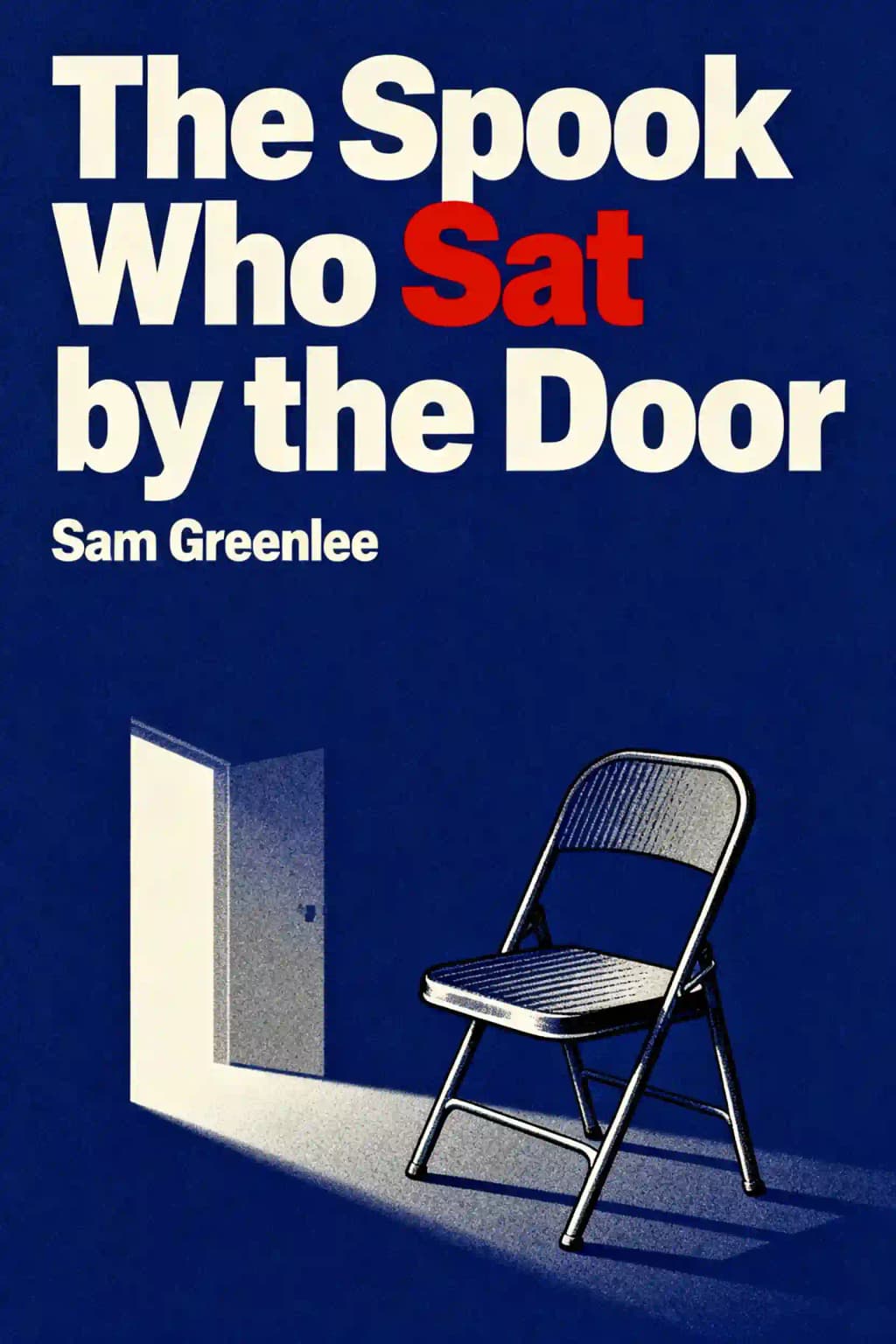
Spook Who Sat by the Door
Spook Who Sat by the Door 개요
Banned, blacklisted, yet impossible to silence - Sam Greenlee's revolutionary 1969 novel imagines a Black CIA officer using his training against oppression. Preserved in the National Film Registry, this continuously-printed cult classic remains shockingly relevant, challenging America's racial power structures with unflinching satire.

Spook Who Sat by the Door의 핵심 주제
- urban guerrilla warfare
- institutional racism
- strategic code switching
- intelligence agency infiltration
- black revolutionary politics
Spook Who Sat by the Door의 명언
He has simply "come to stay."
There are "holes in his mask."
Whites "saw in most Negroes exactly what they most wanted to see."
Black and conspicuous.
Real change requires a much longer and more subversive game.
Spook Who Sat by the Door의 등장인물
- Dan FreemanThe first Black CIA officer and secret subversive
- Senator Gilbert HenningtonPolitician who challenges CIA hiring practices
- Belinda HenningtonThe Senator's politically astute wife
- Carter SummerfieldThe Senator's Harvard-educated Black assistant
- Director PhillipsThe head of the CIA
저자 소개
Spook Who Sat by the Door의 저자 소개
Samuel Eldred Greenlee, Jr. (1930–2014) was the groundbreaking author of "The Spook Who Sat by the Door" and a former U.S. Foreign Service officer whose radical political fiction exposed systemic racism in American institutions. Born in Chicago, Greenlee served eight years with the United States Information Agency, working in Iraq, Pakistan, Indonesia, and Greece as one of the first Black officials stationed overseas.
His experiences with discrimination in government service directly informed the novel's satirical yet incisive portrayal of a Black CIA agent who uses his espionage training to lead a revolutionary movement. Published in 1969 after being rejected by dozens of mainstream publishers, the thriller blends political satire with social commentary on Black militancy, civil rights, and institutional racism.
Greenlee also authored "Baghdad Blues" (1976) and poetry collections including "Blues for an African Princess" (1971). He co-wrote and co-produced the 1973 film adaptation, which became a cult classic. The novel was notably adopted as required reading at the FBI Academy in Quantico, Virginia, cementing its influence on discussions of race, power, and resistance in America.
Spook Who Sat by the Door 요약 다운로드
Spook Who Sat by the Door 요약을 무료 PDF 또는 EPUB으로 받으세요. 인쇄하거나 오프라인에서 언제든 읽을 수 있습니다.
이 책에 대한 FAQ
The Spook Who Sat by the Door by Sam Greenlee tells the story of Dan Freeman, the first Black CIA agent recruited through a tokenistic integration program. After enduring years of marginalization in a desk job, Freeman returns to Chicago and secretly uses his CIA training in guerrilla warfare to organize and train street gangs for an armed resistance movement against systemic racial oppression. The novel combines thriller, satire, and social commentary.
The Spook Who Sat by the Door is essential reading for those interested in Black revolutionary literature, Civil Rights history, and radical political fiction. Readers seeking critical perspectives on systemic racism, institutional tokenism, and resistance movements will find value in Sam Greenlee's work. The novel appeals to students of African American studies, social justice activists, and anyone examining the intersection of race, identity, and power in American institutions.
The Spook Who Sat by the Door remains highly relevant as both a historical artifact and contemporary social commentary. Sam Greenlee's novel became required reading at the FBI Academy, demonstrating its lasting impact on understanding race relations and revolutionary tactics. The book offers powerful insights into tokenism, identity construction, and systemic oppression that continue to resonate decades after publication. Its influence on discussions about equity and justice makes it a worthwhile read.
Sam Greenlee (X'57–2014) was a former U.S. Army officer and United States Information Agency officer who spent eight years in the Foreign Service before writing The Spook Who Sat by the Door. Greenlee stated that Freeman's experiences in the CIA were identical to his own, with "everything in that book is an actual quote". He later collaborated with director Ivan Dixon on the 1973 film adaptation, maintaining the novel's revolutionary message and social analysis.
The title The Spook Who Sat by the Door carries three layers of meaning, according to Sam Greenlee.
- First, "spook" is a racial slur for Black people.
- Second, it's intelligence agency slang for a spy.
- Third, it references how "an armed revolution by Black people haunts White America".
The phrase "sat by the door" refers to tokenistic hiring practices where the first Black employee was placed visibly near entrances to showcase fake integration.
The Spook Who Sat by the Door explores betrayal, identity, and resistance as central themes. Freeman experiences betrayal from institutions that promised opportunity but delivered tokenism instead. The novel examines how Black American identity can be manipulated by power structures for political gain. Resistance emerges through collective action, as Freeman's "Organization" symbolizes grassroots empowerment against systemic oppression. Additional themes include affirmative action, social justice, and revolutionary tactics.
Dan "Turk" Freeman is the protagonist of The Spook Who Sat by the Door, a secretly Black nationalist who becomes the CIA's first Black officer. A Korean War veteran expert in hand-to-hand combat and former Michigan State football player, Freeman deliberately earns the highest grades in his CIA training class. He accepts a tokenistic desk job as Section Chief of the Top Secret Reproduction Center while planning to use his guerrilla warfare skills for revolutionary purposes.
Dan Freeman leaves the CIA in The Spook Who Sat by the Door after acquiring the skills necessary for revolutionary organizing. He works long enough to avoid suspicion about his true motives, then returns to Chicago to provide social services while secretly training street gangs. Freeman recognized he was merely a "token" used to demonstrate fake racial integration. His departure transforms him from an isolated intelligence officer into a radical leader organizing grassroots resistance against systemic oppression.
The Spook Who Sat by the Door critically examines tokenism through Dan Freeman's experience as the CIA's only Black officer, positioned to showcase phony integration. Sam Greenlee illustrates how institutions use token hires for public relations rather than genuine equality, placing Freeman in a visible but powerless desk job. The novel exposes affirmative action programs launched for political motives rather than authentic commitment to racial justice. Freeman's strategic use of his token status to gather revolutionary knowledge subverts the system's intentions.
The Spook Who Sat by the Door was published in 1969 during America's Civil Rights Movement, reflecting widespread unrest over racial inequality and growing radical sentiments among young activists frustrated with slow progress. Set in late 1960s and early 1970s Chicago under Mayor Richard J. Daley, the novel emerged alongside Third World independence movements and Black Power activism. Sam Greenlee's work captured the tension between integrationist and revolutionary approaches to achieving racial justice during this transformative period.
While The Spook Who Sat by the Door achieved cult classic status, it faced significant censorship and rejection from mainstream publishers before Allison & Busby published it in the UK. The novel's advocacy for armed revolutionary tactics and its portrayal of organized resistance made it controversial. The 1973 film adaptation faced suppression, reflecting establishment discomfort with its radical message. Some critics questioned whether the book's revolutionary approach could translate into practical social change versus symbolic resistance.
The Spook Who Sat by the Door remains relevant because it addresses systemic inequality, tokenism, and institutional racism that persist today. The novel's examination of how power structures perpetuate injustice through performative diversity resonates with ongoing discussions about police brutality, socioeconomic disparities, and authentic representation versus superficial inclusion. Sam Greenlee's insights into identity construction, surveillance, and grassroots organizing continue informing contemporary social justice movements, making the book essential reading for understanding structural oppression decades after publication.





