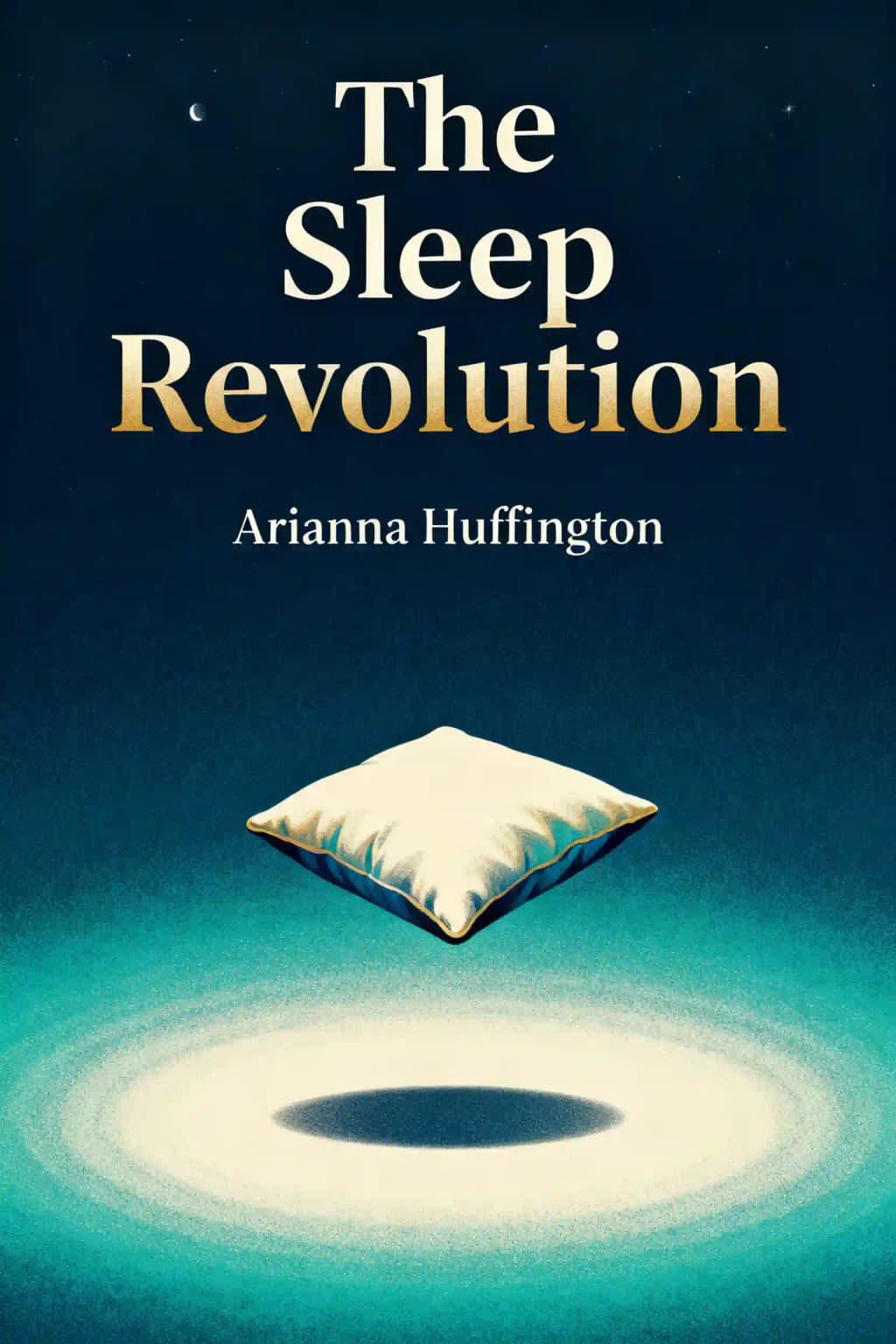
In "The Sleep Revolution," Arianna Huffington reveals why sleep deprivation is a global crisis. Did you know Nike and Zappos installed nap rooms after her influence? Discover why 99% of us can't function on little sleep - despite what corporate culture glorifies.
Arianna Huffington, New York Times bestselling author and founder of Thrive Global, explores the science of sleep and holistic well-being in The Sleep Revolution.
A Greek-born media entrepreneur and wellness advocate, Huffington transformed modern digital journalism as co-founder of The Huffington Post, which won a Pulitzer Prize under her leadership. Her pivot to sleep advocacy followed a personal collapse from exhaustion, fueling her mission to combat burnout through neuroscience-backed strategies.
The book merges sleep research with cultural analysis, reflecting her 15 published works on leadership, health, and societal change. Huffington’s insights reach millions through her LinkedIn thought leadership (ranked #8 U.S. CEO influencer) and Time 100 Most Influential People honors.
Thrive Global’s corporate partnerships with Fortune 500 companies and the translation of her works into 30+ languages, including Thrive and The Sleep Revolution, have redefined workplace wellness paradigms worldwide.
The Sleep Revolution explores the global sleep deprivation crisis, detailing how undervaluing sleep harms health, productivity, and relationships. Divided into two parts, it diagnoses cultural and scientific causes of poor sleep and offers actionable solutions like improved sleep hygiene, mindfulness practices, and technology boundaries. Huffington blends research, historical insights, and personal anecdotes to advocate for prioritizing rest.
This book is ideal for overworked professionals, chronic insomniacs, and health-conscious readers seeking science-backed strategies to improve sleep. It’s particularly relevant for those battling burnout, tech addiction, or workplace stress, as well as leaders aiming to foster healthier organizational cultures.
Yes. Huffington curates decades of sleep science into an accessible guide, offering fresh perspectives on familiar research. Her personal journey from sleep-deprived executive to sleep advocate adds credibility, while practical tips—like creating tech-free bedrooms or optimizing sleep environments—make it a actionable resource.
Key causes include:
Sleep enhances focus, decision-making, and creativity while reducing errors. Huffington cites studies showing well-rested employees outperform sleep-deprived peers, and leaders like Jeff Bezos prioritize 8-hour nights for strategic clarity.
Huffington advocates pre-sleep rituals like journaling or guided meditations to quiet the mind. The book’s appendices include sleep-focused mindfulness exercises and app recommendations to ease the transition into rest.
Some argue the science presented isn’t groundbreaking, but reviewers praise Huffington’s curation of existing research into a compelling narrative. Critics note it focuses more on individual habits than systemic change.
While Thrive broadly redefines success through well-being, The Sleep Revolution drills into sleep as a foundation for that vision. Both stress work-life balance, but the latter provides granular strategies for rest.
Despite advances in sleep tech, societal pressure to prioritize productivity over rest persists. The book’s warnings about tech addiction and burnout remain timely, offering a blueprint for navigating always-on cultures.
Yes. Huffington links sleep deprivation to irritability and poor communication, while quality rest fosters emotional regulation and empathy—key for personal and professional relationships.
저자의 목소리로 책을 느껴보세요
지식을 흥미롭고 예시가 풍부한 인사이트로 전환
핵심 아이디어를 빠르게 캡처하여 신속하게 학습
재미있고 매력적인 방식으로 책을 즐기세요
Sleep is not a luxury but a necessity.
Burnout equals success has made sleep an easy target.
I'll sleep when I'm dead.
College has become a training ground for burnout.
Sleep inequality follows economic inequality.
Sleep Revolution의 핵심 아이디어를 이해하기 쉬운 포인트로 분해하여 혁신적인 팀이 어떻게 창조하고, 협력하고, 성장하는지 이해합니다.
Sleep Revolution을 빠른 기억 단서로 압축하여 솔직함, 팀워크, 창의적 회복력의 핵심 원칙을 강조합니다.

생생한 스토리텔링을 통해 Sleep Revolution을 경험하고, 혁신 교훈을 기억에 남고 적용할 수 있는 순간으로 바꿉니다.
무엇이든 물어보고, 목소리를 선택하고, 진정으로 공감되는 인사이트를 함께 만들어보세요.

샌프란시스코에서 컬럼비아 대학교 동문들이 만들었습니다
"Instead of endless scrolling, I just hit play on BeFreed. It saves me so much time."
"I never knew where to start with nonfiction—BeFreed’s book lists turned into podcasts gave me a clear path."
"Perfect balance between learning and entertainment. Finished ‘Thinking, Fast and Slow’ on my commute this week."
"Crazy how much I learned while walking the dog. BeFreed = small habits → big gains."
"Reading used to feel like a chore. Now it’s just part of my lifestyle."
"Feels effortless compared to reading. I’ve finished 6 books this month already."
"BeFreed turned my guilty doomscrolling into something that feels productive and inspiring."
"BeFreed turned my commute into learning time. 20-min podcasts are perfect for finishing books I never had time for."
"BeFreed replaced my podcast queue. Imagine Spotify for books — that’s it. 🙌"
"It is great for me to learn something from the book without reading it."
"The themed book list podcasts help me connect ideas across authors—like a guided audio journey."
"Makes me feel smarter every time before going to work"
샌프란시스코에서 컬럼비아 대학교 동문들이 만들었습니다

Sleep Revolution 요약을 무료 PDF 또는 EPUB으로 받으세요. 인쇄하거나 오프라인에서 언제든 읽을 수 있습니다.
What if the very thing we brag about sacrificing is the foundation of everything we're trying to achieve? We've turned sleeplessness into a competitive sport, measuring our worth by how little rest we need. Type "why am I" into Google, and the first suggestion that appears is "why am I so tired?"-a collective cry from a civilization running on empty. We're living through a paradox: we know more about sleep than any generation before us, yet we're sleeping worse than ever. The science is clear and compelling-sleep isn't downtime, it's when our brains consolidate memories, flush out toxins, and restore our bodies for the challenges ahead. Yet somehow, we've convinced ourselves that sleep is negotiable, a luxury for the weak, time stolen from productivity. This delusion costs us dearly. After just 17 hours awake, our cognitive function resembles someone legally drunk. We're making life-altering decisions, driving cars, and raising children in states we'd never tolerate if alcohol were the cause. The question isn't whether we can afford to sleep more-it's whether we can afford not to.