1장
Unveiling the Divine Within: A Woman's Guide to Yoga's Sacred Wisdom
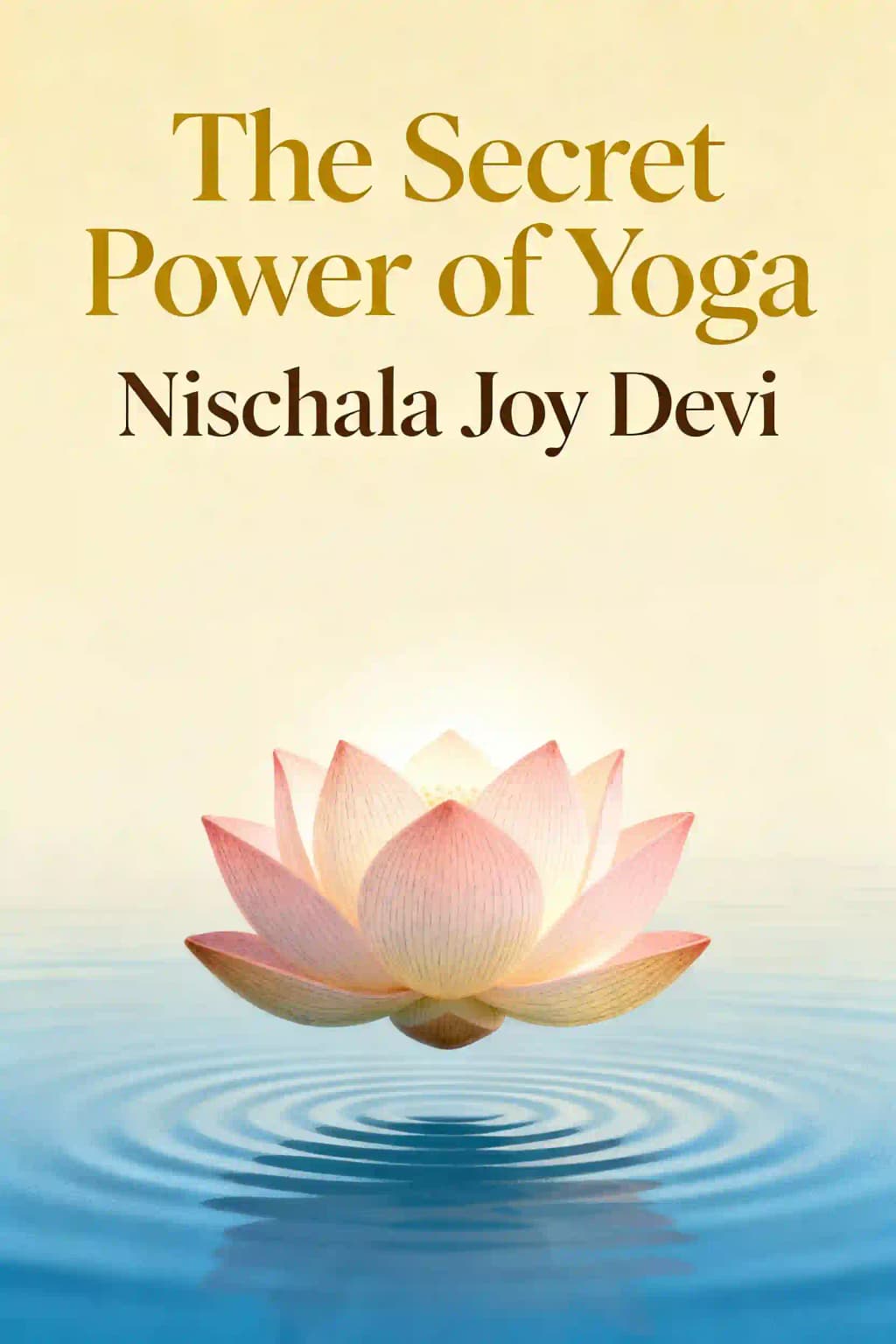
The Secret Power of Yoga isn't just another translation of ancient text-it's a revolutionary feminine perspective on spiritual wisdom that has traditionally been interpreted by and for men. When Nischala Joy Devi first published this groundbreaking work in 2007, she challenged centuries of male-dominated interpretations of Patanjali's Yoga Sutras. Her approach resonated deeply with the millions of women who now dominate modern yoga practice. What makes this book extraordinary is how Devi translates these teachings through the heart rather than the analytical mind, using what she calls the "English of the heart" rather than the conventional "English of the mind." This approach has made her work a favorite among celebrities like Oprah Winfrey and spiritual teachers like Deepak Chopra, who praise her ability to make these profound teachings accessible while preserving their transformative power. In a world increasingly hungry for authentic spiritual wisdom, Devi's interpretation stands as a beacon for those seeking to unite their humanity with their divinity.
2장
The Feminine Face of Spiritual Wisdom
For centuries, spiritual texts have been interpreted almost exclusively through the male lens. Like Yentl in the film who was denied access to sacred books, women have historically been excluded from spiritual interpretation. After thirty years of teaching yoga, Devi felt frustrated that virtually all aspects of yoga had been interpreted by and for men, despite women now comprising the majority of practitioners.
"Even today," Devi writes, "many religions separate the sexes in worship, and women's presence in holy texts remains minimal." This exclusion creates a disconnect for female practitioners seeking to relate to these teachings on a personal level.
What makes Devi's approach revolutionary is her willingness to interpret the sutras from a feminine perspective, emphasizing intuition, feeling, and heart-centered wisdom. Though not a Sanskrit scholar or academic, she recognized that throughout history, ordinary women have exhibited extraordinary intuitive powers as seers, healers, and visionaries. These gifts, once considered natural and honored, later inspired fear, leading to the persecution of women as "witches."
The author points out that gender-specific language in spiritual texts has contributed to the denigration of women throughout history. When masculine qualities are elevated as the only representation of the Divine, feminine aspects are given lesser roles. Her interpretation aims to neutralize these polarizing gender identifications, allowing everyone to see the Divine reflected in themselves.
This feminine approach transforms how we understand core concepts. For instance, where traditional translations emphasize "controlling the mind," Devi focuses on the heart as the holder of consciousness, suggesting that tenderness rather than harsh control liberates our true nature. She chooses terms like "consciousness" and "heart" where customary translations would use "mind" and "thoughts," embracing both thoughts and feelings rather than separating them.
By reclaiming the feminine perspective in spiritual teachings, Devi doesn't just offer an alternative interpretation-she restores balance to our understanding of yoga's profound wisdom, making it more accessible and relevant to practitioners of all genders.
3장
The Heart of Yoga: Union with the Divine Self
The essence of yoga, according to Devi, is far deeper than the physical postures that dominate Western practice. The word "sutra" relates to "suture," a thread that connects things. The Yoga Sutras weave together our material and spiritual lives into an inspiring tapestry that reveals our true nature.
"Yoga is the uniting of consciousness in the heart," Devi translates from the first sutra. This fundamental definition shifts our understanding from the common translation about "stilling the fluctuations of the mind" to something more profound-a heart-centered connection to our divine nature.
This perspective reveals that we are divine beings having a human experience, not humans striving for divinity. When consciousness is steadied in the heart, we abide in our true nature of joy. The text distinguishes between universal consciousness (Chit) and individual consciousness (Chitta), explaining that at birth we gather a portion of universal consciousness into our hearts, which returns to the ocean of consciousness at death.
Devi uses the metaphor of a clear mountain lake to illustrate pure consciousness. When still, the lake perfectly mirrors surrounding mountains, representing our divine nature in its undisturbed state. As wind (representing thoughts and emotions) disturbs the surface, the reflection becomes distorted. Eventually, this churning creates sandbars (samskaras)-habitual patterns and tendencies that become increasingly difficult to change.
The lotus flower emerges as a powerful symbol of spiritual unfolding-growing from muddy waters yet emerging perfectly clean, teaching us to be in the world but not affected by it. This mirrors our journey to recognize our divine nature while navigating human experience.
To experience this divine nature directly, Devi offers a mirror meditation where practitioners gaze softly into their own eyes in a dimly lit room to glimpse the Divine Light within. The practice includes affirming "I am a Divine Being" while looking into the mirror, helping to transform self-perception and relationships with others.
Through these teachings and practices, we come to understand that when humanity harmonizes with divinity, every moment and action becomes infused with spiritual essence. This is the true secret power of yoga-recognizing our divine nature and allowing it to transform our human experience.
4장
The Five Rays of Consciousness: Navigating Our Inner World
Our consciousness expands outward from the heart as we engage with the physical world, manifesting as five distinct rays that polarize as pleasant or unpleasant: knowledge, misunderstanding, imagination, deep sleep, and memory. Understanding these rays helps us navigate our inner landscape with greater awareness and purpose.
Knowledge, the first ray, embraces three aspects: personal experience (what we directly perceive), inference (what we deduce), and insights from the wise. Our personal experience comes through sensory information interpreted by mind and emotions, creating clear knowing when it resonates with our being. However, this knowledge can be tainted by unclear perception-explaining why witnesses to the same event often report different versions. The author notes that while we often seek wisdom from external sources like scriptures and teachers, "the greatest wisdom comes from our own hearts-the wisdom we cannot deny."
Misunderstanding, the second ray, causes considerable unpleasantness when we incorrectly interpret sensory input. Many long-standing resentments and family grudges persist due to misunderstandings, sometimes passing to subsequent generations. Devi advises listening carefully with heart and mind, seeking clarification when doubtful, and liberally applying forgiveness-recognizing that the mistake might be our own.
Imagination, the third ray, creates unlimited pleasant or unpleasant experiences. Worry represents its most common negative form, causing bodily stress responses. Yet imagination also powers healing and creativity. "Every creative person-whether thinker, artist, musician, gardener, cook, or mother-uses imagination to initiate creativity," Devi writes. "What appears to be daydreaming may actually be our most productive moment." As Einstein noted, "Imagination is more important than knowledge."
Deep sleep offers a blessed holiday from thoughts, emotions, and worries by completely letting go. This withdrawal from conscious awareness provides necessary time for the body to repair itself and for mind and emotions to release. Well-rested, we function more effectively and lovingly during waking hours.
Memory, the fifth ray, shapes our present and future through stored experiences. We choose which memories remain readily accessible and which are tucked into the unconscious. Without regular mental housekeeping, stored memories can anchor us in the past. Repressed unpleasant memories may be triggered unexpectedly, causing us to relive past discomfort and project it onto current situations. Conversely, deeply planted pleasant memories can radiate peace even during difficult times.
By understanding these five rays of consciousness, we gain insight into how our inner world functions and how we can work with these aspects more skillfully to create a harmonious experience of life.
5장
The Twin Wings of Spiritual Flight: Practice and Remembrance
To elevate consciousness, we need two complementary forces working in harmony: Abhyasa (devoted practice) and Vairagya (remembering the Self). Like two wings of the same bird, these practices enable us to soar when they move in rhythm.
Abhyasa, or devoted practice, cultivates the unfolding of consciousness through sustained rhythm and heart-centered dedication. The time spent daily in communion with ourselves becomes so integral that its absence leaves us unbalanced. True practice transcends mere repetition-like music requires more than a metronome's beat, our practice needs the heart's engagement to transform it. "When lavished with love," Devi writes, "ordinary practices become extraordinary, resonating deeply within us as striving ceases and the heart takes over."
To sustain dedicated practice, Devi recommends choosing activities that nourish your entire being. Honor your nature-devotional types might prefer chanting, intellectual types might study scriptures, and physical types might enjoy active asanas-but aim for a well-rounded balance. Simple repetition isn't enough; our practices must deepen through wholehearted engagement.
Vairagya, remembering our True Self, naturally leads to detachment from external desires as we recognize we're merely temporary caretakers of our possessions. Like a diamond that reflects light without being colored by it, we can enjoy life's treasures without binding to them. This perspective allows us to maintain emotional equilibrium-delighting in gifts when they come, feeling momentary upset when they depart, but quickly restoring balance through remembering our Divine Self.
Devi challenges the common translation of Vairagya as "nonattachment," which she considers a harsh misunderstanding that can promote coldness and avoidance. "True Vairagya isn't about withdrawing from life's sweetness in the name of spirituality," she explains. "We are simultaneously divine and human; spirit dances with nature, and its expression is joy!"
As newborns, we exist in Vairagya, remembering ourselves as Divine Light with wonder and openness. Only gradually do we accumulate social conditioning that forces us into a lifelong balancing act between our divinity and society's rules.
The more we remember our Divine Self, the more brightly our inner light shines, allowing us to remain unaffected by external changes. The three gunas-Tamas (inactivity), Rajas (overactivity), and Sattwa (balance)-constantly cycle through nature and ourselves like waves crashing on shore. When we identify with our True Self rather than these shifting states, we can observe and transcend their tumultuous movement, finding the steadiness we long for.
Through the balanced practice of Abhyasa and Vairagya, we develop the skill and assurance to navigate life's challenges while maintaining our connection to our divine nature.
6장
The Path of Devotion: Opening the Heart to the Divine
Bhakti Yoga, the Yoga of Devotion, offers one of the most accessible and enjoyable paths to merge with the infinite. Through boundless love and devotion, we unite with Divine Consciousness, which is self-effulgent like the sun and embodies all knowledge, wisdom, and love.
Though Bhakti Yoga may seem mysterious to some, its message is simple-opening our hearts, something we're born knowing how to do but often lose in adulthood. Contrary to misconceptions, Bhakti is the most widely practiced form of yoga worldwide, accessible to everyone from the simple to the clever. While sometimes associated with emotional displays like weeping or ecstatic chanting, true devotion transcends mere emotion to recognize the Divine in every being.
"Like a flower bud protecting itself," Devi explains, "our hearts often remain closed to shield against life's harshness, but through continuous nurturing of deep devotion, they can gradually unfold into full blossoms of beauty."
Unlike more structured practices, there's no right or wrong way to express love for the Divine and creation. Each person's relationship with the Divine is unique-some experience it as mother, father, or friend; some give it name and form while others perceive it as nameless and formless. Through outward devotion, we gradually discover the Divine dwelling within us, first appearing in small acts of kindness before we recognize our complete oneness with it.
A compassionate heart, often symbolized by the female heart, represents devotion in most traditions. Even young girls intuitively show care for small creatures. Motherhood stands as the apex of this love and compassion, exemplified by the Madonna and child imagery that offered worshippers a compassionate alternative to wrathful divine images.
Words carry immense power to affect our emotions-a kind word brings smiles, a cruel one tears. Sacred texts affirm this power: "In the beginning was Brahman as the sound" echoes the Bible's "In the beginning was the word." Ancient places of worship hold special vibrations from countless prayers that elevate our minds and hearts. These sacred sound vibrations-mantras-transcend intellectual meaning, invoking celestial resonance that transports us to higher consciousness.
The sacred sound "Om," revered as the source from which all sounds emanate, awakens universal consciousness through its four components: A (formed at the back of the tongue), U (moving forward in the mouth), M (hummed with closed lips), and the silent vibration after the sound. This progression forms a trinity similar to body-mind-spirit or creator-preserver-destroyer, with the final silent vibration representing our merging with the infinite.
When expressed with great devotion, these sacred sounds reveal our divine nature. The real secret to mantra practice is an open heart-while we may initially focus on correct pronunciation, the essential ingredient is devotion. Through faithful repetition with devotion, our inner light begins to shine luminously, revealing the secret power of the universe.
7장
The Eight-Faceted Path: Integrating Spiritual Wisdom into Daily Life
Asthaanga Yoga offers the practical application of Yogic Wisdom through eight dynamic facets that function interdependently like a grove of trees whose roots are connected below the surface while appearing separate above ground. These eight facets provide a comprehensive framework for integrating spiritual principles into every aspect of our lives.
The first two facets-Yama and Niyama-are compared to two brilliant-cut diamonds meshed at the top. Each diamond has a pinnacle representing its foremost quality: Ahimsa (reverence for all) for Yama and Iswara Pranidhana (dedication to the Divine) for Niyama. When we practice Ahimsa, the other four qualities of Yama-Satya (truthfulness), Astheya (generosity), Brahmacharya (moderation), and Aparigraha (abundance)-naturally emerge. Similarly, Iswara Pranidhana conveys the essence of the other four Niyamas: Saucha (simplicity), Santosha (contentment), Tapas (purification), and Swadhaya (sacred study).
Devi challenges the simplistic view of Yamas and Niyamas as the "do's and don'ts of Yoga" or "ten commandments of Yoga," explaining that these are not finger-wagging prohibitions but tributes to our divine nature. She chooses to translate these principles using positive, life-affirming language rather than negative phrasing, noting that our minds often focus on the prohibited action rather than the desired behavior.
A powerful practice for transforming difficult relationships is Pratipaksha Bhavana-cultivating an opposite, elevated attitude. Devi shares a personal example of mentally placing flower garlands over the head of a grumpy monk who resented taking direction from women. This secret "worship" transformed her reaction from dread to peace, and eventually transformed their relationship.
The next three facets-Asana (comfort in being), Pranayama (enhancement of universal energy), and Pratyahara (drawing senses inward)-form what's known as Hatha Yoga. These practices increase vital energy by aligning physical and subtle bodies through poses, enhancing life force through breathing, and drawing senses inward through relaxation.
Asana practice helps the body, mind, and breath function together, releasing blockages and allowing energy to flow. Pranayama works with prana, the universal energy that inhabits and surrounds each cell of our body. Through rhythmic inhalation and exhalation, with slight hesitation between, prana circulates within and between our physical and subtle bodies, creating a harmonious flow of energy.
Pratyahara entices the senses to draw inward as a prelude to meditation. Since more than 75 percent of external information comes through sight, redirecting vision internally encourages other senses to follow. As our senses become refined through inward practice, they develop extraordinary perception.
The final three facets-Dharana (focusing consciousness inward), Dhyana (continuous inward flow of consciousness), and Samadhi (union with Divine Consciousness)-are not practices to "do" but progressive internal states that evolve naturally from earlier cultivated practices. When they seamlessly flow from one to another, it's called Samyama (fusion), where "doing" transforms into "being."
Through this eight-faceted path, we integrate divine consciousness with our humanity, creating a life that reflects our highest spiritual aspirations in every thought, word, and deed.
8장
The Journey to Liberation: From Practice to Divine Union
The ultimate goal of yoga is Samadhi-the complete union of individual consciousness with Divine Consciousness. This state transcends language and description-it can only be known through direct experience. Like sugar dissolving in water creates something new yet inseparable, when our consciousness merges with the Divine, the distinction between individual consciousness (chitta) and eternal consciousness (chit) dissolves completely.
The journey toward this state progresses through increasingly subtle stages. It begins with Dharana (contemplation), where we gather consciousness and focus it within. This isn't something we "do" like a meditation technique, but rather a state that emerges organically when the groundwork has been laid through the preceding practices. Like a rosebud that cannot be forced to bloom by peeling its petals, our spiritual unfoldment requires patience and nurturing.
With continued practice, Dharana naturally evolves into Dhyana (meditation), where consciousness flows continuously inward. While Dharana offers only brief moments of inner awareness-like oil plopping intermittently from a vessel-Dhyana creates a continuous stream of consciousness flowing back to its divine source. This extended inner awareness strengthens our identification with the Divine, leaving us perpetually rooted within even after formal meditation ends.
Eventually, this deepening awareness leads to various states of Samadhi. In Sabija Samadhi (with seed), the bliss of these higher states is temporary-our ordinary consciousness can return at any moment. These states have limited power to sustain elevated consciousness indefinitely, lasting minutes or days before awareness returns to individual consciousness.
The highest state is Nirbija Samadhi (seedless), where the immortal Divine Self shines forth. All seeds and Samskaras (past impressions) have been rendered impotent. Unlike Sabija Samadhis which retain a subtle awareness of "I," in Nirbija Samadhi the illusions of birth and death vanish, leaving only knowledge of the immortal Divine Self. Living in this state, we emanate total compassion and love, with hearts and minds forever united with the Divine Consciousness we perceive in all.
Along this journey, various psychic and spiritual powers (siddhis) may emerge-abilities like clairvoyance, clairaudience, or even levitation. While these powers can evaluate spiritual progress, we're strongly advised not to dwell on them as they distract from realizing the Divine Self. The ultimate goal remains knowledge of the Divine Self, not the circus of meditation's side effects.
The final stage of liberation, Kaivalya, manifests when the gunas (attributes of nature) become impotent and reabsorb themselves into Prakriti (nature), revealing the exalted consciousness shining forth as Divine Light. In this state, time becomes irrelevant as past and future merge into the present moment, where all knowledge and wisdom reside. We recognize our true nature as limitless and infinite spirit, radiating supreme wisdom and becoming a beacon of light serving humanity while maintaining the wisdom and radiance of the Divine Self.
Through dedicated practice, heart-centered devotion, and the gradual refinement of consciousness, we journey from our limited human perception to the boundless expanse of our divine nature-the secret power that yoga ultimately reveals.
9장
The Divine Light Within: Living Your Spiritual Truth
The Yoga Sutras reveal themselves as experiential wisdom rather than mere philosophy. Like a compass pointing to our divine nature, each revisiting brings deeper heart-centered understanding. The journey culminates in living with love and joy, fully aware of our divine nature.
Karma Yoga (selfless service) transforms the law of karma by redirecting the effects of our actions. If we must reap what we sow, let us sow seeds of sweetness. True Karma Yoga means doing our best without expecting praise or seeking reward-the deed is done for its own sake. Before giving selflessly, our hearts must open to recognize others' needs, honoring them by providing what they ask without judgment.
Whatever service you perform should align with your spiritual path-sacrificing inner convictions for money leaves you feeling perpetually in debt. The money you earn carries the vibration of your work. If necessity forces you to work against your principles, bless each action to infuse it with awareness. When you perform any action, offer all results to the highest good.
Jnana Yoga (intuitive wisdom) empowers us to expand beyond the constantly changing natural world to the abode of the Divine Spirit. When we direct our lives from Intuitive Wisdom, nothing is deemed good or bad-we simply observe the tossing gunas. Like learning to ride a bicycle, what once seemed impossible becomes natural and joyful. The real power manifests when we expand beyond nature's constant changes and ground ourselves in our Intuitive Wisdom.
Through these practices, we come to recognize the distinction between our True Self and the fluctuating chitta (individual consciousness). The chitta, like a mirror, can only reflect light rather than generate it. When the self-effulgent light of the True Self within our hearts is revealed, it radiates outward, illuminating everything around us, both animate and inanimate.
As we evolve spiritually, even the chitta that was once satisfied with Maya (illusion) begins to seek liberation. Desires become less seductive, like a child who loses interest in toys when a puppy enters the room. Once we glimpse the possibility of freedom, all desires-large and small-appear as bondage compared to the great liberation that awaits us.
The final stage of liberation, Kaivalya, manifests when the gunas (attributes of nature) become impotent and reabsorb themselves into Prakriti (nature), revealing the exalted consciousness shining forth as Divine Light. In this state, time becomes irrelevant as past and future merge into the present moment, where all knowledge and wisdom reside.
As Swami Vivekananda said, nature's unselfish task guides the self-forgetting soul through various experiences until "its lost glory comes back and it remembers its own nature." Through the practices and wisdom of the Yoga Sutras, we remember our divine nature and live from that place of truth, love, and joy-the secret power that transforms not only our own lives but radiates outward to heal and uplift the world around us.







![[PDF] Means to Liberation by Four Yogas and the Uniqueness of Swami ...](/_next/image?url=https%3A%2F%2Fd1y2du6z1jfm9e.cloudfront.net%2Fassets%2Fpodcast%2Fblue.png&w=1024&q=50)


