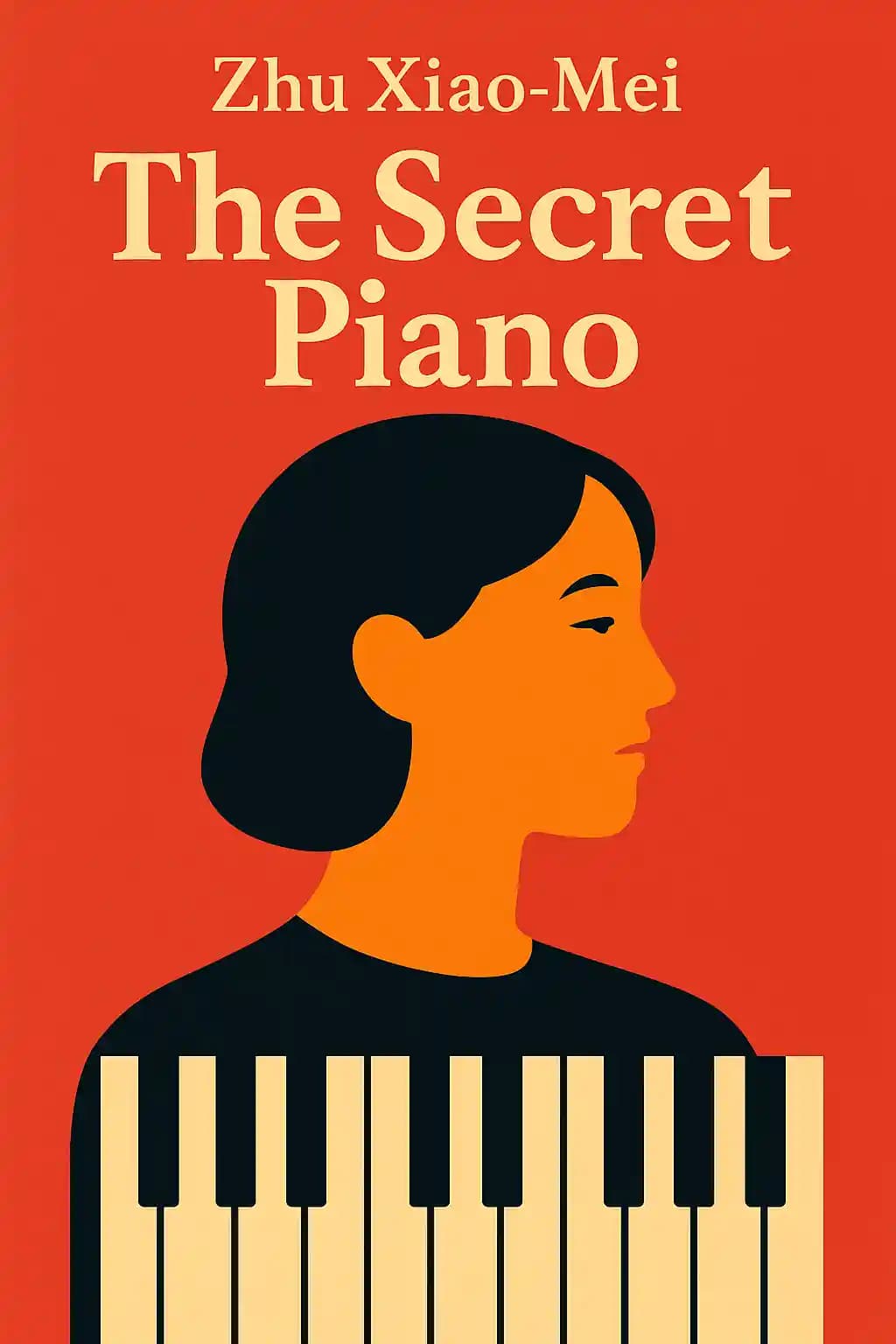
During Mao's Cultural Revolution, pianist Zhu Xiao-Mei survived labor camps by secretly playing Bach. Her memoir - structured like the 30 Goldberg Variations she mastered - reveals how music became her salvation when everything else was forbidden.
저자의 목소리로 책을 느껴보세요
지식을 흥미롭고 예시가 풍부한 인사이트로 전환
핵심 아이디어를 빠르게 캡처하여 신속하게 학습
재미있고 매력적인 방식으로 책을 즐기세요
Picture a three-year-old girl standing before an enormous wooden box that barely fit through the doorway of her family's cramped Beijing apartment. The piano sat like a forbidden shrine in a space where seven people shared just two rooms and one toilet with eleven families. She watched her mother dust it religiously each morning, adorning it with paper flowers like an ancestral altar, yet never playing a single note. Why keep such a monster if it remained forever silent? The answer was dangerous. In Mao's China of the 1950s, owning a piano meant carrying the stain of "bad class background"-a permanent mark against families who had once embraced Western culture. Zhu Xiao-Mei's grandfathers had built fortunes in furniture manufacturing and import-export, immersing themselves in European arts. Now, that heritage could destroy them. Her father remained unemployed, emotionally distant, following strict Confucian principles that demanded absolute obedience. Her mother supported the family teaching music while hiding her own bourgeois education. Everything shifted one stormy evening when her mother finally sat at the piano and played Schumann's "Reverie." The gentle notes awakened something profound in the child-perhaps inherited memory, perhaps universal truth. She knew immediately she wanted to master this singing creature. Her mother's teaching method made music magical: each note represented a family member, transforming abstract theory into living relationships. Under her father's harsh discipline, only piano playing brought peace-perhaps the music reminded him of his parents' better life before revolution consumed everything.
The Secret Piano의 핵심 아이디어를 이해하기 쉬운 포인트로 분해하여 혁신적인 팀이 어떻게 창조하고, 협력하고, 성장하는지 이해합니다.
The Secret Piano을 빠른 기억 단서로 압축하여 솔직함, 팀워크, 창의적 회복력의 핵심 원칙을 강조합니다.

생생한 스토리텔링을 통해 The Secret Piano을 경험하고, 혁신 교훈을 기억에 남고 적용할 수 있는 순간으로 바꿉니다.
무엇이든 물어보고, 목소리를 선택하고, 진정으로 공감되는 인사이트를 함께 만들어보세요.

샌프란시스코에서 컬럼비아 대학교 동문들이 만들었습니다
"Instead of endless scrolling, I just hit play on BeFreed. It saves me so much time."
"I never knew where to start with nonfiction—BeFreed’s book lists turned into podcasts gave me a clear path."
"Perfect balance between learning and entertainment. Finished ‘Thinking, Fast and Slow’ on my commute this week."
"Crazy how much I learned while walking the dog. BeFreed = small habits → big gains."
"Reading used to feel like a chore. Now it’s just part of my lifestyle."
"Feels effortless compared to reading. I’ve finished 6 books this month already."
"BeFreed turned my guilty doomscrolling into something that feels productive and inspiring."
"BeFreed turned my commute into learning time. 20-min podcasts are perfect for finishing books I never had time for."
"BeFreed replaced my podcast queue. Imagine Spotify for books — that’s it. 🙌"
"It is great for me to learn something from the book without reading it."
"The themed book list podcasts help me connect ideas across authors—like a guided audio journey."
"Makes me feel smarter every time before going to work"
샌프란시스코에서 컬럼비아 대학교 동문들이 만들었습니다

The Secret Piano 요약을 무료 PDF 또는 EPUB으로 받으세요. 인쇄하거나 오프라인에서 언제든 읽을 수 있습니다.