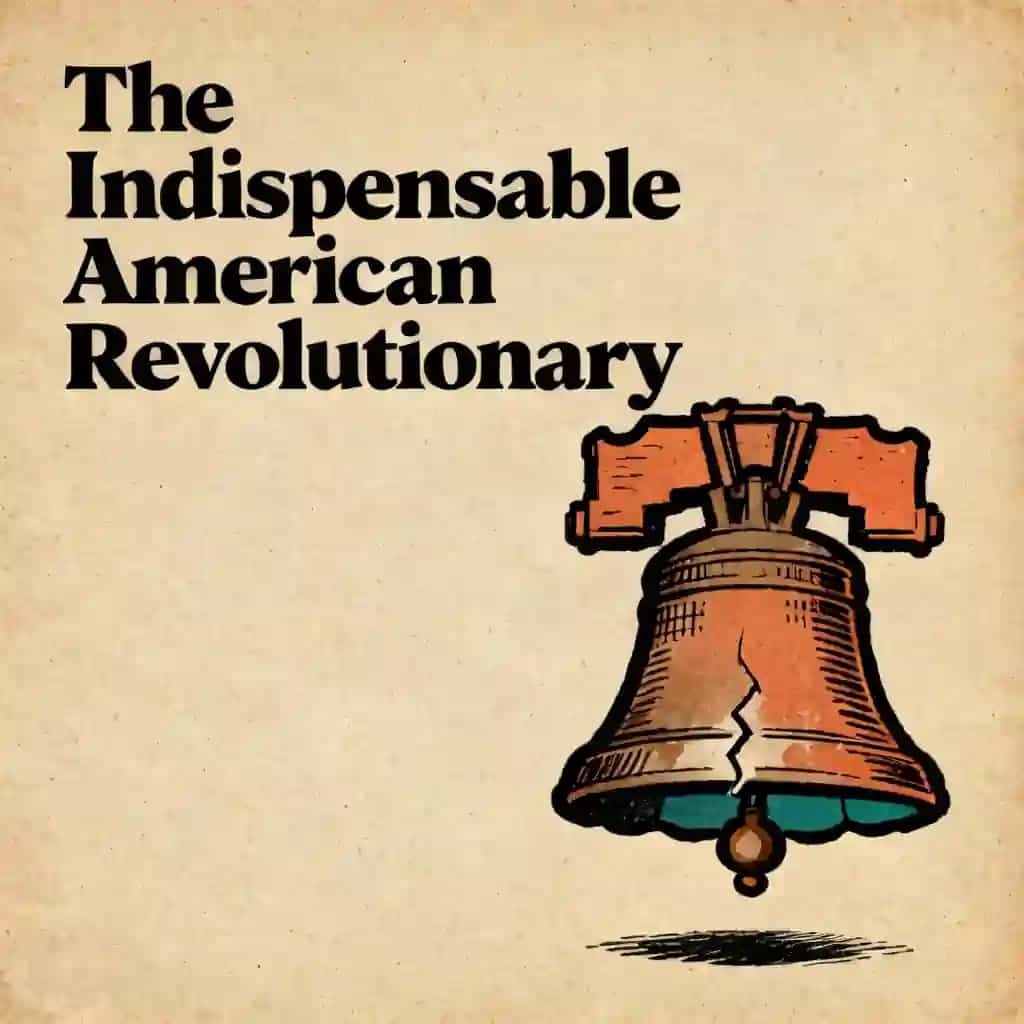
Stacy Schiff's masterful biography resurrects Samuel Adams - the "most essential Founding Father" according to Ron Chernow. TIME's "Must-Read of 2022" reveals how this enigmatic revolutionary, whose personal documents were intentionally destroyed, became what Thomas Jefferson called "the true leader of the Revolution."
Stacy Madeleine Schiff, Pulitzer Prize-winning author of The Revolutionary: Samuel Adams, is renowned for her meticulously researched biographies of iconic historical figures. A Williams College graduate and former Simon & Schuster senior editor, Schiff specializes in illuminating complex personalities and pivotal moments in history, from ancient Egypt to America’s founding.
Her expertise in blending rigorous scholarship with narrative flair has earned accolades, including the 2000 Pulitzer for Véra (Mrs. Vladimir Nabokov) and widespread praise for Cleopatra: A Life, a #1 bestseller translated into 30 languages.
The Revolutionary—hailed as "enthralling" by The New York Times and named a 2022 favorite by President Obama—showcases Schiff’s ability to revitalize foundational narratives, cementing her reputation as a master of biographical storytelling. Her other works, including The Witches: Salem, 1692 and A Great Improvisation, further demonstrate her command of historical drama and political intrigue.
Schiff’s books have been finalists for the George Washington Book Prize and featured in top media outlets like The Wall Street Journal and NPR. A Guggenheim Fellow and American Academy of Arts and Letters honoree, she resides in New York City, where she continues to transform archival detective work into critically acclaimed bestsellers.
The Revolutionary: Samuel Adams explores the life of Samuel Adams, a pivotal but often overlooked Founding Father who orchestrated colonial resistance through propaganda, political strategy, and grassroots organizing. The book highlights his role in events like the Boston Tea Party and his ability to unify colonies against British rule, framing him as the "moral backbone" of the American Revolution.
History enthusiasts, American Revolution scholars, and readers interested in leadership tactics will find this book compelling. Schiff’s vivid storytelling appeals to those seeking a deeper understanding of pre-revolutionary politics, propaganda’s role in social movements, and the complexities of founding-era figures.
Yes—Schiff’s Pulitzer-winning prose and meticulous research make this biography both authoritative and engaging. Praised as a "tour de force" (Wall Street Journal) and "enthralling" (NYT), it balances scholarly depth with narrative flair, revitalizing Adams’s legacy for modern audiences.
Adams masterminded colonial unity through writings, protests, and covert networks. He leveraged events like the Boston Massacre and Tea Party to galvanize anti-British sentiment, authored influential essays, and co-founded the Sons of Liberty. His ability to frame grievances as moral crises proved critical to mobilizing resistance.
Schiff depicts Adams as a pragmatic idealist: a cautious strategist who avoided public confrontations but excelled at behind-the-scenes manipulation. His use of pseudonyms, newspapers, and symbolic acts (e.g., the Tea Party) positioned him as a revolutionary architect rather than a traditional figurehead.
Some historians argue Schiff overemphasizes Adams’s centrality to the Revolution, downplaying collaborators like John Hancock. Others note the book’s narrow focus on Boston-specific events, which may oversimplify broader colonial dynamics.
Unlike older biographies, Schiff emphasizes Adams’s psychological complexity and mastery of propaganda. She challenges his "radical rabble-rouser" stereotype, instead framing him as a calculated dissident who balanced idealism with political realism.
Adams covertly orchestrated the Tea Party as political theater, using the destruction of British tea to protest taxation without representation. The act cemented colonial solidarity and forced Britain into punitive measures that further unified resistance.
Schiff analyzes Adams’s essays, pamphlets, and letters as deliberate propaganda tools. His works, often published under pseudonyms, framed British policies as existential threats to liberty, skillfully blending Enlightenment philosophy with populist rhetoric.
While not explicitly stated, Schiff’s portrayal of Adams’s media manipulation and grassroots organizing invites comparisons to modern activism. His tactics—using symbolic acts, controlling narratives, and leveraging public outrage—mirror contemporary political strategies.
The book details Adams’s alliances and rivalries, notably his fraught partnership with John Hancock. Schiff contrasts Adams’s austere, ideological demeanor with Franklin’s diplomacy and Washington’s military focus, underscoring his unique role as a revolutionary catalyst.
The title reflects Adams’s unmatched ability to radicalize colonial sentiment through incremental steps. Unlike peers who sought compromise, Adams viewed independence as inevitable, relentlessly pushing boundaries until revolution became the only viable path.
저자의 목소리로 책을 느껴보세요
지식을 흥미롭고 예시가 풍부한 인사이트로 전환
핵심 아이디어를 빠르게 캡처하여 신속하게 학습
재미있고 매력적인 방식으로 책을 즐기세요
Adams insisted on a crucial equation: a corrupt people could not remain free.
Liberty was his anthem—"a charming sound" that mankind fought for with zeal.
"This Samuel Adams...is the most dangerous man in Massachusetts."
"Let the people keep a watchful eye over the conduct of their rulers..."
"He therefore is the truest friend to the liberty of his country who tries most to promote its virtue"
Revolutionary Samuel Adams의 핵심 아이디어를 이해하기 쉬운 포인트로 분해하여 혁신적인 팀이 어떻게 창조하고, 협력하고, 성장하는지 이해합니다.
Revolutionary Samuel Adams을 빠른 기억 단서로 압축하여 솔직함, 팀워크, 창의적 회복력의 핵심 원칙을 강조합니다.

생생한 스토리텔링을 통해 Revolutionary Samuel Adams을 경험하고, 혁신 교훈을 기억에 남고 적용할 수 있는 순간으로 바꿉니다.
무엇이든 물어보고, 목소리를 선택하고, 진정으로 공감되는 인사이트를 함께 만들어보세요.

샌프란시스코에서 컬럼비아 대학교 동문들이 만들었습니다
"Instead of endless scrolling, I just hit play on BeFreed. It saves me so much time."
"I never knew where to start with nonfiction—BeFreed’s book lists turned into podcasts gave me a clear path."
"Perfect balance between learning and entertainment. Finished ‘Thinking, Fast and Slow’ on my commute this week."
"Crazy how much I learned while walking the dog. BeFreed = small habits → big gains."
"Reading used to feel like a chore. Now it’s just part of my lifestyle."
"Feels effortless compared to reading. I’ve finished 6 books this month already."
"BeFreed turned my guilty doomscrolling into something that feels productive and inspiring."
"BeFreed turned my commute into learning time. 20-min podcasts are perfect for finishing books I never had time for."
"BeFreed replaced my podcast queue. Imagine Spotify for books — that’s it. 🙌"
"It is great for me to learn something from the book without reading it."
"The themed book list podcasts help me connect ideas across authors—like a guided audio journey."
"Makes me feel smarter every time before going to work"
샌프란시스코에서 컬럼비아 대학교 동문들이 만들었습니다

Revolutionary Samuel Adams 요약을 무료 PDF 또는 EPUB으로 받으세요. 인쇄하거나 오프라인에서 언제든 읽을 수 있습니다.
Samuel Adams remains history's most consequential revolutionary hiding in plain sight. While Washington commanded armies and Jefferson penned declarations, it was Adams who meticulously engineered the American Revolution through sheer political genius. In 1775, a British officer identified him as "the most dangerous man in Massachusetts" - evasive yet blunt, gracious yet inflexible, poor yet incorruptible. Despite being hailed by Jefferson as "truly the man of the Revolution," Adams has faded from our founding mythology, partly by his own design. He destroyed his papers to protect associates and focused on collective action rather than personal glory. Unlike his cousin John Adams or Thomas Jefferson, Samuel never sought the spotlight after independence, allowing his pivotal role to be obscured. Today, historians are rediscovering the mastermind who calculated exactly what was needed to upend an empire - a failed businessman who, at forty-one, transformed into America's premier revolutionary strategist.