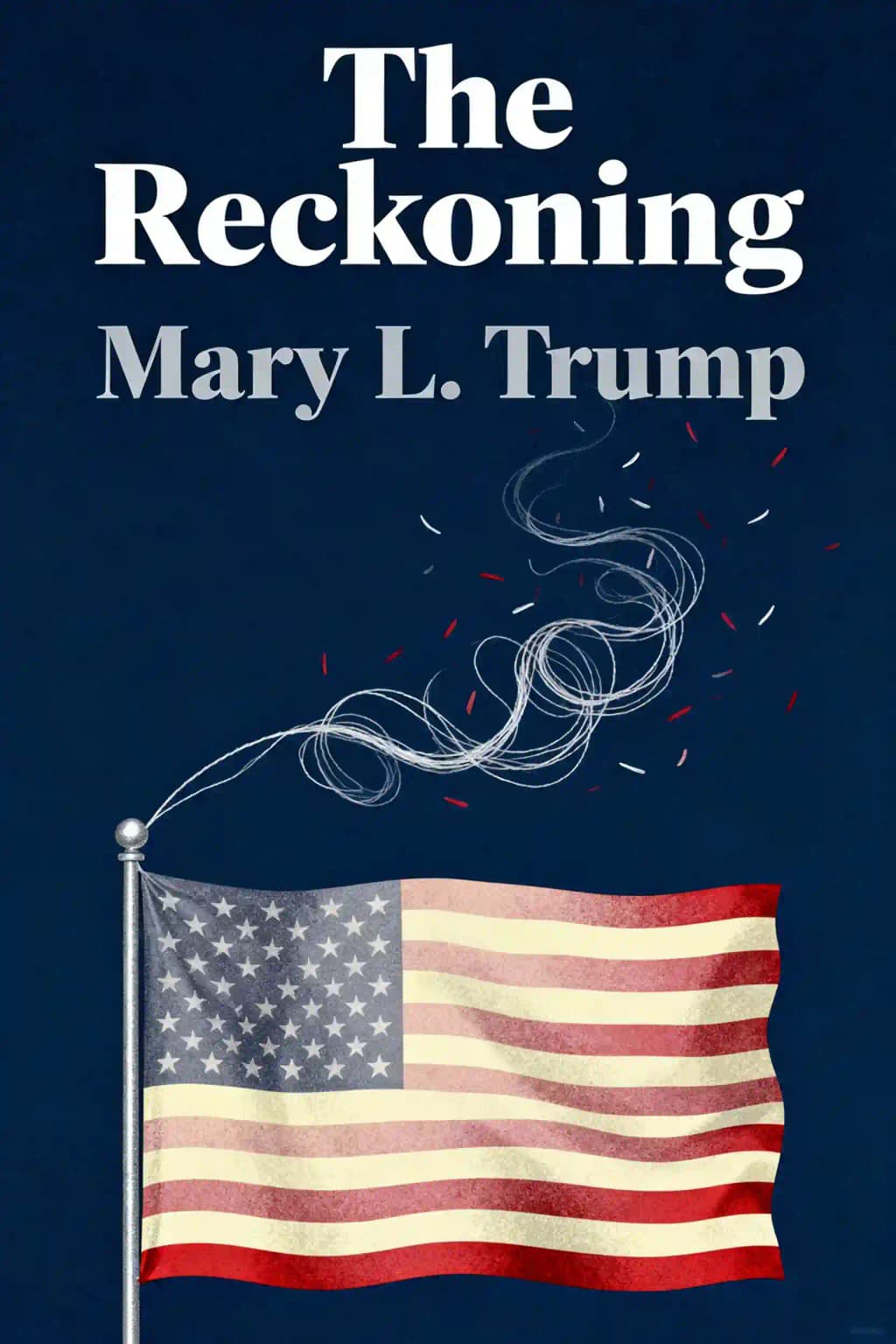
Mary L. Trump's bestselling expose diagnoses America's collective trauma under her uncle's presidency. A clinical psychologist's unflinching examination of historical wounds - from slavery to fascism - that still haunt us. Can we heal a nation divided by its darkest impulses?
Mary Lea Trump, clinical psychologist and bestselling author of The Reckoning: Our Nation’s Trauma and Finding a Way to Heal, combines her expertise in trauma and psychopathology with incisive cultural analysis. A graduate of Tufts University and Adelphi University, where she earned her PhD in clinical psychology, Trump draws on her academic background and family insights to explore systemic racism, historical trauma, and healing in America.
Her debut book, Too Much and Never Enough: How My Family Created the World’s Most Dangerous Man (2020), became an instant #1 bestseller, selling over one million copies on its first day and sparking global discourse on power dynamics in the Trump family.
Trump’s work extends to her podcast The Mary Trump Show, where she critiques politics and societal structures, and her contributions to the clinical anthology Diagnosis: Schizophrenia. Her third book, Who Could Ever Love You (2024), further dissects familial legacy and personal identity. Known for blending memoir with sharp social commentary, Trump’s writing has been cited in major outlets like The New York Times and The Guardian. The Reckoning solidified her reputation as a bold voice in American cultural reckoning, reaching bestseller lists and igniting debates on historical accountability.
The Reckoning analyzes America’s collective trauma stemming from historical injustices like slavery, Indigenous genocide, and systemic racism, alongside modern crises like Donald Trump’s presidency and the COVID-19 pandemic. Mary L. Trump, a clinical psychologist and Trump’s niece, argues that unaddressed generational trauma has led to national PTSD, urging accountability and reparations to begin healing.
This book is ideal for readers interested in political psychology, social justice, or U.S. history. It appeals to those analyzing Trump’s presidency, advocates for racial equity, and individuals exploring trauma’s societal impacts. Critics of partisan polarization will also find its critiques of Republican leadership compelling.
She links events like slavery and Native American displacement to contemporary issues, such as systemic racism and political divisiveness. For example, she critiques Trump-era policies that weakened Indigenous land protections and exacerbated racial tensions, framing these as extensions of unhealed historical wounds.
Mary L. Trump uses PTSD as a metaphor for America’s unresolved trauma, arguing that unprocessed historical injustices—combined with crises like the Capitol insurrection and pandemic—have created a cycle of dysfunction. She emphasizes that healing requires confronting painful truths, not avoiding them.
Yes. The book condemns Trump’s handling of COVID-19, his erosion of democratic norms, and his exploitation of racial divisions. Mary L. Trump describes him as a “grievance-driven” leader who amplified national trauma through incompetence and malice.
Key recommendations include:
Mary L. Trump stresses that progress requires white Americans to acknowledge racial privilege and support structural reforms.
As both a psychologist and Trump’s niece, she blends personal anecdotes with clinical analysis. Her family experiences—including financial disputes and familial dysfunction—lend credibility to her critique of Donald Trump’s character and leadership.
While critical of GOP complicity in Trump’s actions, the book also critiques Democratic shortcomings, such as Barack Obama’s failure to address post-9/11 war crimes or financial corruption. However, its sharpest rebukes target Republican leaders enabling authoritarianism.
Mary L. Trump advocates for reparations as a moral imperative, citing systemic inequities in wealth, education, and criminal justice. She argues that financial compensation alone isn’t enough—truth-telling and policy reforms must accompany it.
While her debut focused on Trump family dysfunction, The Reckoning broadens its scope to national trauma. Both books blend memoir and analysis, but the latter offers more prescriptive solutions for societal healing.
The book remains timely amid ongoing debates about racial justice, political accountability, and mental health in public policy. Its warnings about authoritarianism and unhealed divisions resonate in post-Trump political landscapes.
저자의 목소리로 책을 느껴보세요
지식을 흥미롭고 예시가 풍부한 인사이트로 전환
핵심 아이디어를 빠르게 캡처하여 신속하게 학습
재미있고 매력적인 방식으로 책을 즐기세요
Our current national trauma stems from unreconciled history, perpetuated myths, and the unchecked impunity of the powerful.
Reckoning의 핵심 아이디어를 이해하기 쉬운 포인트로 분해하여 혁신적인 팀이 어떻게 창조하고, 협력하고, 성장하는지 이해합니다.
Reckoning을 빠른 기억 단서로 압축하여 솔직함, 팀워크, 창의적 회복력의 핵심 원칙을 강조합니다.

생생한 스토리텔링을 통해 Reckoning을 경험하고, 혁신 교훈을 기억에 남고 적용할 수 있는 순간으로 바꿉니다.
무엇이든 물어보고, 목소리를 선택하고, 진정으로 공감되는 인사이트를 함께 만들어보세요.

샌프란시스코에서 컬럼비아 대학교 동문들이 만들었습니다
"Instead of endless scrolling, I just hit play on BeFreed. It saves me so much time."
"I never knew where to start with nonfiction—BeFreed’s book lists turned into podcasts gave me a clear path."
"Perfect balance between learning and entertainment. Finished ‘Thinking, Fast and Slow’ on my commute this week."
"Crazy how much I learned while walking the dog. BeFreed = small habits → big gains."
"Reading used to feel like a chore. Now it’s just part of my lifestyle."
"Feels effortless compared to reading. I’ve finished 6 books this month already."
"BeFreed turned my guilty doomscrolling into something that feels productive and inspiring."
"BeFreed turned my commute into learning time. 20-min podcasts are perfect for finishing books I never had time for."
"BeFreed replaced my podcast queue. Imagine Spotify for books — that’s it. 🙌"
"It is great for me to learn something from the book without reading it."
"The themed book list podcasts help me connect ideas across authors—like a guided audio journey."
"Makes me feel smarter every time before going to work"
샌프란시스코에서 컬럼비아 대학교 동문들이 만들었습니다

Reckoning 요약을 무료 PDF 또는 EPUB으로 받으세요. 인쇄하거나 오프라인에서 언제든 읽을 수 있습니다.
When insurrectionists stormed the Capitol on January 6, 2021, they exposed America's deepest wound-a democracy built on contradiction. From our founding documents that proclaimed liberty while codifying slavery to our modern politics that preach equality while practicing division, America has always been a nation at war with itself. Trump's presidency didn't create these divisions; it merely amplified the diseases present since our founding. The question isn't whether recent events pushed us further from our democratic ideals, but whether we were ever as close to them as we believed. The COVID-19 pandemic only intensified this collective trauma, leaving Americans isolated and betrayed by a government unwilling to protect its citizens. Even after Biden's victory, the "Big Lie" continued to poison our national discourse, with millions embracing a president whose incompetence led to countless preventable deaths. Without confronting these traumas, how can we possibly heal?