1장
Unlocking the Silent World: A Journey into Autism's Inner Reality
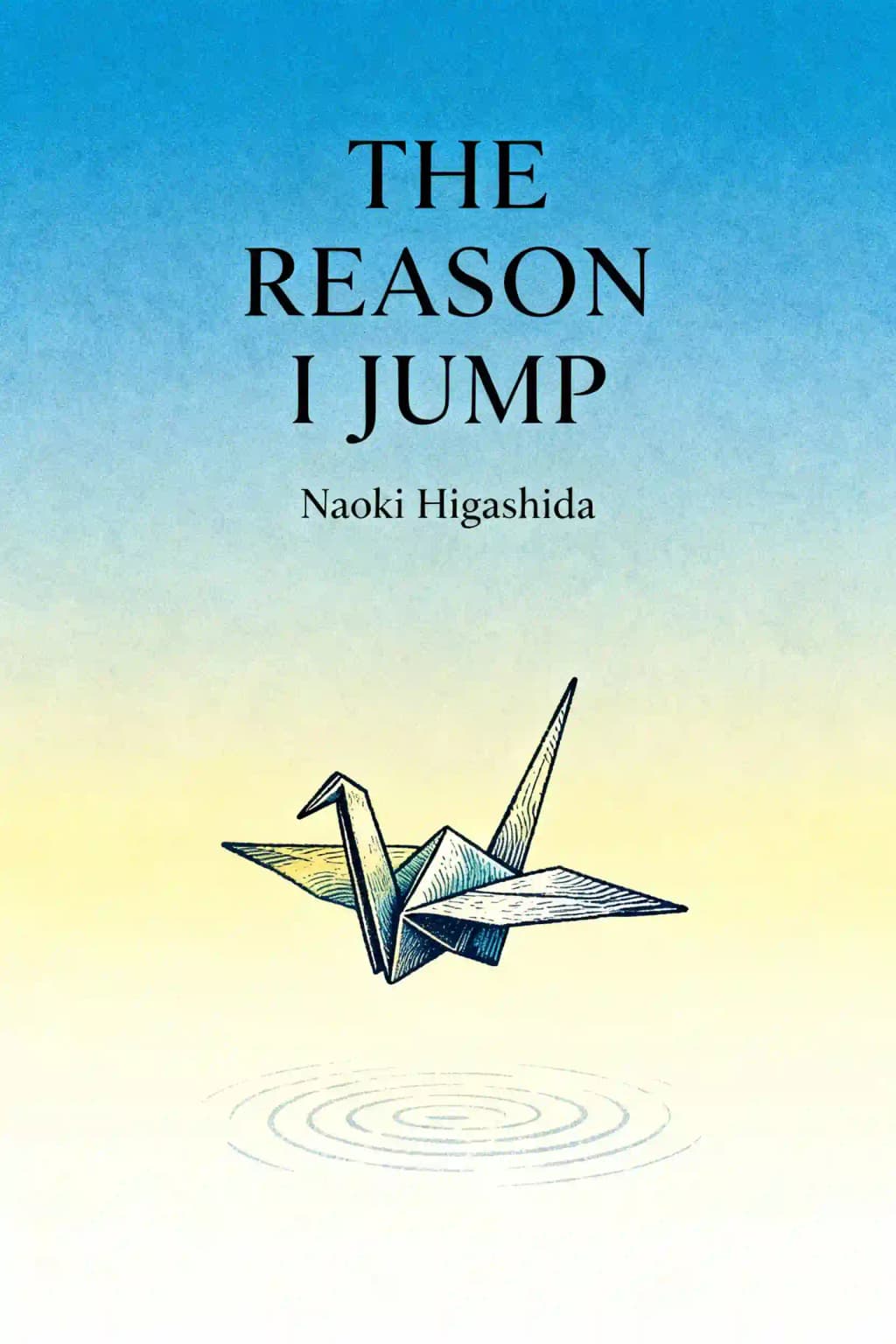
What would it feel like if your brain had no filter? If twenty radios blared simultaneously with no off switch, colors screamed for attention, and the floor constantly tilted beneath your feet? This unedited, unfiltered reality is home for people with autism spectrum disorder, a condition that affects approximately 1 in 54 children according to the CDC. "The Reason I Jump" offers an unprecedented window into this experience through the remarkable voice of Naoki Higashida, who wrote this illuminating book at just 13 years old. Since its English translation by novelist David Mitchell and his wife KA Yoshida in 2013, it has become an international phenomenon, endorsed by celebrities like Jon Stewart and transformed into an award-winning documentary. Beyond its cultural impact, the book has revolutionized how parents, educators, and therapists understand autism-not as a condition to be "fixed," but as a different way of experiencing the world that deserves our empathy and respect.
2장
The Voice That Found Its Way: Naoki's Communication Breakthrough
For most of his early childhood, Naoki Higashida lived in profound isolation, unable to express his thoughts through speech. "I was like a doll without dreams or hopes," he writes, describing the frustration of having a mind full of thoughts but no way to share them. This silence wasn't merely an inconvenience - it was a barrier that separated him from meaningful participation in family life, education, and social connections that most take for granted. Every day brought new thoughts he couldn't express and questions he couldn't ask.
His breakthrough came when his mother, refusing to accept the prevailing belief that non-verbal meant non-communicative, supported his hand to write. Later, she invented an alphabet grid that allowed him to point to letters rather than writing them individually. This innovation transformed pointing - a skill many autistic individuals possess - into a gateway for complex communication. The grid consisted of hiragana characters, numbers, and basic words arranged in a pattern Naoki could easily navigate.
This method of communication, similar to what's now called facilitated communication, became Naoki's bridge to the outside world. Though controversial in some clinical circles, for Naoki it was transformative. "The alphabet grid isn't just about forming sentences - it's about connecting with others and being understood," he explains. The grid allowed him to share not just basic needs but complex thoughts, feelings, and observations about the world around him.
Learning to communicate was an arduous process that took years of dedicated practice. Naoki describes feeling defeated countless times, struggling with motor control issues that made pointing difficult, and battling exhaustion from the intense concentration required. Yet he persisted because "expressing myself is fundamental to living as a human being." His determination challenges the misconception that people with autism lack motivation to connect with others. In fact, his struggle reveals an extraordinary drive to overcome barriers to communication.
This revelation is particularly significant because it contradicts long-held assumptions about autism. For decades, professionals believed that communication difficulties stemmed from lack of desire to connect. Naoki's testimony - and those of many others who have found alternative communication methods - proves otherwise. From typing devices to picture exchange systems to letter boards, these tools have revealed rich inner lives previously hidden from view. The desire to connect burns just as brightly; the pathways are simply different.
Through his writing, Naoki demonstrates not just communication skills but profound self-awareness and empathy - qualities once thought absent in people with autism. His detailed descriptions of sensory experiences, emotional states, and social observations have helped bridge the gap between neurotypical and autistic perspectives. His journey reminds us that inability to speak does not indicate inability to think or feel, and that presuming competence - believing in someone's capacity to understand and communicate - can unlock tremendous potential.
3장
The Sensory Symphony: When Perception Works Differently
One of the most illuminating aspects of Naoki's account is his description of sensory experiences. For people with autism, sensory information arrives unfiltered and often overwhelming. "When I'm jumping up and down clapping my hands," Naoki explains, "I'm not just experiencing the manic glee you see on my face. My feelings are soaring upward to the sky."
Behaviors often misinterpreted as odd or purposeless serve crucial functions. Flapping fingers in front of the eyes, for instance, filters harsh light into something "soft and gentle like moonlight." Direct light enters in "sharp, straight lines, creating too many points of light that actually hurt." Similarly, spinning objects provides comfort through their "unchanging, predictable motion."
Sound sensitivity explains why many people with autism cup their ears. Certain noises neurotypical people barely notice can be devastating. "It's not just that they grate on our nerves," Naoki writes. "If we keep listening, we fear losing all sense of where we are. It feels as if the ground is shaking and the surrounding landscape is coming to get us."
Even perception of time differs dramatically. For Naoki, time has no clear boundaries-"as difficult to grasp as picturing an unknown country." A second might feel infinitely long, while twenty-four hours vanish in a flash. This explains why transitions and waiting can be so challenging for people with autism.
Perhaps most fascinating is Naoki's description of visual processing. While neurotypical people see the whole object first, those with autism notice details before gradually assembling the complete picture. Vivid colors and eye-catching shapes command complete attention, making it difficult to focus elsewhere. Yet this different way of seeing brings its own gifts: "This unique perception allows us to appreciate the beauty in everything around us."
These insights help explain behaviors that might otherwise seem puzzling or irrational. They remind us that what looks like "strange" behavior from the outside often represents adaptive responses to a differently-wired sensory system.
4장
The Body-Mind Disconnect: When Your Body Won't Obey
One of the most frustrating aspects of autism, according to Naoki, is the profound disconnect between intention and action. "Sometimes my body feels completely beyond my control," he writes, "as if everything except my soul belongs to someone else." This sensation of being trapped within an unresponsive body creates a daily struggle that most neurotypical individuals never experience - imagine trying to operate a complex machine with unreliable controls.
This disconnect manifests in numerous ways, affecting even the simplest daily activities. When asked to perform basic tasks like picking up an object or opening a door, Naoki must first think about what he'll do, carefully visualize each step of the process, and finally encourage himself to begin. This multi-step mental preparation explains delays in following instructions that are often misinterpreted as defiance or lack of understanding. What appears as a simple action to others requires an exhausting amount of mental preparation and coordination.
Even basic body awareness presents significant challenges. "In gym class when told to 'Stretch your arms!' or 'Bend at the knees!' I don't always know what my limbs are doing," Naoki explains. "I have no clear sensation of where my arms and legs are attached or how to make them follow my commands. It's like my limbs are a mermaid's rubbery tail." This compromised proprioception - the sense of where body parts are in space - makes everyday movements feel like navigating through fog.
The body-mind disconnect particularly affects communication. When trying to speak, Naoki describes how "the words we want to say and the words we can say don't match well." What comes out is often limited to frequently used phrases or words that left strong impressions - not necessarily what he intends to communicate. This explains why many autistic individuals might repeat phrases from movies or books: these are reliable scripts when original speech feels impossible to coordinate.
Perhaps most poignantly, Naoki describes how this disconnect affects emotional expression. "When surprised, tense, or embarrassed, we freeze up and become unable to show emotion." This explains the "limited facial expressions" often associated with autism - not a lack of feeling, but difficulty translating those feelings into appropriate physical responses. Inside, a person might be experiencing intense joy, anxiety, or excitement, while their face remains seemingly impassive.
This understanding fundamentally challenges common assumptions about behavior and intention in autism. When a person with autism doesn't respond as expected, it's rarely because they don't understand or don't want to comply - more likely, their body simply isn't cooperating with their intentions. This insight has profound implications for how we interpret and respond to autistic behaviors, suggesting that patience and alternative forms of expression may be more helpful than repeated verbal prompting or assumptions of non-compliance.
The gap between mind and body creates a unique form of isolation - being fully aware and present mentally while struggling to demonstrate that presence physically. This experience highlights the importance of presuming competence and finding alternative ways to bridge the communication gap, rather than assuming cognitive limitations based on physical responses.
5장
The Social Paradox: Yearning for Connection While Struggling to Connect
Contrary to popular belief, Naoki insists that people with autism deeply desire social connection. "No human being truly wants to be left alone," he writes. The apparent preference for solitude stems not from disinterest but from anxiety about social interactions. "We'd love to be with other people, but because things never go right, we get used to being alone without noticing."
This creates a painful paradox: longing for connection while finding it overwhelmingly difficult. When Naoki hears someone remark that he prefers being alone, "it makes me feel desperately lonely-as if they're deliberately giving me the cold shoulder."
Social communication presents numerous challenges. Eye contact, for instance, feels uncomfortable because "what we're actually looking at is the other person's voice-we're trying to listen with all our sense organs." When focused on understanding speech, visual processing temporarily shuts down.
Conversation itself feels like "speaking an unknown foreign language every minute of every day." Naoki describes how he scans his memory for similar experiences when asked questions, trying to recall appropriate responses. When this fails, panic sets in, leading to echolalia (repeating questions) or inappropriate answers.
Even simple greetings can be problematic. When waving goodbye with his palm facing inward, Naoki wasn't being deliberately different-he simply couldn't properly imitate the movement because "we don't know our own body parts well."
These insights help explain why social skills training for people with autism often falls short. The challenges aren't just about learning social rules-they involve fundamental differences in perception, processing, and motor control that make social interaction extraordinarily taxing.
Despite these challenges, Naoki emphasizes that people with autism have the same emotional needs as everyone else: "Basically, my feelings are pretty much the same as yours." This simple statement powerfully counters the myth that autism involves emotional deficits.
6장
The Emotional Landscape: Intense Feelings Without Expression
Perhaps the most significant misconception Naoki addresses is the idea that people with autism have limited emotional lives. "A major misunderstanding is that our feelings aren't as complex as yours," he writes. "But we experience the same emotions, possibly with even greater sensitivity because we can't express them properly."
This inability to express emotions appropriately leads to frequent misunderstandings. When making mistakes, for example, Naoki describes how "my mind completely shuts down. I can't think straight-I cry, scream and make an enormous fuss." What looks like an overreaction to others feels to him like "Heaven and Earth have been turned upside down."
Memory works differently too, with past experiences sometimes replaying with their original emotional intensity. "Sometimes they replay in my head as if just happening, bringing back all the original emotions like a sudden storm," Naoki explains. This can trigger seemingly inexplicable distress over events that happened long ago.
Even positive emotions manifest differently. When people with autism laugh uncontrollably or appear to be having fun alone, they're experiencing what Naoki calls "imaginings"-pictures or scenes that appear spontaneously in their minds, similar to how neurotypical people might chuckle when remembering something amusing.
Particularly poignant is Naoki's description of the shame and self-hatred that often accompany autism. "When we're scolded or laughed at for mistakes without being able to apologize, we end up hating ourselves and despairing about our lives repeatedly." This emotional burden is rarely visible to others but weighs heavily on those with autism.
Understanding this emotional landscape is crucial for supporting people with autism. When meltdowns occur, Naoki advises letting the person "cry or yell to release our emotions" while staying nearby and preventing self-injury. This approach acknowledges the legitimacy of these emotions rather than trying to suppress them.
7장
Nature as Sanctuary: Finding Peace in the Natural World
Throughout the book, Naoki returns to the profound connection many people with autism feel with the natural world. "We people with autism love the greenness of nature differently than others," he writes. "While you might appreciate nature's beauty, for us, it's as vital as life itself." This deep resonance manifests in various ways - from finding solace in gardens to experiencing profound moments of clarity while watching clouds drift across the sky.
This connection goes beyond aesthetic appreciation, touching something fundamental in the autistic experience. For Naoki, nature provides unconditional acceptance: "When we look at nature, we receive permission to exist in this world, recharging our entire bodies. No matter how often people ignore or reject us, nature always embraces our hearts." He describes how the rustling of leaves, the patterns of sunlight through trees, and the rhythm of waves can create a sense of harmony that social interactions rarely achieve.
Water holds particular significance in this relationship. "In water, everything is quiet and we feel completely free," Naoki explains. "Nobody bothers us there, and time seems infinite." This explains the common attraction many people with autism feel toward swimming and water play - it provides both sensory relief and emotional peace. The predictable yet ever-changing nature of water creates a perfect balance of stimulation and calm. Many autistic individuals report feeling most at peace while swimming, watching rainfall, or simply being near bodies of water.
Even repetitive behaviors often involve natural elements. Watching running water, for instance, brings "immense joy" similar to lining up objects. These activities "refresh and clear our brains" in ways that social interaction rarely does. Naoki describes how watching leaves fall or observing insects can create a meditative state that helps process overwhelming experiences and restore inner balance.
This special relationship with nature offers important insights for supporting people with autism. Creating opportunities for nature connection - whether through outdoor walks, gardening, or water play - can provide crucial respite from sensory and social demands. Some autism-friendly programs now incorporate nature therapy, forest bathing, and animal interactions, recognizing their therapeutic potential.
Moreover, Naoki suggests that this connection might reflect something deeper about autism itself: "I believe people with autism are born outside civilization's regime... Though physically similar to others, we're fundamentally different, like travelers from the distant past." This perspective frames autism not as a deficit but as an alternative way of being that maintains stronger connections to the natural world. He suggests that this unique relationship with nature might offer valuable lessons about human consciousness and our relationship with the environment.
The natural world provides a space where many autistic individuals feel truly understood and accepted. Unlike human social environments, which often demand constant adjustment and masking, nature allows them to exist authentically, without judgment or expectation. This acceptance and peace can be transformative, offering both immediate comfort and longer-term emotional regulation.
8장
Beyond Behaviors: Understanding the "Why" Behind Autism
Throughout the book, Naoki demystifies behaviors commonly associated with autism by explaining their underlying purposes. Repetitive actions, for instance, aren't voluntary pleasures but compulsions: "Our brains keep sending the same command repeatedly." Refusing these urges creates "unbearable horror, like being pushed into Hell."
Similarly, what looks like deliberate misbehavior-doing things after being told not to-reflects difficulty breaking established patterns. "First, I do something prohibited; something happens as a result; I get scolded; then my impulse to recreate this sequence overrides knowing I shouldn't," Naoki explains.
Even seemingly random behaviors serve important functions. Running off suddenly happens because "my mind constantly sways, and I can't help dashing toward whatever catches my eye." It's not willful disobedience but a temporary loss of self-control that's "frustrating for me too."
Particularly illuminating is Naoki's explanation for why people with autism often need verbal prompts to complete actions. "Even after asking for juice and receiving it, we won't drink until someone says 'Enjoy' or 'Go ahead,'" he writes. Without these cues, proceeding feels terrifying-"like crossing against a red light."
These insights transform how we interpret autistic behaviors. What might look like defiance, attention-seeking, or lack of understanding often represents genuine neurological differences that make self-regulation extraordinarily difficult.
Naoki emphasizes that people with autism are typically aware of these challenges and deeply distressed by them. "The person suffering most is the one with autism-despite appearing to frolic, we're hurting inside, knowing we can't control our bodies." This awareness brings its own pain: "When I see what I've done, I hate myself completely."
Understanding these perspectives allows for more compassionate and effective support strategies. Rather than focusing on eliminating behaviors, Naoki suggests helping people develop greater self-regulation while accepting that some behaviors may be necessary coping mechanisms.
9장
The Path Forward: Hope and Understanding
In his concluding reflections, Naoki addresses the question many parents fear most: would he choose to be "normal" if given the chance? His answer is nuanced: "For ages I desperately wanted to be normal. Living with special needs is depressing and relentless." Yet he continues, "But now, even if someone developed a cure for autism, I might choose to remain as I am. Why? Because I've learned that every human being, with or without disabilities, must strive to do their best."
This perspective shifts the focus from "fixing" autism to supporting individuals in finding fulfillment as they are. "As long as we can learn to love ourselves," Naoki writes, "I'm not sure how much it matters whether we're normal or autistic."
His most urgent message is a plea for continued engagement: "We children with autism want you to 'watch out for us'-meaning please never give up on us. Your watchfulness makes us stronger." This contradicts approaches that might minimize expectations or assume limited potential.
Naoki emphasizes that people with autism are "constantly misunderstood and would give anything to be properly understood." This understanding isn't just about recognizing challenges but appreciating capabilities and perspectives that might otherwise remain hidden.
The book concludes with a powerful statement about hope: "When I was little, I constantly worried about what would become of me if my autism could never be cured. I feared I'd never live properly as a human being." By sharing his explanations, Naoki hopes readers will understand that the difficulties of autism "don't stem from selfishness or ego."
This understanding itself generates hope-not for a "cure," but for acceptance and support that allows people with autism to flourish on their own terms. "No matter how hard or sad an autistic life can be, hope helps us persevere. What I want most is for this hope to shine on the world, connecting our futures together."
In these final reflections, Naoki transforms autism from a condition defined by deficits to one characterized by different ways of experiencing and interacting with the world-ways that deserve respect, accommodation, and understanding rather than attempts at normalization.
10장
A Different Kind of Mind: Rethinking Autism's Meaning
"The Reason I Jump" ultimately challenges us to reconsider fundamental assumptions about autism and, by extension, about human cognition and experience. Rather than viewing autism as a collection of deficits or abnormalities, Naoki invites us to understand it as a different way of being-one with its own strengths, challenges, and perspectives.
This shift in perspective has profound implications. If autism represents not broken normality but neurological diversity, our approach should focus less on "fixing" differences and more on creating environments where diverse minds can flourish. As Naoki puts it, "For us, autism is normal-we can't truly know what your 'normal' is like."
The book also challenges the tendency to interpret autistic behaviors through neurotypical frameworks. When Naoki explains that jumping helps him "shake loose these invisible ropes binding my body" or that lining up objects "refreshes and clears our brains," he's describing adaptive responses to his neurological reality-not meaningless stereotypies to be eliminated.
Perhaps most importantly, Naoki's account reveals the rich inner life behind behaviors that might seem odd or disconnected. Far from lacking self-awareness or empathy, his reflections demonstrate profound insight into his own experience and consideration for how his actions affect others.
This recognition of shared humanity across neurological differences is the book's most powerful message. Despite communication barriers and different sensory experiences, Naoki emphasizes that people with autism share the same fundamental human needs and emotions as everyone else. "I've noticed that very few people grasp this truth," he writes. "Please keep in mind that we are basically the same as you, though we may look different."
By bridging the communication gap between autistic and neurotypical experience, "The Reason I Jump" does more than explain autism-it expands our understanding of human diversity and challenges us to create a world that accommodates and values different ways of thinking, perceiving, and being.