1장
The Psychology of Quick Fixes: Why We Fall for Half-Baked Solutions
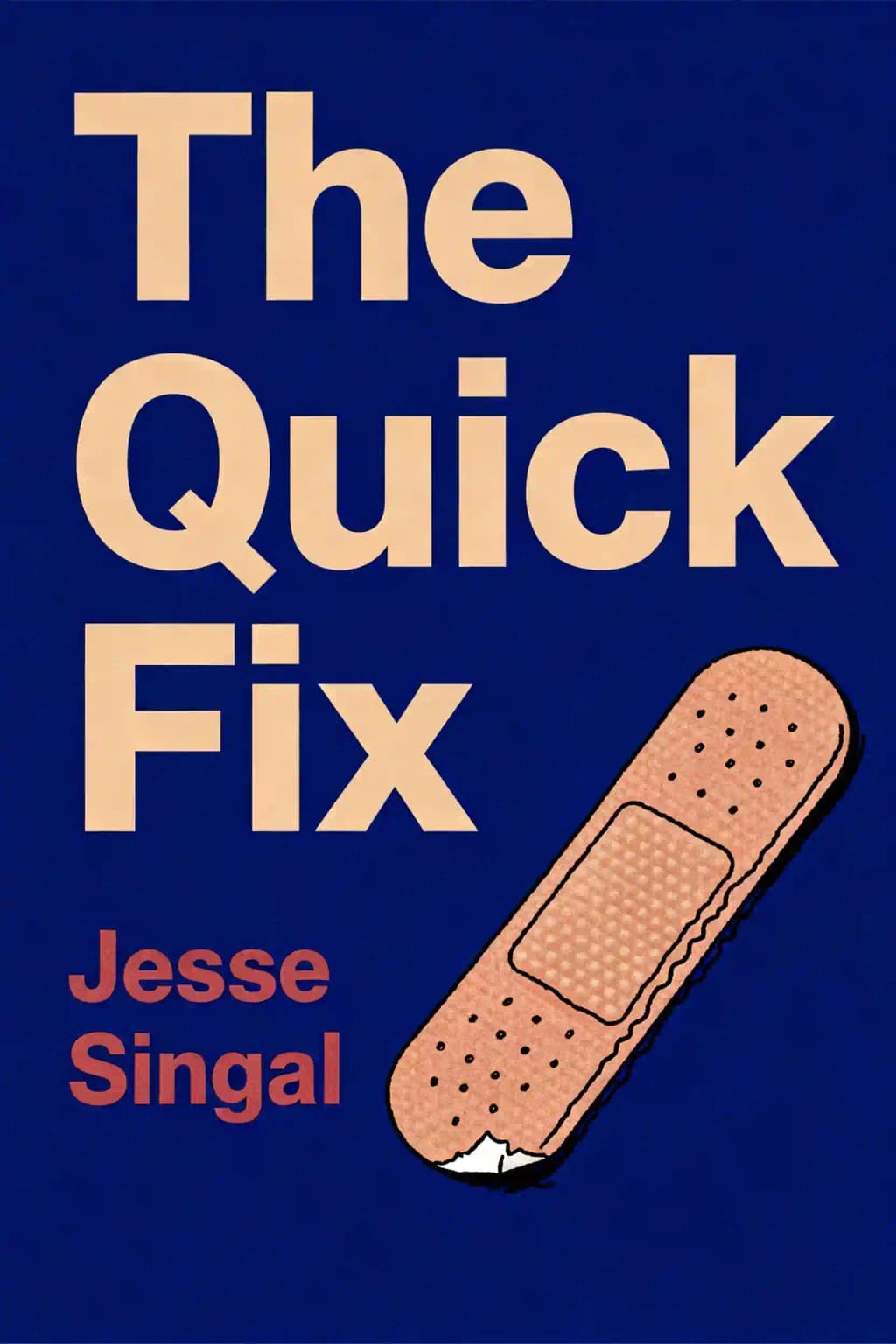
Have you ever wondered why certain psychological theories capture our collective imagination, spreading through media, education systems, and even government policies despite shaky scientific foundations? This phenomenon sits at the heart of Jesse Singal's incisive examination of contemporary behavioral science. As a journalist with deep expertise in psychology research, Singal takes us on a journey through America's most influential psychological fads-from self-esteem movements to power posing-revealing how half-baked ideas transform into cultural phenomena. The book has garnered praise from leading scientists and methodologists, with Nobel Prize-winning psychologist Daniel Kahneman calling it "a major contribution to public understanding of behavioral science." Its publication coincided with growing concerns about replication failures in psychology, making it particularly timely as institutions from schools to corporations increasingly base important decisions on behavioral research findings that may not withstand scrutiny.
2장
The Self-Esteem Movement: America's First Psychological Panacea
The self-esteem movement represents one of America's most pervasive psychological interventions, fundamentally reshaping educational approaches nationwide. It began with California state legislator John Vasconcellos, a "famously rumpled bear-of-a-man" who, despite his own anger issues, became convinced that bolstering self-esteem could solve virtually every social problem from crime to teen pregnancy.
Vasconcellos discovered self-esteem through the writings of Nathaniel Branden, an Ayn Rand disciple who claimed virtually all psychological problems stemmed from poor self-concept. Early research appeared promising, showing correlations between self-esteem measures and positive outcomes. This was enough for Vasconcellos to convince California to establish a $245,000-per-year task force exploring self-esteem's applications to social problems.
The movement tapped into America's long tradition of positive thinking, from Ben Franklin to Norman Vincent Peale to "The Secret," which claims thoughts emit energy frequencies that attract similar energies back. This comfortable blanket of positive thinking merged perfectly with the 1960s focus on healing psychic wounds, creating fertile ground for self-esteem theories.
But the scientific foundation was far shakier than proponents admitted. At a crucial 1988 meeting at El Rancho Inn, the task force claimed University of California researchers had validated their premise that poor self-esteem caused alcoholism, crime, and other social ills. Recordings reveal the opposite: lead researcher Neil Smelser explicitly warned against "the sin of overselling" the research, noting correlations were weak and causality unclear. Task force member David Shannahoff-Khalsa later called the misrepresentation "absolutely dishonest" and "a fucking lie."
Despite this deception, the movement transformed American education with the appealing but simplistic notion that "if children feel bad, they'll perform poorly." Rather than investing in better teachers or improved instruction, self-esteem interventions provided an easy way out-a pattern that would repeat in future educational fads.
The movement's scientific unraveling came through Roy Baumeister's research, which revealed that criminals actually had higher self-esteem than law-abiders, and most Americans already possessed high self-esteem-contradicting the supposed "epidemic." His devastating 2003 review in Psychological Science in the Public Interest methodically dismantled the movement's foundations, showing that when researchers controlled for confounding variables, the supposed self-esteem effects largely disappeared.
Yet the self-esteem narrative proved irresistible. Politicians considered the idea self-evident, potential critics faced incentives not to dissent, and the simple message that raising self-esteem could solve complex problems prevailed despite the absence of robust scientific support. The movement's residue remains in state laws across America, with many statutes still mandating self-esteem building in classrooms-a template for future interventions combining weak science with wide impact.
3장
The Superpredator Panic: When Academia Fuels Racial Fear
By 1995, America was gripped by panic over youth violence. Juvenile homicide arrests had nearly tripled between 1985 and 1993, with news constantly featuring stories of children committing horrific crimes. Cases like eleven-year-old gang member Robert "Yummy" Sandifer, who killed a fourteen-year-old girl before being executed by his own gang, epitomized the crisis that particularly frightened white Americans when it seemed to breach racial boundaries.
Into this environment stepped John J. DiIulio, a young Princeton political scientist with working-class Philadelphia roots who positioned himself as a truth-teller against political correctness. Unlike many criminologists who believed the justice system was biased against minorities, DiIulio argued it wasn't punitive enough. His "superpredator" theory rested on two reasonable-seeming assumptions: home environments affect crime propensity, and populations with more young males experience more crime.
But DiIulio took these ideas to extreme conclusions. In his 1995 Weekly Standard article, he described superpredators as youth who "kill or maim on impulse, without any intelligible motive," who "live entirely in and for the present moment" with "no concept of the future." He blamed "moral poverty"-growing up without loving adults who teach right from wrong, in "abusive, violence-ridden, fatherless, Godless, and jobless settings."
While DiIulio occasionally noted superpredators could be "of whatever race, creed, or color," his focus was clearly on Black youth in inner cities. Though he sometimes acknowledged historical discrimination against Black Americans, he ultimately concluded that "America's justice system is not racist, not anymore"-never explaining how the systemic racism he witnessed in his youth could have disappeared so quickly.
The superpredator concept fully materialized in his 1996 book "Body Count," co-authored with William Bennett and John Walters. With prominent backing from respected figures, the media eagerly propagated this narrative, often using dehumanizing language that portrayed violent teens as subhuman or explosive.
Rather than addressing structural factors like jobs or housing, DiIulio and his colleagues advocated primarily for incarceration and religion. Despite claiming to favor prevention, DiIulio boasted of being academia's "biggest fan of incarceration" and predicted America would need to lock up at least 150,000 juvenile criminals.
The superpredator theory proved catastrophically wrong. Rather than the predicted apocalyptic increase, youth violent crime declined steadily throughout the following decades. The theory's statistical foundation was equally flawed: DiIulio and Wilson misinterpreted the Philadelphia birth cohort study, wrongly claiming 6% of youth would become violent criminals.
Most striking was how the concept bypassed rigorous academic scrutiny. Despite its enormous influence on public policy, the idea was barely discussed in peer-reviewed journals except to later debunk it. By speaking primarily to policy makers rather than submitting to peer review, DiIulio avoided having to precisely define his terminology or answer critical questions about his demographic projections.
The concept had profound political effects despite its thin empirical basis. Politicians from both parties quickly seized on it to justify harsh policies. Republican Representative Bob McCollum dramatically warned about an "unprecedented surge of youth violence" and the "coming generation of super-predators." Democrats weren't immune either-Charles Schumer proposed changes to unseal juvenile records, Hillary Clinton referenced superpredators in a 1996 speech, and Joe Biden spoke of young "predators" without socialization or conscience.
In 2012, DiIulio, Fox and Wilson signed a Supreme Court amicus brief completely renouncing the superpredator theory, acknowledging it was "a myth" with "baseless" predictions. The saga reveals two crucial lessons: the danger when respected academics become uncritical "thought leaders," and the need to challenge conceptual fuzziness in emotionally charged terminology.
4장
Power Posing: When TED Talks Outpace Science
The $10 billion self-help industry in America is built on a simple premise: many people feel powerless against life's unpredictable forces. Body language has become a cornerstone of this formula, with countless books promising success through physical posturing, though most lack scientific backing.
Power posing wasn't without academic pedigree, fitting within "embodied cognition" research examining how physical actions affect psychology. Similar famous studies included the "Macbeth effect" (where recalling unethical behavior increased desire for cleaning products) and "facial feedback" experiments (where forcing smiles supposedly improved mood). However, these studies have been particularly vulnerable to the replication crisis, with many failing to reproduce when tested by independent researchers.
P-values, which indicate statistical significance, are highly manipulable through p-hacking-exactly what Dana Carney admitted she, Amy Cuddy, and Andy Yap had done in their original power posing study. Later, Carney publicly disavowed power posing, stating "The data are flimsy... I do not have any faith in the embodied effects of 'power poses.'" In 2017, researchers Simmons and Simonsohn used their p-curve analysis tool to evaluate power posing studies, finding suspicious clustering of results just below the publishable p=0.05 threshold, suggesting the literature was weaker than it appeared.
While critiquing dubious behavioral science claims, we shouldn't overcorrect. Body language genuinely matters in human and animal interactions-dogs show submission by rolling over, cats arch backs when threatened, and humans constantly communicate through posture and gesture. During an NBA playoff game, J.R. Smith's body language after fouling Jaylen Brown immediately conveyed remorse, changing perceptions of whether the foul was intentional.
The problem with power posing isn't that body language is meaningless, but rather the leap from modest, scientifically justifiable claims to grand assertions based on razor-thin evidence.
Power posing owes much of its success to its alignment with contemporary feminist currents, particularly Sheryl Sandberg's "Lean In" philosophy. Both Cuddy's "Presence" and Sandberg's work promote individualistic solutions to structural problems, emphasizing women's agency while largely ignoring institutional reforms. This approach represents a particular brand of feminism that encourages women to adopt stereotypically masculine behaviors rather than questioning why those behaviors are rewarded.
The search for effective gender bias interventions is complicated by potential unintended consequences-research suggests women may actually be punished for displaying the same confidence that rewards men. Even Cuddy's basic assumption of a gender confidence gap lacks strong empirical support. Despite these challenges, certain institutional changes-like structured interviews, strict adherence to promotion requirements, and increasing job substitutability-could reduce bias without causing harm. These approaches focus on changing institutions rather than individuals, contrary to the power posing philosophy.
5장
Positive Psychology Goes to War: The Military's Resilience Gamble
Daniel Kahneman's anecdote about a chief investment officer who invested millions in Ford stock simply because he liked their cars illustrates how even powerful people make decisions based on unskilled intuition rather than relevant evidence. This "Boy, do they know how to make a car!" mentality becomes particularly problematic at institutional levels where decision-makers often lack expertise to evaluate evidence rigorously.
Martin Seligman, a legendary researcher known for his earlier dark work on learned helplessness in dogs, dramatically shifted focus to found positive psychology. Elected APA president in 1996 by a record margin, Seligman argued psychology was too fixated on pathology rather than cultivating strengths. His individualistic approach viewed poverty as "a problem of individual mastery, dignity, and self-esteem" and criticized "victimology" culture.
Despite controversial scientific foundations, with major claims like the "critical positivity ratio" and the "happiness pie" formula facing serious methodological challenges, the field successfully marketed itself. Harvard's positive psychology course became the university's most popular, and Seligman's center generated substantial revenue for Penn through consulting relationships with police departments, medical schools, and most lucratively, the U.S. Army.
In 2008, facing a mental health crisis from the wars in Iraq and Afghanistan, the Army contracted Seligman to address PTSD and suicide among soldiers. Despite limited evidence for its effectiveness in military contexts, the Comprehensive Soldier Fitness (CSF) program was born-becoming one of history's largest mental health interventions, eventually reaching over a million soldiers.
The program was built on shaky scientific foundations. The Penn Resilience Program (PRP) was never designed to prevent PTSD or suicide-its original modest goal was reducing depression in schoolchildren. Yet Seligman and colleagues claimed that "the preventive effects of the PRP on depression and anxiety are relevant to one of the aims of the MRT course, preventing posttraumatic stress disorder." This leap in logic ignored that PTSD involves many symptoms unaddressed by PRP. Even Jane Gillham, PRP's co-developer, noted that "the original PRP did not include positive psychology activities" and she didn't consider it a positive psychology intervention at all.
While the Army pursued Comprehensive Soldier Fitness, it overlooked expanding access to gold-standard PTSD treatments like cognitive processing therapy and prolonged exposure therapy. The Army's fixation on "resilience" led to the Global Assessment Tool (GAT)-a mandatory annual survey that failed to include validated measures of PTSD, depression, or suicidality, making it impossible to assess whether the program achieved its primary goals.
Despite costing approximately half a billion dollars over a decade, CSF has shown virtually no evidence of effectiveness. The stark contrast between evidence-based PTSD treatment and the Army's preferred approach reveals why CSF gained traction despite its lack of evidence. Seligman's positive psychology spoke the Army's language-emphasizing toughness, resilience, and optimism-while promising a convenient, universal intervention that wouldn't disrupt operations. Meanwhile, evidence-based treatments require uncomfortable work that sometimes challenges military messaging itself.
6장
The Grit Narrative: Character Education's Latest Incarnation
Angela Duckworth's concept of "grit"-the tenacious pursuit of difficult problems rather than giving up-has become wildly popular in education despite surprisingly limited evidence that improving it reliably enhances student performance or closes achievement gaps. In her viral TED Talk (21 million views by 2020), Duckworth presents grit as the key predictor of success across diverse settings, claiming it "beats the pants off IQ, SAT scores, physical fitness and a bazillion other measures."
Duckworth's interest in grit emerged during her early teaching career when she noticed intelligence didn't always correlate with classroom performance. This observation led her to pursue doctoral studies under positive psychology pioneer Martin Seligman at Penn, where she proposed that "character is at least as important as intellect" for helping underperforming students.
The concept of grit has deep American roots. Historian Ethan W. Ris traces how Americans have long feared that privileged youth lack the gumption possessed by the striving poor. During the Gilded Age, elite boarding schools advertised Spartan conditions to counter "affluenza." Popular literature from Huckleberry Finn to Horatio Alger's novels celebrated grit as the pathway to middle-class respectability.
Duckworth's strongest claims about grit appear increasingly questionable under scrutiny. Her Army Special Operations study showed grit accounting for just 1.8% of variance in retention rates, compared to 2.7% for intelligence and 7.2% for physical fitness. A 2017 meta-analysis by Marcus Crede and colleagues titled "Much Ado About Grit" revealed that "the grit-conscientiousness relation may be much stronger than commonly assumed." When correcting for statistical noise, correlations between grit and conscientiousness "approach unity"-meaning they're essentially measuring the same thing.
Both conscientiousness and grit correlate with school performance at about r = 0.18-0.19, explaining roughly 3.6% of variance in academic achievement. By comparison, intelligence accounts for about 25% of variance-seven times more predictive power. A 2020 study using a representative sample found intelligence contributes "48-90 times more than grit to educational success and 13 times more to job-market success," while conscientiousness was twice as useful as grit.
By 2016, Duckworth began cautioning against misapplications of her concept, writing in The New York Times against grading students on grit. Yet she continues defending her early claims about grit's predictive power, maintaining that it "beats the pants off IQ, SAT scores, physical fitness and a bazillion other measures" in certain contexts.
Duckworth's book suffers from survivor bias, featuring only successful "grit exemplars" while ignoring countless gritty people who failed. This selective storytelling obscures how privilege enables success regardless of grit. Linda Nathan's book "When Grit Isn't Enough" reveals this reality through stories like valedictorian Shanita losing a scholarship by missing a deposit deadline, or Carissa forced to leave her dream school when financial aid paperwork complications arose.
The grit narrative caught on because it promises an easy fix to inequality without requiring difficult redistributive social programs. But perhaps grit was never truly "for" poor people-it's marketed to middle and upper-middle-class strivers through self-help books promising success formulas, especially appealing in an era when economic mobility is declining and millennials face unprecedented financial challenges.
7장
The Implicit Bias Test: Measuring the Unmeasurable
In April 2018, two Black men were arrested at a Philadelphia Starbucks while waiting for a white acquaintance, sparking national outrage over racial profiling. Starbucks responded by shutting down all American stores for implicit bias training, highlighting how this concept has become the go-to framework for addressing racism in the 21st century.
The implicit association test (IAT), developed by Harvard's Mahzarin Banaji and University of Washington's Anthony Greenwald in 1998, measures unconscious prejudices by comparing reaction times when associating positive and negative words with images of different racial groups. The test purports to reveal hidden biases even in those who consciously reject prejudice.
According to its creators, over 75% of test-takers show anti-Black bias, and many people report being deeply affected by discovering their own biases. This emotional impact has helped fuel the IAT's adoption in diversity training programs nationwide, from Google to law enforcement agencies.
Ever since the IAT first caught on, skeptics have questioned its validity while most of academia and mainstream journalism accepted it at face value. Critics identified major problems with the IAT's reliability and validity-the test has poor test-retest reliability (around r = 0.5, well below the acceptable r = 0.8 threshold) meaning your results can vary dramatically from one day to the next. More damaging, meta-analyses revealed the IAT accounts for only about 1% of variance in observed behavior, making it essentially useless for predicting individual discriminatory behavior.
The fundamental problem with the IAT is that it's never been clear exactly what it measures. Does a difference in reaction time of a few hundred milliseconds truly constitute "implicit bias" against a group? Alternative theories suggest the IAT might measure familiarity with stereotypes rather than endorsement of them. One clever experiment showed researchers could induce "implicit bias" against fictional groups (Noffians and Fasites) simply by associating one group with oppression.
While prominent public intellectuals offer structural critiques of American racism, diversity trainings have paradoxically grown more individualistic. Robin DiAngelo's bestselling "White Fragility" exemplifies this trend by focusing on white psyches rather than institutions. Similarly, "microaggression" trainings identify seemingly innocuous statements like "America is a melting pot" as harmful, despite polls showing most minorities don't find them offensive.
After critiquing the IAT, I noticed conservatives wrongly claiming that implicit bias itself had been "debunked." This misses the point: just because a measurement tool is flawed doesn't mean the concept it attempts to measure isn't real or important. Given the brain's tendency toward stereotypes and shortcuts, implicit bias likely exists and could affect outcomes in ways that compound structural inequalities.
The problem is that IAT proponents overreach by claiming implicit bias plays a "greater role than explicit bias" in explaining racial disparities, without sufficient evidence. A more parsimonious explanation for Black-white disparities involves two well-understood factors: the shocking wealth gap (white families having ten times the wealth of Black families) and ongoing explicit discrimination.
Organizations can address potential implicit bias harms without measuring or altering individual bias levels. Just as flu vaccines work regardless of individual susceptibility, smart institutional reforms can reduce overall bias probability while bypassing the messiness of individual measurement. For example, anonymizing names on resumes during initial screening eliminates the possibility of name-based bias entirely.
8장
Social Priming: The Replication Crisis Arrives
Humans are naturally fascinated by the idea that we're influenced by forces beyond our conscious awareness. This fascination gave rise to the study of social priming, defined as "the idea that subtle cues can exert large, unconscious influences on human behaviour."
The concept gained national attention in 1957 when advertising expert James Vicary claimed he'd conducted an experiment where moviegoers were subliminally exposed to "eat popcorn" and "drink Coke" messages, supposedly increasing sales dramatically. The nation erupted in outrage, leading to FCC investigations and formal prohibitions. In reality, evidence suggests Vicary's "study" was likely a complete hoax.
Scientific research on priming began developing in the mid-twentieth century. Early studies showed that when MIT students were told a visiting instructor was "warm" versus "cold," they rated him more favorably despite identical descriptions. Later experiments revealed that words students were exposed to were more likely to appear in subsequent free-association tasks-even when they couldn't consciously recall them.
Social priming formally arrived in 1977 through Higgins, Rholes, and Jones's landmark study with Princeton undergraduates. Students exposed to words like "reckless" and "conceited" were more likely to view a deliberately ambiguous character named Donald negatively, while those exposed to "adventurous" and "self-confident" viewed him positively.
Social priming truly exploded in the mid-1990s through John Bargh's work at NYU, particularly his famous 1996 study where participants exposed to elderly-related words like "Florida" and "wrinkle" subsequently walked more slowly down a hallway than control participants.
Social priming quickly produced a cascade of astonishing findings. Studies claimed money-related words made people more capitalistic, the word "professor" improved quiz performance, and subliminal Lipton Iced Tea exposure increased thirst for that specific beverage. Even Nobel laureate Daniel Kahneman embraced these findings, writing in 2011 that "disbelief is not an option" regarding priming studies.
The replication crisis in psychology is widely considered to have begun with Daryl Bem's 2011 study claiming evidence for psychic abilities, published in a leading journal. Coming shortly after Diederik Stapel's fraud scandal (involving fabricated social priming studies), Bem's paper exemplified "questionable research practices" (QRPs) that plague the field. A 2012 survey revealed 60% of psychologists admitted to excluding nonsignificant variables from reports, and 50% admitted to selectively reporting studies that "worked."
In a demonstration of this problem, Simmons, Nelson, and Simonsohn published a paper in Psychological Science claiming to reduce people's ages by having them listen to "When I'm Sixty-Four"-an impossible result deliberately engineered to expose how analyzing data multiple ways and only reporting successful attempts produces false positives.
Social priming became the epicenter of the replication crisis, with Daniel Kahneman writing an open letter in 2012 warning that social priming had become "the poster child for doubts about the integrity of psychological research." Subsequently, many famous priming studies failed to replicate, including Bargh's elderly-walking study.
The replication crisis has prompted significant reforms in psychological research methods. Key innovations include preregistration-publicly posting hypotheses and analysis plans before conducting research to prevent HARKing and data manipulation-and data sharing, which allows other researchers to check for errors. Another ambitious reform is Registered Reports, where journals accept studies based on design rather than results, shifting incentives from "producing the most beautiful story to the most accurate one."
9장
Nudging: Behavioral Science's Limited Promise
In 2014, New York City faced a troubling problem: 41 percent of people issued criminal summonses for minor offenses like public drinking failed to appear in court, resulting in arrest warrants that could cause life-upending consequences. The city enlisted ideas42 (a behavioral science nonprofit) and the University of Chicago Crime Lab to develop solutions.
The researchers identified a key problem: the poorly designed summons form itself. After redesigning the form with a clearer title and moving crucial information from the back to the front, the failure-to-appear rate dropped from 41% to 36%-preventing approximately 17,000 arrest warrants annually. Text message reminders proved even more effective, reducing the rate to 26% among those who provided cell phone numbers.
This case exemplifies the concept of "nudging"-altering choice architecture to facilitate better decision-making without removing options or significantly changing economic incentives.
Nudging owes its existence largely to behavioral economics, pioneered by Daniel Kahneman and Amos Tversky. Their work challenged the prevailing mid-century view of humans as fundamentally rational decision-makers-what economists called "homo economicus" or "econs." Through numerous experiments, they demonstrated that humans make predictable errors in judgment using mental shortcuts (heuristics) that lead to systematic biases.
Kahneman and Tversky identified several key heuristics that shape human decision-making. The representativeness heuristic shows how people rely on stereotypical information rather than statistical reasoning. The availability heuristic demonstrates how we judge an event's likelihood based on how easily examples come to mind. Framing effects reveal how presentation dramatically influences decision-making.
Behavioral economics faced initial resistance from traditional economists who clung to the rational homo economicus model. Eventually these ideas gained widespread acceptance, with both UK and US governments establishing "nudge units" to apply behavioral insights to policy.
While nudging's effectiveness varies by context, many behaviorally-informed interventions have delivered positive returns. However, not all nudges succeed. When people realize they've been defaulted into organ donation status, many opt back out. Energy conservation nudges have shown mixed results, with U.S. social comparison feedback generating modest 2% reductions while similar interventions in other countries showed no significant effects.
Critics like Robert Frank argue that nudges alone cannot address major policy challenges. Frank notes in Under the Influence that "many of the biggest policy opportunities will continue to elude us" without stronger interventions like Pigouvian taxes for negative externalities.
New York City's summons form redesign perfectly illustrates nudging's limitations. While behavioral scientists made the form clearer and implemented text message reminders, these changes couldn't solve the fundamental problem: the city still assigned arbitrary court dates that posed severe logistical difficulties for low-income people, creating racial disparities, and still issued arrest warrants for no-shows.
Real improvement came through the 2016 Criminal Justice Reform Act, which reclassified many minor infractions as civil rather than criminal offenses. This legislative change eliminated arrest warrants for failures to appear in these cases and led to the dismissal of over 644,000 outstanding warrants. While nudging can make meaningful differences within existing systems, truly transformative change requires changing the systems themselves. As the author concludes, "You can't nudge your way out of a policy problem."
10장
Why Half-Baked Behavioral Science Spreads
The Primeworld storytelling ecosystem benefits nearly everyone directly involved: researchers and universities gain attention from publications; media outlets get clicks from readers seeking life hacks or surprising lab findings; researchers enjoy press coverage and seek more; and publications pursue more such stories. This cycle's incentives all encourage overclaiming, oversimplifying, and dismissing contradictory evidence.
The losers are news consumers who develop false beliefs about psychological science, potentially believing that concepts like grit powerfully predict success or that feeling more powerful at work can overcome entrenched gender bias. More dangerously, the constant promotion of "wise interventions" as simple fixes for complex problems may ultimately shift public understanding in harmful ways. When bombarded with messages suggesting poor kids just need more grit or racism can be fixed by making people aware of implicit bias, people may increasingly blame vulnerable populations for their own misfortunes when these problems inevitably persist despite such interventions.
The COVID-19 pandemic only reinforced skepticism about Primeworld's fundamentally impoverished account of society. Americans' pandemic choices were defined by structures of power and wealth-some were forced to choose between financial ruin or working low-wage jobs with infection risk, while others easily shifted to remote work. Individual behavior seemed driven not by subtle psychological nudges but by powerful social, political, and religious networks.
The pandemic made clear that while behavioral nudges might help at the margins, their usefulness pales against the overwhelming force of structural factors in determining outcomes during a crisis. Perhaps it's time we recognize that solving our most pressing social problems will require more than quick psychological fixes-it will demand the hard work of building more equitable systems and institutions.