1장
Finding Your Voice in a World That Demands Silence
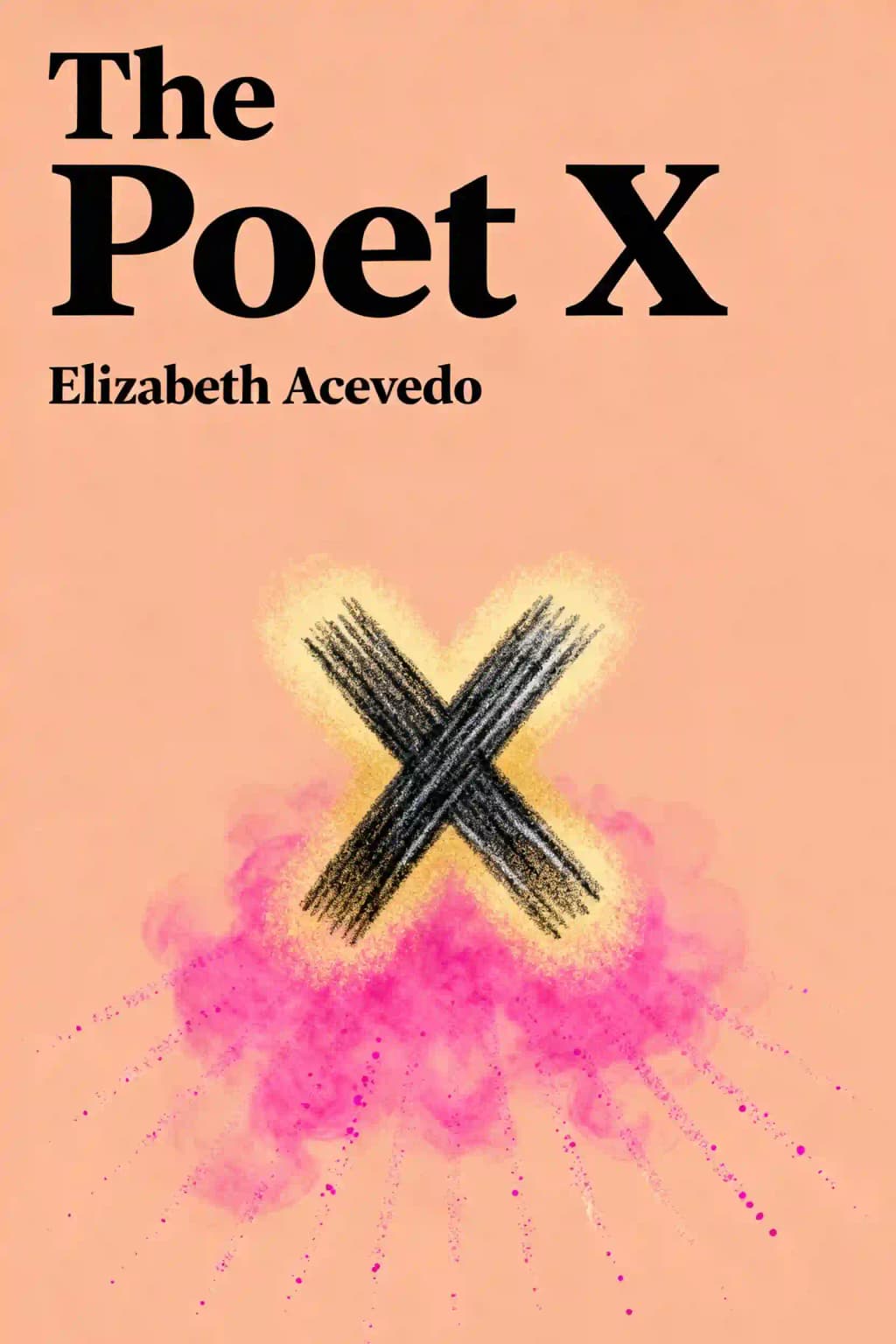
Elizabeth Acevedo's "The Poet X" has become a cultural phenomenon since its 2018 release, winning the National Book Award for Young People's Literature and the Carnegie Medal. This verse novel resonated deeply with readers and critics alike, particularly young women of color seeking representation in literature. Beyonce reportedly included it in her personal reading list, while Michelle Obama praised its "raw power and authenticity." The novel's exploration of identity, religion, body image, and self-expression through poetry speaks to universal struggles while remaining deeply rooted in Dominican-American culture. Let's dive into this powerful coming-of-age story that proves words can indeed become weapons against silence.
2장
The Battle Between Expression and Expectation
Xiomara Batista's world is defined by constraints. As a Dominican-American teenager in Harlem, she navigates the complex intersection of cultural expectations, religious doctrine, and her own emerging identity. Her mother, a devout Catholic who once dreamed of becoming a nun, enforces strict rules about Xiomara's behavior, appearance, and social interactions. Her father, described as a reformed womanizer, remains a distant figure who rarely intervenes in family matters. Meanwhile, her twin brother Xavier (whom she calls "Twin") excels academically and embraces the religious devotion their mother demands.
What makes Xiomara's story so compelling is how her physical development becomes a battleground for control. At fifteen, her curvy figure attracts unwanted attention from men and boys, leading her mother to impose even stricter limitations on her freedom. "My body betrays me," Xiomara reflects, "taller than my father with too much body for such a young girl." Boys who once mocked her now demand photos in thongs, while girls call her conceited or "fast." Her mother's response is to double down on religious instruction, pushing Xiomara toward confirmation classes and warning that her body could lead her into sin.
The irony is that while Xiomara appears intimidating-known for her sharp tongue and willingness to fight-she feels increasingly silenced. Her thoughts and questions, particularly about religion, are dismissed or punished. When she dares to question the story of Genesis in confirmation class, asking how it reconciles with evolution and dinosaurs, Father Sean avoids her questions and suggests she speak with her mother. This pattern repeats throughout the narrative: Xiomara's attempts to understand her world are met with resistance rather than engagement.
This tension between expression and expectation creates the central conflict of the novel. Xiomara must find a way to honor her family's cultural heritage while claiming space for her own voice and desires. Poetry becomes her salvation-a private outlet where she can explore her thoughts about religion, sexuality, and family without fear of judgment or punishment.
3장
Finding Refuge in Words and Rhythm
Poetry enters Xiomara's life as a lifeline when Twin gives her a leather notebook for their twelfth birthday. While he hopes it will give her "a place for thoughts," neither realizes how transformative this gift will become. In the privacy of her notebook, Xiomara discovers she can articulate feelings that have no other outlet. "Sometimes I dress my thoughts as poems," she explains, "trying to see if my world changes once I write them down."
What makes Acevedo's portrayal of Xiomara's poetic awakening so authentic is how organically it develops. Unlike stories where protagonists display immediate talent, Xiomara's relationship with poetry evolves gradually. She begins by simply documenting her experiences and frustrations, but slowly discovers the power of metaphor, rhythm, and structure. Her early connection to hip-hop and spoken word provides a foundation-she describes falling in love with artists like Nicki Minaj, J. Cole, and Drake because she "needed people saying words about what hurt them."
When Ms. Galiano, her English teacher, introduces her to spoken word poetry through a video performance, Xiomara experiences a profound recognition: "I don't breathe for three minutes, feeling like she's talking directly to me, saying thoughts I didn't know anyone else had." This moment illustrates how representation matters-seeing someone articulate familiar struggles validates Xiomara's own experiences and suggests a path forward.
The poetry club becomes a sanctuary where Xiomara finds community with unlikely peers: Chris with his SAT vocabulary, quiet Stephan, and bold Isabelle from the Bronx. Their acceptance of her work provides external validation that her thoughts matter. When she performs at her first open mic night at the Nuyorican Poets Cafe, the audience's enthusiastic response confirms what Ms. Galiano has been telling her: her voice deserves to be heard.
Acevedo brilliantly demonstrates how poetry functions as both shield and sword for Xiomara. It protects her by providing a private space for processing trauma and confusion, while also becoming a weapon she can wield against silence. When she finally performs her work publicly, she reclaims power over her narrative in a way that transcends the limitations others have placed on her.
4장
First Love and Bodily Autonomy
Xiomara's relationship with Aman represents another crucial dimension of her journey toward self-determination. As her lab partner in biology class, Aman offers something rare in Xiomara's life: genuine interest in her thoughts without judgment or expectation. Their connection begins through shared music-listening to Kendrick Lamar in the park-and deepens when Xiomara cautiously shares her poetry with him.
What makes this relationship significant is how it challenges Xiomara's internalized shame about her body and desires. Her mother has taught her that "good girls" suppress their sexuality, that her developing body is a problem to be contained rather than a natural part of growing up. With Aman, Xiomara begins to experience her body as a source of pleasure and connection rather than shame.
Acevedo handles adolescent sexuality with remarkable nuance. When Xiomara and Aman kiss for the first time, she describes it as "his mouth soft against mine" and her heart becoming "one of Darwin's finches learning to fly." Later, when they dance at a Halloween party, Xiomara experiences desire but also uncertainty: "It feels so good I have to push away: 'I need some air.'" These moments capture the complex mix of excitement and anxiety that characterizes first love.
The consequences of this relationship reveal the double standards Xiomara faces. When her mother catches her kissing Aman on the train, the punishment is severe-kneeling on rice while praying for forgiveness. Her mother calls her "cuero" (the Dominican word for "ho") and warns that boys will "make a dishrag of your spine, wring your neck." This reaction exposes how female sexuality is policed within their cultural context while male desire is normalized.
What's powerful about Xiomara's journey is that she maintains agency even as she explores physical intimacy. When she visits Aman's apartment after fleeing home, they begin to become intimate, but she stops when she feels uncomfortable. Rather than pressuring her, Aman respects her boundaries: "he only pulls my straps up, snaps my bra closed, hands me my T-shirt." This moment illustrates that true autonomy includes the right to say both yes and no-a lesson Xiomara is learning to apply in all areas of her life.
5장
Twin Mirrors: Siblings Navigating Different Paths
The relationship between Xiomara and her twin brother provides one of the novel's most poignant explorations of identity. Despite sharing "the same womb, cradle, and our whole lives the same room," the twins navigate vastly different experiences based on gender expectations and personal temperament. Xavier is described as "small, scrawny, straight-up scarecrow skinny," academically gifted, and naturally compliant with their parents' religious expectations. As an altar boy who quotes scripture and attends a specialized high school, he seems to embody everything their parents value.
Xiomara, by contrast, feels like an outsider in her own family. "I was born all the hurricane he needed," she explains, describing how she's always protected her gentler brother by fighting his battles. This dynamic establishes a pattern where Xiomara absorbs punishment and disapproval while Twin receives praise and privileges. When she complains about doing more household chores, her mother simply states: "Mira, muchacha, life ain't fair, that's why we have to earn our entrance into heaven."
The twins' divergent paths create tension but also deep connection. When Xiomara discovers that Twin is gay and has a boyfriend named Cody, she struggles to reconcile this with their religious upbringing. "I've always known without knowing that Twin was gay," she reflects. "We never said it. I think he was scared. I think I was too. He's Mami's miracle who would become her sin." This realization forces Xiomara to confront her own complicity in systems of silence and shame.
What makes this sibling relationship so compelling is how they ultimately support each other's authentic expression. Twin encourages Xiomara's poetry, even secretly leaving the poetry club flyer on her bed with the message: "This world's been waiting for your genius a long time." When she performs at the slam competition, he helps her practice. Similarly, Xiomara gives Twin a comic featuring "Iceman, a super-dope gay mutant" for their birthday, telling him "I'm always on your side." Through these gestures, they create a pocket of acceptance within their restrictive environment.
The twins' parallel journeys toward self-acceptance illustrate how different forms of expression can be policed based on gender, appearance, and conformity to cultural norms. Their solidarity suggests that liberation requires not just finding your own voice but supporting others in finding theirs.
6장
The Mother-Daughter Battlefield
At the heart of "The Poet X" lies the volatile relationship between Xiomara and her mother, Altagracia. This relationship embodies intergenerational conflict intensified by cultural displacement, religious conviction, and differing concepts of womanhood. Altagracia's backstory reveals a woman who once dreamed of becoming a nun but was instead married to Xiomara's father in what she describes as a "business deal" for U.S. travel. Her religious devotion becomes both refuge and weapon-a framework for understanding her world but also for controlling her daughter.
The physical and emotional battles between mother and daughter escalate throughout the novel. When Altagracia discovers Xiomara's notebook filled with poems questioning religion and describing her relationship with Aman, she burns it while reciting scripture: "If your hand causes you to sin... If your eye causes you to sin... If this notebook, this writing, causes you to sin..." This act of destruction represents the ultimate silencing-an attempt to erase not just Xiomara's words but her emerging identity.
What makes this conflict so resonant is how it captures the specific challenges faced by daughters of immigrants. Xiomara must navigate American adolescence while honoring Dominican cultural values and Catholic teachings. Her mother fears that assimilation will lead to moral corruption, viewing Xiomara's questioning and independence as rejection of their heritage. When Xiomara asks to skip communion, her mother warns: "You cannot turn your back on God." The threat of sending Xiomara to the Dominican Republic for the summer hangs over her as the ultimate punishment-a return to the cultural roots she's supposedly betraying.
The path toward reconciliation begins when Father Sean intervenes, creating space for mother and daughter to communicate with mediation. These sessions reveal that beneath Altagracia's rigid control lies fear and love-concern that without strict boundaries, her daughter will suffer as she has. When Xiomara performs at the poetry slam competition, her mother attends and offers practical advice: "Use your hand gestures a little less and next time, en voz alta. Speak up, Xiomara." This small moment signals a shift from silencing to encouraging her daughter's voice.
The resolution avoids easy sentimentality. "My mother and I might never be friends," Xiomara acknowledges. "Will never shop for prom dresses together or paint designs on each other's nails. Might never learn how to give and accept apologies." Yet they find a way forward through small gestures of understanding-Altagracia returns Xiomara's name bracelet, melded where it broke but still whole, symbolizing their damaged but enduring connection.
7장
Religion: Constraint or Liberation?
Religion serves as both antagonist and ally in Xiomara's journey. As a framework that structures her family's life, Catholicism initially appears primarily as a source of restriction. Confirmation classes, daily Mass, and constant prayer create a rhythm that leaves little room for questioning or exploration. When Xiomara expresses doubts about biblical stories or church teachings, she's met with punishment rather than engagement.
Her observations about gender inequity within religious practice are particularly incisive. During Mass, she reflects: "When I'm told girls shouldn't, shouldn't, shouldn't. When I'm told to wait, stop, obey. When I'm told not to be like Delilah, Lot's Wife, Eve. When the only girl I'm supposed to be was an impregnated virgin who was probably scared shitless." This critique highlights how religious teachings can reinforce gender constraints, particularly regarding female sexuality and obedience.
Yet Acevedo avoids simplistic anti-religious messaging by introducing Father Sean as a nuanced character who ultimately helps Xiomara find her voice. When she questions the Genesis story, he doesn't dismiss her outright but acknowledges that "Catholicism invites curiosity." Later, she discovers he was once a boxer, suggesting that faith and fighting spirit can coexist. When Father Sean tells her mother that Xiomara isn't ready for confirmation because "she has questions we should let her answer first," he validates questioning as part of spiritual growth rather than rebellion.
By the novel's conclusion, Xiomara develops a more complex relationship with faith. In her final English assignment, she reflects on Psalm 119:130: "The unfolding of your words gives light; it gives understanding to the simple." She suggests that "when people gather to discuss being human and what hurts us, that too is church-a gathering in God's name." This interpretation expands religious practice beyond institutional boundaries to include poetry and community as forms of spiritual expression.
This evolution reflects a mature understanding that religion itself isn't inherently oppressive-rather, it's how religious teachings are interpreted and enforced that determines whether they constrain or liberate. By finding her own relationship to spirituality, one that honors questioning and personal expression, Xiomara reclaims religious language and imagery on her own terms.
8장
The Body as Contested Territory
Throughout "The Poet X," Xiomara's body functions as contested territory where cultural expectations, male desire, and personal agency compete for control. From the opening pages, we understand that her physical development has transformed how others perceive and treat her. She describes herself as "unhide-able" with "too much body for such a young girl," noting that "when your body speaks louder than your voice, rumors target you."
The male gaze features prominently in Xiomara's experience of her body. Street harassment becomes a daily occurrence-"boys and grown men talk to me however they want, grab themselves, rub against me, make all kinds of offers." This objectification occurs regardless of her behavior or clothing: "It happens when I wear shorts or jeans, when I stare at the ground or ahead, when I'm walking or sitting. It simply never stops." This reality contradicts her mother's implication that modest behavior will protect her from unwanted attention.
What makes Xiomara's journey toward bodily autonomy so powerful is how she reclaims physical space through performance. When she first practices reciting poetry alone in her bathroom, she describes letting "my body take up all the space it wants-tossing my head, screwing up my face, every limb an actor taking center stage." Later, on the slam poetry stage, her physical presence becomes an asset rather than a liability-her height, her voice, her gestures all serve her self-expression rather than others' consumption.
The novel also explores how cultural beauty standards affect Xiomara's self-image. When she describes herself as "Medusa's daughter," she captures the paradox of being both objectified and feared for her appearance: "I look and feel like a myth, a distorted story waiting for others to stare." This metaphor brilliantly connects to Greek mythology where Medusa's beauty became her curse-transformed into a monster whose gaze turned men to stone, she was ultimately beheaded by Perseus. Xiomara similarly feels punished for a body she didn't choose.
By the novel's conclusion, Xiomara develops a more integrated relationship with her physical self. Dancing with her father at the celebration after the poetry slam represents this reconciliation-her body becomes a vehicle for connection and joy rather than a source of shame or conflict. "Pa'lante, Xiomara," her mother encourages. "Que para atras ni para coger impulso." No more backward steps.
9장
The Power of Finding Your Tribe
While much of "The Poet X" focuses on Xiomara's internal struggles and family conflicts, the novel also emphasizes the vital importance of community in supporting self-discovery. Throughout the narrative, Xiomara finds allies who validate her voice and create safe spaces for her expression.
Ms. Galiano emerges as a crucial mentor who recognizes Xiomara's talent before she does herself. By introducing her to spoken word poetry and persistently encouraging her to join the club, Ms. Galiano offers both practical guidance and emotional support. When Xiomara finally confides in her after fleeing home, Ms. Galiano provides perspective without dismissing her feelings: "You don't have to do anything you don't want to do. But you do have to talk to your mom." This balanced advice acknowledges Xiomara's agency while encouraging reconciliation.
The poetry club members-Chris, Stephan, and especially Isabelle-form a community where Xiomara's words are valued. Despite their different backgrounds and styles, they share a commitment to authentic expression. When Isabelle invites Xiomara to join her in the photography room during lunch, she offers sanctuary from the cafeteria's social pressures. These relationships demonstrate how finding "your people" can provide both safety and challenge-encouraging growth while accepting you as you are.
Caridad, Xiomara's lifelong friend, represents continuity and unconditional support. Though they have different approaches to religion and sexuality-Caridad quotes scripture and promotes waiting for marriage-their friendship transcends these differences. When Xiomara isolates herself after being caught with Aman, Caridad breaks through: "Listen, woman, I know you're upset... But don't you dare ignore me for two weeks straight." This tough love reminds Xiomara that she's not alone in her struggles.
Even Aman, despite their complicated relationship, provides a space where Xiomara feels heard. When she first reads him a poem about her father, she describes feeling "as naked as if I'd undressed before him." His response-"Makes me think of my mother being gone. You got bars, X. I'm down to listen to them anytime"-validates both her vulnerability and her talent.
These connections illustrate that finding one's voice rarely happens in isolation. Rather, it requires witnesses who can reflect back your truth and create contexts where expression feels possible. By the novel's conclusion, this expanded community-including her family, friends, teachers, and even Father Sean-gathers to celebrate Xiomara's success at the slam competition, symbolizing how individual expression flourishes with collective support.
10장
Words as Weapons, Words as Bridges
"The Poet X" ultimately celebrates language as both weapon and bridge-a tool for self-defense and connection. Throughout the novel, Xiomara moves from silence to expression, discovering that words can protect her more effectively than her fists ever could. "I've learned to let my knuckles talk," she explains early in the narrative, but poetry offers an alternative form of power.
When Xiomara's mother burns her notebook, the confrontation becomes a battle of competing languages-Xiomara shouting her memorized poems while her mother recites prayers: "I'm where the X is marked, I arrived battle ready-" against "Dios te salve, Maria, llena eres de gracia." This moment crystallizes how words can become weapons in family conflicts, with each person wielding their own sacred texts.
Yet language also builds bridges between seemingly incompatible worlds. When Xiomara performs at the slam competition with her entire support system present-Ms. Galiano, Twin, Aman, Caridad, Father Sean, and even her parents-words become the medium through which understanding becomes possible. Her father's invitation to dance afterward acknowledges this power: "Dancing is a good way to tell someone you love them." Like poetry, dance offers communication beyond verbal limitations.
The novel's title-"The Poet X"-captures this dual nature of language. The X represents both a target ("where the X is marked") and a signature-Xiomara claiming authorship of her own story. When she adopts "The Poet X" as her stage name, she transforms the letter from a symbol of negation into one of affirmation. X marks not just what is crossed out but what is emphasized and highlighted.
In her final English assignment, Xiomara reflects that "learning to believe in my own words has been my most freeing experience, bringing the most light. And isn't that what a poem is? A lantern glowing in the dark." This metaphor beautifully captures how language illuminates paths forward when other options seem obscured. By finding words for her experiences, Xiomara discovers she is not alone in her struggles-and that naming them is the first step toward transformation.
11장
The Journey Toward Authentic Self-Expression
Elizabeth Acevedo's "The Poet X" offers a powerful meditation on what it means to find your voice in a world determined to silence you. Through Xiomara's journey from silence to spoken word, we witness the transformative potential of authentic self-expression-how naming our experiences can help us integrate conflicting aspects of identity and build bridges across cultural and generational divides.
The novel avoids simplistic resolutions. Xiomara doesn't reject her family, culture, or religion entirely-nor does she completely surrender to their demands. Instead, she carves out a third space where Dominican heritage, American adolescence, Catholic imagery, and hip-hop influences coexist in her unique poetic voice. This integration represents a more realistic and sustainable form of empowerment than complete rebellion would provide.
What makes "The Poet X" so resonant is how it connects personal liberation to community. Xiomara's growth doesn't happen in isolation-it requires witnesses who validate her experiences and create spaces where expression feels possible. From Ms. Galiano's classroom to the Nuyorican Poets Cafe to her own living room, Xiomara discovers that finding her voice matters not just for her own healing but for others who might recognize themselves in her words.
The novel's final image-Xiomara dancing with her father while her mother encourages her to move forward-suggests that reconciliation doesn't require erasing differences or forgetting past hurts. Instead, it comes through creating new languages of understanding, whether through poetry, dance, or simply being present with one another. In a world increasingly divided by cultural and political differences, this message offers hope that authentic expression can build connection rather than deepen division.
Through Xiomara's evolution from fighter to poet, Acevedo reminds us that words can be the most powerful weapons we possess-not to wound others, but to carve out space for our full humanity in a world that often seeks to reduce us to single stories. The Poet X stands as testament to the revolutionary potential of finding your voice and speaking your truth, even when-especially when-others would prefer you remain silent.