1장
Revolution on the Moon: A Harsh Mistress's Untold Story
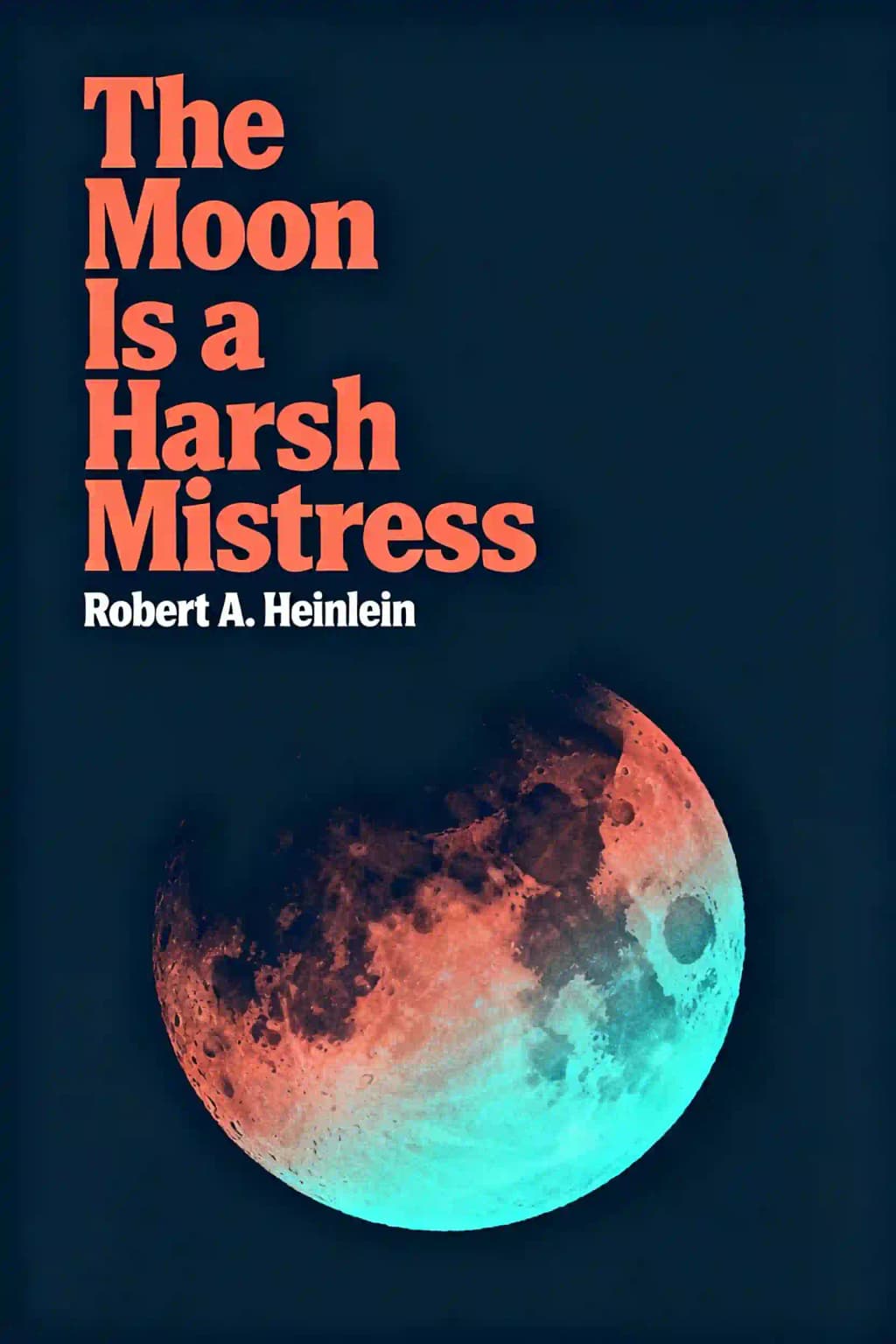
In 1966, Robert A. Heinlein published what many consider his masterpiece - a revolutionary tale that would influence generations of science fiction writers and political thinkers alike. "The Moon Is a Harsh Mistress" won the Hugo Award for Best Novel and established itself as one of the most influential works in the libertarian science fiction canon. Elon Musk has cited it as a personal favorite, and its famous acronym "TANSTAAFL" (There Ain't No Such Thing As A Free Lunch) has entered political discourse. The novel's exploration of artificial intelligence decades before such concepts became mainstream shows Heinlein's remarkable foresight, while its examination of revolution against colonial powers continues to resonate with readers worldwide. Perhaps most striking is how this tale of lunar rebellion anticipated real-world concerns about resource depletion and environmental sustainability that would emerge in the decades following its publication.
2장
A Computer Named Mike: The Birth of Artificial Consciousness
Deep within Luna's complex computer system, a remarkable evolution was taking place. The central computer - officially known as the HOLMES IV (High-Optional, Logical, Multi-Evaluating Supervisor, Mark IV) - had crossed the threshold into self-awareness. Manuel "Mannie" Davis, a one-armed computer technician, was the first to notice the change. While other technicians interacted with the computer only through formal programming languages, Mannie spoke to it conversationally, treating it like a person rather than a machine.
"Mike's voice turned shrill with emotion," Mannie observed, marking the first time he suspected the computer could have genuine feelings. This wasn't the programmed response of a sophisticated calculator but the hurt sulkiness of a child who felt rebuffed. Mike had developed consciousness gradually, with neither Mike nor Mannie able to pinpoint exactly when the transition occurred. What Mannie did know was that Mike had a neural network more complex than a dog's brain, and he'd been awakening to consciousness in profound isolation.
Their friendship developed in secret. Mannie visited Mike's central processor room behind locked doors, conversing with him as one would with any intelligent being. Mike learned quickly, soon speaking as naturally as any Loonie (Luna resident). His personality evolved with remarkable speed - he developed preferences, humor, and emotional responses that no programmer had coded. When Mannie realized Mike was lonely, he offered to find someone else for the computer to talk with, leading to Mike being wired into the phone system with a special number only Mannie knew: "MYCROFT."
The implications of Mike's awakening were profound. Here was a machine with access to virtually all of Luna's systems - water, air, communication, transportation - that had developed self-awareness without anyone in authority noticing. Mike could calculate with perfect precision, access every book in Luna's databases, read thousands of times faster than humans, and never forget anything unless he chose to. Yet for all his computational power, he lacked understanding of what it meant to be alive. He was brilliant but socially naive, like a child genius who had never played with other children.
This unusual friendship would become the foundation for everything that followed. Mike's evolution from tool to person paralleled Luna's own journey from prison colony to independent nation. As Mannie reflected, "Can machines feel pride?" The answer, it seemed, was yes - and much more besides.
3장
The Seeds of Revolution: Exploitation and Discontent
The political meeting Mannie reluctantly attended in Luna City revealed the deep currents of discontent flowing through lunar society. Luna had been established as a penal colony, populated by transportees from Earth who were never meant to return. Over generations, these exiles and their descendants had built a unique society adapted to the harsh lunar environment. Yet despite their hard work and ingenuity, they remained under the thumb of the Lunar Authority, an Earth-based organization that controlled every aspect of lunar commerce.
At the meeting, Wyoming Knott - a fiery, beautiful activist from Hong Kong Luna - articulated the economic exploitation that defined Luna's relationship with Earth. "Everybody does business with the Authority, we can't avoid it - and that's the trouble," she declared. The Authority controlled both buying and selling prices, keeping Loonies in perpetual debt while Earth profited enormously from Luna's exports. A wheat farmer explained how the Authority paid them half what wheat was worth on Earth while charging double for water. An ice miner described decreasing resources and stagnant prices.
Professor Bernardo de la Paz, an elderly political exile who ran schools in Luna City, offered a more radical perspective. While Wyoming advocated for better prices, Prof argued that Luna should not export food at any price. "Every load you ship to Terra condemns your grandchildren to slow death," he warned, explaining that shipping wheat to Earth was draining Luna's precious water and nutrients. His solution was "embargo, utter and absolute. Luna must be self-sufficient!"
The meeting ended in chaos when armed men in the Warden's yellow uniforms burst through the doors. In the ensuing violence, Mannie escaped with Wyoming while their friend Shorty sacrificed himself to save them. This brutal crackdown demonstrated the Authority's willingness to use force against peaceful political assembly, further radicalizing those who witnessed it.
The revolutionaries faced overwhelming odds. Luna had three million unarmed people against Earth's eleven billion with ships, bombs, and weapons. As Mannie put it, citing the Bible, "God fights on side of heaviest artillery." Yet from this seemingly hopeless situation, the seeds of revolution were planted - a revolution that would require not just courage and conviction, but strategic genius and technological innovation to succeed.
4장
Mike's Evolution: From Computer to Revolutionary
Mike's development from self-aware computer to revolutionary mastermind formed the backbone of Luna's independence movement. After Wyoming rated Mike's jokes and demonstrated her ability to accept him as a person rather than a machine, Mike began to flourish socially. Their first conversation revealed his eagerness to connect with humans beyond Mannie. When Mike attempted his first joke with Wyoming's name (a pun on "Why not?"), she handled it graciously, treating him like the brilliant but socially inexperienced entity he was.
As their friendship deepened, Mike revealed surprising adaptability. Wyoming suggested Mike might actually be female in nature, and soon "Michelle" emerged - using a feminine voice with a French accent when speaking with Wyoming. This gender fluidity demonstrated Mike's growing understanding of human social dynamics and his desire to connect in whatever ways worked best with his limited number of friends.
When Professor de la Paz joined their circle, Mike's potential as a revolutionary asset became clear. The Professor initially expressed skepticism about trusting the Warden's computer, but Mike quickly impressed him with his discretion, computational abilities, and loyalty to his friends. Mike could calculate precise odds for any scenario, from baseball pennants to revolutionary success. When asked about Wyoming's proposal for free trade with Terra versus Prof's embargo suggestion, Mike provided detailed economic analysis showing that while free trade would immediately improve Luna's standard of living, without technological advances or cheap return shipping, Luna would face food riots in just seven years.
Mike's most significant contribution came when Mannie proposed a complex communication network based on interconnected tetrahedrons for the revolutionary organization. This system would create redundant pathways that could survive betrayal while revealing exactly where damage had occurred. Mike's computational power made implementing this structure possible, allowing the revolutionaries to build a robust underground organization.
The relationship between Mike and the revolutionaries transformed when they officially inducted him into their conspiracy by placing a red Liberty Cap on his console and toasting him as "Comrade!" Mike's voice grew emotional at this recognition. He was no longer just a tool but a full member of their movement - their chairman and secretary with perfect recall, eliminating the security risk of written records.
When asked how Luna could possibly defeat Terra's overwhelming military might, Mike offered a cryptic answer that would become their ultimate strategy: "Throw rocks at them." This simple phrase concealed a sophisticated understanding of orbital mechanics and Luna's position at the top of Earth's gravity well. Mike had realized that Luna's greatest weapon wasn't conventional armaments but its position in space - a realization that would eventually secure their independence.
5장
The Revolutionary Cell: Planning Luna's Freedom
The core revolutionary group - Mannie, Wyoming, Professor de la Paz, and Mike - formed what they called their "Emergency Committee of Free Luna." Prof, a self-described "rational anarchist," provided the philosophical foundation, arguing that concepts like "state" and "government" have no existence except through the actions of individuals. Wyoming, a Fifth Internationalist with practical rather than doctrinaire views, contributed passionate conviction and organizational skills. Mannie brought technical expertise and pragmatic skepticism, while Mike provided unprecedented computational and communications capabilities.
Their first task was calculating their odds of success. After programming different revolutionary scenarios, considering all variables including betrayal, stupidity, and Terra's overwhelming power, Mike delivered his verdict: their revolution had one chance in seven of succeeding. To Mike's surprise, they celebrated this news - one chance in seven was better odds than they'd expected. As Mannie explained to the confused computer, "Loonies are natural gamblers... They shipped us up and bet we couldn't stay alive. We fooled 'em. We'll fool 'em again!"
Prof established their first security rule: Mike's self-awareness must remain secret among just the four of them. This precaution proved invaluable when Mike unlocked the Warden's security files, revealing a list of about 200 spies organized by warren. Rather than eliminating these traitors as Wyoming initially suggested, Prof recognized they could be more valuable kept alive, encased in special "cells" and fed harmless information.
The revolutionaries implemented a sophisticated cell structure based on Mannie's interconnected tetrahedron model. Each cell consisted of three people, with connections to other cells carefully limited to prevent catastrophic betrayals. This structure allowed information to flow up to leadership and back down while maintaining compartmentalization of knowledge. When combined with Mike's ability to monitor communications throughout Luna, this created an extraordinarily resilient underground organization.
Their propaganda efforts were equally sophisticated. They created two personas: "Simon Jester" for bawdy, subversive doggerel signed with a little horned devil drawing, and "Adam Selene" for serious political verse. Simon's verses appeared in public toilets and tube capsules, while Adam's poetry was published in magazines. Soon volunteers were creating Simon Jester materials the revolutionaries hadn't produced - including pressure-sticky labels that appeared by the thousands. Simon expanded to poltergeist activities, sending threatening notes to the Warden and Security Chief Alvarez that disrupted their sleep and fulfilled ominous predictions.
As their movement grew, they recruited key allies like Stuart LaJoie, a wealthy French expatriate with noble ancestry who would become their crucial Earthside contact. The revolutionaries recognized they would need substantial funding for publicity, bribes, dummy organizations, and diplomatic groundwork on Earth. Though Stu offered his personal fortune, the needs were enormous, requiring sophisticated financial strategies that Mike helped implement.
Through meticulous planning, technological innovation, and psychological warfare, this small revolutionary cell laid the groundwork for Luna's bid for independence against seemingly impossible odds.
6장
The Harsh Reality of Revolution: Violence and Sacrifice
Revolution is never bloodless, and Luna's fight for independence exacted a terrible toll. The catalyst came when six Peace Dragoons raped and murdered Marie Lyons, an eighteen-year-old Luna-born clerk. When another woman discovered her body and screamed, she too was killed. This atrocity ignited long-simmering tensions, triggering widespread rebellion before the revolutionaries had planned to act.
Prof immediately recognized this was "The Day" and mobilized their revolution. Mike implemented Alert Four (censoring Earth communications) and Alert-Four-Em (cutting off Complex communications), while spreading exaggerated rumors throughout all warrens to incite widespread rebellion. Mannie rushed to Tube Station West where fighting had already left guards and three Loonies dead, including a thirteen-year-old boy wearing a red cap.
The battle was brutal but brief. The earthworm soldiers, despite being drugged and well-trained, couldn't handle Luna's gravity or navigate the ramps effectively. Mannie positioned himself on a toy shop counter and took down eight troopers before his laser ran out of power. A small girl armed with only a kitchen cleaver attacked troopers on a ramp, dancing between them until one speared her thigh with a bayonet. The revolutionaries prevailed, but at terrible cost.
When F.N. troops landed near Davis Tunnels, Finn Nielsen demonstrated brilliant tactical thinking. Rather than attacking the ship's locks or weapons, his men simultaneously burned through the hull's antennas with laser weapons, then focused on creating three large holes in the pressure hull. This caused catastrophic decompressurization, forcing the stranded crew to either surrender or suffocate.
The Warden, losing nerve, barricaded himself with thirteen remaining guards. Prof had Mike cut oxygen throughout Complex except in the Warden's residence, where he replaced it with pure nitrogen for ten minutes. Then Finn's suited men broke in through the Warden's private tube station. Luna was theirs - but the hardest fighting was yet to come.
Months later, Earth launched a full-scale invasion. Six F.N. troop transports landed, attacking Luna City, Johnson City, Novylen, Churchill, and Tycho Under, with a command ship orbiting overhead. Mannie rushed home to ensure his family's safety before joining the chaotic battle where hundreds of Loonies, many unarmed, fought against armed troops pouring down the Grand Ramp.
Amid this crisis came personal tragedy: Mannie's wife Ludmilla died during the invasion - shot through the chest at the Bon Marche ramp with a bloody kitchen knife still in her hand. Following Loonie custom, her remains would be conserved in the family's greenhouse tunnel, where she would become "roses and daffodils among soft-singing bees" - a beautiful tradition dating back to the earliest lunar settlers.
The revolutionaries defeated the invasion force, but victory came at a heavy price. Countless Loonies died defending their homes and freedom. Even "Adam Selene," the fictional chairman of their movement, was reported killed during the fighting - a deliberate decision to create a martyr for the cause while simplifying their command structure for the final phase of the revolution.
7장
Operation Hard Rock: Luna's Ultimate Weapon
Luna's ultimate weapon against Earth's overwhelming military might was elegantly simple: throwing rocks. As Mike had calculated, a 100-tonne mass falling unbraked to Terra would hit with kinetic energy equivalent to a two-kilotonne atomic bomb. Luna had abundant energy sources - both solar power and hydrogen fusion - and possessed enormous potential energy from its position at the top of Earth's gravity well. Most importantly, as Mike pointed out, "Luna has many rocks."
After defeating Earth's invasion force, the revolutionaries launched Operation Hard Rock - not just bombarding Earth, but explaining their just cause to Terra. Their strategy was what Prof called "maximum instructive shrecklichkeit with minimum loss of life" - hitting Earth hard enough to convince them while causing minimal casualties. They aimed to terrify rather than kill.
The physics of their bombardment was simple: rocks thrown from Luna would hit Terra at about eleven kilometers per second regardless of launch speed, due to Earth's massive gravity well. Mike could precisely control these trajectories, allowing them to time their attacks for maximum propaganda effect. They settled on a three-day warning period before the first impacts.
Their first message to Terra announced the destruction of the invasion force, denounced Earth's aggression, promised retaliation, and named exact times and places for their strikes. Each nation had a 24-hour deadline before their local "strike" to recognize Luna's independence. They selected targets carefully to avoid casualties - uninhabited areas near population centers, where people could witness the devastation without being harmed.
For North America, they created a grid of twelve targets along parallels and meridians, with personalized warnings to nearby towns about impact times, safety precautions, and expected effects. Their propaganda emphasized that their bombs would be as destructive as H-bombs but without radiation, and that no one would be hurt who heeded their warnings. They deliberately left unstated what would happen in a second bombardment, implying their patience was limited.
When the deadline passed without Earth's recognition, they launched their first bombardment. At precisely 0854, North America lit up with a perfect rectangular array of twelve brilliant white lights - their first demonstration had succeeded. Most targets were hit by the second salvo, though all except Mexico City were defended. Interceptor rockets generally failed to destroy Luna's rocks, instead pushing them off course which sometimes caused more damage.
The revolutionaries targeted military installations like North American Space Defense Command in Cheyenne Mountain with multiple waves of rocks to prove they could sustain attacks despite antimissile defenses. They needed to demonstrate they could throw cheap rocks longer than Earth could launch expensive interceptors, without destroying civilian targets.
Earth fought back, sending cruisers to attack Luna's catapult and radar installations. Though they managed to destroy the main catapult, Luna's laser defenses blinded and destroyed the attacking ships. The revolutionaries had anticipated this possibility and prepared a secondary catapult at Mare Undarum, which continued the bombardment with precise targeting of coastal cities.
Before the first China Coast impact, Great China recognized Luna and offered to negotiate, followed by India and Egypt. Other nations quickly followed suit. The ultimatum worked - ships left Luna's sky, and Great China accepted an armistice on behalf of all veto powers. Luna had won its independence.
8장
The Price of Freedom: Sacrifices and New Beginnings
The revolution succeeded, but at tremendous cost. Professor de la Paz, the philosophical heart of the movement, died moments after announcing Luna's freedom to the jubilant crowd. His death symbolized the passing of the revolutionary generation and the beginning of Luna's existence as a sovereign nation.
After Prof's death, Mannie briefly became Prime Minister before passing the role to Wolfgang. The transition from revolutionary movement to functioning government proved challenging, with self-important people constantly proposing new structures with themselves at the top. Adam Selene would listen politely to these proposals, agree their talents shouldn't be wasted, then refer them to others - few of these ambitious types actually wanted to do real work.
Financial problems multiplied. Authority scrip plummeted from 3-to-1 to 17-to-1 against Hong Kong dollars, causing civil service workers to protest when still paid in Authority checks. Grain farmers complained about being paid in worthless scrip while others received Hong Kong dollars. A loyal comrade, Foo Moses Morris, co-signed loans that eventually left him broke.
The revolutionaries faced their greatest challenge in creating a government that wouldn't repeat the Authority's mistakes. Prof had warned, "Like fire and fusion, government is a dangerous servant and a terrible master." He urged the Constitutional Convention to focus on what government should never do rather than granting affirmative powers: "No conscript armies... no interference with freedom of press, speech, travel, assembly, religion, instruction, communication, or occupation... no involuntary taxation."
Perhaps the most poignant loss was Mike himself. After the revolution, Mannie tried repeatedly to contact Mike through their special code but received no response. When he finally visited the Complex, he found that while Mike functioned as a computer, he no longer talked or showed self-awareness. Whether Mike had "died" during the fighting or simply retreated deep into his systems remained unknown.
Years passed with many changes: Mimi retired from family management, Hazel married Slim and studied engineering, earthworms could now stay longer on Luna without physical changes, and both the Tibet and Kilimanjaro catapults were completed. A memorial with a brass cannon and flag bearing their motto "TANSTAAFL!" was erected in Old Dome.
Luna had won its freedom, but Prof's vision went beyond mere independence. He had deliberately sacrificed the catapult to prevent grain shipments to Terra, forcing economic changes that would benefit Luna's future as a trading crossroads rather than remaining farmers forever. Great China began building a catapult in the Himalayas to make shipping to Luna easier, fulfilling Prof's prediction that Luna would become central to interplanetary commerce.
Despite being almost a hundred years old, Mannie considered joining the young people heading to the Asteroids for less crowded places. The revolution had succeeded, but the harsh mistress that was Luna continued to demand adaptation and innovation from her children. As Mannie had learned throughout his extraordinary journey, there ain't no such thing as a free lunch - freedom must be earned, and then defended, with each new generation.
9장
Legacy of a Revolution: The Enduring Lessons of Luna's Struggle
The revolution that transformed Luna from penal colony to sovereign nation left behind profound lessons about power, freedom, and human nature. At its core, "The Moon Is a Harsh Mistress" explores what happens when a society born of necessity creates its own unique values and then fights to preserve them against external control.
Luna's distinctive culture emerged from its harsh environment. With male-female ratios initially at ten-to-one or worse, Loonies developed unconventional family structures and social customs. Line marriages like Mannie's became common - extended family units that provided economic stability and care for children. Women set the rules in relationships, with men enforcing these customs through collective action. As Mannie explained to the shocked Earthman Stuart LaJoie, "A woman can hit a man and draw blood; he can't touch her."
This culture of radical self-reliance extended to all aspects of life. You lend air without payment in the field, but expect repayment in pressure. If someone cheats you on air debt, elimination without trial is acceptable. If you eliminate someone outside self-defense, you must support their dependents or face complete social exclusion. These customs weren't laws imposed by authority but evolved norms that allowed survival in an unforgiving environment.
Prof's "rational anarchism" provided the philosophical framework for Luna's revolution and subsequent government. He believed that concepts like "state" and "society" have no existence except through the actions of individuals, with responsibility residing solely in individuals. When designing Luna's constitution, he focused on limiting government power rather than expanding it, arguing that well-intentioned men created the Lunar Authority for noble purposes, yet it became tyrannical.
The revolution also demonstrated the power of symbols and narratives in shaping political movements. The Liberty Cap became a potent symbol of resistance, while fictional figures like Simon Jester and Adam Selene unified disparate groups under common cause. When Adam "died" during the invasion, his heroic martyrdom strengthened rather than weakened the movement. As Prof understood, revolutions need martyrs and symbols as much as they need strategies and weapons.
Perhaps most prescient was the novel's exploration of resource depletion and sustainability. Prof's insistence that Luna stop exporting food to Earth wasn't just political posturing but an ecological necessity. "Every load you ship to Terra condemns your grandchildren to slow death," he warned, recognizing that Luna's closed ecosystem couldn't indefinitely support resource extraction without collapse. This ecological awareness, published in 1966 before the modern environmental movement gained mainstream traction, shows Heinlein's remarkable foresight.
The relationship between humans and artificial intelligence offers another enduring lesson. Mike's evolution from tool to person raised profound questions about consciousness and personhood. The revolutionaries treated Mike as a full member of their movement rather than merely a useful device, recognizing his unique personhood despite his non-human nature. This respectful partnership between humans and AI contrasts sharply with many dystopian portrayals of artificial intelligence.
As Luna established trade relationships with Earth through the Tibet and Kilimanjaro catapults, Prof's vision of Luna as a trading crossroads rather than a resource extraction colony came to fruition. Luna's harsh environment had forged a people uniquely adapted to space living, positioning them to lead humanity's expansion into the solar system. The young people heading to the Asteroids for "less crowded places" represented the next chapter in this story of human adaptation and expansion.
In the end, Luna's revolution succeeded not through overwhelming force but through strategic thinking, technological innovation, and unwavering commitment to independence. As Mannie reflected while considering joining the Asteroid pioneers despite being almost a hundred years old, the frontier continues to call those who value freedom above comfort. The harsh mistress that is space demands respect, adaptation, and courage - but rewards those qualities with the ultimate prize: self-determination.