At 26, Charlie Kirk's NYT bestseller dissects Trump's political revolution beyond left-right divides. How did this provocative defense of "ordinary Americans" against "coastal elites" become required reading for young conservatives nationwide? Trump's appointment of Kirk to his education commission speaks volumes.
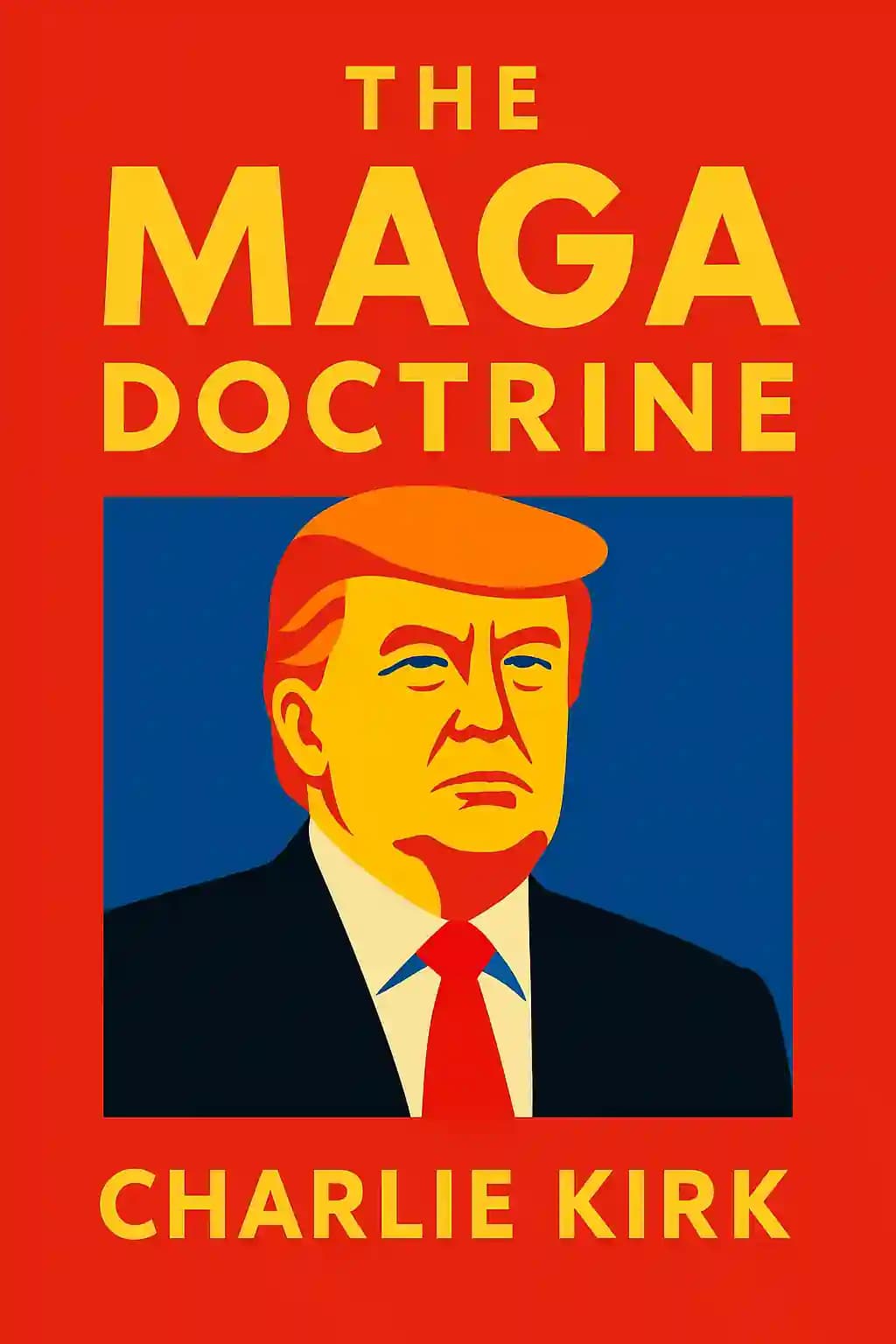
Charlie Kirk is the New York Times bestselling author of The MAGA Doctrine: The Only Ideas That Will Win the Future and founder of Turning Point USA, a leading conservative youth organization.
His book dissects the ideological pillars of the Trump-era conservative movement, focusing on themes like limited government, individual liberty, and resistance against institutional overreach—drawing directly from his experience mobilizing young activists nationwide.
Kirk also authored Campus Battlefield and Time for a Turning Point, hosts the nationally syndicated Charlie Kirk Show, and has made over 1,000 appearances on Fox News and CNBC. Named to Forbes’ “30 Under 30” list, he opened the 2020 Republican National Convention and chairs Students for Trump. The MAGA Doctrine became a #1 New York Times bestseller, solidifying his influence in modern political discourse.
The MAGA Doctrine argues that the movement behind Donald Trump offers superior solutions to both traditional conservatism and progressivism. Charlie Kirk contends it champions individual liberty, local businesses, and pushes back against "Big Everything"—institutions like Silicon Valley, elite universities, and federal overreach. The book frames Trump’s presidency as a restoration of self-rule against centralized power.
This book targets conservatives seeking a manifesto for Trump-era policies, young activists interested in political strategy, and readers curious about the ideological shift from Tea Party to MAGA movements. It’s ideal for those valuing limited government and skeptical of institutional power.
Yes, for understanding the intellectual underpinnings of Trump’s appeal to young conservatives. Kirk critiques "sclerotic institutions" (UN, Harvard, media) and links Trump’s rise to grassroots frustration with "Big Everything". However, critics note contradictions between Trump’s policies and Kirk’s small-government rhetoric.
Kirk defines "Big Everything" as consolidated power across government, tech, media, and academia working against ordinary Americans. Examples include:
Kirk credits Trump’s focus on issues dismissed by both parties: protecting small businesses, religious freedom, and individual rights. He argues Trump bypassed "power-hungry institutions" to connect directly with voters.
Critics highlight contradictions, like Kirk condemning "Big Everything" while Trump appointed Wall Street billionaires and expanded military spending. Some call Kirk’s defense of Trump’s authoritarian comments "dismissive".
It advocates minimal government intervention, claiming agencies and regulations crush local economies and personal freedoms. Kirk praises Trump for reducing federal overreach—though fact-checks dispute this claim.
Notable lines include:
While traditional conservatism focused on small government, Kirk’s "MAGA conservatism" opposes cultural and corporate power alongside state overreach—calling this broader focus Trump’s innovation.
He argues Trump returned power to "forgotten" citizens via policies like tax cuts, deregulation, and conservative judicial appointments, countering decades of elite consensus.
Kirk targets:
Yes, for analyzing ongoing debates about institutional trust, populism, and conservative strategy. Its critique of media bias and elite capture remains cited in political discourse.
저자의 목소리로 책을 느껴보세요
지식을 흥미롭고 예시가 풍부한 인사이트로 전환
핵심 아이디어를 빠르게 캡처하여 신속하게 학습
재미있고 매력적인 방식으로 책을 즐기세요
Trump has been an insider who now exposes their secrets to outsiders.
The two-party system operated more like a cartel than genuine opposition.
Establishment elites routinely dismissed or minimized these successes.
Trump's emergence shattered this comfortable arrangement.
It's now a Trump-remade populist party.
MAGA Doctrine의 핵심 아이디어를 이해하기 쉬운 포인트로 분해하여 혁신적인 팀이 어떻게 창조하고, 협력하고, 성장하는지 이해합니다.
MAGA Doctrine을 빠른 기억 단서로 압축하여 솔직함, 팀워크, 창의적 회복력의 핵심 원칙을 강조합니다.

생생한 스토리텔링을 통해 MAGA Doctrine을 경험하고, 혁신 교훈을 기억에 남고 적용할 수 있는 순간으로 바꿉니다.
무엇이든 물어보고, 목소리를 선택하고, 진정으로 공감되는 인사이트를 함께 만들어보세요.

샌프란시스코에서 컬럼비아 대학교 동문들이 만들었습니다
"Instead of endless scrolling, I just hit play on BeFreed. It saves me so much time."
"I never knew where to start with nonfiction—BeFreed’s book lists turned into podcasts gave me a clear path."
"Perfect balance between learning and entertainment. Finished ‘Thinking, Fast and Slow’ on my commute this week."
"Crazy how much I learned while walking the dog. BeFreed = small habits → big gains."
"Reading used to feel like a chore. Now it’s just part of my lifestyle."
"Feels effortless compared to reading. I’ve finished 6 books this month already."
"BeFreed turned my guilty doomscrolling into something that feels productive and inspiring."
"BeFreed turned my commute into learning time. 20-min podcasts are perfect for finishing books I never had time for."
"BeFreed replaced my podcast queue. Imagine Spotify for books — that’s it. 🙌"
"It is great for me to learn something from the book without reading it."
"The themed book list podcasts help me connect ideas across authors—like a guided audio journey."
"Makes me feel smarter every time before going to work"
샌프란시스코에서 컬럼비아 대학교 동문들이 만들었습니다

MAGA Doctrine 요약을 무료 PDF 또는 EPUB으로 받으세요. 인쇄하거나 오프라인에서 언제든 읽을 수 있습니다.
When Donald Trump descended that golden escalator in 2015, few understood they were witnessing the birth of something larger than a presidential campaign. What emerged wasn't just a slogan but a coherent philosophy that would fundamentally reshape American politics. This approach resonated so deeply it transcended borders, inspiring freedom movements worldwide-from Hong Kong protesters donning "Make Hong Kong Great Again" hats to everyday Americans who felt forgotten by the political establishment. But what exactly makes this philosophy so compelling? At its core, it represents a return to America's founding principles while addressing modern challenges through a pragmatic, results-oriented lens. For decades, America's two-party system functioned more like a sophisticated dance than genuine opposition. Despite their heated rhetoric, both parties had grown remarkably comfortable with each other, engaging in strategic vote trading while maintaining just enough ideological differences to win elections. Democrats pushed for expanded welfare and regulatory frameworks while Republicans focused on corporate deregulation and military interventionism-both growing government in different directions while driving national debt to unprecedented levels. Have you ever noticed how Washington insiders seem more aligned with each other than with the people they represent? This comfortable arrangement satisfied party leaders and donors but increasingly alienated ordinary voters who watched their concerns go unaddressed. The revolving door between Wall Street, lobbying firms, and government positions cemented this "uniparty" system that Trump's emergence shattered.