1장
Beyond the Financial Horizon: A New Path to True Wealth
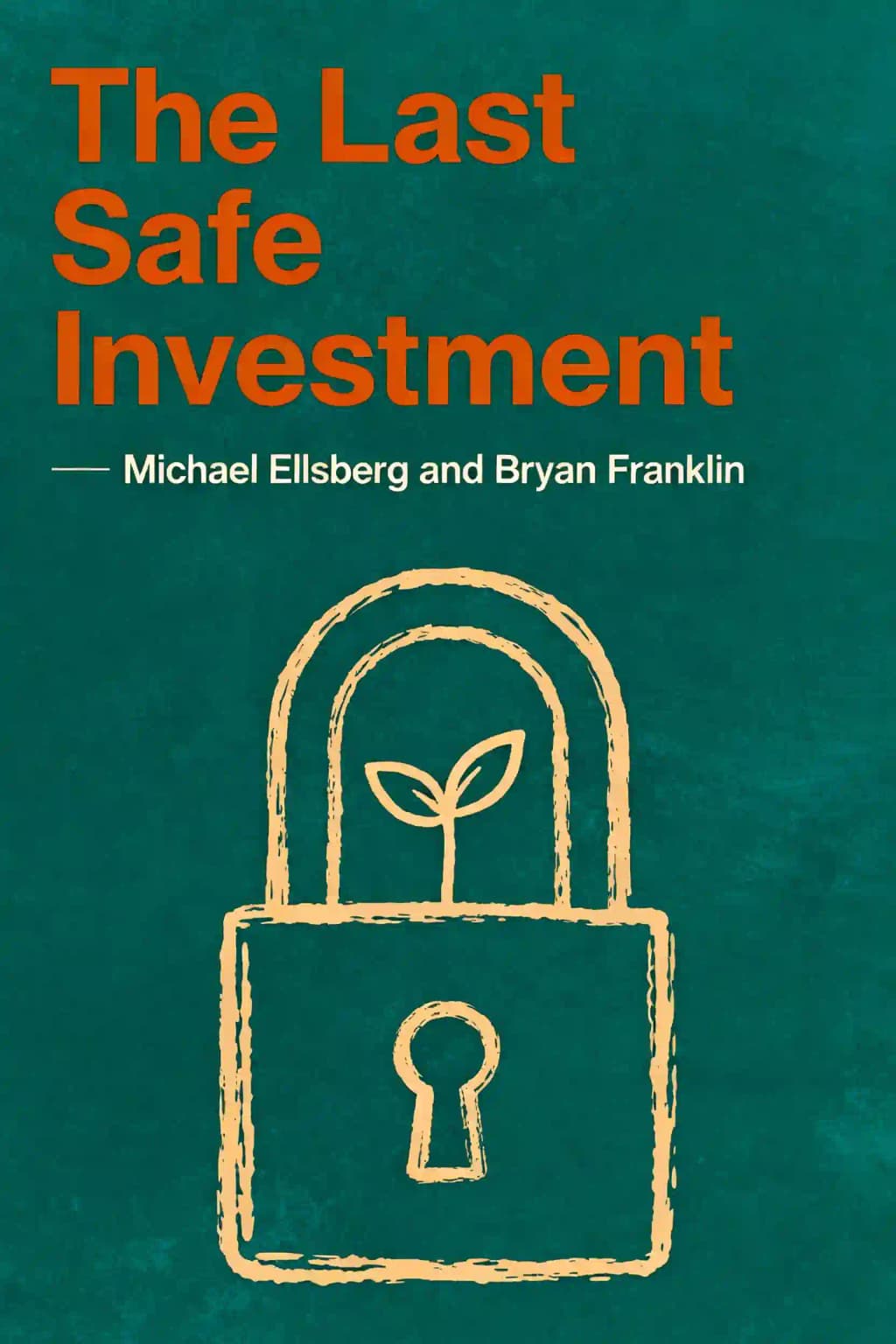
In a world where traditional financial advice seems increasingly hollow, "The Last Safe Investment" offers a radical reimagining of what it means to build wealth. This isn't just another personal finance book-it's a manifesto that has garnered attention from Silicon Valley entrepreneurs to Wall Street veterans. Tim Ferriss called it "required reading for anyone looking to create sustainable wealth," while the book has quietly built a cult following among those disillusioned with conventional financial wisdom. What makes this approach so compelling is its rejection of the either/or mentality that dominates financial planning-the false choice between enjoying life now or sacrificing for future security. Instead, authors Michael Ellsberg and Bryan Franklin propose something revolutionary: a system where spending, earning, and investing become part of the same self-reinforcing ecosystem.
2장
The Broken Promise of Traditional Financial Advice
The conventional financial wisdom-what the authors call Financial Advice Commonly Delivered (FACD)-has failed spectacularly. We've all heard these seemingly prudent recommendations: save 10-15% of your income, eliminate small daily luxuries like $5 lattes and $12 lunches, invest primarily in diversified index funds that supposedly compound at 7% above inflation, and purchase a home as your primary wealth-building vehicle. The problem? For people who diligently followed this advice over the past fifteen years, the promised "nest egg" never materialized, leaving millions of Americans financially vulnerable.
The stark reality is that the S&P 500 has risen only 1.9% above inflation annually-far below the promised 7%-while home values have barely beaten inflation in most markets. Even worse, this period has seen unprecedented student debt surpass $1.7 trillion, with 30% of loans now delinquent or in default. The middle class has primarily attempted two main wealth-building strategies: the "education path" of investing in degrees and careers, and the "property path" of buying homes as investments. Both have ended in disappointment for many, with degrees not delivering promised income and properties becoming financial burdens rather than assets.
The sequential nature of the traditional plan is fundamentally unworkable for several reasons. First, most people simply can't save enough given stagnant wages and rising costs of living - the recommended 15% savings rate remains out of reach for over 60% of Americans. Second, those who do save often lose money on investments when adjusted for inflation and fees, with studies showing that the average investor underperforms the market by 4-5% annually due to poor timing and emotional decision-making. Third, the extreme delayed gratification required by traditional plans (working 40+ years before "retirement") proves psychologically unsustainable for many. Finally, those who do reach traditional retirement often discover that free time alone doesn't create happiness or fulfillment.
What's particularly troubling is that the traditional approach requires surrendering control to "financial experts" who have consistently failed to deliver on their promises. Wall Street firms, financial advisors, and investment companies often prioritize their own profits over client outcomes, charging fees that significantly erode returns while providing generic advice that doesn't account for individual circumstances. When we examine investments that have negative inflation-adjusted returns or unpredictable catastrophic results (as seen in 2008 and 2020), we're left with a startling conclusion: the only truly safe investment is yourself - your skills, knowledge, and ability to generate income through multiple channels.
This broken system has created a generation of disillusioned savers who followed the rules but still find themselves financially insecure. The traditional advice isn't just ineffective - it's fundamentally flawed because it assumes a stable economic environment that no longer exists in our rapidly changing global economy.
3장
The Self-Amplifying Financial Ecosystem
Instead of the failing FACD approach, the authors propose the SAFE plan-Self-Amplifying Financial Ecosystem-which creates an interconnected system rather than relying on a single point of failure. This plan recognizes that True Wealth encompasses your entire financial ecosystem, not just monetary wealth.
Money alone cannot provide happiness, freedom, safety, power, creative expression, or love. To achieve True Wealth, you must be able to convert money into enjoyable life experiences, transform those experiences into self-development, convert that development into new abilities that create value for others, and finally convert that value into more money.
The SAFE plan develops three key disciplines that lead to three valuable assets, creating a self-reinforcing system that produces both financial and non-financial rewards:
The first discipline is Systemic Spending-transforming ordinary consumption into investment by viewing all purchases as investments with potential returns across multiple life contexts. When you adopt this perspective, you're not just investing a few thousand dollars in savings annually, but effectively investing your entire post-tax income.
The second discipline focuses on increasing your value to others. This isn't about your intrinsic worth as a human but about the match between your behavior and others' desired outcomes. Your earning potential is the most variable and predictable asset you possess-more controllable than any traditional investment.
The third discipline involves improving your Happiness Exchange Rate-how efficiently you convert external wealth (money and material comfort) into internal wealth (happiness, freedom, security). Most people are remarkably inefficient at predicting which purchases will actually increase their happiness, wasting enormous amounts of money in failed attempts to obtain internal wealth.
4장
The Three True Wealth Assets
From these disciplines emerge three essential True Wealth assets: adviser equity, tribe, and savings - each playing a crucial role in building sustainable wealth and happiness.
Adviser equity is earned through interpersonal contributions like advice or mentorship rather than financial investment. Unlike traditional equity, it can be formal (contractual ownership) or informal (based on gratitude and reciprocity). This form of equity grows through consistent investment in others' success, particularly in mentoring younger professionals and entrepreneurs. For example, helping a startup founder navigate early challenges might lead to future opportunities, board positions, or equity stakes. The more you invest in mentoring others, the more adviser equity you accumulate, creating a security network that functions like a "double-tax-free, depreciation-proof, recession-proof retirement account." This equity often compounds over time as those you've helped succeed and begin helping others, creating a virtuous cycle of mutual support and opportunity.
Tribe represents your most self-amplifying True Wealth asset-a community of at least 15 close friends who are deeply interconnected and share your core values. These relationships go beyond casual friendships to form a support network that can significantly enhance quality of life while reducing costs. Tribes transform True Wealth assets by distributing ownership costs while maintaining full benefits. For instance, rather than each person buying expensive equipment or vacation homes, tribe members share resources. An invitation to use a friend's luxury RV creates more True Wealth than owning one sitting unused, and shared vacation homes provide more value than individual ownership. Tribes provide natural insurance against life's setbacks by distributing risks across many members, making evictions, job losses, or medical bills manageable. They also create opportunities for skill-sharing, emotional support, and collaborative projects that benefit all members.
Savings emerge naturally when your Happiness Exchange Rate increases while your earnings power grows, creating a comfortable margin without requiring willpower. This approach differs fundamentally from traditional budgeting methods. Unlike the FACD approach of forced spending reduction, the SAFE plan reduces spending only after achieving happiness and satisfaction. When you optimize your spending around true sources of joy, unnecessary expenses naturally fall away. For example, someone might discover that hosting dinner parties with friends brings more satisfaction than expensive restaurant meals, or that local adventures with tribe members provide more joy than costly solo vacations. The SAFE plan doesn't eliminate the need for savings but reduces how much you need by decreasing your requirements for a fulfilling lifestyle. This creates a sustainable path to financial security that aligns with personal happiness rather than arbitrary spending restrictions.
5장
Mastering Your Happiness Exchange Rate
Your Happiness Exchange Rate consists of five distinct skills that can dramatically increase how much happiness you derive from every dollar spent.
The first skill involves using Systemic Spending to maximize happiness from expenditures. Consider the wealthy couple James and Selena, who despite enjoying luxuries like fine dining and travel, were consistently unhappy because they spent much time fighting. Their Happiness Exchange Rate was essentially zero until they invested in therapy to address childhood wounds. Though therapy cost over $1,000 monthly, this relatively small investment dramatically improved their enjoyment of everything else they spent money on.
The second skill is getting good at predicting what makes you happy. Every purchase serves two functions: providing the direct benefit you seek and serving as an experiment about what truly makes you happy. If you could reclaim the money spent on items that provided little lasting happiness, you might have hundreds of thousands more dollars today.
The third skill involves improving your ability to enjoy the experiences you're already having. Many people develop a low Happiness Exchange Rate because they're not present for the experiences they're paying for. Consider the difference between mindfully enjoying a restaurant meal versus thinking about tomorrow's work emails. Presence can be systematically cultivated through practices like meditation and mindfulness.
The fourth skill is learning to treat negative feelings at the root, not with retail therapy. Often when feeling bad, we mistake not feeling bad for feeling good, reaching for things that numb or help escape our feelings. You can't selectively numb feelings-numbing pain also diminishes your capacity for joy. As Victor Cheng says, "Psychotherapy is cheaper than retail therapy."
The fifth skill focuses on finding and living your purpose, not on increasing comfort. For decades, consumerism has promised comfort and convenience, creating a cultural purpose of "get that cash" to buy the next automatic gadget. But in shifting from survival via craft to cash accumulation, we lost something vital: purpose. Purpose is an infinite value, while money is finite. This mismatch makes "getting more money" a poor candidate for a satisfying purpose.
6장
The Power of Super Skills
Super Skills are universally valuable abilities that dramatically increase earning potential regardless of professional circumstances. Unlike specialized skills that only benefit specific industries, Super Skills enhance value across all professional contexts and amplify the effectiveness of other skills. For example, strong communication skills boost performance whether you're a software engineer explaining technical concepts to clients or a teacher engaging with students and parents.
The formula for investing in your income potential begins with a strategic assessment of Super Skill categories aligned with your natural inclinations. Someone naturally analytical might start with technical Super Skills, while an empathetic person might excel faster in interpersonal skills. The key is focusing on skills requiring minimal behavior change - this reduces friction in the learning process and increases the likelihood of sustained practice. For instance, if you're naturally detail-oriented, developing project management skills builds on this trait rather than fighting against your nature.
The authors identify four distinct categories of Super Skills:
• Interpersonal: Including negotiation, leadership, and relationship building
• Creative: Encompassing problem-solving, innovation, and strategic thinking
• Technical: Covering data analysis, digital literacy, and systems thinking
• Physical: Including public speaking, presence, and stress management
Success in skill development requires careful selection of learning resources. This means investing in credible education sources with proven track records - whether through formal education, specialized training programs, or mentorship from recognized experts. The investment should include both time and money, with specific commitments that force regular practice and accountability. For example, joining professional associations, enrolling in certification programs, or taking on projects that require using new skills.
Rather than pursuing the often misleading promise of passive income, the authors strongly advocate for leveraged income through skill development. While passive income schemes promise financial freedom without ongoing work, they frequently lead to disappointment and financial loss. In contrast, developing high-value Super Skills creates leveraged income opportunities that combine financial rewards with meaningful professional growth. This might manifest as board positions offering both compensation and influence, speaking engagements that provide both income and visibility, or consulting opportunities that leverage expertise for premium rates. The skill development approach also builds a foundation of genuine expertise that compounds over time, creating increasingly valuable opportunities while minimizing financial risk.
The authors emphasize that while individuals should eventually develop competency across all Super Skill categories, success comes from strategic sequencing - starting with areas that align with natural strengths and gradually expanding into complementary domains. This progressive approach ensures steady advancement while maintaining motivation and momentum in professional development.
7장
Interpersonal Super Skills: The Foundation of Influence
Interpersonal super skills can vault you past those who focus solely on market skills. Raj Bandyopadhyay's story exemplifies this-by creating Atlanta's first data science meetup group, he transformed from an outsider to a community leader, eventually landing a chief data scientist position at a hot startup. His success came not from technical expertise alone, but from leadership and community-building.
True influence isn't about pushing personal agendas but understanding motivations within a system and aligning with larger purposes that serve both your values and others' needs. This perspective ensures your investment in influence doesn't degrade into manipulation.
Leadership isn't about authority or charisma-it's about moving people's hearts and minds from point A to point B. The most effective leadership combines honest empathy with authentic vision of a collective future. Two trends make leadership increasingly valuable: the decline of "command and control" management and the rise of global collaboration requiring coordination of many people.
Public speaking is perhaps the most undervalued super skill. In our knowledge economy, the inability to communicate compelling messages to groups can mean career death. Even without aspirations to become a professional speaker commanding thousands in fees, public speaking remains essential for knowledge exchange.
Teaching is the art of leading people to become more educated and capable-essential to the SAFE plan because it provides leverage. If you know how to sell, you'll make money; if you know how to teach someone else to sell, you'll make money, friends, and potential income from others' sales efforts as well.
Even if you're not formally selling products, sales skills remain your most lucrative self-investment. Sales is about persuading others to commit resources to your ideas or projects, making you vastly more valuable to any team. Rather than manipulation, effective selling involves discovering what people genuinely want and determining if your offering serves their path.
8장
Creative Super Skills: The Last Human Frontier
Creativity may be the final skill that remains uniquely human as automation advances. Companies like Nike, Google, and Apple invest millions to foster innovation, recognizing that algorithmic tasks are increasingly being offshored or automated. In corporate layoffs, creative employees typically survive while others are let go.
The key insight: creative value comes from application, not just innate talent. Even those with less natural talent can produce more creative work by fully applying what creativity they have, making creativity investment worthwhile regardless of perceived natural ability.
Two opposing pitfalls threaten creative development. First is focusing too much on technique-learning instruments or skills in a rote manner without self-expression. The second is the opposite: believing creativity requires no technique at all-just unbridled emotional expression without skill. True creativity requires both technical proficiency and authentic self-expression.
While creative results are unpredictable, the conditions that foster creativity are known. Four specific conditions create "the zone" where creativity flourishes:
Spaciousness provides mental time and space for habitual thought patterns to dissipate. Paradoxically, constraints enhance creativity-movie sequels often suffer because increased budgets and fewer limitations reduce creative problem-solving. Models of inspiration come in two forms: emulation where you study techniques from others, and contextual importing where you translate concepts across domains. Finally, loving your ideas into existence means meeting each idea fragment with a resounding "YES!" to open the channel between you and your unconscious creative source.
True creativity requires newness, which inherently involves risk. Most people avoid creativity because they've been conditioned toward conformity through family, school, and social environments. To reclaim creativity, invite unpredictability into your life. That nervous energy you feel when contemplating the unknown isn't fear-it's creative energy waiting to be released.
9장
Technical Super Skills: Building Mental Models
Technical Super Skills enhance the value of all your other skills by giving you the ability to solve technical problems, even if you identify as "nontechnical." When you understand how things work, obstacles seem smaller and opportunities greater.
A mental model is a simplified functional representation of something larger and more complex-powerful enough to help make high-quality decisions yet simple enough to avoid getting bogged down in minutiae. Mental models bridge the gap between technical and nontechnical people. While good technical models describe how things work, good mental models describe why they work.
Building effective mental models involves seven steps: begin at the end and work backward; discover the processes, inputs, and outputs; draw boxes and lines to visualize connections; get the chunk size right for your level of understanding; focus on the critical path by removing everything extra; challenge assumptions about resources and prerequisites; and visualize yourself walking through the process.
Perhaps the highest-leverage way to increase your earning potential is understanding how to attract customers to a business. The marketing crank consists of three essential parts: the clear story (why customers should buy), the assets (components of your marketing system), and the offer (what customers are buying).
When story, assets and offer align, businesses create a reliable customer acquisition system. Understanding this system reveals which projects are truly strategic within any organization. Mastering the marketing crank could even become the foundation of a six-figure consulting practice if combined with interpersonal and creative skills.
10장
Physical Super Skills: The Foundation of Everything
Physical Super Skills relate to your body and brain's operating system-your health, vitality, fitness, sleep, energy levels, focus, and concentration. Unlike Physical Market Skills that directly generate income, Physical Super Skills rarely make money directly. Instead, they enhance intangible factors like confidence, presence, trust, energy, charisma, and motivation that determine your ability to capitalize on earning opportunities.
Extending your productive work life is one of the most direct investments in earning power. The financial returns are substantial-if earning $100,000 annually and extending your productive life by five years, you've gained $500,000 in additional earnings.
In today's knowledge economy with employees handling 125 emails daily, mental focus is invaluable. Between two equally qualified workers, the one with superior focus and attention will invariably succeed. You can invest in attention through productivity systems, meditation practices, or mindfulness training.
Attractive people earn 3-4% more than those with below-average looks, totaling $230,000 more over a lifetime according to The Wall Street Journal. Contrary to popular belief, attractiveness isn't just genetic-simple changes like basic hygiene, smiling more, wearing well-fitted clothes, and eating vegetables (which give skin a natural glow) can significantly increase appeal.
A healthy relationship to sexuality is both empowering and liberating, and can systemically impact your earning potential. The impediments to great sex-self-judgment, shame, low self-esteem-are the same factors that decrease confidence and presence at work. The more you express your fullest self sexually, the less compartmentalized it becomes, enhancing motivation and vitality that fuel creativity and interpersonal skills in all areas of life.
11장
Building Your Tribe: The Ultimate Safety Net
The most valuable True Wealth asset is often overlooked until acquired, then becomes treasured above all else. Bryan discovered this after a car accident in 2007, when his San Francisco community responded with overwhelming support. Within hours, sixty-five text messages arrived asking "Is there anything at all you need?" followed by rides, meals, insurance help, and therapy sessions-all offered without expectation of payment.
This modern version of ancient social structure has no formal membership, rules, or hierarchy-just networked friends bound by shared values and mutual care, creating something far greater than individual friendships.
True Wealth tribes share universal values: contribution (giving to advance others' purposes), freedom (valuing authentic expression over conformity), growth or transcendence (embracing feedback and personal development), devotion (honoring commitments and serving something larger than yourself), and community (valuing the tribe itself above individual membership).
Humans derive happiness from two universal sources: Being (appreciating present reality and feeling acceptance) and Becoming (striving toward growth and improvement). A healthy tribe functions like ideal parents, simultaneously encouraging development while accepting you as you are. When friends are networked, they see different facets of you and compare notes, allowing you to relax into your authentic self.
Building a tribe requires strategic planning to maximize connection capital-the social resource that increases financial opportunities while decreasing risks. Start by selecting core values that both resonate personally and connect to earning potential. Gather diverse individuals who embody these values from different life domains. Host events regularly, choose appealing venues, and craft personal invitations that convey benefits and excitement.
12장
The Future of Financial Safety
The dream of comfortable retirement in a single-family home is dead for most young Americans due to inflated housing prices, educational debt, wage stagnation, and inability to save. Fortunately, young people are pioneering their own solution: the sharing economy.
The previous American Dream was based on ownership-homes, appliances, cars-requiring enormous costs. Today's youth, finding even apartment rental unaffordable, are creating cohousing communities that are both more economical and more enjoyable. This trend recognizes that using assets can be better than owning them, especially as technology platforms reduce the logistical hassles of sharing.
Traditional prestige has been exclusionary-either mainstream (biggest homes, best cars, prestigious credentials) or countercultural (knowing the coolest bands, mastering ironic fashion). Now emerging is inclusionary prestige based on contribution, modeled after the open source movement where people gain status through their contributions to communities.
True Wealth involves distinguishing between infinite values (love, belonging, self-acceptance) that require infinite resources, and finite values (food, gadgets) that need sufficient resources. The economic problem arises when we try satisfying infinite values with finite means.
The self-aware person knows the difference between finite and infinite values, cultivating both the capacity to tap into infinite resources within themselves and others, and generating sufficient finite resources. This balanced approach leads to extraordinary living guided by one's highest ideals rather than endless consumption.